
-
- ExosomesVirus-like Nanoparticles (VNPs)
- LiposomesHeparosanCyclodextrins
- Polymeric NanocarrierPolymer-Drug ConjugatesHydrogelResponsive Polymer



Exosomes
Exosomes are cell-derived vesicles with a diameter of 30-100 nm. Several research groups have reported the secretion of vesicles by different cells and discussed their possible biological functions, such as the stimulation of immune response, or transfer antigens to dendritic cells. The composition of exosome mainly includes a bi-layer lipid membrane, and various types of proteins and nucleic acids. Compare to other widely used drug delivery vehicles, such as liposome and polymeric nanoparticles, exosome provides advantages such as a long circulating half-life, the intrinsic ability to target tissues, biocompatibility, and minimal or no inherent toxicity issues.
One of the most important properties of exosome is its ability to carry small molecular drugs across the blood–brain barrier (BBB). Since 98% of potent central nervous system drugs cannot cross the BBB, their conceptual efficacy shown in labs has not been successful in clinical trials. Many nanomaterials have been employed to solve this problem while issues such as nano-toxicity and rapid drug clearance by the mononuclear phagocyte system (MPS), have also been observed. As a natural product of the body’s own cells, the ability of exosomes to deliver drugs across the BBB was examined by injecting specific cell line derived exosomes loaded with rhodamine and doxorubicin in zebrafish embryos. At the end of the experiments, brain tissue was examined for the presence of rhodamine fluorescence. The results undeniably showed the drug's distribution in the brain region of the zebrafish embryos, suggesting the ability of exosomes to deliver drugs across the BBB. Besides engineering exosomes vesicles through genetic or nongenetic methods to enhance their efficacy and targeting ability, Creative BioMart also provides therapeutic proteins that used in the treatment of various diseases.
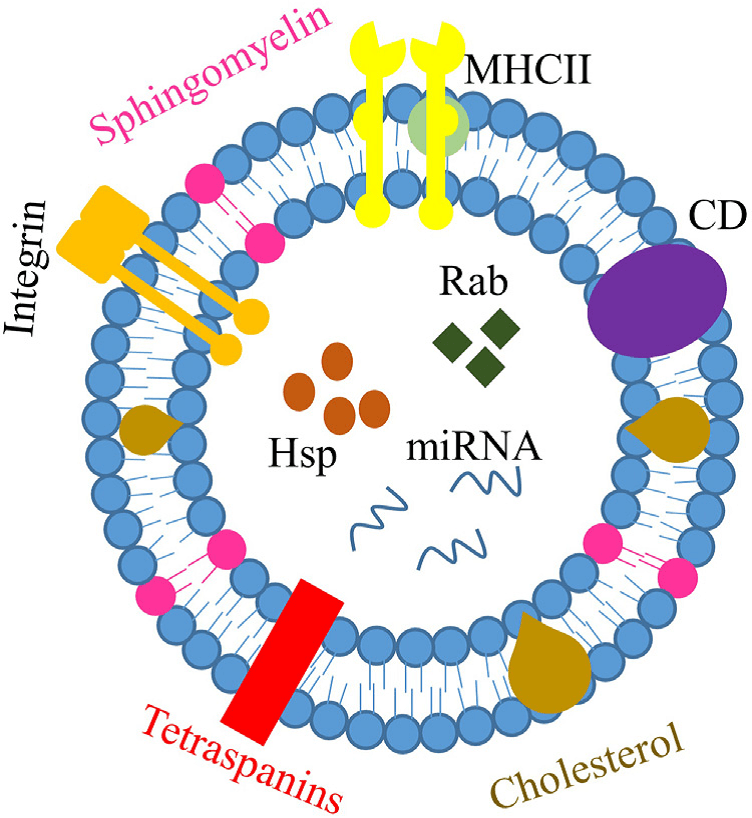 Compositions of exosomes.
-
