-
- ExosomesVirus-like Nanoparticles (VNPs)
- LiposomesHeparosanCyclodextrins
- Polymeric NanocarrierPolymer-Drug ConjugatesHydrogelResponsive Polymer



Biopolymer Drug Carriers Design
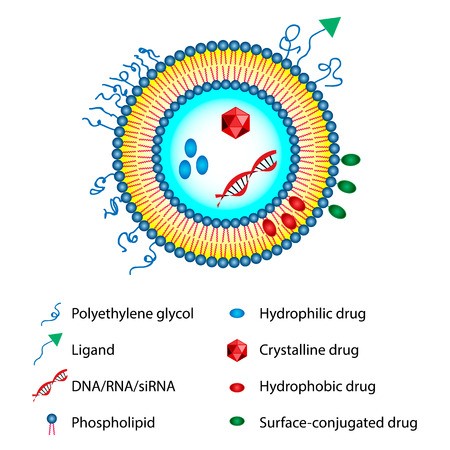
Biopolymers are polymers that are produced from living organisms, which are classified in three groups: polysaccharides, proteins and nucleic acids. Biopolymers are suitable materials as nanoparticles for clinical application due to their versatile traits, including biocompatibility, biodegradability and low immunogenicity. It is important to control particle size, charge, morphology of surface and release rate of loaded molecules to use biopolymer-based nanoparticles as drug/gene delivery carriers.
When drugs- or genes-loaded nanoparticles are injected into bodies, they cross epithelial barriers and circulate in the blood vessels, and then, go through fenestrations whose gaps on the endothelium are much larger (100nm to 2μm) than in healthy tissues (2–6nm), finally accumulate in tumor sites. Since nanoparticles interact with fluids, cells, and tissues, and may trigger mediators which then may activate inflammatory or immunological responses, designing the biopolymer-based nanoparticles with the specific sizes is one of the most important criteria for delivery carrier application. Particle shape, surface charge, and the surface feature also play roles in intercellular delivery. In addition, the type of polymers, particle sizes, solubility, biodegradability and surface properties need to be considered. Our experts could design suitable biopolymer carriers according to your drug-specific requirements. Creative BioMart is your reliable partner in studying of novel drug delivery systems. We will support you with superb expertise, advanced equipment, and satisfactory customer service.
Protein/Polypeptide nanoparticles and polysaccharides are two main class of biopolymers.
Proteins are naturally-derived polymers that are advantageous in their biodegradability, low toxicity, nonantigenicity, high nutritional value, high stability and binding capacity of various drugs. They have abilities of emulsification, gelation, forming and water binding capacity. Because of these unique properties that are different from any synthetic polymers, protein-based nanocarriers are promising candidates for drug and gene delivery. This kind of nanoparticles include but not limited to:
Polysaccharides are long carbohydrate molecules of repeated monosaccharide units joined together by glycosidic bonds. Chitosan, alginate, heparin, hyaluronic acid, pullulan and dextran are examples of polysaccharides. They are naturally derived polymers with storage and structural functions, which are one of the main constituents in biological systems such as the glycocalyx and the extracellular matrices. Polysaccharides are highly stable, biocompatible and biodegradable.
Preparation of polysaccharide nanoparticles by crosslinking can be achieved by either ionic crosslinking (physical crosslinking) or covalent crosslinking (chemical crosslinking). Introduction of hydrophobic segments into hydrophilic polysaccharide backbones enables to form self-assembled structures such as micelles, particles and hydrogels.
Our Specific Carriers Types:
Please feel free to contact us for a detailed quote or custom requirement!
Reference
1. Sachiko Kaihara Nitta and Keiji Numata, Biopolymer-Based Nanoparticles for Drug/Gene Delivery and Tissue Engineering, Int. J. Mol. Sci. 2013, 14, 1629-1654; doi:10.3390/ijms14011629

-