
Why Can Some People’s Brains Quickly Clear a Virus After a Mosquito Bite, While Others Carry It Long-Term?

Tue, 2026/05/05

Why Can Some People’s Brains Quickly Clear a Virus After a Mosquito Bite, While Others Carry It Long-Term?

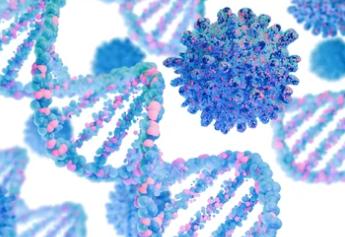
This study used human brain organoids to show that West Nile virus infection can follow two patterns: early clearance or long-term persistence. The virus mainly attacks neurons and astrocytes and triggers the release of multiple inflammatory factors, offering a new perspective for understanding viral encephalitis. Every summer, mosquito bites are hard to avoid. Most people only feel itchy, put up with it for a while, and then move on. But what you may not know is that a virus called West Nile virus can be hidden in the mouthparts of some mosquitoes. Most people feel little or nothing after inf
Read More
Cysteine’s “One Carbon, Two Uses”: The Metabolic Switch That Determines CD8+ T Cell Proliferation and Cancer-Killing Power

Tue, 2026/05/05

Cysteine’s “One Carbon, Two Uses”: The Metabolic Switch That Determines CD8+ T Cell Proliferation and Cancer-Killing Power

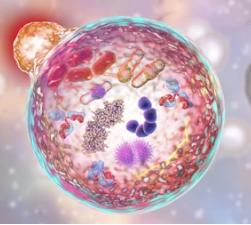
Research shows that cysteine—an amino acid and one of the basic building blocks of life—is essential for T cells, but it is used in different ways. Once inside the cell, the supply of cysteine is divided between two internal pathways, each driving different T cell behaviors. A research team from the Johns Hopkins Kimmel Cancer Center, the Bloomberg~Kimmel Institute for Cancer Immunotherapy, and the Johns Hopkins Bloomberg School of Public Health has discovered how CD8+ T cells in the immune system use the nutrient cysteine to regulate two key functions that compete for this resourc
Read More
New Hope Emerges in Pancreatic Cancer Treatment

Tue, 2026/05/05

New Hope Emerges in Pancreatic Cancer Treatment

Pancreatic cancer has long been notorious as the “king of cancers.” Globally, its incidence has continued to rise over the past several decades, with particularly notable growth among younger populations. In the coming years, pancreatic cancer is expected to become the second leading cause of cancer death in developed countries, behind only lung cancer. Even more discouraging is the fact that the five-year survival rate after diagnosis has long hovered around 10%. Over the past 40 years, drug treatment for this disease has seen almost no substantive progress. Recently, however, res
Read More
A New Mechanism of RIPK1 Ubiquitination Regulating Cell Death and Inflammatory Responses

Tue, 2026/05/05

A New Mechanism of RIPK1 Ubiquitination Regulating Cell Death and Inflammatory Responses

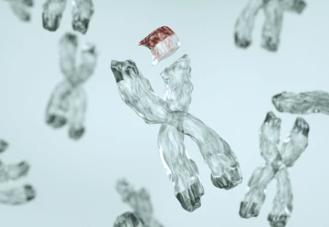
The findings show that the RIPK1^K376R mutant not only induces kinase activity-dependent cell death during embryonic development, but also activates the NLRP3 inflammasome in adulthood through RIPK3-mediated metabolic reprogramming, thereby promoting kinase activity-independent inflammation driven by its scaffold function. Receptor-interacting protein kinase 1, or RIPK1, is a key regulator of cell death and inflammation, and its activity is controlled by various post-translational modifications. Although previous studies have shown that ubiquitination of lysine 376, or K376, in RIPK1 can suppr
Read More
When Someone Taps Your Shoulder, Your Cells Can “Precisely Sense Force”

Sun, 2026/03/22

When Someone Taps Your Shoulder, Your Cells Can “Precisely Sense Force”

-Nobel Prize Team Uncovers the Molecular Switch Behind Touch This study fully reveals the core mechanism behind the human sense of touch and its remarkable ability to distinguish subtle differences in force. When someone gently taps your shoulder, what seems like a simple action actually involves an intricate, nanoscale molecular code. Why can your skin precisely distinguish between a gentle touch and a rough impact? Why can it sense the brush of a feather, yet not mistake the constant pressure of clothing for touch? Recently, the team led by Ardem Patapoutian, winner of the 2021 Nobel Prize i
Read More
The “Lurkers” Behind Cancer Metastasis — Scientists Identify a Key Culprit in Breast Cancer Spread

Sun, 2026/03/22

The “Lurkers” Behind Cancer Metastasis — Scientists Identify a Key Culprit in Breast Cancer Spread

Lymphatic metastasis in breast cancer is not the result of cancer cells acting alone; rather, it is a complex drama jointly staged by tumor cells and their surrounding microenvironment. The systemic interactions among cancer cells, metabolism, and the immune system form the core mechanism that allows metastasis to succeed. If cancer is a war taking place inside the body, metastasis is often the most troubling chapter. A primary tumor may be removed with surgery, but once cancer cells quietly escape through the lymphatic system and establish new colonies elsewhere in the body, the situation bec
Read More
As a “Cousin” of CAR-T Cells, HIT Cell Therapy Shows Promise for Treating Solid Tumors

Sun, 2026/03/22

As a “Cousin” of CAR-T Cells, HIT Cell Therapy Shows Promise for Treating Solid Tumors

This new study made a surprising discovery: at least for several types of solid cancers, a molecule called CD70 can serve as a homing beacon for cell therapies. CAR-T cell therapy has revolutionized the treatment of many blood cancers, but it has had limited success against solid tumors, which account for more than 85% of all cancers. Researchers at Columbia University have now found that a new type of cell therapy—HIT cells, considered a “cousin” of CAR-T cells—has enhanced sensitivity. This feature helps overcome a major barrier in using cell therapies to treat solid
Read More
A “Well-Behaved” New Material Helps Organoids Grow in an Orderly Way

Sun, 2026/03/22

A “Well-Behaved” New Material Helps Organoids Grow in an Orderly Way

Only when organoids stop being quirky, one-of-a-kind “only children” and become uniform, standardized “industrial products” can they truly serve as reliable tools for drug screening, disease modeling, and even regenerative medicine. If you think cell culture simply involves pouring cells into a dish and adding some nutrients, your understanding of biology may still be stuck twenty years in the past. Today, scientists are no longer satisfied with letting cells spread out flat in two dimensions; instead, they want them to “build houses” in three dimensions&mda
Read More