When Someone Taps Your Shoulder, Your Cells Can “Precisely Sense Force”
Sun, 2026/03/22

When Someone Taps Your Shoulder, Your Cells Can “Precisely Sense Force”

-Nobel Prize Team Uncovers the Molecular Switch Behind Touch This study fully reveals the core mechanism behind the human sense of touch and its remarkable ability to distinguish subtle differences in force. When someone gently taps your shoulder, what seems like a simple action actually involves an intricate, nanoscale molecular code. Why can your skin precisely distinguish between a gentle touch and a rough impact? Why can it sense the brush of a feather, yet not mistake the constant pressure of clothing for touch? Recently, the team led by Ardem Patapoutian, winner of the 2021 Nobel Prize i
Read More
The “Lurkers” Behind Cancer Metastasis — Scientists Identify a Key Culprit in Breast Cancer Spread
Sun, 2026/03/22

The “Lurkers” Behind Cancer Metastasis — Scientists Identify a Key Culprit in Breast Cancer Spread

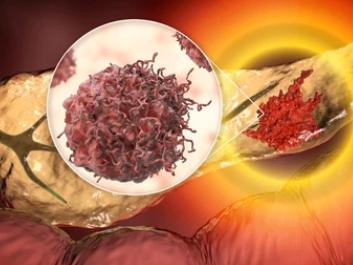
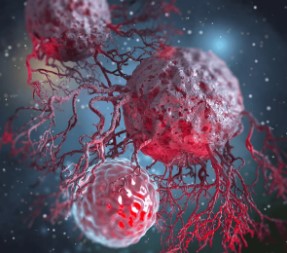
Lymphatic metastasis in breast cancer is not the result of cancer cells acting alone; rather, it is a complex drama jointly staged by tumor cells and their surrounding microenvironment. The systemic interactions among cancer cells, metabolism, and the immune system form the core mechanism that allows metastasis to succeed. If cancer is a war taking place inside the body, metastasis is often the most troubling chapter. A primary tumor may be removed with surgery, but once cancer cells quietly escape through the lymphatic system and establish new colonies elsewhere in the body, the situation bec
Read More
As a “Cousin” of CAR-T Cells, HIT Cell Therapy Shows Promise for Treating Solid Tumors

Sun, 2026/03/22

As a “Cousin” of CAR-T Cells, HIT Cell Therapy Shows Promise for Treating Solid Tumors
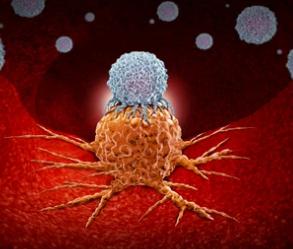
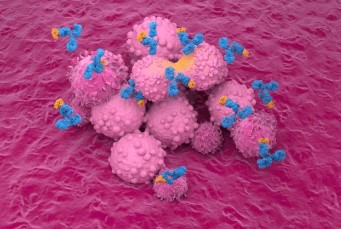
This new study made a surprising discovery: at least for several types of solid cancers, a molecule called CD70 can serve as a homing beacon for cell therapies. CAR-T cell therapy has revolutionized the treatment of many blood cancers, but it has had limited success against solid tumors, which account for more than 85% of all cancers. Researchers at Columbia University have now found that a new type of cell therapy—HIT cells, considered a “cousin” of CAR-T cells—has enhanced sensitivity. This feature helps overcome a major barrier in using cell therapies to treat solid
Read More
A “Well-Behaved” New Material Helps Organoids Grow in an Orderly Way

Sun, 2026/03/22

A “Well-Behaved” New Material Helps Organoids Grow in an Orderly Way

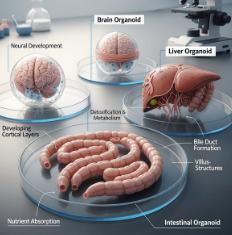
Only when organoids stop being quirky, one-of-a-kind “only children” and become uniform, standardized “industrial products” can they truly serve as reliable tools for drug screening, disease modeling, and even regenerative medicine. If you think cell culture simply involves pouring cells into a dish and adding some nutrients, your understanding of biology may still be stuck twenty years in the past. Today, scientists are no longer satisfied with letting cells spread out flat in two dimensions; instead, they want them to “build houses” in three dimensions&mda
Read More
Why Do Aging Muscles Heal Slowly? It May Be a Form of “Self-Protection” — Aging Muscle Stem Cells Shift from Rapid Repair to Long-Term Survival

Wed, 2026/03/11

Why Do Aging Muscles Heal Slowly? It May Be a Form of “Self-Protection” — Aging Muscle Stem Cells Shift from Rapid Repair to Long-Term Survival

Findings suggest that some molecular changes associated with aging may not be purely harmful but could instead represent protective adaptations of stem cells. After injury, aging muscles heal more slowly—a frustrating reality familiar to many older adults. A research team at the University of California, Los Angeles (UCLA) has uncovered an unexpected explanation for this phenomenon through studies in mice: stem cells in aging muscle accumulate a protein called NDRG1. While this protein slows the activation of stem cells and their ability to repair tissue, it helps the cells survive longe
Read More
Research Progress in CAR-T Cell Therapy

Wed, 2026/03/11

Research Progress in CAR-T Cell Therapy

CAR-T (Chimeric Antigen Receptor T-Cell Immunotherapy) refers to chimeric antigen receptor T-cell immunotherapy. Although this therapy has existed for many years, it has only been improved and applied clinically in recent years as a novel type of cell therapy. It has shown remarkable efficacy in the treatment of acute leukemia and non-Hodgkin lymphoma and is considered one of the most promising cancer treatment strategies. Like all technologies, CAR-T technology has undergone a long evolutionary process, during which it has gradually matured. The key to this therapeutic strategy lies in the ar
Read More
Do “Super-Agers” Have Memories as Sharp as Young People

Wed, 2026/03/11

Do “Super-Agers” Have Memories as Sharp as Young People

Nature Reveals Hidden Secrets in the Hippocampus: Newborn Neurons May Be the Brain’s Anti-Aging “Secret Weapon” Scientists from institutions including the University of Illinois Chicago have produced compelling new evidence through their research. In the study, they analyzed more than 350,000 cell nuclei from the human hippocampus, using cutting-edge technologies such as single-cell sequencing, providing fresh answers to a long-standing scientific question. Have you ever wondered why some people, even in their 80s or 90s, retain astonishingly sharp memories? They can remember
Read More
Did eating too sweet and greasy foods in childhood make it harder to control your appetite later in life

Wed, 2026/03/11

Did eating too sweet and greasy foods in childhood make it harder to control your appetite later in life

Early-life healthy diets may influence brain health for a lifetime Scientists from University College Cork in Ireland and other institutions have found that long-term consumption of high-fat and high-sugar diets early in life may leave “permanent scars” on the neural circuits that regulate feeding in the brain. Even if body weight returns to normal in adulthood, these changes can quietly influence eating behavior and food preferences throughout life. In everyday life, many of us have experienced this: even when we are already full, we still can’t resist taking a few more bite
Read More