
Uncategorized Tuesday, 2026/06/16
Drugs originally developed to treat diabetes and obesity may have even more untapped health potential. As new generations of GLP-1 drugs continue to emerge, researchers will have opportunities to compare how different molecules affect aging regulation and to identify the groups of people most likely to benefit from such therapies.
In recent years, GLP-1 receptor agonists represented by semaglutide have attracted widespread attention because of their significant weight-loss effects and glucose-lowering capacity. These drugs can also reduce the risk of cardiovascular disease and have become star molecules in the field of metabolic disease treatment. However, whether they can influence the internal biological aging process in humans has long lacked direct evidence from randomized controlled clinical trials.
Recently, in a research paper published in the international journal Nature Communications titled “Semaglutide slows epigenetic aging in a randomized trial of HIV-associated lipohypertrophy,” researchers from institutions including the University of California San Diego filled this gap through their study.
Ours Related Products
| Cat.No. # | Product Name | Source (Host) | Species | Tag | Protein Length | Price |
|---|---|---|---|---|---|---|
| GLP1-001H | Recombinant Human Glucagon Like Peptide-1 | Human | Non |

|
||
| GLP1-2703M | Recombinant Mouse GLP1 Protein, His&GST-tagged | E.coli | Mouse | GST&His | His92-Gly128 |
|
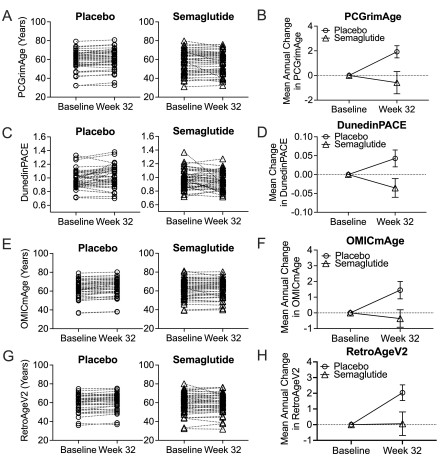
In the article, the researchers reported that an analysis of a clinical trial showed semaglutide not only improved metabolic indicators but may also slow, to some extent, the pace of biological aging at the DNA level. The study was based on a 32-week, randomized, double-blind, placebo-controlled phase 2b clinical trial (NCT04019197). The original participants were 108 adults living with HIV who also had abnormal fat distribution. Among them, 45 received semaglutide treatment, while 39 received placebo injections. The primary endpoint of the original trial was change in visceral adipose tissue, while the epigenetic age analysis was a post hoc exploratory analysis.
The researchers collected peripheral blood samples from participants before treatment began and again at week 32, then analyzed changes in DNA methylation patterns. DNA methylation is an epigenetic marker that can regulate gene expression without altering the genetic sequence, and it is considered an important molecular indicator for measuring biological age. The study used multiple generations of “epigenetic clock” technologies, including first-, second-, and third-generation clocks, to systematically assess the effects of semaglutide on the biological aging process.
The results showed that in the semaglutide treatment group, multiple second- and third-generation epigenetic clocks detected a significant slowing of biological age increase. Specifically, semaglutide reduced the annual increase in biological age measured by the PhenoAge clock by 4.9 years; PCGrimAge decreased by 3.1 years; GrimAge V2 decreased by 2.3 years; OMICmAge decreased by 2.2 years; and RetroAge decreased by 2.2 years. Meanwhile, DunedinPACE, an indicator that measures the pace of aging, showed that semaglutide slowed biological aging by about 9%. In addition, system-based epigenetic clocks also showed parallel improvements in indicators related to inflammation, brain aging, and heart aging.
Even when receiving effective antiretroviral therapy, people living with HIV often still face accelerated aging. Chronic immune activation and metabolic abnormalities are key factors driving this process. By reducing inflammation levels and metabolic stress, semaglutide may decrease chronic immune activation and thereby delay aging. At the same time, the drug reduces fat accumulation in the abdomen and around organs, which may also help suppress inflammatory and metabolic signals that promote aging.
In another preliminary study, the researchers also found that among people living with HIV and metabolic dysfunction-associated fatty liver disease, after 24 weeks of semaglutide treatment, 42% of participants showed a reduced pace of aging as assessed by DunedinPACE, while 34% showed slower aging indicators related to all-cause mortality risk as assessed by PCGrimAge. In addition, nearly 49% of participants had increased telomere length, and these participants also walked faster after treatment, suggesting improved physical function.
The researchers emphasized that semaglutide does not “reverse aging” or make people “young again.” The signals observed so far only suggest that it may slow certain aging-related biological processes. Because this study was a post hoc analysis with a small sample size, a follow-up period of only 32 weeks, and a study population limited to a specific group of people living with HIV and abnormal fat distribution, the conclusions cannot yet be directly generalized to the general population. Larger, prospective clinical trials will be needed in the future to verify the effects of GLP-1 drugs on aging biology in different populations and to explore whether combined lifestyle interventions—such as diet, exercise, and sleep optimization—can enhance their anti-aging effects.
For the scientific community and the public, this study offers a new perspective: drugs originally used to treat diabetes and obesity may have more untapped health potential. As new generations of GLP-1 drugs continue to emerge, researchers will have opportunities to compare how different molecules differ in aging regulation and to identify the populations most likely to benefit from these therapies.
Related Products & Services
- Obesity Targets
- Epigenetics related Proteins
- Cell and Gene Therapy
- Immune Checkpoint Proteins
- PROTAC Targets
- Protein Engineering Services
- Protein Interaction Service
- Protein Expression and Purification Services
- Drug Discovery Screening
- Protein Pathway Profiling
Reference
- Corley, M.J., Dwaraka, V.B., Pang, A.P. et al. Semaglutide slows epigenetic aging in a randomized trial of HIV-associated lipohypertrophy. Nat Commun (2026). doi:10.1038/s41467-026-72861-3