
Uncategorized Tuesday, 2026/06/16
The study shows that FGF21 can partially upregulate TFE3-mediated autophagy flux through the FGFR1–SIRT1–MTOR signaling pathway. This restores the vitality of adipose-derived mesenchymal stem cells, or ASCs, enhances their potential to differentiate into neural stem cells, and ultimately improves the therapeutic efficacy of ASC transplantation for acute intracerebral hemorrhage.
Intracerebral Hemorrhage and the Need for New Therapies
Intracerebral hemorrhage, or ICH, is a neurological disease characterized by high mortality, and there is currently no definitive cure. Studies have shown that adipose-derived mesenchymal stem cells, or ASCs, have significant potential for treating intracerebral hemorrhage.
However, the advanced age of many patients with intracerebral hemorrhage, together with the necessary expansion of cells before transplantation therapy, may lead to ASC senescence. This can impair cell vitality and reduce therapeutic efficacy.
A New Study Published in Autophagy
Weilin Lu from Huazhong University of Science and Technology, as the sole corresponding author, published a research paper online in Autophagy titled “FGF21 rejuvenates aged human adipose-derived mesenchymal stem cells via enhancement of TFE3-mediated autophagy flux.”
The study aimed to investigate whether fibroblast growth factor 21, or FGF21, could restore the vitality of aged ASCs by enhancing macroautophagy/autophagy flux, thereby improving their therapeutic efficacy against intracerebral hemorrhage.
The authors confirmed that autophagy flux was significantly reduced in aged ASCs, while FGF21 treatment markedly reversed the senescent phenotype and enhanced the vitality of aged ASCs.
Our Related Proteins


FGF21 Restores ASC Vitality Through Autophagy
Mechanistically, FGF21 restored the vitality of aged ASCs by enhancing autophagy flux, a process partly mediated by the nuclear translocation of transcription factor E3, or TFE3.
The FGF21-induced nuclear translocation of TFE3 may be partially promoted through the fibroblast growth factor receptor 1, or FGFR1, sirtuin 1, or SIRT1, and mechanistic target of rapamycin, or MTOR, signaling pathway.
In addition, FGF21 enhanced the potential of aged ASCs to differentiate toward neuronal lineages. In in vivo studies, the authors further demonstrated that FGF21 improved the therapeutic effect of ASCs in rats with acute intracerebral hemorrhage.
Overall, these results indicate that FGF21 can partially upregulate TFE3-mediated autophagy flux through the FGFR1–SIRT1–MTOR signaling pathway. By doing so, it restores ASC vitality, enhances their potential to differentiate into neural stem cells, and ultimately improves the therapeutic efficacy of ASC transplantation for acute intracerebral hemorrhage.
Why ASCs Are Promising for ICH Treatment
Intracerebral hemorrhage is a common neurological disease with high incidence and high mortality. Traditional treatments mainly involve surgical intervention. However, these surgical approaches have several limitations, including substantial trauma, long recovery periods, and the risk of potential complications. Therefore, more effective and safer therapeutic strategies are urgently needed.
In recent years, mesenchymal stem cells, or MSCs, have shown great potential as a promising treatment option for intracerebral hemorrhage.
ASCs offer several advantages in the treatment of ICH. First, they are relatively easy to obtain and cause minimal trauma to donors. A large number of cells can be harvested through simple liposuction, which supports their potential clinical application.
Second, ASCs have strong multidirectional differentiation capacity. They can differentiate into neurons, glial cells, and other nervous system-related cells, thereby significantly promoting neural repair.
In addition, ASCs can secrete a variety of neurotrophic factors, enhance the activation of endogenous neural stem cells, support neuronal survival, and improve neurological function. ASCs also have immunomodulatory properties, helping to reduce inflammatory responses and minimize secondary injury after brain damage. For these reasons, the present study selected ASCs for in-depth investigation.
FGF21 Enhances the Neural Differentiation Potential of Aged ASCs
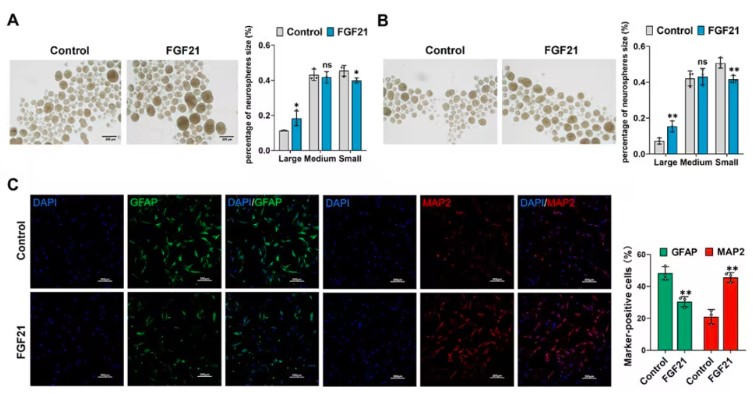
Fig1. FGF21 enhances the neural differentiation potential of aged ASCs.
However, the application of ASCs in ICH treatment is limited by several factors, including the age of patients with intracerebral hemorrhage and the increased number of in vitro passages required during cell expansion before treatment. Both factors can induce ASC senescence.
Studies have shown that the biological properties of ASCs change with age, leading to reduced proliferative capacity and diminished differentiation potential. This may affect their clinical therapeutic efficacy. In addition, increased passaging in vitro can also induce stem cell senescence and weaken their therapeutic performance.
Therefore, rejuvenating aged ASCs is essential for improving the effectiveness and safety of ASC-based therapies for intracerebral hemorrhage.
Autophagy: The Cell’s Cleanup and Recycling System
Macroautophagy, commonly referred to as autophagy, plays a crucial role in cellular degradation. It removes damaged or excess organelles, protein aggregates, and invading pathogens through the formation of autophagosomes, which subsequently fuse with lysosomes.
Autophagy flux refers to the complete process from autophagosome formation and lysosomal fusion to final degradation. The efficiency of autophagy flux is essential for maintaining cellular homeostasis and overall cell health.
As a fundamental cellular process for degrading and recycling damaged organelles and proteins, autophagy often declines with age, especially in senescent cells. Studies have shown that stimulating autophagy can alleviate senescent phenotypes, suggesting that enhancing autophagy flux may rejuvenate aged cells.
TFE3 as a Key Regulator of Autophagy and Lysosomal Function
Recent studies have shown that TFE3, or transcription factor E3, is a key factor regulating the expression of genes involved in autophagy and lysosomal biogenesis. It also influences cellular senescence by regulating autophagy-related gene expression.
TFE3 belongs to the microphthalmia-associated transcription factor, or MiT, family. It plays a critical role in regulating autophagy and lysosomal biogenesis, processes that are essential for cellular metabolism, energy homeostasis, and stress responses.
Notably, recent evidence indicates that nuclear translocation of TFE3 can activate the expression of autophagy-related genes, thereby enhancing autophagosome formation and lysosomal fusion. Therefore, promoting TFE3 nuclear translocation and stimulating autophagy flux may be an effective strategy for rejuvenating ASCs.
FGF21 as a Potential Rejuvenating Factor
Fibroblast growth factor 21, or FGF21, is an endocrine hormone belonging to the FGF family. It is mainly secreted by the liver and exhibits broad metabolic functions.
FGF21 plays a key role in regulating glucose and lipid metabolism and is also considered a potential factor in delaying the aging process. Notably, recent studies have found that FGF21 can stimulate autophagy.
Based on this, the authors hypothesized that FGF21 may rejuvenate ASCs by enhancing autophagy flux, a process mediated by the promotion of TFE3 nuclear translocation.
Study Design and Key Findings
In this study, the authors established an in vitro cellular senescence model through the natural passaging of ASCs.
The results showed that FGF21 significantly alleviated the senescent phenotype of these aged ASCs. Importantly, FGF21 enhanced autophagy flux in aged ASCs by promoting TFE3 nuclear translocation.
This effect was partially mediated by the FGFR1–SIRT1–MTOR signaling pathway. In addition, the authors evaluated the therapeutic potential of FGF21-treated ASCs in a rat model of acute intracerebral hemorrhage.
Therapeutic Implications
This study suggests that enhancing the cellular cleanup system through FGF21 may be a promising strategy to improve stem cell-based therapy for intracerebral hemorrhage.
By restoring autophagy flux, reversing ASC senescence, and improving neural differentiation potential, FGF21 may help overcome one of the major limitations of ASC transplantation: the decline in stem cell function caused by aging and in vitro expansion.
These findings provide a new mechanistic basis for optimizing ASC-based regenerative therapies and highlight the FGFR1–SIRT1–MTOR–TFE3 axis as a potential target for improving the treatment of acute intracerebral hemorrhage.
Related Products & Services
- Cell and Gene Therapy
- Immune Checkpoint Proteins
- ADC Target Protein
- PROTAC Targets
- Targets of CAR-T Cell Therapy
- Cancer Drug Targets
- Protein Engineering Services
- Protein Interaction Service
- Protein Expression and Purification Services
- Drug Discovery Screening
- Protein Pathway Profiling
Reference
- Song, B., Liu, C., Hu, J., Zhao, X., Fan, H., Liu, T., … Lu, W. (2026). FGF21 rejuvenates aged human adipose-derived mesenchymal stem cells via enhancement of TFE3-mediated autophagy flux. Autophagy, 1–22. https://doi.org/10.1080/15548627.2026.2669987