
Uncategorized Friday, 2026/11/20
A new study reveals how a natural immune defense in the gut can suppress abnormal cell division that may eventually lead to cancer. While most cancer research focuses on eliminating established tumors, this study highlights a potentially important window for intervention before tumors even begin to form.
The Hidden Role of IgA in Colorectal Cancer Prevention
Colorectal cancer ranks among the leading causes of cancer incidence and mortality worldwide. However, its development is rarely a sudden event. Instead, it often results from a gradual accumulation of cellular and molecular changes shaped by long-term interactions between the intestinal mucosa and trillions of resident microorganisms.
Immunoglobulin A (IgA) is the most abundantly produced antibody class in mammals. Continuously secreted into the intestinal lumen, IgA binds to commensal microorganisms, helping regulate their colonization and biological activities. Despite its abundance and established role in mucosal immunity, the precise implications of IgA–microbe interactions for intestinal health have remained incompletely understood.
Selective IgA deficiency is relatively common, affecting approximately 1 in 500 people in the United States. However, investigating its biological consequences has been challenging because the condition has a complex etiology and frequently occurs alongside other diseases.
Recently, researchers from The Rockefeller University and collaborating institutions addressed this long-standing question in a study published in Nature, titled “Suppression of Epithelial Proliferation and Tumorigenesis by IgA.”
Their findings revealed an unexpected function of IgA: protecting against intestinal tumor development by restraining excessive epithelial cell proliferation.
IgA Deficiency More Than Doubles Tumor Formation in Mouse Models
To investigate the relationship between IgA and colorectal cancer, the researchers employed genetically and environmentally controlled mouse models.
Mice with different forms of IgA deficiency were housed together with IgA-sufficient mice, ensuring that they were exposed to comparable microbial communities, diets, and environmental conditions. This experimental design helped minimize confounding factors and isolate the biological effects of IgA deficiency.
The results were striking.
Across several spontaneous colorectal cancer models, IgA-deficient mice developed more than twice as many tumors as their IgA-sufficient counterparts. The consistency of this finding across multiple models provided strong experimental evidence for the protective role of IgA.
More importantly, when the researchers administered IgA orally to deficient mice, the increased susceptibility to tumor formation was reversed.
These findings suggested that IgA does more than regulate microbial interactions. It may also play a direct role in maintaining the cellular environment that protects the colon from tumor initiation.
How IgA Deficiency Triggers Abnormal Intestinal Cell Proliferation
To understand how IgA influences tumor development, the scientists turned their attention to intestinal epithelial cells, the cellular compartment in which colorectal cancers typically originate.
Under normal physiological conditions, intestinal epithelial cells undergo tightly regulated cycles of proliferation, differentiation, and renewal. These processes are essential for maintaining the intestinal barrier and replacing damaged or aging cells.
However, the researchers discovered that, in the absence of IgA, colonic epithelial cells responded abnormally to the intestinal microbiota.
Specifically, IgA deficiency was associated with:
- Increased expression of antimicrobial factors, indicating altered epithelial responses to microorganisms.
- Enhanced activation of cell cycle programs, suggesting accelerated epithelial proliferation.
- Changes in gene expression before detectable tumor formation, demonstrating that epithelial dysregulation begins at a very early stage.
These molecular alterations occurred before any visible tumors had developed.
In other words, the absence of IgA caused intestinal epithelial cells to enter a state of heightened responsiveness and excessive proliferative activity, potentially creating conditions favorable for tumor initiation.
This observation was particularly important because it suggested that IgA acts at an early stage of carcinogenesis rather than merely influencing the growth of already established tumors.
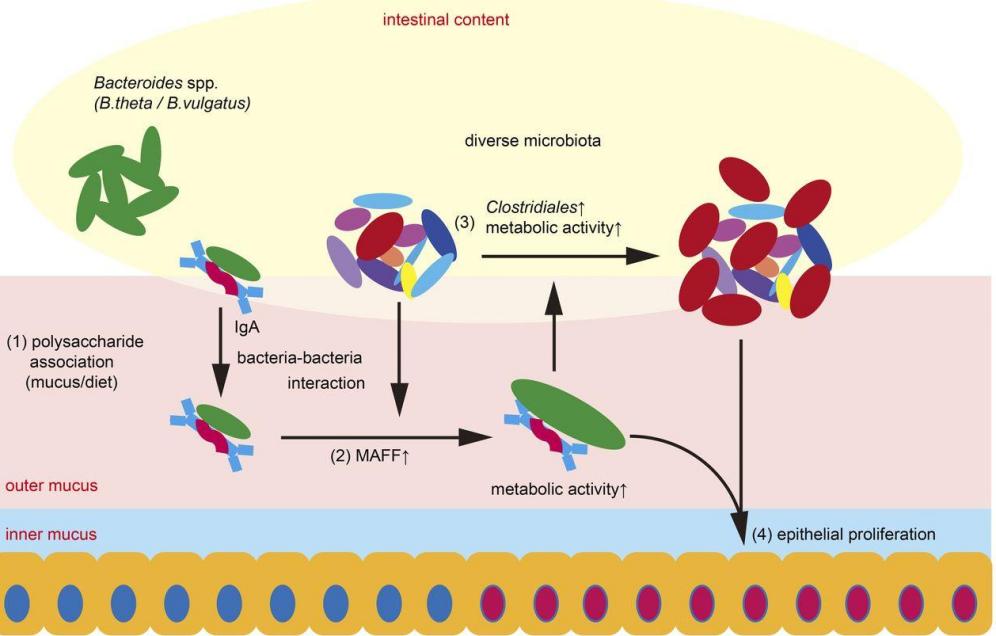
Fig1. IgA regulates the composition and metabolic function of gut microbiota by promoting symbiosis between bacteria ( Journal of Experimental Medicine | Rockefeller University Press | rupress.org )
DMBT1: The Molecular Switch Connecting IgA to Tumor Suppression
The researchers next sought to identify the molecular mechanism responsible for IgA-mediated regulation of epithelial proliferation.
Using co-immunoprecipitation coupled with mass spectrometry and targeted CRISPR screening, they identified a protein on the epithelial cell surface capable of binding IgA: Deleted in Malignant Brain Tumors 1 (DMBT1).
DMBT1 had previously been associated with several types of cancer, but its precise functional role in colorectal tumorigenesis remained unclear.
The new study provided important mechanistic insights into how DMBT1 participates in intestinal epithelial regulation.
In the presence of intestinal bacteria, DMBT1 functions like an accelerator that promotes epithelial cell proliferation. However, when IgA binds to DMBT1, it acts as a molecular brake, restraining excessive proliferative signaling.
This creates a regulatory balance between microbial stimulation and antibody-mediated inhibition.
When IgA is absent, DMBT1-mediated signaling becomes insufficiently restrained, allowing epithelial cells to proliferate excessively and increasing susceptibility to tumor development.
Conversely, when microbial stimulation is absent, DMBT1 signaling is disrupted, or normal IgA-mediated regulation is maintained, epithelial proliferation remains more tightly controlled.
The central finding is that IgA and DMBT1 form a regulatory mechanism that helps prevent uncontrolled epithelial cell division in the intestine.
IgA Protection Depends on Antibody Structure, Not Antigen Specificity
One of the most intriguing discoveries was that the protective effect of IgA did not depend on its antigen-binding specificity.
Traditionally, antibodies are understood to protect the body by recognizing specific antigens on pathogens or other foreign substances. Their biological functions are often closely associated with this molecular recognition.
However, the researchers found that IgA-mediated suppression of epithelial proliferation depended on the antibody's structural properties rather than its ability to recognize a particular bacterial antigen.
In simplified cell culture systems, IgA directly inhibited epithelial growth.
Furthermore, the protective effect of orally administered IgA was linked to its molecular structure, not to its specificity for particular bacterial species.
This finding challenges the conventional view of IgA as an antibody functioning primarily through selective microbial recognition.
In this context, IgA does not behave like a highly specialized molecular “sniper” targeting an individual microorganism. Instead, it acts more like a universal brake that limits excessive epithelial proliferation.
To further validate the mechanism, the researchers genetically removed the transmembrane and cytoplasmic signaling regions of DMBT1 in IgA-deficient mice.
Remarkably, this modification reversed both the accelerated epithelial proliferation and increased tumor susceptibility associated with IgA deficiency.
These results provided strong evidence that DMBT1-dependent signaling is a critical mediator of the tumor-promoting effects observed when IgA is absent.
Our Related Proteins
| Cat.No. # | Product Name | Source (Host) | Species | Tag | Protein Length | Price |
|---|---|---|---|---|---|---|
| IgA-15B | Recombinant Bovine IgA Protein, His tagged | E.coli | Bovine | His | ||
| IgA-3446H | Recombinant Human IgA protein, His-tagged | E.coli | Human | His | 4-353 aa | |
| IgA-7431M |
Native Mouse Immunoglobulin A

|
Mouse | Non | |||
| IgA-130H | Native Human Immunoglobulin A | Human Serum | Human | Non | Full length native Human IgA | |
| IgA-238R | Native Rabbit Immunoglobulin A | Sera | Rabbit | Non | ||
| IgA-7430M |
Active Native Mouse IgA Kappa Protein
|
Myeloma | Mouse |

|
||
| DMBT1-3231H | Active Recombinant Human DMBT1 protein, His-tagged | HEK293 | Human | His | 1-220 aa | |
| DMBT1-1890R | Recombinant Rat DMBT1 Protein | Mammalian Cells | Rat | His |
|
|
| DMBT1-2700H | Recombinant Human DMBT1 Protein, GST-tagged | Wheat Germ | Human | GST |
|
A New Regulatory Pathway for Maintaining Intestinal Homeostasis
Taken together, the findings establish a regulatory pathway in which IgA and DMBT1 cooperate to control the normal cell cycle of absorptive colonocyte progenitors.
This mechanism connects three fundamental components of intestinal biology: commensal bacteria, mucosal antibodies, and epithelial cell proliferation.
The intestinal microbiota provides signals that influence epithelial activity, DMBT1 mediates proliferative responses, and IgA helps prevent these responses from becoming excessive.
Through this interaction, the intestinal immune system contributes not only to microbial homeostasis but also to the maintenance of appropriate epithelial cell turnover.
Researcher Daniel Mucida emphasized that the study demonstrates how a natural defense mechanism in the gut can suppress cell division that might otherwise contribute to cancer.
Whereas much of modern oncology focuses on destroying tumors after they have formed, this research shifts attention toward a potentially critical period before tumor initiation, when abnormal cellular behavior may still be restrained.
This represents an important conceptual shift from treating established cancer to understanding the biological processes that may prevent cancer from developing in the first place.
Could the IgA–DMBT1 Pathway Become a Target for Cancer Prevention?
Although the findings are promising, the study was conducted primarily using mouse models, and substantial research is still required before the results can be translated into clinical applications.
Nevertheless, the discovery identifies a previously underappreciated molecular mechanism with potential implications for colorectal cancer prevention and recurrence risk management.
One particularly interesting possibility involves patients who have undergone the removal of colorectal polyps.
Even after a polyp has been removed, DMBT1-associated signaling may remain active in the surrounding intestinal environment. If this pathway contributes to abnormal epithelial proliferation, targeting its activity could potentially offer a preventive strategy during a period when no detectable tumor is present.
Such an approach would differ fundamentally from conventional anticancer treatment. Rather than attacking an existing tumor, it would aim to regulate the biological conditions that favor tumor initiation.
However, the IgA–DMBT1 pathway remains an experimental research target, and further studies are necessary to determine whether manipulating this mechanism can safely and effectively reduce cancer risk in humans.
Future research will also need to clarify how variations in intestinal microbiota composition, IgA production, and DMBT1 signaling influence individual susceptibility to colorectal cancer.
Looking Ahead: Rethinking the Cancer-Protective Functions of IgA
The interactions among intestinal bacteria, antibodies, and epithelial cells form a complex biological network, and many aspects of this relationship remain to be explored.
This study adds an important dimension to the understanding of mucosal immunity by showing that IgA may regulate host cell proliferation through a mechanism that is distinct from its traditional antigen-specific immune functions.
For an antibody that is both extremely common and frequently underappreciated, these findings offer a new perspective on its physiological significance.
IgA is not merely a guardian that helps protect the intestinal barrier against microbial threats. It may also function as a molecular brake that prevents excessive epithelial proliferation before cancer has an opportunity to develop.
By uncovering the relationship between IgA, DMBT1, and intestinal tumorigenesis, the researchers have identified a potential direction for future cancer prevention strategies.
Although clinical validation remains essential, the study highlights an increasingly important principle in cancer biology: preventing the cellular events that initiate cancer may be just as valuable as developing treatments to eliminate tumors after they appear.
Related Products & Services
- Cell and Gene Therapy
- Immune Checkpoint Proteins
- ADC Target Protein
- PROTAC Targets
- Targets of CAR-T Cell Therapy
- Cancer Drug Targets
- Protein Engineering Services
- Protein Interaction Service
- Protein Expression and Purification Services
- Drug Discovery Screening
- Protein Pathway Profiling
Reference
- Donaldson, G. P., Saad, M., Wichmann, C., Mamede, I., Chen, G., Harrer, C. E., DelGaudio, N. L., Zhang, D., Aydin, B., Castro, T. B., Grivennikov, S. I., Reis, B. S., Liu, E. G., Eisenbarth, S. C., Birsoy, K., Tavazoie, S. F., Stadtmueller, B. M., Victora, G. D., & Mucida, D. (2026). Suppression of epithelial proliferation and tumorigenesis by IgA. Nature, 1-9. https://doi.org/10.1038/s41586-026-11264-2