
Uncategorized Wednesday, 2026/10/21
Keywords: Senescence-Modulating Nanoparticles (SMNPs), Fibrosis, P-Selectin, Targeted Nanomedicine, Cellular Senescence, Cancer Immunotherapy
Summary
A groundbreaking study published in Science introduces a precision nanomedicine strategy that selectively targets disease-associated senescent-like cells in fibrotic tissues and tumors. By delivering therapeutic agents through P-selectin-targeting nanoparticles, researchers demonstrated reduced fibrosis, improved immune cell infiltration, and enhanced responses to immune checkpoint inhibitors in preclinical cancer models. This approach offers a promising direction for overcoming the limitations of conventional senescence-targeting therapies while minimizing systemic toxicity.
Fibrosis: A Hidden Barrier to Effective Cancer Immunotherapy
Fibrosis is a pathological process characterized by excessive deposition of extracellular matrix components, particularly collagen, following chronic inflammation or tissue injury. As fibrotic tissue accumulates, affected organs become progressively stiffer, their normal architecture is disrupted, and physiological functions deteriorate.
Beyond its role in chronic organ damage, fibrosis presents a major challenge in cancer treatment. Fibrotic remodeling creates a dense, immunosuppressive tumor microenvironment that restricts the infiltration and activity of cytotoxic T cells. As a result, even when immune checkpoint inhibitors successfully activate antitumor immune responses, immune cells may struggle to penetrate tumor tissues and eliminate malignant cells.
Among the key contributors to this process are senescent-like cells. Although these cells display features of cellular senescence, including reduced proliferative activity and altered secretory programs, they can remain metabolically active and continuously release inflammatory cytokines, chemokines, and profibrotic factors. These secretions, collectively associated with the senescence-associated secretory phenotype (SASP), can sustain chronic inflammation, stimulate fibroblast activation, and promote tissue remodeling.
However, cellular senescence is biologically complex. While certain senescent cell populations contribute to pathological fibrosis and tumor progression, others participate in tissue repair, wound healing, and tumor suppression. Consequently, indiscriminate elimination of senescent cells may disrupt beneficial physiological processes.
This complexity raises an important therapeutic question: Can researchers selectively eliminate or reprogram harmful senescent cells while preserving beneficial cell populations?
A Breakthrough Study Published in Science
A research team led by Scott W. Lowe at Memorial Sloan Kettering Cancer Center published a study in Science entitled “Senescence-directed nanotherapy ameliorates fibrosis and overcomes immune exclusion in cancer.”
The study identified a potential molecular target that enables more selective therapeutic intervention in fibrotic tissues.
Researchers discovered that a subset of senescent-like cells in fibrotic environments expresses elevated levels of P-selectin, a cell adhesion molecule commonly associated with activated endothelial cells and platelets.
Importantly, the P-selectin-positive senescent-like population showed substantial overlap with a population of lipid-associated macrophages. These macrophages were implicated in maintaining fibrotic remodeling and immunosuppressive tissue conditions.
Using experimental models of liver and lung fibrosis, the researchers demonstrated that P-selectin could serve as a molecular entry point for delivering therapeutic agents to disease-associated cellular populations.
Rather than targeting all senescent cells, this strategy focuses on specific pathogenic cell states involved in fibrosis and immune suppression.
Our Featured Proteins
| Cat.No. # | Product Name | Source (Host) | Species | Tag | Protein Length | Price |
|---|---|---|---|---|---|---|
| SELP-1114R |
Active Recombinant Rat SELP protein(Met1-Gln700), hFc-tagged

|
HEK293 | Rat | Fc | Met1-Gln700 |

|
| SELP-457H |
Active Recombinant Human SELP, Fc Chimera
|
HEK293 | Human | Fc&His |
|
|
| SELP-473H |
Active Recombinant Human SELP protein, hFc-tagged
|
HEK293 | Human | Fc | 1-771 aa |
|
| SELP-905M |
Active Recombinant Mouse SELP protein, hFc-tagged
|
HEK293 | Mouse | Fc | Met1-Ala709 |
|
| SELP-1674H | Recombinant Human SELP, Fc-tagged | Mammalian Cells | Human | Non | 1-771 a.a. |
|
| SELP-192C | Recombinant Cynomolgus SELP, His-tagged | Human Cells | Cynomolgus | His | Met1-Ala771 |
|
| SELP-208H | Recombinant Human SELP protein, Fc-tagged | HEK293 | Human | Fc | Trp42-Ala771 |
|
| SELP-2584H | Recombinant Human SELP protein, His-tagged | E.coli | Human | His | Lys58~Glu195 |
|
Engineering P-Selectin-Targeting Nanoparticles
To exploit this discovery, the research team developed senescence-modulating nanoparticles (SMNPs) based on fucoidan, a naturally occurring sulfated polysaccharide derived primarily from brown algae.
Fucoidan exhibits binding affinity for P-selectin, making it a useful component for targeted drug delivery systems.
By incorporating fucoidan into nanoparticle formulations, the researchers created a delivery platform capable of preferentially accumulating in P-selectin-expressing cellular environments.
Two therapeutic agents were investigated:
- Navitoclax: A senolytic agent that inhibits anti-apoptotic BCL-2 family proteins, promoting the elimination of susceptible senescent cells.
- dBET6: A BRD4-targeting proteolysis-targeting chimera (PROTAC) that can modulate transcriptional programs associated with the SASP, thereby suppressing inflammatory and profibrotic signaling without necessarily eliminating the targeted cells.
These two formulations represent complementary therapeutic approaches: senolysis, which eliminates susceptible senescent cells, and senomorphism, which modifies disease-associated cellular behavior.
Following administration, the nanoparticles exploit P-selectin-mediated targeting and cellular uptake pathways to deliver their therapeutic cargo to relevant cells within fibrotic tissues.
This targeted delivery strategy increases local therapeutic activity while potentially reducing unnecessary drug exposure in healthy tissues.
Reducing Fibrosis While Minimizing Systemic Toxicity
The therapeutic effects of SMNPs were evaluated in mouse models of liver and lung fibrosis.
Both nanoparticle formulations demonstrated significant antifibrotic activity, including reductions in collagen deposition and markers of fibroblast activation.
These findings suggest that selectively targeting pathological senescent-like cell populations can interfere with the cellular signaling networks that sustain fibrotic remodeling.
An important advantage was the improved therapeutic index observed with nanoparticle-based drug delivery.
Conventional systemic administration of senescence-targeting agents can be limited by adverse effects. For example, navitoclax is associated with thrombocytopenia because BCL-XL inhibition can compromise platelet survival. Other agents that interfere with transcriptional regulatory pathways may also cause systemic toxicity.
By concentrating therapeutic activity in disease-associated tissue environments, SMNPs reduced treatment-associated toxicity compared with corresponding free-drug approaches in the evaluated preclinical models.
These results highlight the potential of nanomedicine not only to improve drug delivery efficiency but also to expand the therapeutic window of pharmacologically potent compounds.
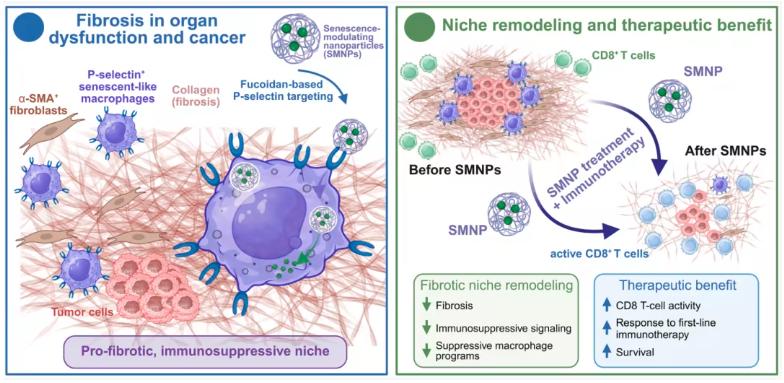
Fig1. P-selectin-guided SMNP remodels fibrotic and immune-rejecting tissues (Hinterleitner, C.et al. Science)
Remodeling the Tumor Microenvironment to Improve Immunotherapy
Perhaps the most significant finding emerged from experiments involving fibrotic tumor models.
In mouse models of liver and lung cancer, SMNP treatment modified the fibrotic tumor microenvironment and reduced cellular programs associated with immune suppression.
These changes were accompanied by increased immune cell infiltration, including T cells that are essential for effective antitumor responses.
When SMNP treatment was combined with immune checkpoint blockade, the researchers observed improved antitumor activity, including tumor regression and prolonged survival in the investigated models.
The findings suggest that fibrotic remodeling is not simply a structural consequence of tumor progression. It can also function as an active biological barrier that prevents immune cells from accessing malignant tissue.
By disrupting fibrosis-associated immunosuppressive networks, targeted nanotherapy may help convert immune-excluded tumors into environments that are more receptive to immune-based treatments.
This provides a potential therapeutic rationale for combining antifibrotic nanomedicine with existing immunotherapy strategies.
Evidence Supporting Potential Clinical Translation
The researchers also investigated the relevance of their findings to human cancer.
Analysis of human lung tumor samples revealed macrophage populations with characteristics similar to those identified as therapeutic targets in experimental models.
Notably, these disease-associated populations were enriched in immune-excluded tumors and associated with poorer responses to immune checkpoint-based treatment.
These observations suggest that P-selectin-expressing senescent-like macrophages may represent a clinically relevant therapeutic target.
However, the findings remain preclinical. Further research will be necessary to establish appropriate dosing strategies, long-term safety, biodistribution, pharmacokinetics, and therapeutic efficacy in humans.
Future investigations must also determine whether differences in P-selectin expression among patients and tumor types influence the effectiveness of nanoparticle targeting.
A New Direction for Precision Nanomedicine
This study highlights a fundamental shift in the development of senescence-targeting therapies: moving from broad elimination of senescent cells toward selective targeting of disease-associated cellular states.
By integrating molecular targeting, nanotechnology, and senescence-modulating pharmacology, the researchers demonstrated a strategy capable of addressing two interconnected challenges: pathological fibrosis and tumor-associated immune exclusion.
The ability to deliver senolytic or senomorphic agents selectively may help overcome some of the toxicity and specificity limitations that have restricted earlier senescence-directed therapeutic approaches.
More broadly, this research illustrates how nanomedicine can be designed to modify pathological tissue microenvironments rather than acting exclusively on malignant cells.
Although clinical validation is still required, P-selectin-directed SMNPs represent a promising platform for future combination therapies targeting fibrosis-associated cancers and potentially other chronic fibrotic diseases.
Related Products & Services
- Cell and Gene Therapy
- Immune Checkpoint Proteins
- ADC Target Protein
- PROTAC Targets
- Targets of CAR-T Cell Therapy
- Cancer Drug Targets
- Protein Engineering Services
- Protein Interaction Service
- Protein Expression and Purification Services
- Drug Discovery Screening
- Protein Pathway Profiling
Reference
Hinterleitner, C., Barthet, V. J. A., Goldberg, H. V., et al. (2026). Senescence-directed nanotherapy ameliorates fibrosis and overcomes immune exclusion in cancer. Science, 393(6818), eaeg4791.DOI: https://doi.org/10.1126/science.aeg4791