
Uncategorized Wednesday, 2026/10/21
Research Highlights
A new study published in Science reveals that loss of the tumor suppressor p53 promotes epithelial clonal expansion by reorganizing the spatial distribution of Wnt signaling and expanding the progenitor cell pool. Rather than simply increasing overall signaling intensity, p53 deficiency establishes a distinct Wnt activity gradient that favors progenitor cell self-renewal and clonal growth. These findings shift attention from signaling strength to spatial signaling organization and suggest a potential new strategy for limiting the early expansion of mutant cell populations before cancer develops.
How Does p53 Loss Enable Mutant Cells to Expand?
Throughout life, human tissues continuously accumulate genetic mutations. However, most mutant cells remain spatially restricted and do not develop into malignant lesions.
This natural restraint can be disrupted when the tumor suppressor p53 becomes inactivated. Cells carrying p53 mutations can undergo extensive clonal expansion, progressively occupying large regions of otherwise normal tissue and creating conditions that may favor tumor initiation.
But what exactly changes when p53 is lost? How do mutant cells acquire the ability to expand beyond their original boundaries and outcompete neighboring cells?
A recent study provides new insights into these questions by revealing an unexpected connection between p53 deficiency, Wnt signaling gradients, and epithelial progenitor cell behavior.
New Science Study Identifies a Spatial Mechanism of Clonal Expansion
A research team led by Slobodan Beronja at Fred Hutchinson Cancer Center and Zhe Ying at the Icahn School of Medicine at Mount Sinai, with Qiwen Gan as the first author, published a study in Science entitled “Loss of the tumor suppressor p53 generates a signaling gradient that drives epithelial clonal expansion.”
Using mouse skin as an experimental model, the researchers uncovered a mechanism that differs from the classical understanding of p53-mediated tumor suppression.
Traditionally, p53 is recognized as a central regulator of cellular responses to DNA damage, controlling cell cycle arrest, apoptosis, and other protective processes that prevent the propagation of damaged cells.
However, the new findings demonstrate that p53 can also restrict mutant cell expansion through mechanisms involving progenitor cell fate decisions and the spatial organization of intercellular signaling.
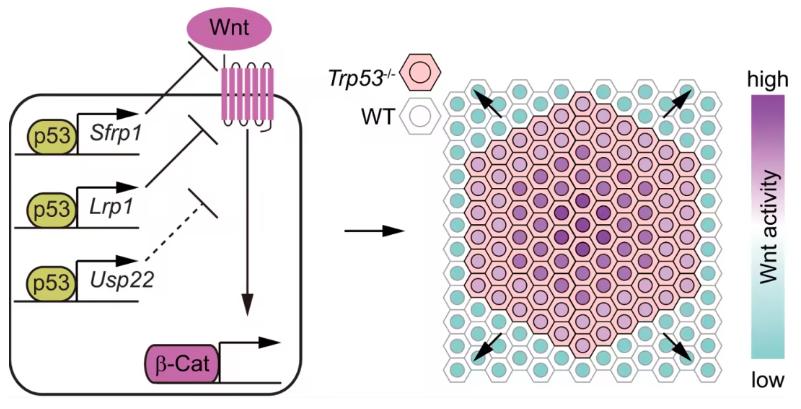
Fig 1. Spatial organization of Wnt signaling following p53 loss.
p53 Deficiency Alters Progenitor Cell Fate Decisions
Through lineage tracing and quantitative analysis of individual cell fates, the researchers investigated how p53 deficiency influences the behavior of basal epithelial progenitor cells.
The results showed that the enhanced clonal expansion associated with p53 loss did not primarily depend on the classical p53 functions of DNA damage surveillance, cell cycle arrest, or apoptosis.
Instead, p53 deficiency changed the balance between progenitor cell self-renewal and differentiation.
In normal epithelial tissue, progenitor cells maintain tissue homeostasis by balancing their capacity to generate additional progenitor cells with their commitment to differentiation.
When p53 was lost, the proportion of self-renewing progenitor cells increased, while the proportion entering differentiation pathways decreased.
This shift favored the progressive accumulation of progenitor cells, allowing p53-deficient clones to expand more rapidly within the surrounding tissue.
These findings indicate that mutant clone growth can be driven by changes in cell fate decisions rather than solely by increased proliferation or resistance to cell death.
Three p53 Targets Connect Tumor Suppression to Wnt Signaling
To identify the molecular mechanisms underlying these altered progenitor cell behaviors, the researchers integrated transcriptomic profiling, p53-binding analyses, and large-scale in vivo genetic screening.
This combined approach identified three direct p53 target genes: Sfrp1, Lrp1, and Usp22.
All three genes contribute to the negative regulation of Wnt signaling, although they act through distinct molecular mechanisms.
Under normal conditions, p53 supports the expression of these regulatory factors, helping maintain appropriate Wnt pathway activity within epithelial tissues.
Following p53 loss, expression of these Wnt inhibitory regulators declines, resulting in increased Wnt signaling activity.
Wnt signaling plays a fundamental role in tissue development, stem cell maintenance, progenitor cell renewal, and epithelial homeostasis.
However, excessive or improperly organized Wnt signaling can disrupt normal cell fate regulation and promote abnormal tissue growth.
The identification of Sfrp1, Lrp1, and Usp22 therefore establishes a molecular connection between p53-dependent transcriptional regulation and the control of epithelial progenitor cell behavior.
Our Featured Proteins


A Radial Wnt Signaling Gradient Drives Rapid Clonal Expansion
One of the most striking discoveries was that Wnt signaling activity did not increase uniformly throughout p53-deficient clones.
Instead, the simultaneous reduction of multiple inhibitory mechanisms produced a distinctive radial gradient of Wnt activity.
Within these mutant clones, Wnt signaling was strongest near the center and progressively decreased toward the outer boundaries.
This center-high, edge-low signaling pattern proved to be critical for rapid clonal expansion.
Experimental manipulation of Wnt signaling demonstrated that spatial organization, rather than average pathway activity alone, determines how effectively mutant clones expand.
Remarkably, even when researchers increased overall Wnt signaling to higher levels, uniform activation resulted in slower clonal expansion than the spatially graded signaling pattern.
These findings challenge the conventional assumption that stronger oncogenic signaling necessarily produces faster mutant cell expansion.
Instead, they demonstrate that the distribution of signaling activity across a cell population can be just as important as its absolute intensity.
Spatial Signaling Coordinates Self-Renewal and Clone Expansion
The radial Wnt gradient appears to coordinate distinct cellular behaviors within expanding p53-deficient clones.
Higher Wnt activity in the central region favors progenitor cell self-renewal, helping maintain an expanding population of undifferentiated cells.
Meanwhile, relatively lower Wnt activity near the clonal boundaries supports a different balance of cell behaviors that allows the clone to continue expanding into neighboring tissue.
Rather than relying on uniformly elevated signaling, p53-deficient cells exploit a spatially organized signaling environment that coordinates progenitor maintenance and expansion.
This mechanism illustrates how local differences in signaling activity can produce collective effects on tissue growth.
It also highlights the importance of studying mutant cell populations as spatially organized systems rather than collections of independent cells.
Implications for Cancer Initiation and Early Prevention
The study introduces a new perspective on how tumor suppressor loss contributes to the earliest stages of cancer development.
Although p53 has traditionally been studied in the context of DNA damage responses and cell death regulation, these findings reveal an additional function in maintaining tissue organization by controlling spatial signaling patterns.
The results suggest that abnormal clonal expansion may arise not only from changes in the molecular intensity of growth-related pathways but also from changes in how these pathways are distributed across tissues.
From a cancer prevention perspective, this raises the possibility that disrupting the characteristic Wnt signaling gradient established by p53-deficient cells could limit mutant clone expansion at an early stage.
Such an approach would differ from conventional strategies aimed at globally inhibiting Wnt signaling.
Instead, future interventions might seek to alter the spatial organization of signaling activity while preserving physiological Wnt functions required for normal tissue homeostasis.
However, this concept remains exploratory and requires substantial additional investigation before it can be considered a therapeutic strategy.
Future Research Directions
Although the study provides compelling evidence from mouse skin models, several important questions remain.
Further research is needed to determine whether similar p53-dependent Wnt signaling gradients occur in other epithelial tissues, such as the gastrointestinal tract, respiratory system, or other organs susceptible to clonal expansion and tumor formation.
It will also be important to establish whether spatial signaling gradients contribute to the expansion of cells carrying other cancer-associated mutations.
Moreover, understanding how these gradients interact with tissue architecture, neighboring normal cells, and local microenvironmental factors may provide additional insights into the earliest stages of tumorigenesis.
Advanced spatial transcriptomics, lineage tracing, and high-resolution imaging approaches could help clarify these relationships in future studies.
Conclusion: Spatial Organization Matters in Cancer Development
This study reveals a previously underappreciated mechanism through which loss of the tumor suppressor p53 promotes epithelial clonal expansion.
By reducing the expression of multiple Wnt pathway inhibitors, including Sfrp1, Lrp1, and Usp22, p53 deficiency generates a spatial Wnt signaling gradient characterized by elevated activity at the center of mutant clones and lower activity toward their boundaries.
This gradient alters progenitor cell fate decisions, increases self-renewal, and promotes the expansion of mutant cell populations.
Most importantly, the findings demonstrate that the spatial organization of signaling pathways can be a critical determinant of clonal behavior, independent of overall signaling intensity.
Although additional studies are required to determine whether this mechanism extends beyond skin epithelium, the research provides a new framework for understanding early tumor development and exploring strategies to limit the expansion of potentially precancerous cell populations.
Related Products & Services
- Cell and Gene Therapy
- Immune Checkpoint Proteins
- ADC Target Protein
- PROTAC Targets
- Targets of CAR-T Cell Therapy
- Cancer Drug Targets
- Protein Engineering Services
- Protein Interaction Service
- Protein Expression and Purification Services
- Drug Discovery Screening
- Protein Pathway Profiling
Reference
Qiwen Gan et al. ,Loss of the tumor suppressor p53 generates a signaling gradient that drives epithelial clonal expansion.Science394,eaed3065(2026).DOI:10.1126/science.aed3065