
Uncategorized Wednesday, 2026/10/21
Research Highlights
A recent study reveals the critical role of hepatocyte receptor-interacting protein kinase 1 (RIPK1) scaffolding function in maintaining liver homeostasis under alcohol-induced stress. The findings establish a mechanistic connection between RIPK1 deficiency, impaired NF-κB/p65 signaling, excessive endoplasmic reticulum (ER) stress, hepatocyte apoptosis, and amplified inflammatory responses. These discoveries provide new insights into the pathogenesis of alcohol-associated liver disease and identify potential therapeutic strategies for mitigating alcohol-induced liver injury.
Background: Alcohol-Associated Liver Disease and RIPK1 Signaling
Alcohol-associated liver disease (ALD), also traditionally referred to as alcoholic liver disease, has become a major global health concern and an important cause of chronic liver disorders.
Excessive alcohol consumption not only disrupts hepatic lipid metabolism, resulting in steatosis, but also promotes hepatocellular damage, cell death, and inflammatory responses. However, the key molecular mechanisms determining the progression from simple hepatic steatosis to more severe liver injury and inflammation remain incompletely understood.
Receptor-interacting protein kinase 1 (RIPK1) is a central signaling molecule involved in regulating cell survival, programmed cell death, and inflammation. Although its kinase activity has received considerable attention, RIPK1 also performs an essential kinase-independent scaffolding function that supports cellular homeostasis and survival signaling.
Nevertheless, the specific contribution of RIPK1 scaffolding activity to alcohol-induced liver injury has remained unclear.
Recently, a collaborative research team led by Dan Weng at the Center for Molecular Metabolism, Nanjing University of Science and Technology; Na Fu at the Third Hospital of Hebei Medical University; and Yuxin Chen at Nanjing Drum Tower Hospital, affiliated with Nanjing University Medical School, published a study in Cell Death & Disease entitled:
“Hepatocyte RIPK1 scaffolding function protects against alcohol-induced liver injury by restraining ER stress-driven apoptosis and inflammation.”
The study demonstrates that the scaffolding function of hepatocyte RIPK1 serves as an important protective mechanism during alcohol exposure. Loss of RIPK1 weakens NF-κB/p65 signaling, exacerbates ER stress, and promotes hepatocyte apoptosis and inflammatory responses. Importantly, targeting the associated stress-response pathways can alleviate alcohol-induced liver injury in experimental models.
Our Featured Proteins
| Cat.No. # | Product Name | Source (Host) | Species | Tag | Protein Length | Price |
|---|---|---|---|---|---|---|
| RIPK1-202H |
Active Recombinant Human RIPK1 protein, GST-tagged

|
Insect Cells | Human | GST | 1-327 aa | |
| RIPK1-7018H |
Recombinant Full Length Human RIPK1, GST-tagged

|
Sf9 Cells | Human | GST | Full L. 1-671 a.a. |

|
| RIPK1-42H | Recombinant Full Length Human RIPK1 protein, GST-tagged | Wheat Germ | Human | GST | Full L. 1-671 a.a. | |
| RIPK1-36H |
Active Recombinant Full Length Human RIPK1, GST-tagged
|
Sf9 Cells | Human | GST | Full L. 1-671 a.a. |
|
| Ripk1-1264R | Recombinant Rat Ripk1 protein, His-tagged | E.coli | Rat | His | Met1~Ala179 |
|
| RIPK1-14243M | Recombinant Full Length Mouse Ripk1 protein, His-tagged | HEK293 | Mouse | His | Full L. 1-656aa |
|
| RIPK1-43H | Recombinant Full Length Human RIPK1 protein, His-tagged | E.coli | Human | His | Full L. |
|
Hepatocyte RIPK1 Scaffolding Function Protects Against Alcohol-Induced Liver Injury
To investigate the role of hepatocyte RIPK1 in alcohol-associated liver injury, the researchers generated hepatocyte-specific RIPK1 knockout mice (Ripk1-hepKO) and established experimental models involving chronic and acute alcohol exposure.
The results showed that hepatocyte-specific RIPK1 deficiency significantly exacerbated alcohol-induced hepatocyte apoptosis and liver injury. However, RIPK1 deletion did not substantially affect hepatic steatosis, suggesting that its protective effects are primarily associated with the regulation of cell survival rather than hepatic lipid accumulation.
In contrast, mice expressing kinase-inactive RIPK1 did not exhibit comparable increases in alcohol-induced liver injury.
These findings indicate that hepatocyte RIPK1 protects the liver against alcohol-induced stress predominantly through its kinase-independent scaffolding function rather than its kinase activity.
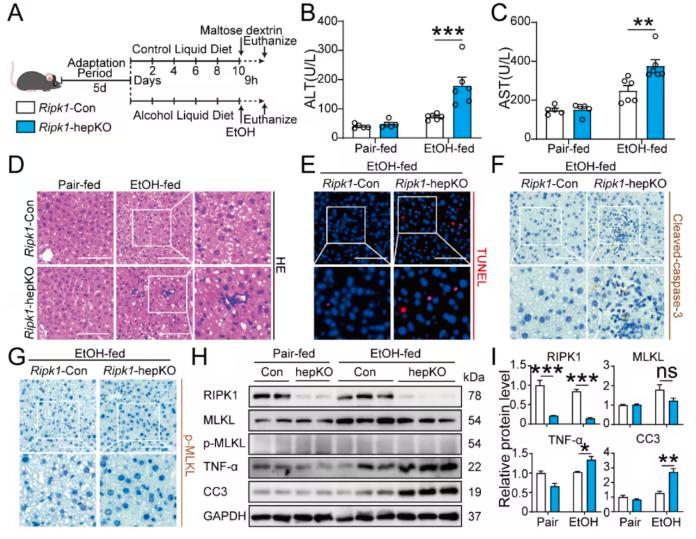
Fig 1. Hepatocyte RIPK1 deficiency exacerbates alcohol-induced liver injury.
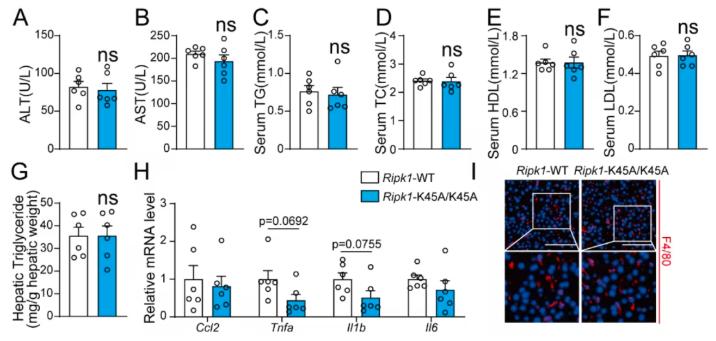
Fig 2. RIPK1 kinase inactivation does not significantly affect alcohol-induced liver injury.
RIPK1 Deficiency Exacerbates Alcohol-Induced Hepatic Inflammation
Further investigations demonstrated that the consequences of RIPK1 deficiency extend beyond hepatocyte damage.
Loss of hepatocyte RIPK1 was associated with increased expression of inflammation-related genes and enhanced macrophage infiltration into liver tissue.
Transcriptomic analysis using RNA sequencing (RNA-seq) revealed significant activation of multiple inflammatory signaling pathways in the livers of Ripk1-hepKO mice following alcohol exposure.
These observations suggest that hepatocyte RIPK1 functions as an important regulatory link between cellular injury and hepatic inflammatory responses.
When RIPK1 is absent, alcohol-induced hepatocyte injury is aggravated, contributing to an amplified inflammatory environment characterized by immune cell recruitment and inflammatory gene expression.
Thus, the protective scaffolding function of RIPK1 appears to play an essential role in limiting both direct hepatocellular injury and secondary inflammatory responses.
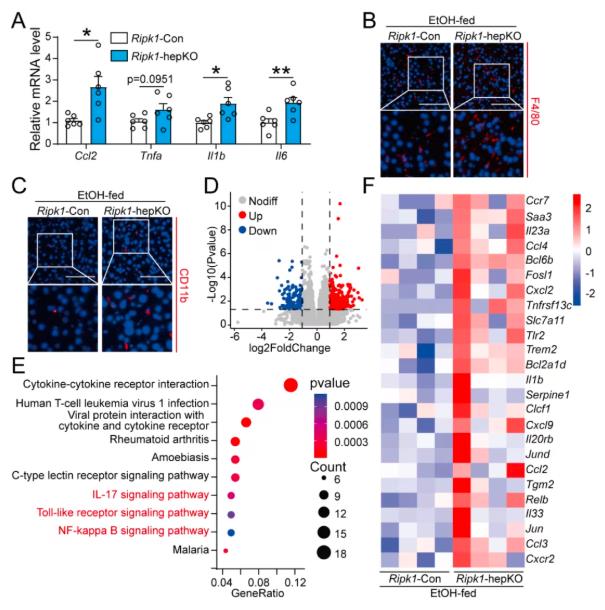
Fig 3. RIPK1 deficiency enhances alcohol-induced hepatic inflammation and transcriptional remodeling.
RIPK1 Restrains ER Stress Through NF-κB/p65 Signaling
Mechanistic analyses revealed that alcohol exposure activates endoplasmic reticulum stress responses in the liver.
Under conditions of RIPK1 deficiency, NF-κB/p65 signaling was attenuated, while the eIF2α–ATF4–CHOP-associated stress response became more pronounced.
The ER stress response is an important cellular adaptation mechanism activated when protein-folding capacity becomes insufficient to meet cellular demands. However, when ER stress is excessive or prolonged, stress-response pathways can contribute to apoptotic cell death.
Additional cellular experiments demonstrated that restoring p65 activity attenuated the enhanced ER stress observed following RIPK1 deficiency.
Conversely, inhibition of NF-κB signaling produced the opposite effect, further intensifying stress-associated responses.
Together, these findings suggest that RIPK1 scaffolding activity helps maintain NF-κB/p65-dependent adaptive signaling, thereby preventing excessive ER stress activation and subsequent hepatocyte apoptosis.
The results establish an important mechanistic connection between RIPK1 scaffolding function, NF-κB/p65 signaling, ER stress regulation, and hepatocyte survival during alcohol exposure.
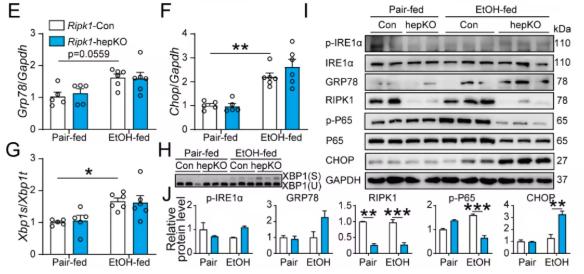
Fig 4. RIPK1 deficiency amplifies alcohol-induced hepatic ER stress.
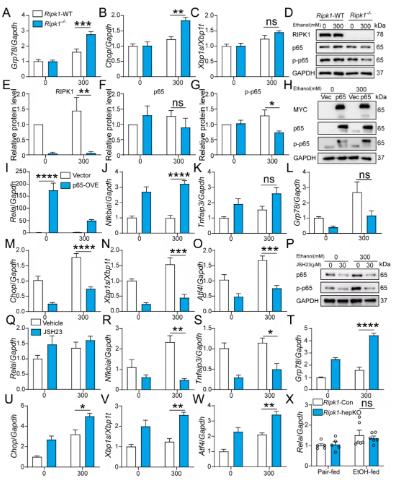
Fig 5. NF-κB/p65 signaling contributes to RIPK1-mediated regulation of ER stress.
Targeting ER Stress Alleviates Alcohol-Induced Liver Injury
To determine whether excessive ER stress directly contributes to the aggravated liver injury caused by RIPK1 deficiency, the research team evaluated two pharmacological interventions: 4-phenylbutyric acid (4-PBA) and integrated stress response inhibitor (ISRIB).
4-PBA is commonly used experimentally as a chemical chaperone to alleviate ER stress, whereas ISRIB modulates signaling downstream of eIF2α phosphorylation by acting on the translation initiation machinery.
Both interventions attenuated relevant stress-associated signaling and reduced markers of liver injury in RIPK1-deficient mice exposed to alcohol.
The treatments also decreased hepatocyte apoptosis and inflammatory responses, providing functional evidence that dysregulated ER stress contributes directly to the severity of alcohol-induced liver injury.
These findings indicate that ER stress is not merely a secondary consequence of hepatocellular damage. Instead, it represents an important mechanistic driver of liver injury when hepatocyte RIPK1 scaffolding function is disrupted.
The therapeutic effects observed with 4-PBA and ISRIB further suggest that pharmacological modulation of maladaptive stress-response pathways may offer a potential strategy for reducing alcohol-associated liver damage.
Nevertheless, these findings were obtained in experimental models, and additional studies are required to determine their clinical applicability.
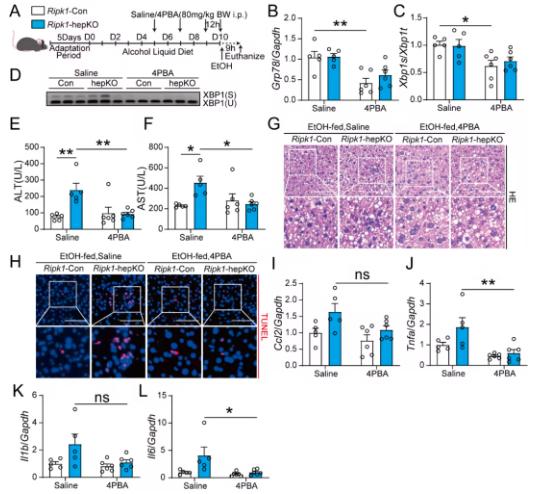
Fig 6. 4-PBA alleviates alcohol-induced liver injury and inflammation in RIPK1-deficient mice.
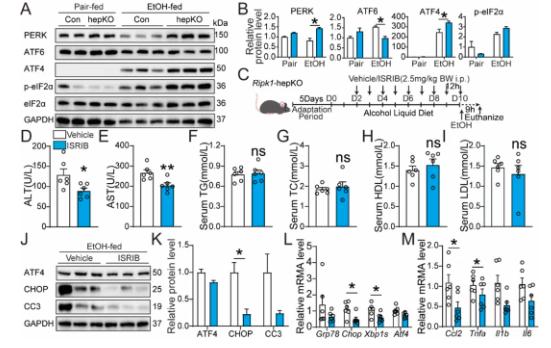
Fig 7. ISRIB reduces alcohol-induced liver injury in RIPK1-deficient mice.
Human ALD Liver Samples Exhibit Similar Pathological Features
To assess the clinical relevance of their experimental findings, the researchers examined liver tissue samples from patients with alcohol-associated liver disease.
Compared with healthy controls, liver samples from patients with ALD exhibited increased hepatocyte apoptosis, enhanced infiltration of CD68-positive macrophages, and elevated expression of CHOP, a transcription factor associated with ER stress-induced apoptotic signaling.
These pathological features were consistent with several key alterations observed in the experimental mouse models.
The results indicate that heightened ER stress, hepatocyte death, and inflammatory responses are also prominent features of human alcohol-associated liver disease.
Although the human tissue findings do not independently establish a causal role for RIPK1 deficiency, they provide supporting evidence for the clinical relevance of the cellular stress and inflammatory mechanisms identified in the study.
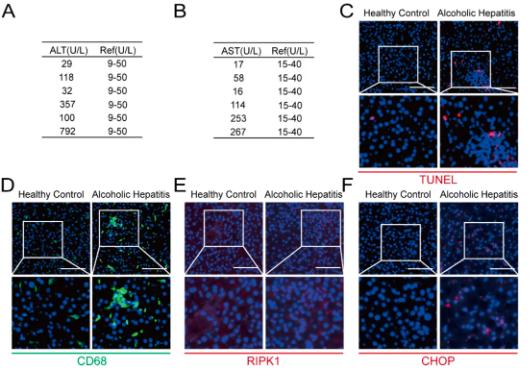
Fig 8. Hepatocyte apoptosis, inflammation, and ER stress are markedly increased in human alcohol-associated liver disease.
Conclusion and Therapeutic Implications
In summary, this study reveals the essential role of hepatocyte RIPK1 scaffolding function in maintaining liver homeostasis during alcohol-induced stress.
The researchers identified a mechanistic relationship linking RIPK1 deficiency to impaired NF-κB/p65 signaling, excessive ER stress, hepatocyte apoptosis, and amplified hepatic inflammation.
Importantly, the findings distinguish the protective scaffolding activity of RIPK1 from its kinase function, highlighting the complexity of RIPK1-mediated signaling in liver disease.
The study not only advances our understanding of the molecular mechanisms underlying alcohol-associated liver disease but also suggests that preserving RIPK1 scaffolding function or selectively modulating maladaptive ER stress responses may represent promising therapeutic approaches.
Further preclinical and clinical investigations will be necessary to evaluate the safety, specificity, and therapeutic effectiveness of these strategies.
Related Products & Services
- Cell and Gene Therapy
- Immune Checkpoint Proteins
- ADC Target Protein
- PROTAC Targets
- Targets of CAR-T Cell Therapy
- Cancer Drug Targets
- Protein Engineering Services
- Protein Interaction Service
- Protein Expression and Purification Services
- Drug Discovery Screening
- Protein Pathway Profiling
Reference
Zhang, W., Liu, H., Zhu, Y. et al. Hepatocyte RIPK1 scaffolding function protects against alcohol-induced liver injury by restraining ER stress-driven apoptosis and inflammation. Cell Death Dis (2026). https://doi.org/10.1038/s41419-026-09201-2