
Uncategorized Thursday, 2026/11/19
This study is the first to identify CDK1 as a candidate biomarker of poor prognosis in early-stage estrogen receptor-positive (ER+) breast cancer, while also highlighting its potential as an indicator of adaptive responses and resistance to CDK4/6 inhibition.
Estrogen receptor-positive (ER+) breast cancer is the most common subtype of breast cancer, with tumor growth driven by estrogen signaling. For patients with high-risk, early-stage ER+ breast cancer, endocrine therapy combined with CDK4/6 inhibitors has become a standard treatment approach. However, clinicians still lack reliable molecular biomarkers to identify which patients are most likely to benefit from these drugs. More challenging still, CDK4/6 inhibitors are not effective in all patients, and most patients with advanced disease eventually develop resistance.
Recently, a study published in the journal Advanced Science, titled “Tracking CDK1 Dynamics With a Novel Biosensor Mouse and Clinical Cohorts to Predict CDK4/6 Inhibitor Sensitivity in ER+ Breast Cancer,” reported new findings from researchers at the Garvan Institute of Medical Research and collaborating institutions. The scientists focused on CDK1, a protein belonging to the same family as CDK4 and CDK6 but whose potential role in predicting treatment response has received comparatively little attention. Their findings suggest that the activation state of CDK1 may serve as a molecular “indicator light” for assessing therapeutic effectiveness and drug resistance.
To understand the role of CDK1, it is important to examine the cellular machinery that controls cell division. CDK4 and CDK6 help initiate cell cycle progression, whereas CDK1 plays a critical role in the final stages of cell division, when a cell ultimately divides into two daughter cells. Healthy cells follow this tightly regulated process, while cancer arises when cell cycle control becomes disrupted.
Dr. Liz Caldon, one of the researchers involved in the study, compared CDK1 to an engine that must be running for cell division to occur. CDK4/6 inhibitors act by blocking the ignition switch, but some cancer cells find ways to bypass this blockade. Even when they do, the CDK1 “engine” must still operate for the cells to complete division. Therefore, determining whether CDK1 remains active may help reveal whether a treatment is successfully suppressing cancer cell proliferation.
To monitor CDK1 activity during tumor development, the researchers developed a preclinical mouse model equipped with a fluorescent biosensor that produces a detectable signal when CDK1 is active. Using this tool, they observed that CDK1 activity increased as tumors progressed to invasive ductal carcinoma.
Dr. Max Nobis, co-senior author of the study and currently affiliated with the University of Manchester, explained that conventional detection methods can often determine whether a protein is present but cannot necessarily reveal whether it is functionally active. In contrast, the new biosensor model makes it possible to identify cells in which CDK1 is activated, allowing researchers to track cell cycle activity during treatment.
The investigators also examined breast cancer biopsy samples from more than 400 patients. Their findings showed that CDK1 activity increased with tumor aggressiveness and that higher activity was associated with poorer clinical outcomes. Specifically, phosphorylation of CDK1 at threonine 161 (pCDK1T161) was selectively upregulated in invasive ductal carcinoma, while phosphorylation at tyrosine 15 (pCDK1Y15) was identified as a prognostic indicator of poorer recurrence-free survival in patients with stage I breast cancer.
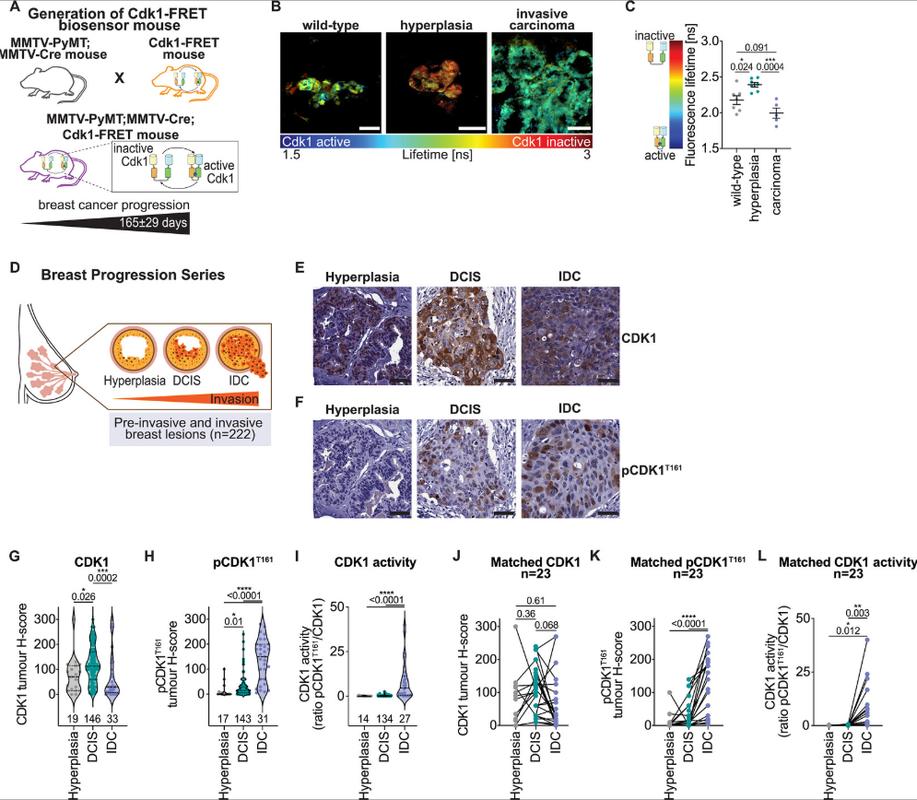
Fig1. CDK1 activity increases as breast cancers become invasive.
CDK1 also emerged as a recurring warning signal in the context of drug resistance.
By analyzing existing clinical trial data, the researchers found that tumors that did not respond to CDK4/6 inhibitors exhibited sustained expression of genes encoding CDK1 and its associated regulatory proteins. This provided indirect evidence that the CDK1-driven cell cycle machinery remained active despite treatment. Similar patterns were observed in advanced breast cancers that relapsed following therapy.
In laboratory experiments, breast cancer cells exposed to CDK4/6 inhibitors for approximately 10 months until they developed resistance also showed reactivation of CDK1. Likewise, in preclinical models, tumors that continued to grow despite treatment demonstrated elevated CDK1 activity.
The researchers noted that even a small population of surviving cancer cells can eventually drive tumor recurrence. The ability to identify which cells remain active during treatment offers a new perspective on how drug resistance begins and develops.
Across early-stage breast cancer, advanced disease, and tumors that have overcome therapeutic inhibition, CDK1 repeatedly appeared as a potential warning signal. Elevated CDK1 activity in a tumor may indicate reduced sensitivity to CDK4/6 inhibitors, suggesting that this information could eventually help clinicians develop more personalized treatment strategies.
Our Related Proteins


The study further revealed that CDK1 activity is involved in the dynamic adaptive response of cancer cells to CDK4/6 inhibition. Although CDK1/cyclin B1 complex activity was initially suppressed following treatment, it rebounded within three days. In the NeoPalAna clinical trial, patients who did not respond to treatment exhibited incomplete suppression of CDK1 activity.
These findings suggest that CDK1 may serve not only as a prognostic biomarker but also as a dynamic indicator of how tumor cells adapt to therapeutic pressure.
Importantly, this is the first study to identify CDK1 as a candidate biomarker associated with poor prognosis in early-stage ER+ breast cancer while also positioning it as a potential indicator of adaptive responses and resistance to CDK4/6 inhibition.
The discovery builds on decades of research into the molecular mechanisms of breast cancer. In the 1990s, research conducted at the Garvan Institute demonstrated the role of cyclin D1 in driving breast cancer growth, helping lay the scientific groundwork for the subsequent development of CDK4/6 inhibitors.
The latest findings emerged from years of laboratory work, including the development of drug-resistant breast cancer cell models in which researchers observed the reactivation of CDK1.
The scientists emphasized that identifying better treatment options for patients whose cancers no longer respond to existing therapies requires sustained research efforts. Each resistant cell model can take months of careful experimental development, highlighting the time and resources needed to investigate the biological mechanisms underlying treatment failure.
Although the findings are promising, the researchers acknowledged that further validation is necessary in larger patient populations receiving CDK4/6 inhibitor therapy. Future studies may also support the development of new therapeutic agents targeting CDK1.
Several decades ago, CDK4/6 inhibitors were still largely a theoretical therapeutic concept. Today, they have become important treatment options for breast cancer patients worldwide. Although no CDK1-targeted therapy has yet been established for clinical use, the researchers remain optimistic that continued investigation could eventually translate these findings into new treatment strategies.
The study highlights the potential of CDK1 as both a prognostic biomarker and a tool for monitoring treatment resistance, offering new possibilities for precision medicine in ER+ breast cancer.
Related Products & Services
- Cell and Gene Therapy
- Immune Checkpoint Proteins
- ADC Target Protein
- PROTAC Targets
- Targets of CAR-T Cell Therapy
- Cancer Drug Targets
- Protein Engineering Services
- Protein Interaction Service
- Protein Expression and Purification Services
- Drug Discovery Screening
- Protein Pathway Profiling
Reference
- Alexandrou, S., Fernandez, K. J., Huang, M. L., A. Millar, E. K., Vennin, C., Eshraghi, L., Timothy Lam, T. D., Lee, V., Brooks, N. C., Stoehr, J., Mendez, C. G., Strathdee, D., Stevenson, D., Herrmann, D., Timpson, P., Nobis, M., & Caldon, C. E. Tracking CDK1 Dynamics With a Novel Biosensor Mouse and Clinical Cohorts to Predict CDK4/6 Inhibitor Sensitivity in ER+ Breast Cancer. Advanced Science, e77920. https://doi.org/10.1002/advs.77920