
Uncategorized Wednesday, 2026/03/11
Nature Reveals Hidden Secrets in the Hippocampus: Newborn Neurons May Be the Brain’s Anti-Aging “Secret Weapon”
Scientists from institutions including the University of Illinois Chicago have produced compelling new evidence through their research. In the study, they analyzed more than 350,000 cell nuclei from the human hippocampus, using cutting-edge technologies such as single-cell sequencing, providing fresh answers to a long-standing scientific question.
Have you ever wondered why some people, even in their 80s or 90s, retain astonishingly sharp memories? They can remember the names of people they just met, vividly recall events from decades ago, and learn new things almost as quickly as younger individuals. Meanwhile, others at the same age struggle with forgetfulness and may even develop Alzheimer’s disease.
The difference may lie deep within the brain, in a structure called the hippocampus. More specifically, it may reside in the newly generated neurons within the hippocampus.
Can the Adult Brain Still Produce New Neurons?
This question has been debated in the scientific community for decades. In the late 20th century, scientists first discovered adult neurogenesis in mice. However, skeptics argued that findings in rodents might not apply to humans. Later studies in primates offered support, but controversy about whether the human brain can generate new neurons in adulthood has persisted. Even today, some researchers maintain that neurons in adults only decline in number.
Recently, a landmark study published in Nature provided a clear answer. Researchers from the University of Illinois Chicago and collaborating institutions used single-nucleus RNA sequencing (snRNA-seq) and single-nucleus chromatin accessibility sequencing (snATAC-seq) to analyze 355,997 nuclei from the human hippocampus. Their findings not only confirmed that neurogenesis occurs in the adult human hippocampus, but also uncovered the core biological secret behind the extraordinary memory of “super-agers.”
Who Are the “Super-Agers”?
The researchers examined brain tissue samples from five groups:
- Young adults with intact memory (YA)
- Healthy older adults with normal cognition (HA)
- “Super-agers” (SA) with exceptional memory
- Patients with preclinical intermediate pathology and mild cognitive impairment (PCI)
- Patients diagnosed with Alzheimer’s disease (AD)
“Super-agers” are individuals over 80 years old whose episodic memory performance matches that of people aged 50–60. Their brains appear unusually resilient to aging.
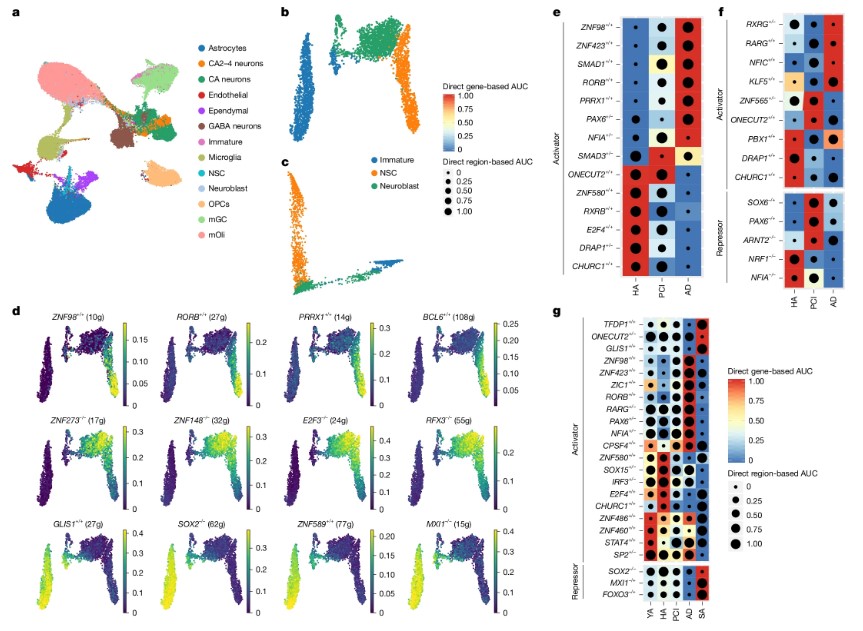
Fig1. GRNs in ageing and cognitive decline
Evidence of Lifelong Neurogenesis
Within the hippocampus, researchers identified neural cells at different developmental stages:
- Neural stem cells (NSCs) — “seed cells” capable of differentiating into neurons
- Neuroblasts — immature neuronal precursors
- Immature granule neurons — nearly mature neurons that have not yet reached full functionality
The presence of these three cell types directly demonstrates that the healthy human hippocampus continuously generates new neurons throughout life.
The Secret of Super-Agers
The most exciting discovery came from the super-ager group. These individuals had about twice as many immature neurons in their hippocampus compared with typical older adults. Even after accounting for sample variability, they still showed about a 1.5-fold advantage.
Researchers call this feature a “resilience signature,” which may be the brain’s key mechanism for resisting age-related decline.
Further analysis showed that super-agers not only produce more new neurons, but their neurons are also higher quality. Their neural stem cells, neuroblasts, and immature neurons display unique gene regulatory networks, including:
- Activation of transcription factors such as TFDP1, ONECUT2, and GLIS1
- Suppression of inhibitory factors such as SOX2 and MXI1
This molecular network appears to enhance the vitality of newborn neurons and allows them to integrate more effectively into memory circuits.
Our Related Proteins
| Cat.No. # | Product Name | Source (Host) | Species | Tag | Protein Length | Price |
|---|---|---|---|---|---|---|
| TFDP1-3198H | Recombinant Human TFDP1, GST-tagged | E.coli | Human | GST | 1-410aa | |
| TFDP1-16685M | Recombinant Mouse TFDP1 Protein | Mammalian Cells | Mouse | His |

|
|
| TFDP1-1071HFL | Recombinant Full Length Human TFDP1 Protein, C-Flag-tagged | Mammalian Cells | Human | Flag | Full L. |
|
| ONECUT2-1459H | Recombinant Human ONECUT2, GST-tagged | E.coli | Human | GST | 226-332aa | |
| ONECUT2-3539H | Recombinant Human ONECUT2 protein, His-tagged | E.coli | Human | His | 226-332 aa | |
| ONECUT2-12154M | Recombinant Mouse ONECUT2 Protein | Mammalian Cells | Mouse | His |
|
|
| GLIS1-115H | Recombinant Human GLIS1 protein, arginine-tagged | E.coli | Human |
|
||
| SOX2-67H |
Active Recombinant Human SOX2 protein

|
E.coli | Human | Non |
|
|
| SOX2-667H |
Recombinant Human SOX2, His-tagged

|
E.coli | Human | His | 1-200 a.a. |
|
| SOX2-12337Z | Recombinant Zebrafish SOX2 | Mammalian Cells | Zebrafish | His |
|
|
| SOX2-15780M | Recombinant Mouse SOX2 Protein | Mammalian Cells | Mouse | His |
|
|
| MXI1-1120H | Recombinant Human MXI1, His-tagged | E.coli | Human | His | 1-182aa | |
| MXI1-481H | Recombinant Human MXI1 protein, His-tagged | E.coli | Human | His | 1-182 aa | |
| MXI1-12H | Recombinant Human MXI1 protein, GST-tagged | Wheat Germ | Human | GST | 1-182 a.a. |
|
Neurogenesis in the Adult Human Brain
At the other end of the spectrum, the trajectory of cognitive decline is equally clear. In individuals with preclinical mild cognitive impairment (PCI), abnormalities in hippocampal neurogenesis are already evident. Genes associated with chromatin accessibility, including members of the RFX transcription factor family, begin to decline.
These changes become even more pronounced in Alzheimer’s disease patients:
- Neuroblasts and immature neurons are dramatically reduced, sometimes nearly undetectable.
- Neural stem cells increase abnormally, suggesting a “production line” blockage where stem cells fail to mature into functional neurons.
Crucially, these alterations appear before clinical diagnosis of Alzheimer’s disease, driven primarily by changes in chromatin accessibility rather than simple gene expression differences. This suggests that epigenetic dysregulation is an early marker of impaired neurogenesis.
Quality Matters as Much as Quantity
The study also revealed a deeper principle: brain health depends not only on how many new neurons are produced, but also on the quality of their development.
Newborn neurons from individuals with different cognitive states carry distinct epigenetic signatures. Epigenetics acts like annotations added to genes by environmental influences—it does not change the DNA sequence but affects how genes respond to external conditions.
For example:
- In super-agers, chromatin regions associated with synaptic plasticity and neurotransmitter signaling are more accessible, allowing newborn neurons to integrate quickly into neural networks.
- In Alzheimer’s patients, these regions show reduced accessibility, leading to dysfunctional neuronal development.
This difference in neuronal quality may explain why some individuals retain normal cognition despite pathological changes in the brain—they possess neurons that are more resilient and adaptable.
A Complete Molecular Map of Human Neurogenesis
Beyond confirming adult neurogenesis, this research provides the first comprehensive molecular map of neurogenesis in the human hippocampus, identifying the developmental pathway:
Neural stem cells → Neuroblasts → Immature neurons → Mature granule neurons
Key transcription factors such as STAT3, PLAGL1, and RFX2 regulate this process.
Importantly, the study also identified the molecular basis of cognitive resilience, offering potential targets for interventions against brain aging.
Researchers found that the neurogenesis advantage in super-agers is not solely genetic. It is closely linked to the health of astrocytes and CA1 neurons, which interact with newborn neurons through pathways involving NRXN1 (neurexin-1) and glutamatergic receptors, helping maintain cognitive function.
Our Related Proteins
| Cat.No. # | Product Name | Source (Host) | Species | Tag | Protein Length | Price |
|---|---|---|---|---|---|---|
| STAT3-1496H |
Recombinant Human STAT3, GST-tagged
|
Sf9 Cells | Human | GST | ||
| STAT3-29823TH |
Active Recombinant Full Length Human STAT3, His-tagged
|
E.coli | Human | His | Full L. | |
| STAT3-39228H | Recombinant Human STAT3, GST-tagged | E.coli | Human | GST | False | |
| STAT3-07H | Recombinant Human STAT3 Protein, His-tagged | Insect Cells | Human | His | 1-770 a.a. | |
| PLAGL1-3585H | Recombinant Human PLAGL1 protein, His-tagged | E.coli | Human | His | 201-463 aa | |
| PLAGL1-752H | Recombinant Human PLAGL1 Protein, His-tagged | E.coli | Human | His | His226~Pro362 | |
| NRXN1-1548H | Recombinant Human NRXN1 Protein, His (Fc)-Avi-tagged | HEK293 | Human | Avi&Fc&His | ||
| NRXN1-3746R | Recombinant Rat NRXN1 Protein, His (Fc)-Avi-tagged | HEK293 | Rat | Avi&Fc&His | ||
| NRXN1-054H |
Active Recombinant Human Neurexin I, Fc-tagged
|
Mammalian Cells | Human | Fc | 51-363 a.a. |
|
| Nrxn1-739R |
Active Recombinant Rat Nrxn1 Protein, His-tagged
|
Mammalian Cells | Rat | His | Leu31-Thr1431 |
|
Can We Replicate the “Super-Ager” Brain?
This does not mean we can easily replicate the brain state of super-agers. Neurogenesis is regulated by a complex interplay of genetics, environment, and lifestyle factors.
However, the study offers hope: brain aging is not necessarily an irreversible passive decline. Even in one’s 80s or 90s, the hippocampus retains the ability to generate new neurons.
Future research will investigate how factors such as diet, physical activity, and inflammation influence the molecular networks of neurogenesis. Scientists also aim to explore whether targeting chromatin accessibility and key transcription factors could help more people maintain memory and cognitive health during aging.
Why Do Some Elderly People Have Extraordinary Memory?
The study offers a compelling answer:
Their hippocampus produces more newborn neurons, with better functional quality, protected by a unique “resilience signature.”
Although many mysteries remain—especially regarding the interaction between genes and environment—the direction for future exploration is now clear.
For anyone who is aging, or watching their parents grow older, this research brings encouraging news: One day, targeted interventions may help more people develop the same anti-aging resilience in the brain, making memory decline no longer an inevitable part of aging.
Related Products & Services
- Cell and Gene Therapy
- Alzheimer's Disease
- Parkinson's Disease Related Molecules
- Neurological Disorders Targets
- Protein Engineering Services
- Protein Interaction Service
- Protein Expression and Purification Services
- Drug Discovery Screening
- Protein Pathway Profiling
Reference
- Disouky, A., Sanborn, M.A., Sabitha, K.R. et al. Human hippocampal neurogenesis in adulthood, ageing and Alzheimer’s disease. Nature (2026). doi:10.1038/s41586-026-10169-4