
Uncategorized Wednesday, 2026/03/11
CAR-T (Chimeric Antigen Receptor T-Cell Immunotherapy) refers to chimeric antigen receptor T-cell immunotherapy. Although this therapy has existed for many years, it has only been improved and applied clinically in recent years as a novel type of cell therapy. It has shown remarkable efficacy in the treatment of acute leukemia and non-Hodgkin lymphoma and is considered one of the most promising cancer treatment strategies. Like all technologies, CAR-T technology has undergone a long evolutionary process, during which it has gradually matured.
The key to this therapeutic strategy lies in the artificial receptor used to recognize target cells, known as the chimeric antigen receptor (CAR). After genetic modification, a patient’s T cells can express this receptor. In human clinical trials, scientists extract some T cells from the patient through a process similar to dialysis. These T cells are then genetically modified in the laboratory by introducing the gene encoding the CAR, enabling the cells to express this new receptor. The genetically modified T cells are expanded in the lab and subsequently infused back into the patient. These T cells use their expressed CAR receptors to bind to molecules on the surface of target cells. These binding triggers intracellular signaling that strongly activates the T cells, allowing them to rapidly destroy the target cells.
In recent years, CAR-T immunotherapy has not only been used to treat acute leukemia and non-Hodgkin lymphoma but has also been improved and applied to treat solid tumors, autoimmune diseases, HIV infection, and heart disease, indicating broader application potential. Based on these developments, the following is an overview of the latest research progress in CAR-T cell therapy.
1. Nature: OR7A10-Expressing CAR-NK Cells Combat Solid Tumors
DOI: 10.1038/s41586-026-10149-8
Since scientists first discovered that human immune cells could be engineered into anti-cancer weapons, they have been trying to design cells capable of effectively combating solid tumors, which account for the majority of cancer cases. In a key breakthrough addressing this “holy grail challenge” in cancer cell therapy, a research team led by geneticist Sidi Chen at Yale University revealed how immune cells can be “enhanced” to target and eradicate solid tumors.
In this study published in Nature, researchers found that adding a gene called OR7A10 to CAR-NK (chimeric antigen receptor natural killer) cells significantly improved their ability to fight solid tumors. In multiple mouse models of breast, colon, and ovarian cancer, the modified cells demonstrated far stronger tumor-control capacity than standard CAR-NK cells. In one breast cancer model, 100% of treated mice experienced complete tumor elimination.
“Suddenly, these NK cells started working against solid tumors,” said Chen, associate professor of genetics and neurosurgery at Yale School of Medicine. “We truly believe this therapy has tremendous potential in patients.”
2. Science: HIT Cell Therapy, a “Cousin” of CAR-T Cells, Shows Promise Against Solid Tumors
DOI: 10.1126/science.adv7378
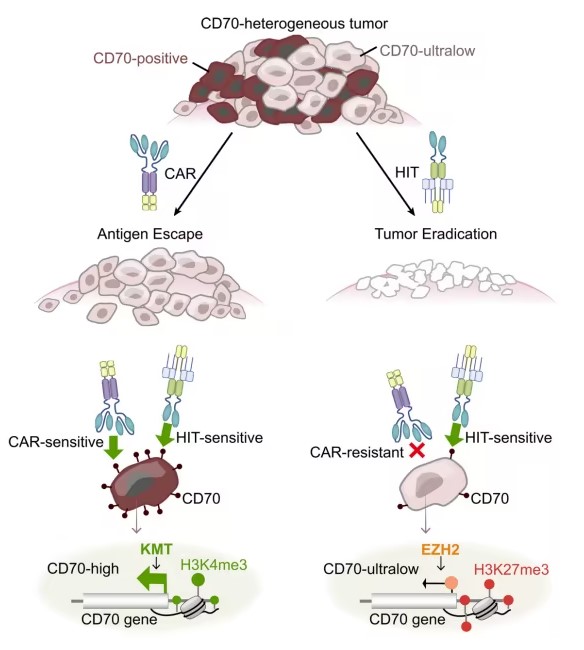
CAR-T cell therapy has revolutionized the treatment of many blood cancers but has shown limited success against solid tumors, which account for more than 85% of all cancers. Researchers at Columbia University have now discovered a new type of cell therapy—HIT cells—that function as a “cousin” of CAR-T cells. With enhanced sensitivity, HIT cells overcome a major barrier in treating solid tumors with cell therapy and can completely eliminate kidney, pancreatic, and ovarian tumors in mice. The study was published in Science.
The work was conducted by researchers from the Columbia Initiative in Cell Engineering and Therapy (CICET). CICET director Michel Sadelain is a pioneer of CAR-T therapy, which reprograms a patient’s immune cells into trained “assassins” that seek out and destroy cancer. In recent years, his laboratory has also led the development of HIT cell therapy.
Traditional CAR-T cells can detect only cancer cells that express high levels of target molecules. This limitation became evident when Hanina tested CD70-targeting CAR-T cells against solid tumors, explaining why CD70-targeted CAR-T therapies have performed poorly in patients with solid cancers.
“HIT cells are the next generation of CAR-T cells,” said Hanina. “They can be programmed like CAR-T cells but retain the natural sensitivity of T cells, allowing them to detect cancer cells that express only extremely small amounts of target molecules.”
HIT cells programmed to target CD70 completely eradicated tumors in mice with pancreatic, kidney, and ovarian cancers, while conventional CAR-T cells eliminated only part of the tumor cells. HIT cells also avoided attacking healthy cells because most normal cells do not express the CD70 molecule.
Our Related Proteins
3. Molecular Therapy: Bispecific BAFF-R/BCMA CAR-T Cells Control Heterogeneous Plasma Cell Growth in Multiple Myeloma
DOI: 10.1016/j.ymthe.2025.12.005
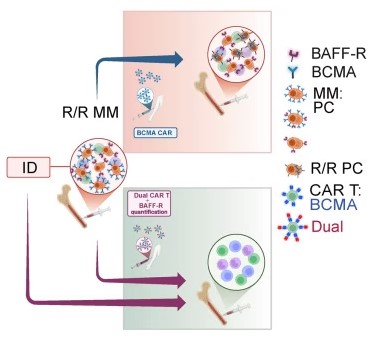
Multiple myeloma, a cancer of the bone marrow, remains difficult to treat despite modern CAR-T therapies. In a recent study led by Dr. Armin Rehm, researchers proposed an improved immunotherapy that recognizes two different features of malignant cells, enabling more effective cancer destruction. The research was published in Molecular Therapy.
Researchers from the Max Delbrück Center in Berlin, led by Dr. Uta Elisabeth Höpken, along with an international team, developed an optimized CAR-T therapy capable of binding two receptors simultaneously, rather than just one as in previous approaches.
Rehm and colleagues tested these bispecific CAR-T cells in multiple myeloma cell lines and patient-derived bone marrow cells.
“In all our experiments, we demonstrated that even when the BCMA receptor is missing or lost due to treatment—meaning that single-target CAR-T therapy fails—the improved CAR-T cells remain effective,” he explained.
4. Signal Transduction and Targeted Therapy: Combination of CAR-T Therapy and TAK-981 Improves Cure Rates in Burkitt Lymphoma Mouse Models
DOI: 10.1038/s41392-025-02422-5
Burkitt lymphoma is a rare and aggressive blood cancer characterized by MYC gene translocation, most commonly affecting children and adolescents. In recent years, CAR-T cell therapy—often called a “living drug” administered as a single infusion—has been approved for certain blood cancers. However, its efficacy against Burkitt lymphoma remains limited. Additionally, developing drugs that directly target MYC, the root cause of the disease, has been challenging for decades.
A study led by Dr. Hiroshi Kotani at Kanazawa University, in collaboration with scientists from Roswell Park Comprehensive Cancer Center, discovered that a SUMOylation inhibitor can suppress MYC activity. Based on this finding, the researchers investigated whether combining CAR-T therapy with the SUMOylation inhibitor TAK-981 could improve treatment outcomes for Burkitt lymphoma. The study was published in Signal Transduction and Targeted Therapy.
The team confirmed that the inhibitor slowed the growth of Burkitt lymphoma cells and altered their signaling pathways. They also examined its effect on CAR-T cells and found a dual action: although it initially activated CAR-T cells in a way that might limit long-term effectiveness, it also triggered an intrinsic “safety brake” mechanism. These results suggest that using limited doses of the inhibitor could maximize the long-term therapeutic benefits of CAR-T therapy.
Our Related Proteins
| Cat.No. # | Product Name | Source (Host) | Species | Tag | Protein Length | Price |
|---|---|---|---|---|---|---|
| MYC-1029H | Recombinant Full Length Human MYC, His-tagged | E.coli | Human | His | Full L. 1-454 a.a. | |
| MYC-01HFL | Recombinant Full-length Human MYC Protein, His-avi-tagged, Biotin Labeled | E.coli | Human | Avi&His | 1-454aa | |
| MYC-1028H |
Active Recombinant Human MYC

|
Sf9 Cells | Human | Non |

|
|
| MYC-2522H |
Active Recombinant Human MYC, His-tagged
|
E.coli | Human | His |
|
5. Cancer Cell: Experimental CAR-T Therapy Targets Tumor Immune Barriers Instead of Cancer Cells Directly
DOI: 10.1016/j.ccell.2025.12.021
Scientists at the Icahn School of Medicine at Mount Sinai have developed an experimental immunotherapy that tackles metastatic cancer in a non-traditional way: instead of directly attacking cancer cells, it targets the cells that protect them. Published in Cancer Cell, the study used aggressive preclinical models of metastatic ovarian and lung cancers and points to a new strategy for treating advanced solid tumors.
Inspired by the Trojan horse strategy, the therapy targets macrophages—cells that guard cancer cells within tumors. By disarming these protectors and opening the tumor “gate,” the therapy allows the immune system to enter and eliminate cancer cells.
Metastatic cancers account for the majority of cancer-related deaths, and solid tumors such as lung and ovarian cancers are particularly difficult to treat with current immunotherapies. One reason is that tumors actively suppress the surrounding immune system, forming a protective fortress around cancer cells.
The research team designed a therapy that selectively eliminates tumor-associated macrophages while preserving normal macrophages, converting tumors from an immunosuppressive state to an immune-activated one. The approach uses engineered immune cells—CAR-T cells derived from the patient’s own T cells.
Typically, CAR-T cells are designed to recognize and kill cancer cells directly, but for many cancer types this is difficult to achieve. Therefore, the team engineered CAR-T cells capable of recognizing tumor macrophages instead.
They further modified these CAR-T cells to produce interleukin-12 (IL-12), a powerful immune-activating molecule that stimulates cytotoxic T cells. When used to treat mice with metastatic lung and ovarian cancers, the results were striking: survival increased by several months, and many mice were completely cured.
Our Related Proteins
| Cat.No. # | Product Name | Source (Host) | Species | Tag | Protein Length | Price |
|---|---|---|---|---|---|---|
| IL12-4327H |
Recombinant Human IL12A&IL12B heterodimer protein
|
CHO | Human | Non | ||
| IL12-12H | Recombinant Human IL12 Protein, His-tagged | HEK293 | Human | His | ||
| IL12-001H |
Active Recombinant Human IL12, HIgG1 Fc-tagged
|
CHO | Human | Fc | 23-328;57-253 a.a. |
|
6. Nature Immunology: Enhanced BACH2 Expression Improves the Anti-Cancer Activity of CAR-T Cells
DOI: 10.1038/s41590-025-02388-0
Researchers at the University of Texas Southwestern Medical Center discovered that increasing levels of a protein called BACH2 enables engineered anti-cancer immune cells to behave more like stem cells, improving their therapeutic effectiveness. The findings were published in Nature Immunology.
“Using mouse models of solid cancers, we found that programming CAR-T cells during manufacturing to acquire stem-like properties significantly enhances their anti-tumor activity,” said Dr. Tuoqi Wu, who co-led the study with Dr. Chen Yao. Both researchers are assistant professors of immunology at UT Southwestern and members of the Harold C. Simmons Comprehensive Cancer Center.
This fine-tuning of CAR-T cells may represent a powerful strategy to overcome key barriers in immunotherapy for solid tumors.
Our Related Proteins
| Cat.No. # | Product Name | Source (Host) | Species | Tag | Protein Length | Price |
|---|---|---|---|---|---|---|
| BACH2-3751H | Recombinant Human BACH2 protein, GST-tagged | E.coli | Human | GST | 136-235 aa | |
| BACH2-046H | Recombinant Human BACH2 protein, GST-tagged | Wheat Germ | Human | GST |
|
|
| BACH2-1277H | Recombinant Human BACH2 Protein (S2-T841), Tag Free | Insect Cells | Human | Non | S2-T841 |
|
| BACH2-1766HF | Recombinant Full Length Human BACH2 Protein, GST-tagged | In Vitro Cell Free System | Human | GST | Full L. 841 amino acids |
|
7. ACS Nano: “Arming” Tumor Macrophages—Scientists Develop In-Situ CAR-Macrophage Therapy
DOI: 10.1021/acsnano.5c09138
Cancer is the second leading cause of death worldwide. In 2020, nearly 10 million people died from cancer, about 90% of which were caused by solid tumors. Solid tumors such as lung, gastric, and liver cancers have dense tissue structures that act like a fortress, preventing immune cells from effectively infiltrating tumors. This is a key reason why CAR-T-based therapies often struggle against solid tumors.
To address this challenge, researchers from the Korea Advanced Institute of Science and Technology (KAIST) and other institutions developed a novel strategy described in ACS Nano titled “In Situ Chimeric Antigen Receptor Macrophage Therapy via Co-Delivery of mRNA and Immunostimulant.”
Instead of extracting immune cells from patients and training them outside the body, the scientists chose to reprogram immune cells directly inside the tumor.
They designed lipid nanoparticles that macrophages can efficiently absorb, functioning as a Trojan horse carrying two key components:
- CAR-encoding mRNA, which acts like a navigation map and attack instruction enabling macrophages to recognize cancer cells.
- A STING agonist, a powerful immune stimulant that activates macrophages and enhances their anti-tumor response.
When injected directly into the tumor, surrounding macrophages engulf these nanoparticles. The mRNA is translated into CAR proteins, giving macrophages the ability to recognize cancer cells. Meanwhile, the STING agonist strongly activates macrophage immune activity and reshapes the tumor microenvironment, converting “cold tumors” (immunosuppressive) into “hot tumors” (immunologically active).
8. Cell: Fungal Cellobiose Metabolism Provides Fuel for T Cells to Overcome Glucose Competition in Tumors
DOI: 10.1016/j.cell.2026.01.015
Researchers at UCLA discovered a way to “supercharge” immune cells using a fuel source that tumors cannot steal. Their preclinical study, published in Cell, significantly improved immune cell survival and tumor-killing ability in solid tumors.
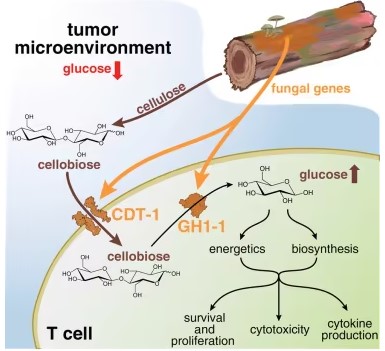
“One challenge with solid tumors is that cancer cells consume most of the glucose in the environment,” said Dr. Manish Butte, professor of pediatrics, allergy, immunology, and rheumatology at UCLA and member of the UCLA Jonsson Comprehensive Cancer Center. “This leaves attacking T cells without enough glucose to produce cytokines and kill cancer cells.”
To overcome this metabolic barrier, the team developed a method to supply T cells with glucose without feeding the tumor. They used cellobiose, a natural sugar found in plant fiber that is safe and commonly added to foods such as infant formula, beverages, candy, and frosting. Human cells and tumors cannot break down cellobiose, but some microbes and fungi can.
By equipping T cells with two proteins derived from fungi, researchers enabled them to import cellobiose and convert it into usable glucose inside the cell. In laboratory experiments simulating nutrient-poor tumor environments—where glucose levels can drop to a fraction of those in healthy tissue—these engineered T cells remained alive, continued dividing, produced anti-cancer cytokines, and effectively killed tumor cells, while unmodified T cells rapidly lost their function.