
Fluorescent Labeling in Vitro
Fluorescent labeling is an essential technique for visualizing, quantifying, and tracking biomolecules in a wide range of biological systems. Creative BioMart offers a highly efficient and customizable ColorLabel ™ Fluorescent Labeling Service, enabling precise conjugation of your protein or antibody to an extensive panel of fluorophores. By utilizing optimized, mild reaction conditions, advanced purification systems, and rigorous quality analyses, we ensure that labeled proteins retain their structural integrity and biological activity. Whether your application involves flow cytometry, multiplex detection, imaging, or assay development, our in vitro fluorescent labeling platform delivers high-performance conjugates designed for reliability, brightness, and stability.
Introduction to Fluorescent Labeling and ColorLabel™
Fluorescent labeling serves as a cornerstone in modern biochemical and cellular research. The ability to attach highly stable, bright fluorophores to proteins and antibodies enables a multitude of experimental approaches, including:
- Fluorescence microscopy
- Flow cytometry (FACS)
- Immunofluorescence assays
- Multiplex detection systems
- Live‐cell imaging
- Protein trafficking and interaction studies
- Signal amplification strategies via tandem labels
The flexibility of in vitro labeling allows researchers to select the fluorophore ideal for their application, whether they need high photostability, specific excitation-emission profiles, minimal background, or compatibility with multiplex detection. Chemical conjugation strategies typically target accessible functional groups such as lysine residues (via amine-reactive dyes) or cysteine residues (via thiol-reactive dyes). More controlled labeling can be achieved at the N- or C-terminus, while dual-color labeling enables complex imaging and molecular interaction analysis.
Creative BioMart has developed proprietary high-efficiency labeling protocols and the ColorLabel™ platform, enabling precise and reproducible conjugation under mild conditions that preserve protein binding capacity, conformational integrity, and activity. Our comprehensive service allows clients to rely on expert fluorophore selection, robust quality control, and purified, ready-to-use fluorescent conjugates.
Fluorescent Labeling In Vitro: Services & Capacities
Our Fluorescent Labeling In Vitro Service includes a complete suite of experimental steps and analytical support:
Core Labeling Services
- Conjugation of 1–5 mg of protein or antibody
- Universal C- or N-terminal labeling
- Dual-color labeling for advanced imaging or multiplex detection
- Amino- or thiol-reactive labeling depending on protein chemistry
Service Workflow

Available Fluorophores
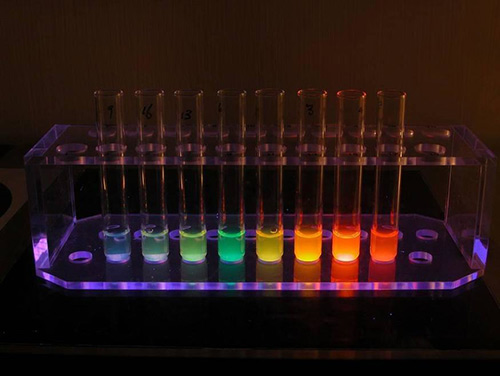
We offer conjugation to a broad spectrum of fluorescent dyes, including but not limited to:
- Alexa Fluor series
- ATTO Fluor dyes
- Dylight series
- Cy dyes ( Cy3, Cy5, Cy7, etc.)
- Cascade Blue, Oregon Green, and other Molecular Probes fluorophores
- Traditional fluorophores: FITC, TRITC, Texas Red
- Protein-based fluorophores: R-PE, APC, and Alexa Fluor tandems
We also work with custom dyes upon request. Our specialists are available to help you select the most appropriate fluorophore based on excitation/emission properties, brightness, photostability, and compatibility with your detection system.
Choosing the Best Fluorophore and Approach
-
Fluorophore Selection
Selecting the optimal fluorophore ensures maximum experimental performance. We provide guidance based on:
- Compatibility with your detection instrument
- Brightness and quantum yield
- Photostability for long-term imaging
- pH resistance
- Spectral separation for multiplexing
- Minimization of autofluorescence and background
-
Labeling Chemistries
To accommodate different structural and functional constraints, we offer multiple labeling approaches:
- Amine-reactive dyes (NHS esters) for lysine side chains or N-termini
- Thiol-reactive dyes (maleimide derivatives) for cysteine residues
- Terminal-specific labeling at the N- or C-terminus for controlled conjugation
- Dual-labeling strategies when two spectrally distinct dyes are required
ColorLabel™ Advantages
- Wide selection of colors suitable for complex multiplex panels
- High fluorescence intensity enabling sensitive detection
- Excellent photostability supporting extended imaging sessions
- Room-temperature incubations for convenience and protein stability
- pH-insensitive performance across diverse experimental conditions
- Low background fluorescence improving clarity and signal precision
- Harsh-chemical–free protocols , maintaining protein activity
- Mild conjugation conditions ensuring preservation of binding properties
Purification and Analysis
Purification by size-exclusion chromatography to remove free dye, and full conjugate characterization, including:
- Fluorescence excitation/emission spectra
- Protein concentration determination
- Dye-to-protein molar ratio (D/P ratio)
Additional Support Services
- Consultation on optimal labeling strategies
- Selection of compatible dye chemistry for sensitive proteins
- Guidance for downstream applications such as FACS, microscopy, and multiplex assays
Why Partner With Creative BioMart
- Extensive Fluorophore Options and Customization: We offer one of the industry’s broadest selections of dyes—from small-molecule fluorophores to tandem labels—and can customize labeling strategies for any application.
- High-Efficiency ColorLabel™ Technology: Our proprietary protocols ensure high labeling yields, controlled D/P ratios, and reliable brightness, while preserving biological activity.
- Mild, Protein-Safe Conjugation Conditions: We avoid harsh chemicals and extreme conditions, protecting sensitive epitopes and maintaining antibody affinity or protein stability.
- Comprehensive QC and Spectral Analysis: Each labeled protein undergoes thorough characterization, including spectral verification, purity assessment, and ratio quantification to guarantee consistent performance.
- Expert Consultation from Start to Finish: Our scientists assist with fluorophore selection, buffer compatibility, labeling chemistry, and downstream application optimization, reducing the risk of experimental failure.
- Fast Turnaround with Reliable Reproducibility: From 1–5 mg custom conjugations to larger production runs, we deliver high-quality fluorescent conjugates swiftly and reproducibly, meeting the needs of research, diagnostics, and assay development.
Fluorescent Labeling In Vitro: Case Studies
Case 1: A novel multiplex fluorescent-labeling method for the visualization of mixed-species biofilms in vitro
Aherne et al., 2024. doi:10.1128/spectrum.00253-24
Understanding microbial interactions within mixed-species (MS) biofilms is crucial for studying persistent infections, yet distinguishing individual species in situ remains challenging. Using specialized fluorescent dyes, researchers established a robust multiplex labeling strategy enabling clear visualization of multiple oral bacteria within complex in vitro biofilm models. Bacteria labeled in four distinct colors formed stable single- and mixed-species biofilms, analyzed through confocal spinning disk microscopy, which maintained strong fluorescence for up to four days. Flow cytometry of supernatants further revealed species-specific dispersal behaviors. This multi-color labeling approach provided precise spatial mapping and quantitative segmentation of species distributions, offering a powerful tool for dissecting biofilm architecture and dynamics.
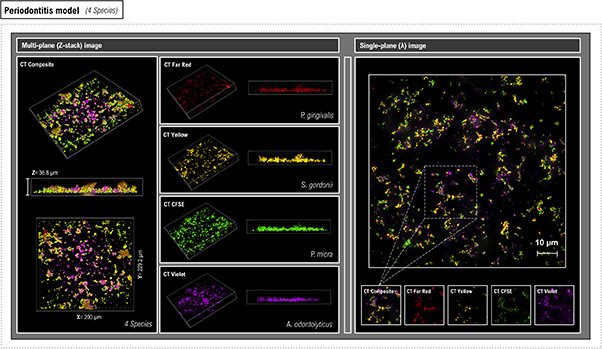
Figure 1. Visualization of MS biofilms representing a periodontitis model labeled by multiplexing dyes. Representative CDSM Z-stack (left) and single-plane (right) images of overnight MS biofilms stained with specialized dyes. A unique color was used to label four species ( P. gingivalis [red], S. gordonii [yellow], P. micra [green], and A. odontolyticus [violet]). (Aherne et al., 2024)
Case 2: Dual-fluorescence imaging to assess ADC-induced tumor apoptosis
Tsuboi and Jin, 2022. doi:10.1021/acsomega.1c05636
To support the development of antibody–drug conjugates (ADCs), researchers established a dual-fluorescent labeling strategy using annexin V–EGFP–quantum dot (QD) conjugates to visualize ADC-triggered tumor apoptosis. The probe emits both visible (515 nm) and near-infrared (850 nm) fluorescence, enabling apoptosis detection at cellular and whole-body scales. Applied to HER2-positive breast cancer models treated with Kadcyla, this approach provided clear in vitro and in vivo imaging of apoptotic responses. The study demonstrates that fluorescently labeled annexin V–EGFP–QDs offer a powerful, sensitive platform for evaluating ADC efficacy and monitoring therapeutic apoptosis dynamics in cancer research.
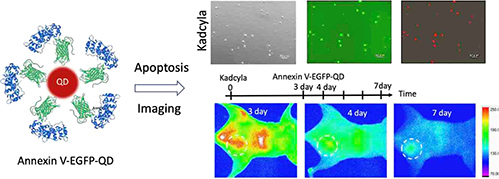
Figure 2. Graphic abstract: In vitro and in vivo fluorescence imaging of antibody–drug conjugate-induced tumor apoptosis using annexin V–EGFP conjugated quantum dots. (Tsuboi and Jin, 2022)
Fluorescent Labeling In Vitro: Customer Testimonials
“Creative BioMart transformed our multiplex flow cytometry panel by delivering precisely labeled antibodies with exceptional brightness and stability. Their team helped us select ATTO and Alexa Fluor dyes that minimized spillover and significantly improved our rare-cell detection sensitivity. The final conjugates passed all our internal QC criteria on the first run.”
— Director of Immunology R&D | Global Pharmaceutical Company
“We outsourced the fluorescent labeling of several custom recombinant proteins for a receptor–ligand binding study. Creative BioMart provided dual-color conjugates with highly consistent dye-to-protein ratios, enabling us to generate clean FRET signals without batch-to-batch variation. Their analytical report was thorough and saved us weeks of assay optimization.”
— Principal Scientist, Molecular Pharmacology | Biotechnology Research Institute
“Our team needed FITC- and Cy5-labeled antibodies for a high-content imaging screen targeting neuronal surface markers. Creative BioMart delivered conjugates with outstanding photostability—critical for our long exposure times. The fact that they preserved antibody affinity even with our sensitive monoclonal clone made them our preferred partner moving forward.”
— Head of Cell-Based Assays | Neuroscience Drug Discovery Center
“For a collaborative project on tumor microenvironment profiling, we required a panel of five antibodies labeled with different Alexa Fluor and Dylight dyes. Creative BioMart guided us through dye selection, optimized the conjugation conditions, and returned reagents with remarkably low background signal. Their fast turnaround allowed us to meet an important grant deadline.”
— Senior Scientist, Translational Oncology | Academic Medical Research Consortium
Fluorescent Labeling In Vitro: Frequently Asked Questions
-
Q: What types of fluorophores can you conjugate to my protein or antibody?
A: We offer an extensive range of fluorophores, including Alexa Fluor dyes, ATTO dyes, Dylight dyes, Cy dyes, Molecular Probes fluorophores (such as Cascade Blue and Oregon Green), traditional labels like FITC, TRITC, and Texas Red, as well as R-PE, APC, and tandem dyes. If you require a fluorophore not listed, our team can recommend or source the optimal dye based on your application’s excitation/emission needs. -
Q: Will the fluorescent labeling affect the binding activity of my antibody or protein?
A: No—our workflows are specifically designed to preserve protein function. We use mild, carefully controlled conjugation conditions and avoid harsh chemicals. Our optimized chemistries ensure minimal modification of the active site and maximize retention of binding affinity. -
Q: What is the typical amount of protein required for your labeling service?
A: Our standard service supports 1–5 mg of protein or antibody. For projects requiring more or less material, we provide customized solutions. Simply share your sample constraints and we will recommend the best approach. -
Q: How do you ensure the quality of the labeled conjugate?
A: Every project includes a comprehensive quality control (QC) analysis. This includes an assessment of the excitation/emission spectra, the determination of the protein concentration and the calculation of the accurate dye-to-protein (D/P) ratio. Size-exclusion chromatography is also used to purify the sample and remove any free dye and aggregates. These steps ensure high signal intensity, clean backgrounds and consistent performance. -
Q: Can you perform dual-color or site-specific labeling?
A: Yes. We provide universal N- or C-terminal labeling, amino-reactive labeling, thiol-specific labeling, and dual-color strategies. Our team can advise on the best labeling chemistry to maintain molecular function while achieving strong, stable fluorescence. -
Q: Can you help me decide which fluorophore is best for my experiment?
A: Absolutely. Share your instrument details, assay format, and downstream workflow, and our specialists will help you select the optimal fluorophore based on brightness, photostability, spectral overlap, and required multiplexing. -
Q: What information should I provide to ensure a successful labeling project?
A: Please include as many details as possible about your protein/antibody: buffer composition, concentration, purity, storage conditions, known sensitivities, and intended application. This enables us to optimize conditions and maximize the probability of successful conjugation.
Other Resources
Related Services
- Protein Engineering Services
- Protein Quantitation Service
- Fluorescent Tagged Protein in Vivo
- Protein Expression and Purification Services
- Multiplex Protein Detection Assay
- Protein Labeling
Related Products
References:
- Aherne O, Mørch M, Ortiz R, Shannon O, Davies JR. A novel multiplex fluorescent-labeling method for the visualization of mixed-species biofilms in vitro. Ferran AA, ed. Microbiol Spectr. 2024;12(7):e00253-24. doi:10.1128/spectrum.00253-24
- Tsuboi S, Jin T. In vitro and in vivo fluorescence imaging of antibody–drug conjugate-induced tumor apoptosis using annexin V–EGFP conjugated quantum dots. ACS Omega. 2022;7(2):2105-2113. doi:10.1021/acsomega.1c05636

Contact us or send an email at for project quotations and more detailed information.
Quick Links
-

Papers’ PMID to Obtain Coupon
Submit Now -

Refer Friends & New Lab Start-up Promotions