
Protein Bioconjugation Services
Creative BioMart provides comprehensive Protein Bioconjugation Services designed to support advanced research, diagnostics, and therapeutic development. With years of experience in chemical modification and conjugation of proteins, oligonucleotides, fluorophores, toxins, haptens, bifunctional ligands, and metal chelates, we deliver high-quality, reproducible conjugates tailored to client needs. Leveraging our state-of-the-art gene synthesis and protein engineering platforms, every bioconjugate is produced under strict quality assurance and quality control standards. Our capabilities ensure high purity, structural integrity, and functional performance, empowering customers to accelerate discovery, streamline assay development, and achieve reliable biological insights.

Understanding Protein Bioconjugation
Protein bioconjugation plays a central role in modern biological research, diagnostics, and targeted drug delivery. By covalently linking proteins to functional molecules —such as fluorophores for imaging, polymers for stabilization, toxins for therapeutic payload delivery, or metal chelators for radiolabeling—researchers can customize biomolecules to perform specialized tasks with enhanced sensitivity and precision.
Creative BioMart has built a robust platform integrating gene-to-protein expression, modification, and conjugation, enabling precise control over conjugation chemistry, orientation, stoichiometry, and purification. Our long-standing expertise ensures that each bioconjugate achieves optimal performance in downstream applications ranging from molecular imaging and bioassays to therapeutic evaluation.
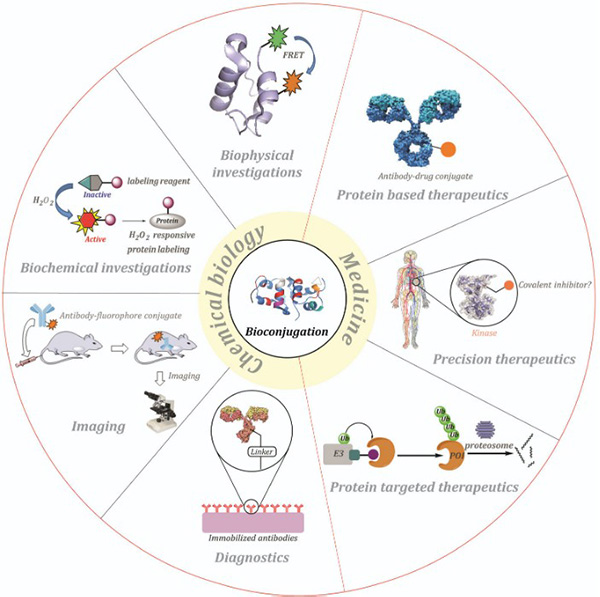
Figure 1. Protein bioconjugation bridging diverse elements of chemical biology and medicine. (Kumar et al., 2021)
Protein Bioconjugation: What We Offer
-
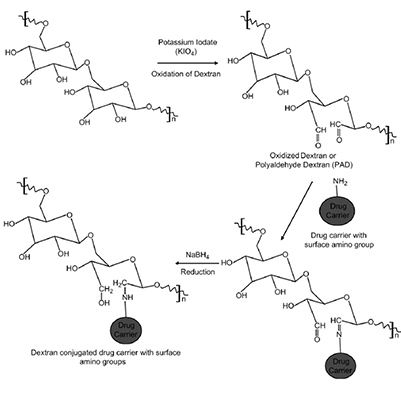
Dextran Conjugation
High-quality modification and activation of dextran for conjugation to proteins or small molecules. Dextrans offer excellent water solubility, low toxicity, and resistance to enzymatic degradation, making them ideal carriers for drugs, haptens, tracers, and enzyme stabilizers. Fluorescent dextran conjugates are widely used for intracellular delivery, microinjection studies, vesicle fusion assays, and tracking phagocytic or endocytic pathways.
-

Macrocyclic Metal Chelator Conjugation
Covalent attachment of peptides, antibodies, drugs, or oligonucleotides to macrocyclic chelators. Resulting conjugates support radiolabeling, MRI contrast enhancement, photodynamic therapy, and molecular imaging. Each project is supported by our dedicated bioanalytical laboratory to ensure precise metal loading and purity.
-
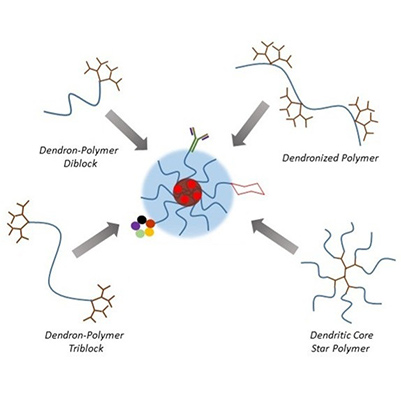
Dendritic Bioconjugation
Conjugation of dendrimers and dendrons to biomolecules for the creation of multivalent, nano-scale constructs. Dendritic materials enhance assay signal strength, improve solubility of hydrophobic molecules, enable targeted drug delivery, support transfection applications, and provide versatile scaffolds for advanced biomaterial development.
Creative BioMart delivers a broad portfolio of custom protein bioconjugation solutions, including but not limited to:
Custom and Flexible Conjugation Chemistries
- Fluorophore conjugation
- Hapten and toxin conjugation
- Biopolymer–protein conjugation
- Radioisotope labeling
- Multifunctional crosslinking strategies
- High-throughput multiplexed conjugation
All conjugates are produced with careful control of molar ratios, reaction conditions, and purification to meet exact specifications.
Service Workflow

Service Features
- Expertise in conjugating proteins with oligonucleotides, fluorophores, toxins, metal chelators, polymers, and multifunctional ligands
- Support for large- and small-scale conjugation projects
- Strict adherence to quality control to ensure batch-to-batch consistency
- Capability to work with sensitive or challenging biomolecules
- Customizable levels of modification and labeling density
- Optional analytical testing packages for functional validation
- Fast turnaround times and cost-effective project plans
Why Choose Our Services
- Extensive Expertise in Bioconjugation Chemistry: Decades of experience in diverse conjugation platforms ensure highly reliable outcomes for complex biomolecules.
- Comprehensive Gene-to-Protein Capability: Integrated systems for gene synthesis, expression, modification, and conjugation streamline workflows and improve consistency.
- Stringent Quality Control: Every stage—from protein preparation to final QC—is monitored under rigorous standards for purity, stability, and performance.
- Flexible and Customizable Service Options: Tailored chemistries, labeling densities, and analytical evaluations meet both routine and highly specialized research needs.
- High Throughput and Multiplexing: Ability to process multiple targets simultaneously, improving efficiency and reducing assay development time.
- Cost-Effective and Time-Saving Solutions: Optimized workflows, experienced staff, and efficient project handling reduce both costs and timelines without compromising quality.
Protein Bioconjugation: Case Studies
Case 1: Whey protein isolate-dextran conjugate
Liu et al., 2021. doi:10.1016/j.lwt.2021.111766
Whey protein isolate–dextran conjugates produced through controlled Maillard reaction showed time-dependent increases in conjugation degree and structural remodeling, including higher α-helix content and reduced hydrophobicity. These conformational shifts, along with increased steric hindrance, enabled precise control over nanoparticle size and enhanced thermal stability. Nanoparticles formed from the conjugates were markedly more resistant to aggregation and dissociation across wide pH and ionic strength ranges compared with non-conjugated systems. Overall, glycation-driven modification of whey proteins provided an effective strategy to tune nanoparticle dimensions and improve their robustness against environmental stresses.
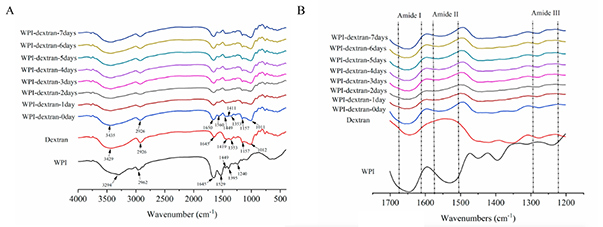
Figure 2. Fourier-transform Infrared spectral changes (A) and detailed spectra (B) of conjugates as a function of reaction time. WPI: whey protein isolate; WPI-dextran-0day: mixture of WPI and dextran before conjugation; WPI-dextran-(1-7)days: WPI-dextran conjugates incubated for 1-7 days. (Liu et al., 2021)
Case 2: A novel thiacrown-based chelator platform for mercury theranostic radioimmunoconjugates
Randhawa et al., 2025. doi:10.1039/D5PM00222B
This study introduces two new bifunctional chelators (BFCs), NS4-Tz and NS4-NCS, designed for attaching theranostic radiometals 197m/gHg to biomolecules. Derived from a 15-membered thiacrown macrocycle, the chelators were synthesized, radiolabeled, and evaluated for stability and bioconjugation to trastuzumab (TmAb). NS4-Tz demonstrated high radiolabeling efficiency, excellent serum and glutathione stability, and successful conjugation to TmAb using a two-step labeling strategy, yielding a construct with HER2-specific binding in vitro and tumor-targeted uptake in vivo. Although long-term stability remains a challenge, NS4-Tz shows strong potential for mercury-based theranostics, particularly with fast-clearing vectors such as peptides and small molecules.

Figure 3. Bioconjugation reactions: (right) thiourea coupling of NS4-NCS with Trastuzumab, or (left) coupling of NS4-Tz to PEG4-TCO-modified Trastuzumab via the inverse electron demand Diels–Alder (IEDDA) click reaction. (Randhawa et al., 2025)
Protein Bioconjugation: Customer Feedback
“We relied on Creative BioMart to conjugate a macrocyclic metal chelator to one of our most sensitive therapeutic antibodies for a preclinical radiodiagnostic program. Their team ensured precise control over chelator density and maintained more than 95% of the antibody’s binding affinity. The radiolabeling efficiency and serum stability exceeded our internal benchmarks, allowing us to move into animal imaging studies ahead of schedule. Their scientific insight and rigorous QC made them an invaluable partner.”
— Senior Director of Molecular Imaging | Global Pharmaceutical Company
“Our lab needed custom fluorescent dextran conjugates for long-term tracking of macrophage populations in vivo . Creative BioMart delivered batches with consistent molecular weights, excellent fluorescence intensity, and outstanding resistance to enzymatic degradation. These conjugates gave us clean, high-contrast images for weeks—something we had struggled to achieve with other suppliers. Their responsiveness and willingness to customize the project were exceptional.”
— Principal Investigator | Academic Medical Research Institute
“We approached Creative BioMart to design dendrimer–peptide bioconjugates for a targeted oncology delivery platform. The constructs they produced significantly enhanced peptide solubility and nearly doubled receptor-binding avidity in our assays. Their team helped us refine linker selection and provided detailed structure–function analyses. The final conjugates performed better than our internal prototypes and have now progressed to in vivo efficacy testing.”
— Head of Drug Delivery R&D | Mid-Sized Biotech Company
“Creative BioMart supported our multiplex immunoassay project by generating a panel of protein–fluorophore conjugates with highly controlled dye-to-protein ratios. Their consistency across batches dramatically improved our assay reproducibility, and the signal strength was exactly what we needed for low-abundance biomarker detection. The turnaround time was impressive, and their technical team communicated clearly throughout the entire process. This collaboration helped us accelerate the launch of a key diagnostic product.”
— Director of Diagnostics Development | In-Vitro Diagnostics Manufacturer
Protein Bioconjugation: Frequently Asked Questions
-
Q: What types of bioconjugation does Creative BioMart support?
A: We offer a comprehensive suite of conjugation strategies, including protein–fluorophore, enzyme, oligonucleotide, toxin, metal chelator, dextran, and dendrimer conjugates. Our capabilities cover everything from simple label addition to complex multifunctional constructs such as diagnostic probes, imaging agents, and targeted drug delivery conjugates. -
Q: How do you ensure the quality and consistency of each bioconjugate?
A: Every project is controlled under stringent QA/QC standards. We use state-of-the-art gene synthesis, high-purity protein expression platforms, and validated analytical assays to ensure batch consistency, controlled labeling ratios, preserved bioactivity, and high purity of the final conjugate. -
Q: Can you handle complex or highly customized conjugation projects?
A: Absolutely. Our team routinely works with challenging chemistries, including macrocyclic metal chelators, hydrophilic polysaccharide carriers (such as dextrans), dendritic nanomaterials, and bifunctional linkers. We tailor each workflow based on the biomolecule, desired functionality, and downstream application—whether imaging, diagnostics, or targeted delivery. -
Q: Do your conjugation services support multiplexing or multivalent designs?
A: Yes. We specialize in generating conjugates that allow simultaneous detection or functionalization of multiple targets within a single assay or reaction. Our chemistries support multivalent scaffolds, multiplex fluorescent labeling, and multifunctional dendrimer constructs. -
Q: What applications can your bioconjugates be used for?
A: Our custom conjugates are designed for a wide range of uses, including radio immunodetection, radioimmunotherapy, magnetic resonance imaging, photodynamic therapy, ELISA improvement, cellular tracking, drug delivery, diagnostic assay development, and high-throughput screening. -
Q: How flexible are your service options? Can you meet tight timelines?
A: We offer flexible service packages—with options for rapid turnaround, scalable production, and project-specific customization. Our experienced team streamlines each step to save time and cost while maintaining high data integrity, making us a strong partner for time-critical research and product development. -
Q: Can you provide analytical support for characterization and validation?
A: Yes. We provide full analytical support, including purity assessment, structural confirmation, activity assays, dye-to-protein or ligand ratios, stability testing, and functional validation. You will receive comprehensive data packages tailored to your regulatory or publication needs.
Other Resources
Related Services
- Protein Labeling
- Stable Isotope Labeling
- Protein Biotinylation
- Fluorescent Labeling in Vitro
- Fluorescent Tagged Protein in Vivo
- Enzyme/Antibody Conjugation
- Site-Specific and Custom Labeling
Related Products
References:
- Bolu BS, Sanyal R, Sanyal A. Drug delivery systems from self-assembly of dendron-polymer conjugates †. Molecules. 2018;23(7):1570. doi:10.3390/molecules23071570
- Jain K, Kesharwani P, Gupta U, Jain NK. A review of glycosylated carriers for drug delivery. Biomaterials.
- Kumar M, Reddy NC, Rai V. Chemical technologies for precise protein bioconjugation interfacing biology and medicine. Chem Commun. 2021;57(58):7083-7095. doi:10.1039/D1CC02268G
- Liu Q, Cui H, Muhoza B, et al. Whey protein isolate-dextran conjugates: Decisive role of glycation time dependent conjugation degree in size control and stability improvement of colloidal nanoparticles. LWT. 2021;148:111766. doi:10.1016/j.lwt.2021.111766
- Randhawa P, Kondo M, Chu ACK, et al. Bifunctional sulfur-rich macrocyclic chelators and their immunoconjugates for the targeted delivery of theranostic mercury-197. RSC Pharm. Published online 2026:10.1039.D5PM00222B. doi:10.1039/D5PM00222B
- Rinne SS, Leitao CD, Mitran B, et al. Optimization of HER3 expression imaging using affibody molecules: Influence of chelator for labeling with indium-111. Sci Rep. 2019;9(1):655. doi:10.1038/s41598-018-36827-w

Contact us or send an email at for project quotations and more detailed information.
Quick Links
-

Papers’ PMID to Obtain Coupon
Submit Now -

Refer Friends & New Lab Start-up Promotions