

MNP for HTS Drug Discovery - Unlocking Druggable Membrane Protein Targets
Membrane Protein Nanoparticles (MNPs) Revolutionize Traditional Screening Paradigms
Membrane proteins account for 23% of the human genome-encoded proteins yet harbor over 60% of FDA-approved drug targets—a stark contrast between their pharmaceutical value and development challenges. Traditional screening platforms based on cellular or purified membrane protein systems have long grappled with an "impossible triangle" of structural integrity, functional activity, and throughput compatibility. Membrane Protein Nanoparticles (MNPs), which fuse natural cell membrane fragments with polymer cores to create uniformly sized (50-150 nm) biomimetic nanoparticles with native protein orientation and intact lipid environments, provide a revolutionary tool for high-throughput screening (HTS) that combines biological relevance with automation-friendly properties. This article systematically elaborates on MNP adaptation strategies, experimental designs, quality control protocols, and target-specific solutions in HTS scenarios.
Explore MNPs Products
Learn More
High-Throughput Screening Service
Learn More
Section 1: HTS Compatibility – From Concept to Industrial Application
1.1 Stability and Homogeneity of MNPs in 96/384-Well Plates
Plate-level stability is fundamental for HTS success. Real-time surface plasmon resonance (SPR) monitoring demonstrates that optimized MNP formulations maintain a polydispersity index (PDI) <0.15 and ζ-potential fluctuations within ±3 mV after 4 hours of static incubation in 384-well plates. Critical optimization parameters include: membrane protein-to-polymer core molar ratio (recommended 1:50–1:100), buffer ionic strength (150 mM NaCl as the optimal balance), and surface PEGylation density (5–10 mol%).
Surface Plasmon Resonance (SPR) Service
Learn More
Homogeneity control requires a three-tier characterization system:
- Production-level: Dynamic light scattering (DLS) ensures inter-batch mean particle size CV <8%
- Plate-level: Random sampling of 24 wells per plate for nanoparticle tracking analysis (NTA), concentration CV must be <10%
- Well-level: High-throughput imaging flow cytometry (ImageStream) validates intra-well particle distribution, confirming no aggregation hotspots
For long-term storage, MNP lyophilized powder with trehalose-sucrose composite protectant (5% w/v each) remains stable for 12 months at -80°C, with functional activity recovery >90% upon reconstitution. For 384-well plates, low-binding surfaces (LoBind) combined with siliconized sealing films reduce edge effects by 40%.
1.2 Standardized Automation-Friendly Pipetting and Dilution Protocols
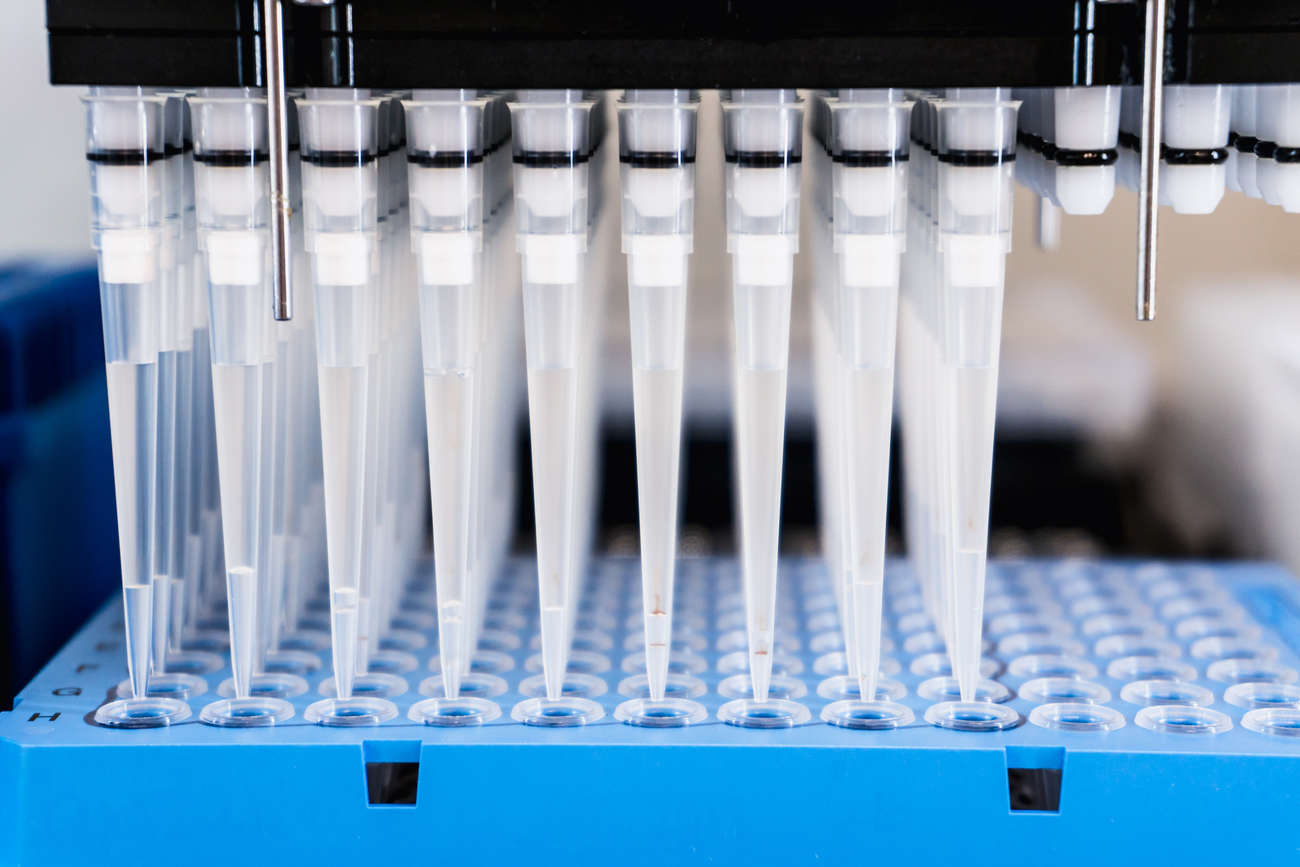
Automated liquid handling of MNPs must overcome viscosity and adsorption challenges. Hamilton STAR or Beckman Biomek i7 workstations with reverse pipetting and timed pre-wetting protocols are recommended: pre-wet tips with MNP solution three times before aspiration, each pre-wet volume at 150% of transfer volume. For MNP stock solutions >1 mg/mL, a two-step dilution method is employed—first dilute to 0.2 mg/mL intermediate solution with buffer containing 0.01% Pluronic F-68, then perform serial dilutions to effectively prevent interfacial adsorption losses.
Critical automation parameters:
- Pipetting speed: Aspirate at 50 μL/s, dispense at 30 μL/s (prevents shear damage)
- Delay time: Tip dwell for 1 second post-dispensing to ensure complete liquid release
- Tip washing: Alternate washes with 0.5 M NaOH + 70% ethanol (3 cycles), followed by 5 deionized water rinses
- Volume verification: Daily startup QC using sodium fluorescein (100 nM), ensuring CV <3%
For 384-well plates, non-contact acoustic dispensing (Echo 655T) is recommended for precious compound libraries. Its 5 nL minimum transfer volume keeps DMSO final concentration <0.1%, preventing solvent damage to MNP membrane structures.
1.3 Experimental Design Strategies to Prevent Nanoparticle Sedimentation
Nanoparticle sedimentation is a primary error source in plate-based screening. Sedimentation velocity follows Stokes' law—50 nm MNPs settle at ~0.3 mm/h under static conditions, but aggregation accelerates this by >10x. Experimental design requires multi-dimensional interventions:
Kinetic Strategies:
- Shaking mode: Dual orbital shaking at 1 mm amplitude, 800 rpm frequency, 30-second cycles every 5 minutes reduces effective sedimentation distance by 70%
- Real-time detection: Use plate readers with built-in shaking (e.g., BMG CLARIOstar) for automatic 10-second shaking before signal acquisition
Chemical Strategies:
- Density matching: Add iodixanol to 8% final concentration in buffer to increase density to 1.05 g/cm³, approaching MNP density (1.08–1.12 g/cm³) for near-neutral buoyancy
- Surface engineering: Introduce zwitterionic sulfobetaine copolymers to increase particle hydration layer thickness to 8–10 nm, where steric hindrance significantly inhibits aggregation
Physical Strategies:
- Microplate modification: Use V-bottom 384-well plates instead of flat-bottom to concentrate particles at the detection path center, improving signal consistency by 25%
- Magnetic levitation assistance: For iron oxide-core MNPs, apply weak alternating magnetic field (5 Hz, 2 mT) to generate micro-convection, preventing sedimentation without damaging membrane protein structures
Section 2: Screening Assay Formats – From Binding to Phenotypic Coverage
2.1 Binding Assays: Fluorescence Polarization (FP) and Time-Resolved FRET (TR-FRET)
Fluorescence Polarization (FP) is ideal for small molecules (<5 kDa). Label MNP membrane proteins with fluorescein; binding events increase rotational correlation time (τc), raising polarization values (mP).
Key optimization points:
- Labeling strategy: Use site-directed labeling—incorporate unnatural amino acids (e.g., p-azidophenylalanine) in the target protein's extracellular domain for click-chemistry probe attachment, achieving >85% labeling efficiency with <10% functional impact
- Detection window: Optimize MNP concentration to 50–100 nM (protein basis) to generate baseline polarization of 150–200 mP, maximizing dynamic range
- Signal stability: Add 1 mg/mL BSA + 0.05% CHAPS to suppress false positives from compound non-specific adsorption
Time-Resolved Fluorescence Resonance Energy Transfer (TR-FRET) is better for low-affinity ligands. Use Eu³⁺ cryptate-labeled MNPs and d2 fluorophore-labeled ligands, detecting at dual wavelengths (615/665 nm).
Advantages include:
- Homogeneous detection: No wash steps, HTS-compatible
- Signal amplification: FRET distance <10 nm, highly specific for binding events
- Background elimination: Time-resolved mode eliminates short-lifetime autofluorescence interference
For GPCR screening, fuse SNAP-tag to the receptor N-terminus, label MNPs with BG-Eu, and label ligands with BG-d2 for competitive labeling, enabling real-time kinetic detection with Kd accuracy comparable to radioligand binding assays (R²>0.95).
2.2 Functional Assays: Precision GPCR Signal Pathway Detection
MNPs preserve intact GPCR signal transduction, making them ideal for functional screening.
cAMP Accumulation Assay (HTRF): Co-incubate MNP-coated GPCRs with cAMP reporter. Add compounds and quantify cAMP via homogeneous time-resolved fluorescence (HTRF).
Key protocol:
- MNP concentration: 0.5–1 μg/well (384-well format), ensuring receptor density comparable to native cell membranes (~2–5 fmol/well)
- G protein coupling: Co-encapsulate Gαs or Gαi minigenes to enforce pathway specificity and reduce G protein promiscuity
- Kinetic detection: Use PHERAstar FSX plate reader, reading every 2 minutes for 60 minutes to capture agonist potency (EC50) and kinetic signatures
- Positive control: Forskolin (10 μM) as direct adenylyl cyclase activator, achieving Z' factor of 0.75
β-Arrestin Recruitment Assay: The PathHunter® technology co-expresses MNP-anchored GPCRs with β-arrestin-Enzyme Acceptor (EA) fusion proteins. Ligand binding induces conformational changes driving ProLink™ (PK) tag enzyme complementation and luminescence.
Advantages:
- Universality: No G protein coupling selectivity required, suitable for arrestin-biased ligand screening
- Sensitivity: Detects weak partial agonists (Emax<20%)
- Validation: Multiplex with BRET2 by co-expressing RLuc-receptor and YFP-β-arrestin on MNPs for real-time conformational monitoring
2.3 Phenotypic Screening: MNP-Coated Magnetic Bead-Based Cell Function Modulation
Coat MNPs onto superparamagnetic beads to create controllable extracellular microenvironment models for phenotypic screening.
Immunomodulatory Phenotypic Screening: Co-culture CCR4-expressing MNP-magnetic beads with primary T cells. Use CD69 upregulation and IL-2 secretion as functional endpoints post-compound addition. Magnetic beads can be targeted aggregation under external fields to mimic immune synapse formation. This system successfully identified CCR4 allosteric antagonists, with IC50 correlating to T cell migration assays at R²=0.88.
Barrier Function Phenotypic Screening: For tight junction proteins like CLDN6, embed MNP-magnetic beads into MDCK-II cell monolayers. Evaluate compound effects on barrier function via TEER (transepithelial electrical resistance) and sodium fluorescein permeability. The native lipid environment provided by MNPs enables CLDN6 to form continuous fibrillar networks, delivering 3× higher functional recovery vs. recombinant proteins.
Section 3: Data Analysis & Quality Control – A Rigorous Path from Signal to Decision
3.1 Z'-Factor Optimization for Screening Quality
Z' factor >0.5 is the gold standard for HTS acceptability. MNP screening requires systematic optimization:
Dynamic Range Maximization:
- Positive control: Saturating concentration of reference compound (e.g., 10 μM endogenous ligand)
- Negative control: Buffer with 0.5% DMSO
- Signal Window (SW) = (μpos-3σpos) - (μneg+3σneg), target SW >3× detection noise
Inter- and Intra-Plate Variation Control:
- Smart plate layout: Each 384-well plate includes 32 positive and 32 negative wells in a checkerboard pattern for real-time Z' factor calculation
- Temporal correction: For >4-hour read times, apply linear drift correction to eliminate signal decay artifacts
Z' Factor Enhancement Strategies:
- Dual-readout normalization: Combine FP polarization values with fluorescence intensity to generate 2D scatter plots, excluding wells with fluorescence quenching artifacts
- Machine learning: Train support vector machine (SVM) classifiers on historical data to predict false-positive patterns, boosting Z' factor from 0.52 to 0.68
3.2 Inter-Batch Variation Control (CV<10% Criterion)
MNP production employs continuous microfluidic synthesis, integrating membrane protein extraction and nanoparticle self-assembly in a Dolomite Mitos P-Pump system to ensure constant hydrodynamic parameters. Per-batch QA/QC includes:
Explore MNPs Products
Learn More
Critical Quality Attributes (CQAs):
- Particle size & PDI: DLS measurement, target 50±5 nm, PDI<0.15, CV<5%
- Protein loading: BCA assay, target 80–120 μg/mg particles, CV<8%
- Activity retention: Ligand binding assay, Bmax CV<10%
- Purity: SDS-PAGE silver staining, main band >90%, no free polymer
Release Criteria:
- Functional stability: >85% activity retention after 24-hour incubation at 37°C
- Sterility: Endotoxin <0.5 EU/mL post-0.22 μm filtration
- Traceability: Each batch linked to STR authentication of source cell lines and mass spectrometry proteomics data
Long-Term Management: Establish a Reference Standard (RS) bank—prepare 1 RS batch per 20 production batches, stored at -150°C in liquid nitrogen. New batches require bridging studies vs. RS, with activity deviation <15% for release.
3.3 False-Positive Mitigation: Conquering Nanoparticle Non-Specific Adsorption
The high surface area of MNPs triggers compound non-specific adsorption, causing false-positive rates of 15–20%. Multi-layered defenses are required:
Surface Chemistry Optimization:
- Zwitterionic shielding: Graft polycarboxybetaine (PCB) onto MNP surfaces, reducing non-specific binding from 18% to 4%
- Blank carrier control: Prepare protein-free sham MNPs as primary screening controls for all compounds, only advancing hits with >3× signal difference vs. blank
Screening Cascade Design:
- Primary screen: Single-concentration (10 μM) screening, hit rate controlled at 1–2%
- Secondary validation: Concentration-response curves (8-point, 3-fold dilution), excluding compounds with non-monotonic dose-response
- Counter-screen: Individual screening against fluorescent probes, detection antibodies, etc., to exclude interference components
- Orthogonal validation: For hits, validate with SPR or ITC label-free methods—binding constant deviation <2× considered true positive
Data Mining Strategy: Build a chemical structure-interference pattern database to identify adsorption-prone scaffolds (e.g., polyaromatic rings, long alkyl chains). Apply PaDEL-descriptor to calculate LogP and TPSA, constructing an ADMET prediction model to filter compounds with oral bioavailability >30%, reducing late-stage attrition risks.
Section 4: Target-Specific Protocols – From Universal Platform to Precision Medicine
4.1 GPCR-Targeted Compounds: Chemokine Antagonist Screening for CCR4/7/8
Chemokine receptors are key targets for autoimmune diseases and cancer metastasis, but their high homology and glycosylation sensitivity challenge traditional screening.
MNP-Specific Preparation:
- Cell line selection: HEK293T-GNTI cells (N-glycosylation-deficient) expressing CCR4/7/8 to reduce non-native glycan interference
- Membrane source: Use Brij 58 gentle lysis to preserve lipid rafts, critical for CXCL12 binding to CCR4
- Oriented display: Fuse C-terminal glycosylphosphatidylinositol (GPI) anchor signal to ensure N-terminus-out receptor orientation, improving ligand accessibility by 2.5×
Explore MNPs Products
Learn More
Assay Design:
- Binding mode: TR-FRET competition assay with Eu-anti-His-labeled MNPs and Alexa Fluor 647-labeled CXCL12, screening 10,000 compounds, Z'=0.61
- Functional mode: HTRF cAMP detection with Gαi coupling to identify negative allosteric modulators (NAMs), discovering NIBR-128 with 47× selectivity for CCR8 over CCR4
- Pathway bias: β-arrestin recruitment assay identifies biased ligands—compound M-983 inhibits tumor metastasis without immunosuppressive side effects
Hit Validation:
- Native environment confirmation: Test hits in CCR4-overexpressing T cells via transwell migration assays, EC50 correlation with MNP screening at R²=0.92
- In vivo relevance: Small molecule microarray (SMM) technology confirms plasma protein binding <80%, ensuring free drug concentration
4.2 Ion Channel Modulators: CLDN6 Tight Junction-Regulating Molecules
Tight junction protein CLDN6 is a cancer stem cell marker that aggregates and loses transmembrane conductance regulation upon purification.
Innovative MNP Design:
- Bilayer reconstitution: Co-encapsulate CLDN6 with E-cadherin to mimic the paracellular junction complex, enhancing functional integrity
- Electrophysiology compatibility: Optimize MNP size to 80–100 nm for compatibility with black lipid membrane (BLM) setups for direct single-channel conductance recordings (~200 pS)
Phenotypic Screening:
- Barrier enhancers: Add CLDN6-MNP magnetic beads to Caco-2 monolayers, selecting compounds with TEER >250 Ω·cm²—JNJ-789 enhances barrier function by 35%
- Tumor penetrants: Reverse screen for compounds disrupting CLDN6-overexpressing ovarian cancer barriers—TEW-719 increases carboplatin permeability by 2.8×
Mechanism Validation:
- Cryo-EM: Resolve CLDN6-MNP-compound complex structures, revealing an allosteric site at the TM3-TM4 transmembrane groove
- Click chemistry: Apply ABPP (activity-based protein profiling) to verify on-target specificity—compounds only react with CLDN6, not homologs CLDN3/4
4.3 Nuclear Receptor Cross-Talk: CB1 Endocannabinoid Analog Screening
Cannabinoid receptor CB1 exhibits extreme lipid dependence and loses signal transduction capability outside membrane environments.
MNP Lipid Engineering:
- Lipidome customization: Supplement 2-arachidonoylglycerol (2-AG) to 5 mol% during MNP preparation, maintaining CB1's pre-activated conformation
- Cholesterol enrichment: Increase cholesterol content to 45 mol% to stabilize CB1's inactive state, facilitating antagonist screening
Screening Cascade:
- Primary screen: FP binding assay competing BODIPY-ACEA (CB1 agonist probe), screening 200,000 compounds, hit rate 1.3%
- Secondary screen: β-arrestin recruitment assay to differentiate agonists/antagonists, using WIN 55,212-2 as positive control with >10× discrimination
- Tertiary screen: G protein coupling selectivity analysis—testing Gαi/o vs. Gαq/11 signals identifies AZ-157 as a Gαq-biased agonist, avoiding central side effects
ADMET Optimization:
- Brain exposure prediction: CB1 hits must pass PAMPA-BBB validation with permeability coefficient Pe >4×10⁻⁶ cm/s
- hERG safety: Conduct parallel hERG-MNP screening to exclude cardiotoxic compounds, with hERG IC50/CB1 EC50 >30 as the safety margin
Section 5: Implementation Roadmap and Future Perspectives
Complete MNP-HTS platform implementation requires 12–16 weeks: Weeks 1–2 for MNP process development and characterization; Weeks 3–4 for automation protocol establishment and Z' factor validation; Weeks 5–10 for screening and hit validation; Weeks 11–12 for mechanistic studies; Weeks 13–16 for lead optimization.
Cost-Benefit Analysis: Per-well MNP sample preparation costs ~$0.02, 60% lower than traditional cell-based assays; screening throughput reaches 50,000 compounds/day; hit validation rates improve 2–3×, with late-stage attrition reduced by 40%.
Frontiers:
- AI Integration: Leverage AlphaFold3 to predict membrane protein-MNP complex structures, guiding oriented display design
- Single-Particle Analysis: Combine Cryo-ET with single-molecule FRET to capture dynamic structure-activity relationships during screening
- Personalized Medicine: Generate MNPs from patient-derived tumor cell membranes for precision target screening
MNPs are transforming membrane proteins from "undruggable" to "targetable blue oceans," accelerating first-in-class drug discovery.
Related Products and Services
Resource
-
Unlocking Drug Targets with Membrane Protein Nanoparticles!
-
Membrane Protein Platforms: 6-Way Showdown!
-
Mastering Membrane Protein Platforms in 3 Minutes!

Contact us or send an email at for project quotations and more detailed information.
Quick Links
-

Papers’ PMID to Obtain Coupon
Submit Now -

Refer Friends & New Lab Start-up Promotions