

Developing Rapid Diagnostics for Nipah Virus: Key Reagents for Lateral Flow Assays
Abstract
Nipah virus (NiV), designated as a WHO priority pathogen, demands rapid diagnostic solutions for effective outbreak control. This review systematically examines the application of lateral flow immunoassay (LFA) technology in NiV point-of-care (POC) detection, with emphasis on the comparative performance of nucleocapsid (N) protein versus glycoprotein (G) protein in serological diagnosis, and critical optimization strategies for colloidal gold labeling technology. We provide guidance on raw material selection and technical considerations for POC diagnostic kit development.
Introduction: The Urgent Need for POC Diagnostics
Nipah virus (NiV) is a zoonotic RNA virus belonging to the Paramyxoviridae family, genus Henipavirus, with fruit bats (Pteropus species) serving as its natural reservoir. Since its initial emergence in Malaysia and Singapore in 1998, NiV has caused multiple outbreaks across Bangladesh and India, with case fatality rates (CFR) ranging from 40% to 75%. The World Health Organization (WHO) has classified NiV as a priority pathogen under the R&D Blueprint initiative, highlighting the urgent need for medical countermeasures and the high risk of epidemic potential.
Diagnostic Challenges in Resource-Limited Settings:
- Laboratory Infrastructure Constraints: NiV is classified as a Biosafety Level 4 (BSL-4) pathogen, requiring maximum containment facilities for sample processing—resources often unavailable in outbreak regions
- Time-to-Result Limitations: While conventional RT-PCR offers high sensitivity (approximately 1 pfu), it demands specialized equipment, trained personnel, and extended turnaround times
- Field Screening Imperatives: Viral shedding in respiratory secretions can occur before symptom onset, necessitating rapid screening tools to interrupt human-to-human transmission chains
Lateral flow immunoassay (LFA) technology offers distinct advantages for resource-limited settings: operational simplicity (15-30 minute results), no cold chain requirements, minimal training needs, and cost-effectiveness. Recent advances demonstrate that colloidal gold-based LFA targeting the NiV N gene achieves sensitivity of 8.21×10⁴ RNA copies with 92% concordance to RT-PCR.
Target Selection: Molecular Basis for N Protein as the Serological Target of Choice
The NiV genome encodes six structural proteins: nucleocapsid (N), phosphoprotein (P), matrix (M), fusion (F), attachment glycoprotein (G), and large polymerase (L). Among these, the nucleocapsid (N) protein exhibits distinct advantages for diagnostic applications:
Table 1. Comparative Diagnostic Performance of NiV N Protein versus G Protein
| Characteristic | N Protein | G Protein | Clinical Significance |
|---|---|---|---|
| Expression Abundance | Highest (>50% of total viral protein) | Moderate | Enhanced detection sensitivity; reduced false-negative rate |
| Immunogenicity | Strong (early antibody production) | Strong (primary neutralizing antigen) | Earlier IgM detection window |
| Sequence Conservation | High (conserved between Malaysia and Bangladesh strains) | Variable | Cross-strain detection capability |
| Structural Stability | High (nucleocapsid complex formation) | Lower (envelope surface protein) | Suitable for tropical storage conditions |
| Serological Window | IgM detectable 7-10 days post-infection | Slightly delayed | Advantage for early diagnosis |
N protein represents the most abundantly expressed viral protein during replication, inducing robust humoral immune responses early in infection. Research indicates that anti-N protein IgM antibodies appear approximately 7 days post-infection, peak at day 20, and remain detectable for up to one month. In contrast, while G protein serves as the primary neutralizing antigen, its lower abundance in viral particles and location within the lipid envelope may require sample lysis steps for effective epitope exposure in rapid test formats.
N Protein in Molecular Diagnostics:
The US Centers for Disease Control and Prevention (CDC) real-time RT-PCR assay targets the N gene with sensitivity of approximately 1 pfu. Similarly, the 2023-developed reverse transcription recombinase polymerase amplification-lateral flow detection (RT-RPA-LFD) system targets the N gene, enabling complete sample-to-result workflow in 30 minutes with detection limits of 1,000 copies/μL synthetic RNA and 50,000-100,000 TCID₅₀/mL live virus.
Explore Nipah Virus Proteins
Learn More
Raw Material Requirements: Quality Standards for LFA-Grade Proteins
Recombinant antigens intended for lateral flow and colloidal gold applications must meet stringent quality standards to ensure assay sensitivity, specificity, and lot-to-lot consistency.
Table 2. Critical Quality Attributes (CQAs) for NiV Antigen Raw Materials
| Quality Parameter | Standard Requirement | Analytical Method | Impact on LFA Performance |
|---|---|---|---|
| Purity | ≥95% (SDS-PAGE) | Reducing/non-reducing gel electrophoresis | Minimizes nonspecific binding; reduces background |
| Endotoxin | <0.1 EU/μg | LAL chromogenic assay | Prevents false positives; preserves protein activity |
| Host Cell DNA | <10 pg/dose | qPCR | Meets IVD regulatory requirements |
| Aggregates | <5% | SEC-HPLC | Prevents membrane clogging; ensures consistent flow |
| Bioburden | Sterile or <10 CFU/mL | Microbial limits testing | Extends reagent shelf life |
Stability and Storage Considerations
LFA products frequently require storage and transport in tropical climates (30-40°C), demanding exceptional protein stability:
- Lyophilization: Recommended for conjugate pad applications; incorporate trehalose (5-10% w/v) or sucrose as stabilizers
- Buffer Formulation: 20-50 mM PBS or Tris-HCl (pH 7.4-8.0) with 0.05% Tween-20 and 0.1% ProClin 300
- Freeze-Thaw Avoidance: Aliquot and store at -20°C or -80°C; after colloidal gold conjugation, store at 4°C protected from light
Lot-to-Lot Consistency
IVD regulatory requirements mandate strict lot-to-lot consistency controls:
- Expression System Stability: Prefer mammalian expression systems (HEK293 or CHO cells) to ensure proper post-translational modifications (glycosylation patterns)
- Process Validation: Establish control ranges for Critical Process Parameters (CPP), including induction temperature and purification elution conditions
- Comprehensive Characterization: Each lot requires mass spectrometry molecular weight confirmation, peptide mapping, and potency determination
Technical Challenge Resolution: Nonspecific Binding and False Positive Control
The primary technical challenge in LFA development involves nonspecific binding leading to false positives, particularly problematic in serum/whole blood sample matrices.
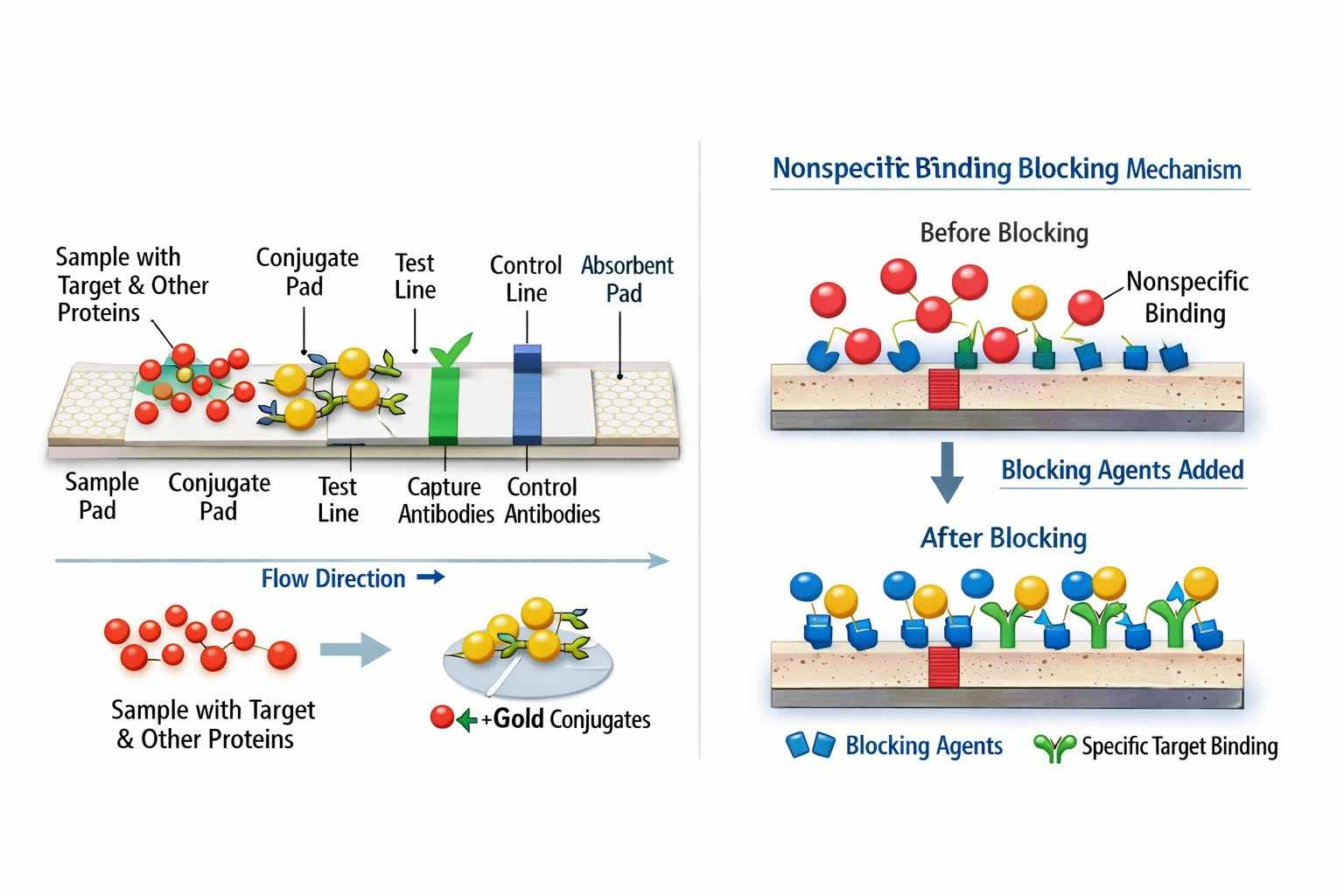 Fig 1. LFA Strip Architecture and Nonspecific Binding Blocking Mechanisms
Table 3. LFA Blocking Agent Selection Guide
| Blocking Agent Type | Mechanism of Action | Recommended Concentration | Optimal Application |
|---|---|---|---|
| BSA | Physical occupation of hydrophobic sites | 1-5% w/v | General purpose; cost-effective |
| Casein | Hydrophobic interaction; reduced electrostatic adsorption | 0.5-2% w/v | Superior for serum samples vs. BSA |
| PEG 3350 | Steric hindrance effect | 0.5-1% w/v | Reduces protein-protein aggregation |
| PVP | Surface tension reduction; improved flow | 0.5-2% w/v | Whole blood samples; minimizes RBC interference |
| Murine IgG | Blocks human anti-mouse antibody (HAMA) effects | 10-50 μg/mL | Essential when using murine antibodies |
Optimized Buffer Formulations
Sample Diluent (Running Buffer) Optimized Formulation:
- Base Buffer: 50 mM PBS, pH 7.4
- Surfactants: 0.5% Tween-20 + 0.1% Triton X-100 (promotes uniform sample flow)
- Blocking Protein: 2% BSA or 1% casein
- Carbohydrates: 5% sucrose (protein stabilization; flow rate modulation)
- Chelating Agent: 5 mM EDTA (metalloprotease inhibition; antigen protection)
- pH Maintenance: 7.4-8.0 to prevent protein denaturation
Critical Parameters for Colloidal Gold Labeling Buffer:
- pH Adjustment: Set 0.5-1.0 pH units above protein isoelectric point (pI) to ensure negative charge for stable gold particle binding
- Ionic Strength: Maintain 20-50 mM low salt concentration to prevent aggregation
- Stabilizer Addition: Post-labeling, add 1% BSA or 0.05% PEG 20000 to block unoccupied gold surfaces
Control Line (C Line) Design
Rational control line design effectively identifies false negatives:
- Recommended Configuration: Utilize anti-species IgG antibody (e.g., goat anti-rabbit IgG) to capture rabbit IgG-labeled colloidal gold, developing color simultaneously with the test line
- Concentration Optimization: Control line antibody spraying concentration typically 1.0-2.0 mg/mL, ensuring color development regardless of sample result
- Signal Intensity: Control line signal should exceed test line intensity, confirming reagent validity
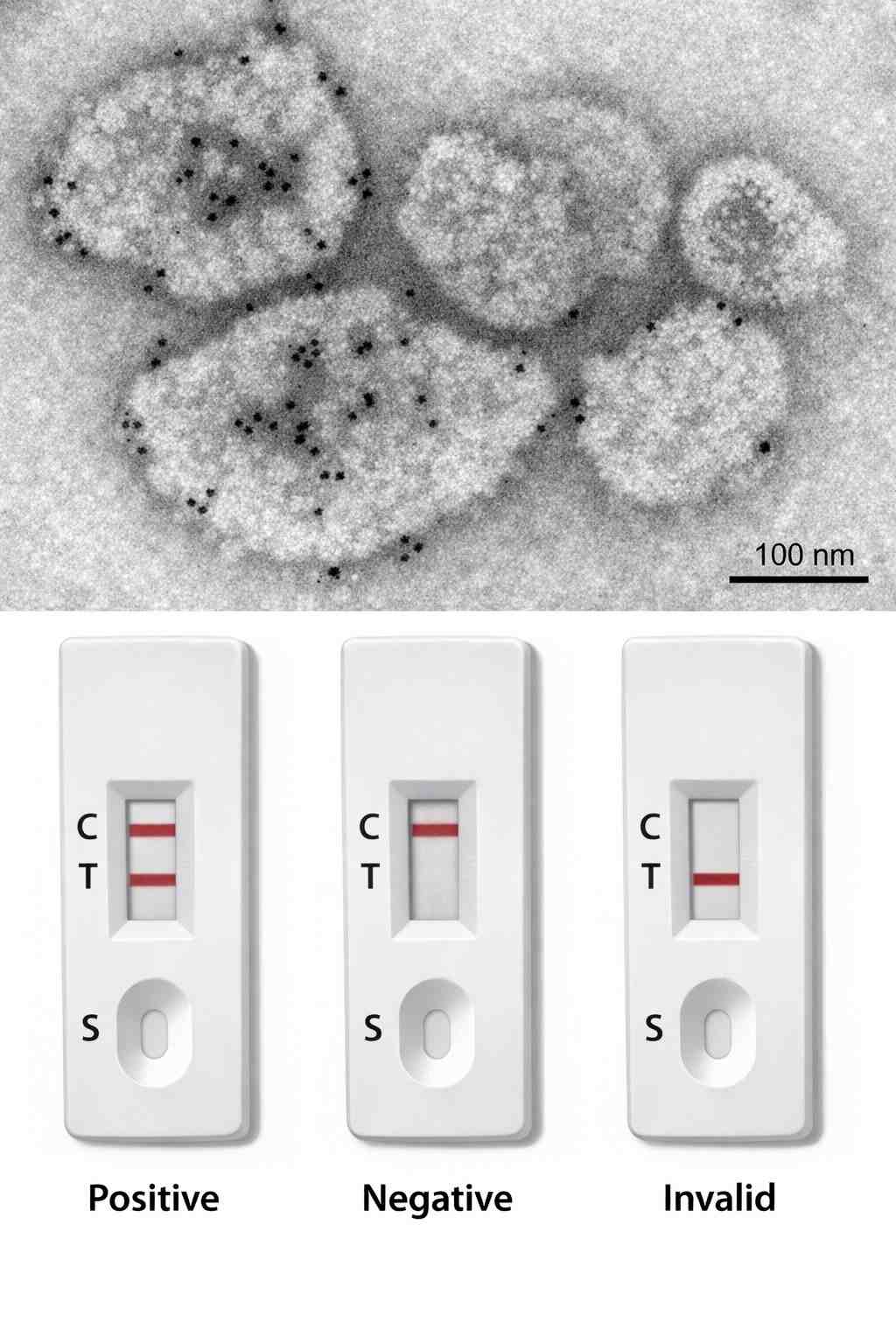 Fig 2. Transmission Electron Micrograph of Colloidal Gold-Labeled NiV N Protein (Scale bar: 100 nm) and Representative LFA Strip Results Positive/Negative/Invalid)
Product Recommendations: LFA-Optimized NiV Diagnostic Reagents
Based on the technical requirements outlined above, the following application-validated raw materials are recommended:
Table 4. NiV LFA-Dedicated Antigen Product Line
| Product Name | Specifications | Application | Key Features |
|---|---|---|---|
| Recombinant NiV Nucleocapsid Protein (N), His-tag | 1 mg / 10 mg | Test line (T line) coating; colloidal gold labeling | HEK293 expressed; >95% purity; <0.1 EU/μg endotoxin; lyophilized |
| Recombinant NiV N Protein (Full Length), Biotinylated | 0.5 mg / 2 mg | Streptavidin-colloidal gold systems | Site-specific biotinylation; 3-5:1 labeling ratio; preserves active sites |
| Recombinant NiV Glycoprotein G (Soluble), Fc-tag | 0.5 mg / 2 mg | Neutralizing antibody detection; confirmatory testing | Retains receptor-binding domain (RBD); mammalian cell expressed; properly folded |
Table 5. Recommended Monoclonal and Polyclonal Antibodies for NiV Diagnostics
| Product Name | Clone | Application | Pairing Recommendation |
|---|---|---|---|
| Mouse Anti-NiV N Protein mAb (Capture) | 1A3 | T line coating | Pair with mAb-NiV-N-02 for sandwich format |
| Mouse Anti-NiV N Protein mAb (Detection) | 4C7 | Colloidal gold labeling | Recognizes distinct N protein epitope; avoids competition |
| Mouse Anti-NiV G Protein mAb | 2G5 | Confirmatory testing | G protein-specific confirmation assays |
| Rabbit Anti-NiV N Protein pAb | Polyclonal | Control line/signal amplification | High affinity; suitable for C line systems |
Explore Nipah Virus Proteins
Learn More
Pre-Optimized Colloidal Gold Conjugation Services
Customized services specifically tailored for NiV diagnostic development:
- Gold Nanoparticle Size Selection: 40 nm gold particles recommended (balance of sensitivity and stability); OD₅₂₀=1.0 corresponds to approximately 0.05 mg/mL antibody labeling capacity
- Labeling Buffer Screening: pH 6.0-9.0 gradient buffer screening service to determine optimal conjugation conditions
- Accelerated Stability Testing: 37°C accelerated stability testing (7-day/14-day protocols) to evaluate conjugate stability
- Lyophilization Process Development: Conjugate pad lyophilization optimization to ensure tropical climate stability
Conclusion and Future Perspectives
The development of rapid diagnostic reagents for Nipah virus faces unique challenges including BSL-4 containment requirements and harsh field deployment conditions. N protein-based lateral flow assays offer superior performance due to high abundance, early immune recognition, and excellent stability. Through optimization of colloidal gold labeling protocols, implementation of effective blocking strategies, and rigorous raw material quality control, LFA sensitivity and specificity can be substantially enhanced.
Future Development Directions:
- Multiplex Detection: Development of combined NiV and Hendra virus (HeV) test strips to provide comprehensive Henipavirus genus coverage
- Sample Type Expansion: Optimization for non-invasive specimens including saliva and nasopharyngeal swabs
- Digital Integration: Smartphone app-based result interpretation and data transmission to support outbreak surveillance
Related Products & Services
Resource
-
Understanding Nipah Virus Entry: The Deadly Dance of Proteins G and F
-
Pre-F vs. Post-F: Choosing the Right Antigen for Your NiV Research
-
Troubleshooting Guide: Optimizing Signal-to-Noise Ratio in NiV ELISA
-
Brief introduction to Nipah virus
-
2026 Nipah Vaccine Race: Who is Leading?
References
- Chingtham S, Kulkarni DD, Sivaraman S, et al. Novel triplex nucleic acid lateral flow immunoassay for rapid detection of Nipah virus, Middle East respiratory syndrome coronavirus and Reston ebolavirus. Animal Diseases. 2024;4(1):21.
- Pollak NM, Olsson M, Marsh GA, Macdonald J, McMillan D. Evaluation of three rapid low-resource molecular tests for Nipah virus. Frontiers in Microbiology. 2023;13:1101914.
- Diagnostic tests for Nipah Virus: A Landscape Analysis. Journal of Clinical Virology. 2025;178:105423.
- Development of a Point-of-Care Immunochromatographic Lateral Flow Strip Assay for the Detection of Nipah and Hendra Viruses. Viruses. 2025;17(7):1021.
- Nipah virus dynamics in bats and implications for spillover to humans. Nature Communications. 2020;11:6340.
- Nipah virus infection: A review. Epidemiology and Infection. 2019;147:e8.
- Serological Evidence of Henipavirus Exposure in Cattle, Goats and Pigs in Bangladesh. PLoS Neglected Tropical Diseases. 2014;8(12):e3302.
- Wondfo Biotech Launches New Detection Solution for Nipah Virus. CACLP. 2024.
- National Institute of Virology develops portable 'point-of-care' test kit for detecting Nipah virus. The Economic Times India. 2025.
- Target Product Profiles for Nipah Diagnostics. FIND. 2025.
- A Protocol for the Optimization of Lateral Flow Immunoassay Strip Development. Biomedical Research and Therapy. 2020;7(12):788.
Note: This article is intended for technical review purposes only. Product information is provided for reference; specific applications require experimental validation. Research involving Biosafety Level 4 pathogens must be conducted in BSL-4 facilities.

Contact us or send an email at for project quotations and more detailed information.
Quick Links
-

Papers’ PMID to Obtain Coupon
Submit Now -

Refer Friends & New Lab Start-up Promotions