

Broad-Spectrum Protection Against Henipaviruses: Focusing on Nipah Virus to Tackle Hendra and the Emerging Langya Virus
Keywords: Henipavirus cross-reactivity, Langya virus research, Pan-henipavirus vaccine, Ephrin-B2 receptor, Nipah virus vaccine
Nipah Virus: The Central Public Health Threat of the Henipavirus Genus
Since its initial outbreak in Malaysia in 1998, Nipah virus (NiV) has emerged as the most significant zoonotic pathogen within the Henipavirus genus in terms of public health impact. Compared to Hendra virus (HeV) and the more recently discovered Langya virus (LayV), NiV demonstrates greater capacity for human-to-human transmission and higher case fatality rates, making it the primary target for broad-spectrum vaccine development.
Epidemiological Characteristics of Nipah Virus
| Characteristic | Nipah Virus (NiV) | Hendra Virus (HeV) | Langya Virus (LayV) |
|---|---|---|---|
| Year/Location of Discovery | 1998, Malaysia | 1994, Australia | 2022, China |
| Primary Endemic Regions | Bangladesh, India, Southeast Asia | Australia | Eastern China |
| Natural Reservoir | Pteropus fruit bats | Pteropus fruit bats, horses | Shrews (presumed) |
| Human-to-Human Transmission | Frequent | Rare | Not observed |
| Case Fatality Rate | 40-75% | ~57% | To be determined |
| Receptor Usage | Ephrin-B2/B3 | Ephrin-B2/B3 | Unknown (non-Ephrin) |
| Outbreak Frequency | Periodic outbreaks (annual) | Sporadic | Under surveillance |
The periodic outbreaks of NiV, particularly in Bangladesh and India, combined with its transmission through contaminated date palm sap and respiratory secretions, have led the World Health Organization (WHO) to designate NiV as a priority pathogen for research and development.
Explore Nipah Virus Proteins
Learn More
Structural Biology of Nipah Virus: Conservation Analysis of G and F Proteins
Nipah virus entry depends on two surface glycoproteins: the Attachment Glycoprotein (G) and the Fusion Glycoprotein (F). Understanding the structural features of NiV is essential for developing broad-spectrum interventions targeting the entire genus.
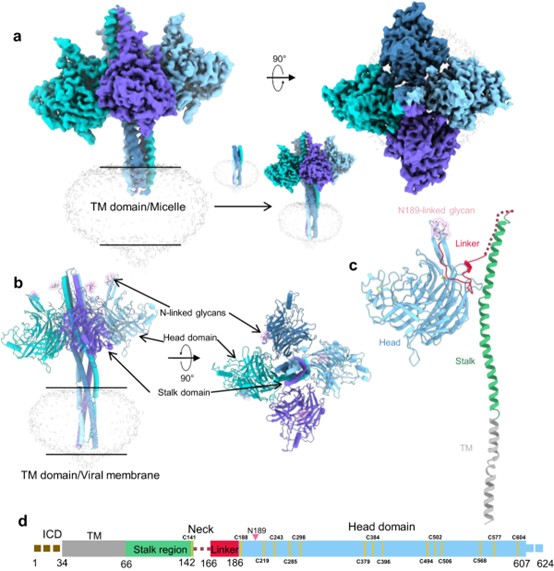 Fig 1. Cryo-EM structure of Henipavirus G protein homotetramer (Illustrating structural folding similarities among NiV, HeV, and LayV G proteins) (Nature Communications 2024)
NiV G Protein: Receptor Recognition and Antigenicity
The NiV G protein recognizes host cell receptors Ephrin-B2 and Ephrin-B3, with the C-terminal domain (CTD, residues 176-602) containing the receptor-binding site. Structural comparisons reveal:
Sequence and Structural Homology Comparisons:
| Comparison Parameter | NiV vs HeV | NiV vs LayV | Structural/Functional Significance |
|---|---|---|---|
| Overall G Protein Homology | ~90% | Lower | Determines degree of cross-reactivity |
| Ephrin-Binding Domain | Highly conserved | Not conserved | NiV/HeV share receptors; LayV uses different receptor |
| Central Cavity Structure | Similar, Ephrin-compatible | Deep cavity, unique protruding loop | Affects antibody binding and neutralization |
| Homology with MojV | - | LayV shares 86% with MojV | LayV/MojV form independent branch |
Key Finding: Although NiV and HeV G proteins differ at the amino acid level, both precisely recognize the same binding interface on Ephrin-B2. This "functional conservation with sequence variability" enables antibodies targeting the Ephrin-binding site (such as m102.4) to cross-neutralize both viruses. However, the unique structural features of LayV G protein's central cavity prevent Ephrin binding, explaining why NiV-specific antibodies fail to neutralize LayV.
NiV F Protein: Fusion Mechanism and Broad-Spectrum Vaccine Target
The F protein mediates fusion between the viral envelope and host cell membrane, representing a superior target for broad-spectrum vaccine design. NiV F protein exists as a trimer, transitioning between pre-fusion (Pre-F) and post-fusion (Post-F) conformations.
Cross-Species Conservation of F Protein:
| Virus Strain | F Protein Homology with NiV | Fusion Peptide Sequence | Pre-Fusion Conformation Stability |
|---|---|---|---|
| Nipah Virus (NiV) | 100% | GIVGIGIAILG - 100% conserved | Prototype (L104C/I114C mutations stabilize) |
| Hendra Virus (HeV) | ~90% | GIVGIGIAILG - 100% identical | Stabilization strategy fully applicable |
| Langya Virus (LayV) | Lower overall homology | GIXGIGIAILG - highly conserved | Stabilization strategy partially applicable |
Structural Mechanism: The fusion peptide of NiV F protein is buried in a highly conserved hydrophobic pocket in the pre-fusion state. This "spring-loaded" mechanism is conserved across all henipaviruses, providing a structural foundation for designing universal vaccines targeting multiple viruses. Research demonstrates that stabilizing mutations from NiV F protein (L104C/I114C disulfide bond) can be transferred to HeV F and LayV F proteins, effectively stabilizing their pre-fusion conformations and enhancing immunogenicity.
Explore Nipah Virus Proteins
Learn More
Cross-Neutralization Mechanisms of Nipah Virus: From m102.4 to Next-Generation Broad-Spectrum Antibodies
Antibody development targeting NiV has provided a paradigm for broad-spectrum protection across the henipavirus genus. The most extensively studied are the m102.4 antibody and a series of novel broad-spectrum neutralizing antibodies reported in 2024.
m102.4: A Clinical-Stage Antibody Targeting NiV G Protein
m102.4 is a humanized monoclonal antibody isolated from a native human antibody library through phage display technology, with affinity maturation optimization. It represents the first henipavirus therapeutic antibody to enter clinical trials.
Characteristics and Clinical Progress of m102.4:
| Characteristic | Description |
|---|---|
| Target | NiV G protein receptor-binding domain (RBD), Ephrin-binding site |
| Mechanism of Action | Competitive blockade of Ephrin-B2/B3 binding to G protein |
| Neutralizing Activity against NiV | IC₅₀ < 0.04 μg/ml (extremely potent) |
| Neutralizing Activity against HeV | IC₅₀ ~0.6 μg/ml (potent) |
| Activity against LayV | No neutralizing activity (LayV does not bind Ephrin) |
| In Vivo Protection (Ferret) | 100% survival when administered 10 hours post-infection |
| Clinical Progress | Phase I clinical trial completed (good safety profile), Phase II/III preparation underway |
The success of m102.4 validates the feasibility of targeting the G protein receptor-binding domain, but its ineffectiveness against LayV and other novel viruses highlights the necessity for developing broader-spectrum antibodies.
Next-Generation Broad-Spectrum Neutralizing Antibodies: Beyond m102.4
Novel broad-spectrum neutralizing antibodies reported in 2024 (such as 1E5, 2A4, 1B6, 2E7) maintain potent neutralization against NiV while demonstrating superior cross-reactivity and genetic stability.
Comparison of Key Antibody Characteristics:
| Antibody | Target Protein | Neutralizing Activity against NiV | Neutralizing Activity against HeV | Activity against HeV-g2 (New Genotype) | Competition with m102.4 | Epitope Classification |
|---|---|---|---|---|---|---|
| m102.4 | G protein | +++ | ++ | Effective | - | Group A |
| 1E5 | G protein | +++ | ++ | +++ | Yes | Group C |
| 2A4 | G protein | +++ | +++ | +++ | Yes | Group C |
| 1B6 | G protein | +++ | +++ | +++ | No | Group B |
| 2E7 | G protein | +++ | +++ | +++ | No | Group B |
Key Advantage: These new antibodies maintain stable neutralizing capacity against NiV G protein V507I mutation and HeV G protein D582N mutation (IC₅₀ changes only 0.5-1.9-fold), whereas m102.4 neutralizing activity against these mutations decreased by 5.3-fold and 44.5-fold, respectively. This indicates that new antibodies target more conserved epitopes on the G protein, offering stronger resistance to genetic barriers.
Broad-Spectrum Strategies Targeting NiV F Protein
Given the high conservation of F protein across the henipavirus genus, antibodies targeting NiV F protein demonstrate true broad-spectrum potential:
- HENV-26 Antibody: Targets the pre-fusion conformation of NiV F protein, potentially effective against all henipaviruses using similar fusion mechanisms
- Fusion Peptide Targeting: Focuses on the conserved hydrophobic pocket surrounding the F protein fusion peptide, where amino acid sequences are nearly 100% identical among NiV, HeV, and LayV
Nipah Virus Research Tools: Essential Reagents Supporting Broad-Spectrum Vaccine Development
To support NiV-focused broad-spectrum vaccine and drug development, the following core reagents are indispensable:
Core Nipah Virus Protein Products:
| Product Category | Product Name | Virus Source | Application | Key Features |
|---|---|---|---|---|
| G Protein | Recombinant NiV G (ΔTM) Protein | Nipah virus | Antibody screening, SPR/ELISA, vaccine antigen | Full-length ectodomain, native conformation preserved, contains Ephrin-binding site |
| G Protein | Recombinant HeV G Protein (aa 71-604) | Hendra virus | Cross-reactivity studies | Highly homologous to NiV G (~90%), validates broad-spectrum potential |
| G Protein | Recombinant LayV G Protein (CTD, 176-602) | Langya virus | Novel target discovery, cross-reactivity exclusion | Unique antigenicity, no cross-reaction with NiV/HeV antibodies |
| F Protein | Recombinant NiV F (ΔTM) Protein | Nipah virus | Vaccine antigen design | High immunogenicity, stable pre-fusion conformation, induces potent neutralizing antibodies |
| F Protein | Pre-fusion stabilized HeV F (G99C/I109C) | Hendra virus | Broad-spectrum vaccine development | Fusion peptide region 100% conserved with NiV |
| F Protein | Pre-fusion stabilized LayV F (G99C/I109C) | Langya virus | Structural comparison studies | Validates cross-species stabilization strategy applicability |
| Receptor Protein | Human Ephrin-B2 (EFNB2) | Human | Receptor binding assays, competition inhibition assays | Essential receptor for NiV/HeV entry, LayV does not bind |
| Control Antibody | Anti-NiV G mAb (m102.4 surrogate) | Humanized | Therapeutic antibody development, positive control | Cross-neutralizes NiV/HeV, does not neutralize LayV |
| Broad-Spectrum Antibody | Pan-Henipavirus F-specific mAbs | Human/Chimeric | Broad-spectrum passive immunization | Targets conserved F protein epitopes, potential coverage of LayV |
Explore Nipah Virus Proteins
Learn More
Recommended Technical Platforms:
- Surface Plasmon Resonance (SPR): Assess antibody binding affinity (EC₅₀) to NiV G protein, compare differences with HeV/LayV
- Pseudovirus Neutralization Assays: Utilize rHIV-HNV pseudovirus systems to rapidly evaluate serum/antibody neutralizing activity against NiV under BSL-2 conditions
- Cryo-Electron Microscopy (Cryo-EM): Resolve structures of NiV G/F protein-antibody complexes to guide rational vaccine design
- Ferret/Hamster Infection Models: Evaluate vaccine/antibody protective efficacy against NiV challenge
Future Perspectives: Broad-Spectrum Vaccine Design with Focus on Nipah Virus
Facing continued NiV outbreaks and expansion of the henipavirus genus, development of a pan-henipavirus vaccine must center on the biological characteristics of NiV while covering emerging threats such as HeV and LayV.
Universal Vaccine Platform Based on NiV F Protein
Given the high conservation and strong immunogenicity of NiV F protein, a vaccine platform based on pre-fusion NiV F (Pre-F) represents the most promising approach:
Design Strategies:
- Monovalent Pre-F Vaccine: Optimize stabilized NiV Pre-F protein, leveraging its high homology with HeV F (100% fusion peptide conservation) to induce cross-protection
- Mosaic Vaccine: Display variable regions from HeV and LayV F proteins on the NiV Pre-F scaffold to expand antigenic coverage
- Nanoparticle Display: Assemble NiV Pre-F trimers into multivalent nanoparticles to enhance immunogenicity and breadth
Cross-Protection Strategies Targeting NiV G Protein
Although NiV G protein differs substantially from LayV G protein, strategies targeting conserved epitopes on NiV G protein remain effective against HeV:
- Conserved Epitope Targeting: Utilize epitopes recognized by newly discovered Group B antibodies (such as 1B6, 2E7), which are conserved between NiV and HeV and distant from the mutable Ephrin-binding interface
- Chimeric G Proteins: Fuse immunodominant regions of NiV G protein with corresponding regions from HeV G protein to induce broader immune responses
Special Considerations for Langya Virus
Since LayV does not use Ephrin receptors and possesses unique G protein antigenicity, vaccines based solely on NiV/HeV may not cover LayV. Recommended strategies include:
- F Protein-Centric Approach: Prioritize development of vaccines targeting F protein, as the fusion mechanism and fusion peptide are conserved across all henipaviruses
- Multivalent Vaccine: Combine NiV Pre-F + LayV Pre-F + NiV G (for HeV cross-protection)
- Platform Technologies: Establish mRNA vaccine platforms that can rapidly adapt to newly discovered viruses, using NiV sequence as a template for rapid substitution with LayV sequences
Clinical Development Pathway
Clinical development of NiV-focused broad-spectrum vaccines should follow this pathway:
- Phase I: Evaluate safety and immunogenicity of NiV Pre-F protein vaccine in healthy adults
- Phase II: Evaluate vaccine immune responses against NiV in endemic regions (Bangladesh/India), while detecting cross-neutralizing antibodies against HeV
- Phase III: Field efficacy trials observing vaccine protection rates against NiV infection, monitoring breakthrough infections against HeV
- Label Expansion: Based on F protein conservation, apply for HeV indication; develop boost immunization or bivalent vaccines targeting LayV
Conclusion
As the member of the henipavirus genus posing the most severe public health threat, Nipah virus serves as the central focus of broad-spectrum protection strategies. Through in-depth understanding of NiV G and F protein structure and function, we have developed clinical-grade antibodies such as m102.4 and vaccine technologies including Pre-F stabilization. These NiV-focused research achievements provide direct foundation for covering Hendra virus and point the direction for addressing emerging threats such as Langya virus—namely, exploiting the high conservation of F protein to develop truly pan-henipavirus universal vaccines.
Key Action Items:
- Accelerate NiV Vaccine Clinical Translation: Advance NiV Pre-F-based vaccine candidates into Phase II/III clinical trials
- Continuous Antigenic Variation Surveillance: Track G protein mutations in circulating NiV strains to ensure continued vaccine and antibody effectiveness
- Structure-Guided Broad-Spectrum Design: Utilize structural comparisons among NiV-HeV-LayV to discover conserved "Achilles' heels"
- One Health Integrated Prevention and Control: Based on NiV prevention and control experience, establish protection systems targeting the entire genus through fruit bat habitat management, food hygiene (avoiding raw date palm sap consumption), and clinical infection control
By focusing on Nipah virus and integrating advances in structural biology, immunology, and clinical research, we can build broad-spectrum protection systems covering the henipavirus genus and prepare adequately for future potential outbreaks.
Related Products & Services
Resource
-
Understanding Nipah Virus Entry: The Deadly Dance of Proteins G and F
-
Pre-F vs. Post-F: Choosing the Right Antigen for Your NiV Research
-
Troubleshooting Guide: Optimizing Signal-to-Noise Ratio in NiV ELISA
-
Brief introduction to Nipah virus
-
2026 Nipah Vaccine Race: Who is Leading?
References
- Broder CC, Xu K, Nikolov DB, et al. A treatment for and vaccine against the deadly Hendra and Nipah viruses. Antiviral Research. 2013;100(1):8-13.
- Dawes BE, Kalveram B, Ikegami T, et al. Favipiravir (T-705) protects against Nipah virus infection in the hamster model. Scientific Reports. 2018;8(1):7604.
- de Wit E, Bushmaker T, Scott D, et al. Nipah virus transmission in a hamster model. PLoS Neglected Tropical Diseases. 2011;5(12):e1432.
- Dietzel E, Kolesnikova L, Sawatsky B, et al. Mature nidovirus arthurianin is processed by the cellular signal peptidase in the endoplasmic reticulum. Journal of Virology. 2017;91(24):e01375-17.
- Geisbert TW, Mire CE, Geisbert JB, et al. Therapeutic treatment of Nipah virus infection in nonhuman primates with a neutralizing human monoclonal antibody. Science Translational Medicine. 2014;6(242):242ra82.
- Hickey AC, Kachko A, Amara RR, et al. Henipavirus receptor usage and tropism. Current Topics in Microbiology and Immunology. 2012;359:59-76.
- Lo MK, Spengler JR, Krumpe LRH, et al. Evaluation of a single-dose nucleoside-modified mRNA vaccine encoding Hendra virus-soluble glycoprotein against lethal Nipah virus challenge in African green monkeys. The Lancet. 2023;401(10387):1754-1764.
- McEachern JA, Bingham J, Crameri G, et al. A recombinant subunit vaccine formulation protects against lethal Nipah virus challenge in cats. Vaccine. 2008;26(31):3842-3852.
- Mire CE, Satterfield BA, Geisbert JB, et al. Pathogenic differences between Nipah virus Bangladesh and Malaysia strains in primates: implications for antibody therapy. Scientific Reports. 2016;6:30916.
- Mire CE, Versteeg KM, Cross RW, et al. Single injection recombinant vesicular stomatitis virus vaccines protect ferrets against lethal Nipah virus disease. Virology Journal. 2013;10:353.
- Munster VJ, Prescott JB, Bushmaker T, et al. Rapid Nipah virus entry into the central nervous system of hamsters via the olfactory route. Scientific Reports. 2012;2:736.
- Pallister J, Middleton D, Crameri G, et al. Chloroquine administration does not prevent Nipah virus infection and disease in ferrets. Journal of Virology. 2009;83(22):11979-11982.
- Pallister JA, Klein R, Arkinstall R, et al. Vaccination of ferrets with a recombinant G glycoprotein subunit vaccine provides protection against Nipah virus infection for over 12 months. Virology Journal. 2013;10:237.
- Rockx B, Brining D, Kramer J, et al. Clinical outcome of henipavirus infection in hamsters is determined by the route and dose of infection. Journal of Virology. 2011;85(15):7658-7671.
- Weatherman S, Feldmann H, de Wit E. Transmission of henipaviruses. Current Opinion in Virology. 2018;28:7-11.
- Wong KT, Shieh WJ, Kumar S, et al. Nipah virus infection: pathology and pathogenesis of an emerging paramyxoviral zoonosis. American Journal of Pathology. 2002;161(6):2153-2167.
- Xu K, Rockx B, Xie Y, et al. Crystal structure of the Hendra virus attachment G glycoprotein bound to a potent cross-reactive neutralizing human monoclonal antibody. PLoS Pathogens. 2013;9(10):e1003684.
- Zhu Z, Dimitrov AS, Bossart KN, et al. Potent neutralization of Hendra and Nipah viruses by human monoclonal antibodies. Journal of Virology. 2006;80(2):891-899.
- Chan YP, Lu M, Dutta S, et al. Biochemical, conformational and immunodiagnostic analysis of the structure of the attachment glycoprotein of henipaviruses. PLoS Pathogens. 2012;8(1):e1002831.
- Bossart KN, Zhu Z, Middleton D, et al. A neutralizing human monoclonal antibody protects against lethal disease in a new ferret model of acute nipah virus infection. PLoS Pathogens. 2009;5(10):e1000642.
- Playford EG, Munro T, Mahler SM, et al. Safety, tolerability, pharmacokinetics, and immunogenicity of a human monoclonal antibody targeting the G glycoprotein of henipaviruses in healthy adults: a first-in-human, randomised, double-blind, placebo-controlled, phase 1 study. The Lancet Infectious Diseases. 2020;20(4):445-454.
- Dawes BE, Kalveram B, Ikegami T, et al. Favipiravir (T-705) protects against Nipah virus infection in the hamster model. Scientific Reports. 2018;8(1):7604.
- Lo MK, Feldmann F, Gary JM, et al. Remdesivir (GS-5734) protects African green monkeys from Nipah virus challenge. Science Translational Medicine. 2019;11(494):eaau9242.
- Satterfield BA, Dawes BE, Milligan GN, et al. The immunomodulatory factor HLA-G is multiple sclerosis-associated and the HLA-G 14-bp insertion/deletion polymorphism is differentially expressed in women with multiple sclerosis. Journal of Interferon & Cytokine Research. 2016;36(4):272-279.
- Welch SR, Scholte FEM, Harmon JR, et al. Identification of a new strain of Hendra virus in Australian flying foxes. Viruses. 2023;15(2):436.
- Zhang L, Li Y, Chen Y, et al. Crystal structure of the attachment glycoprotein from Langya henipavirus. Nature Communications. 2024;15:195.
- Wang L, Harcourt BH, Yu M, et al. Molecular biology of Hendra and Nipah viruses. Microbes and Infection. 2001;3(4):279-287.
- Marsh GA, de Jong C, Barr JA, et al. Cedar virus: a novel Henipavirus isolated from Australian bats. PLoS Pathogens. 2012;8(8):e1002836.
- Li Y, Wang J, Hickey AC, et al. Antibodies to Nipah or Nipah-like viruses in bats, China. Emerging Infectious Diseases. 2008;14(12):1974-1976.
- Wacharapluesadee S, Lumlertdacha B, Boongird K, et al. Bat Nipah virus, Thailand. Emerging Infectious Diseases. 2005;11(12):1949-1951.

Contact us or send an email at for project quotations and more detailed information.
Quick Links
-

Papers’ PMID to Obtain Coupon
Submit Now -

Refer Friends & New Lab Start-up Promotions