

Accelerating Therapeutic Antibody Discovery: Phage Display & B-Cell Sorting with Biotinylated NiV Proteins
Screening Technology Overview: Phage Display vs. Single B-Cell Sequencing
Nipah virus (NiV), designated as a priority pathogen by the World Health Organization (WHO), demands rapid discovery of therapeutic antibodies to address potential outbreak threats. The two dominant antibody screening technologies—phage display and single B-cell sequencing—each offer distinct advantages in NiV antibody development.
Table 1. Comparison of Phage Display and Single B-Cell Sequencing Technologies
| Feature | Phage Display | Single B-Cell Sequencing |
|---|---|---|
| Antibody Source | Synthetic/naïve libraries (10⁹-10¹¹ diversity) | B cells from immunized animals/convalescent patients |
| Chain Pairing | Random pairing in vitro | Preserves natural heavy-light chain pairing |
| Affinity Maturation | In vitro simulation | Retains in vivo affinity maturation imprints |
| Screening Timeline | 2-4 weeks | 3-5 weeks (including immunization) |
| Humanization Requirements | Requires subsequent humanization | Direct access to fully human or humanized antibodies |
| Epitope Coverage | Biased toward high-affinity epitopes | Covers full spectrum of natural immune response epitopes |
| Typical Applications | Rapid lead antibody generation (e.g., m102.4) | Discovery of broadly neutralizing antibodies |
In NiV research, phage display has successfully identified the human monoclonal antibody m102.4 targeting the G protein, which demonstrates potent neutralizing activity against both NiV and Hendra virus. Meanwhile, single B-cell sorting technology utilizes multicolor flow cytometry to isolate broadly neutralizing antibodies against the F protein from immunized mice, revealing novel vulnerable epitopes on the prefusion F protein.
Explore Our Phage Display Platform
Learn More
The Critical Role of Antigen Format: Advantages of Site-Specific Biotinylation (Avi-tag)
During antibody screening, the method of antigen labeling directly impacts epitope integrity and screening efficiency. Compared to traditional chemical biotinylation (e.g., NHS-ester labeling), enzymatic site-specific biotinylation (Avi-tag technology) demonstrates significant advantages.
Explore Our Protein Biotinylation Service
Learn More
Preservation of Native Epitope Structure
The Avi-tag is a 15-amino-acid peptide (GLNDIFEAQKIEWHE) that can be specifically recognized by BirA enzyme both in vivo and in vitro, attaching biotin to a lysine residue. This site-specific labeling approach avoids random modification of surface lysines by chemical labeling, maximally preserving the integrity of conformation-sensitive epitopes.
Explore Avi-tagged Proteins
Learn More
Reduced Steric Hindrance and Optimized Orientation
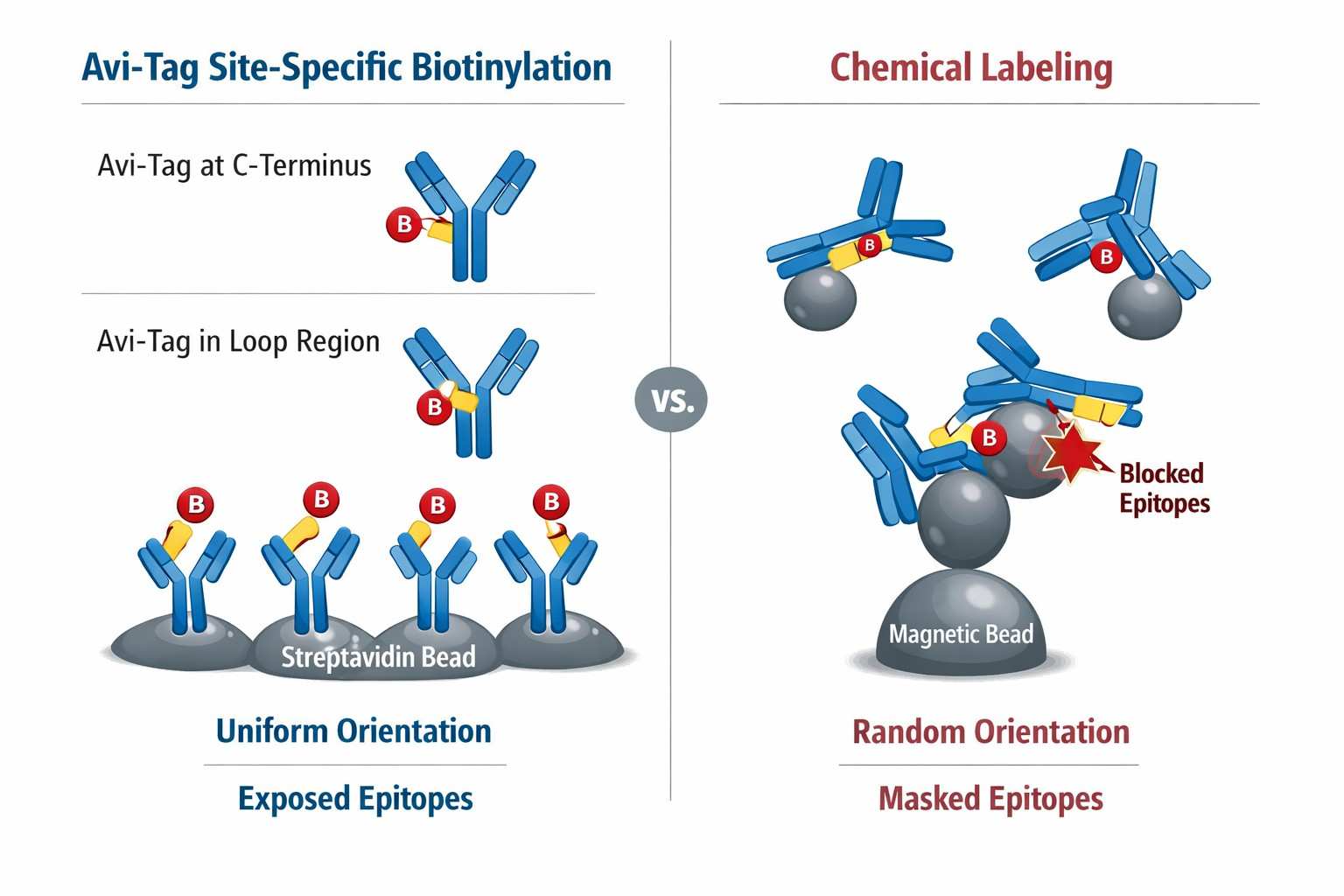 Fig 1. Schematic Comparison of Avi-tag Site-Specific Biotinylation vs. Chemical Labeling Antigen Orientation
By strategically placing the Avi-tag at the C-terminus or a flexible loop region, antigen molecules present in a uniform orientation away from the solid-phase surface after Streptavidin magnetic bead or fluorophore labeling, significantly reducing steric hindrance and improving antibody accessibility.
Labeling Efficiency and Batch Consistency
Enzymatic biotinylation achieves near 100% labeling efficiency, and unlabeled proteins can be easily removed through simple Streptactin or Streptavidin affinity chromatography. In contrast, the heterogeneity of chemical labeling may lead to false positives or missed detection during screening.
Optimized Experimental Workflows
Streptavidin Magnetic Bead Panning Strategy (Phage Display)
The phage display panning workflow utilizing biotinylated NiV proteins is as follows:
Table 2. Optimization of Phage Display Panning Parameters
| Step | Key Parameters | Optimization Recommendations |
|---|---|---|
| Antigen Immobilization | Biotinylated NiV-G/F protein concentration | 50-200 nM (first round), progressively decreasing |
| Bead Selection | M-280 Streptavidin Dynabeads | Pre-blocking: 1% BSA/PBS, room temperature 1h |
| Library Pre-treatment | Negative selection (Depletion) | Pre-adsorption against irrelevant antigen beads, BSA, IgG |
| Binding Conditions | Time/Temperature | Room temperature 1h, gentle rotation |
| Wash Stringency | PBST concentration (Tween-20) | 0.05%→0.1%→0.5% progressive increase |
| Elution Method | Acidic elution (0.1 M Glycine, pH 2.7) | Immediate neutralization with 1 M Tris-HCl (pH 8.0) |
| Recovery Amplification | ER2738 host bacteria | OD₆₀₀=0.5, infection ratio 1:10 |
Key Optimization Points:
- Soluble antigen competitive panning: Introducing soluble biotinylated antigen in later rounds for competitive elution can specifically enrich high-affinity clones
- Automation platforms: Implementing KingFisher FLEX automated magnetic bead processing systems improves reproducibility and throughput
- Cross-reactivity screening: Alternating panning with biotinylated NiV and Hendra virus antigens enriches for broadly reactive antibodies
Explore Nipah Virus Proteins
Learn More
Flow Cytometry (FACS) Using Tetramer Antigens for Enrichment of Specific B Cells
Single B-cell sorting technology utilizes fluorescently labeled antigen tetramers to enrich antigen-specific B cells from immunized animal or patient samples.
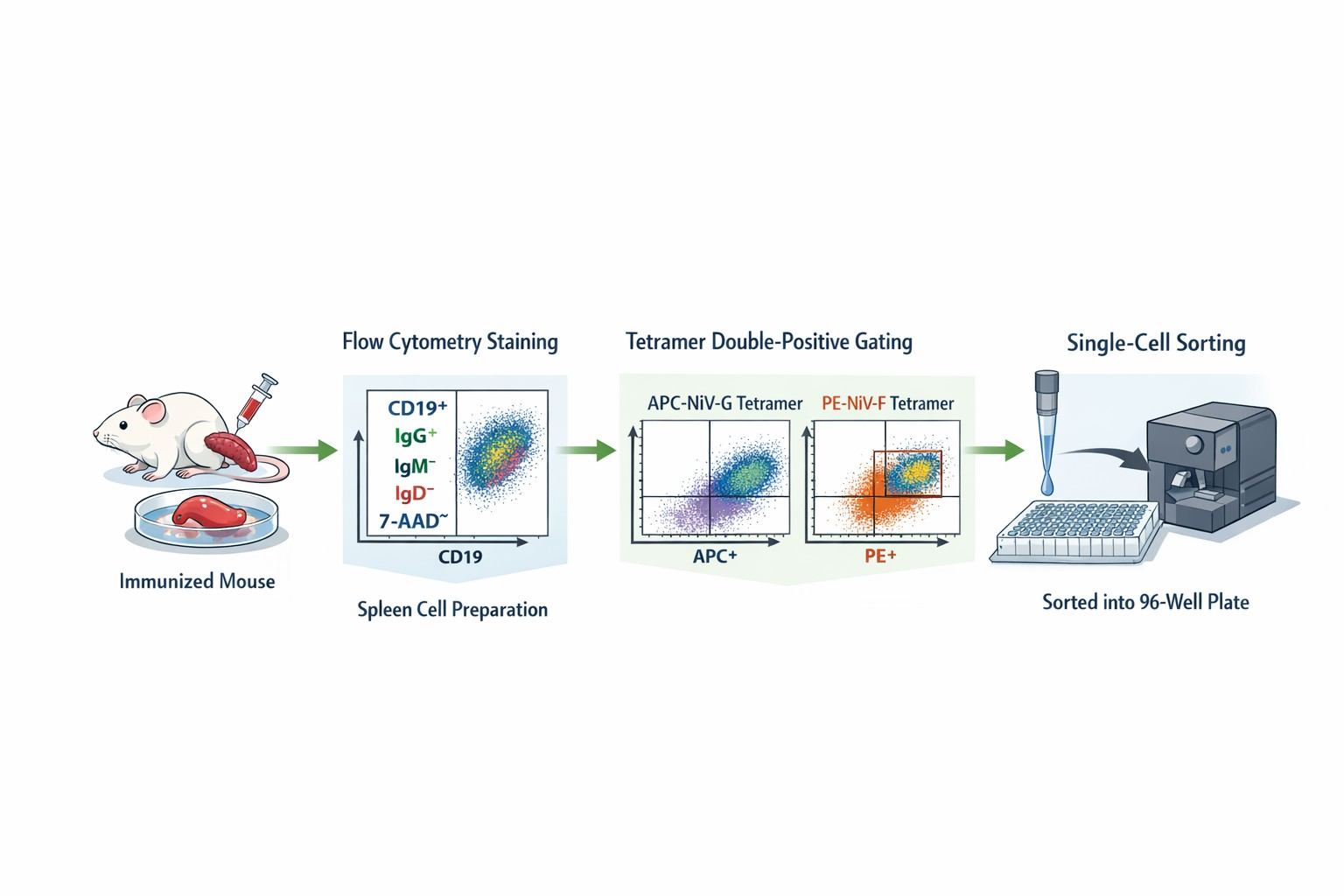 Fig 2. Workflow for NiV-Specific B-Cell Sorting Based on Tetramer Antigens
Experimental Protocol Highlights:
Table 3. FACS Sorting Parameters for NiV-Specific B Cells
| Step | Reagents/Parameters | Detailed Description |
|---|---|---|
| Sample Preparation | Spleen cell suspension | Density 1×10⁷ cells/mL, 500 μL system |
| Viability Staining | 7-AAD (2%) | Added 5 minutes before sorting, excludes dead cells |
| Fc Blocking | TruStain FcX | Blocks non-specific Fc receptor binding |
| B Cell Identification | CD19-FITC, IgG-BV510 | Memory B cell phenotype: CD19⁺IgG⁺IgM⁻IgD⁻ |
| Antigen Probes | APC-NiV-G, PE-NiV-F | Biotinylated antigen pre-mixed with Streptavidin-fluorophores to form tetramers |
| Double-Positive Gating | PE⁺APC⁺ | Excludes single-positive non-specific binding cells |
| Sorting Settings | 100 μm nozzle, 20 psi | Event rate ≤2000/s, ensures cell viability |
| Single-Cell Collection | 96-well PCR plates | 5 μL lysis buffer per well, stored at -80°C |
Tetramer Preparation Key: Biotinylated NiV protein is mixed with Streptavidin-fluorophores at a 4:1 molar ratio to form tetramer complexes. Tetramerization significantly enhances affinity for B-cell surface BCRs (avidity effect), effectively enriching low-frequency antigen-specific B cells (typically <0.1% of total B cells).
Case Study: Broadly Neutralizing Antibody Screening Strategy Targeting the G Protein Head Domain
Background and Design
The NiV G protein (receptor-binding protein, RBP) recognizes host cell receptors ephrin-B2/B3 and serves as the primary target for neutralizing antibodies. While the G protein head domain contains the receptor-binding site, surface hypervariable regions may enable immune evasion. This case study demonstrates how biotinylated G proteins can be utilized to screen for broadly neutralizing antibodies targeting conserved cryptic epitopes.
Screening Strategy
Phase One: Phage Display Primary Screening
- Perform 4 rounds of panning on a fully human phage display library (10¹² diversity) using biotinylated NiV-G-Head-Avi-tag protein
- Strategy: First round uses high antigen concentration (200 nM) to capture diverse clones, with subsequent rounds decreasing to 10 nM and extending wash times (1 min→5 min→10 min)
- Rounds 3-4 introduce Hendra virus G protein cross-panning to enrich for cross-reactive clones
Phase Two: Single B-Cell Sorting Validation
- Immunize mice with prefusion-stabilized NiV G protein (containing Avi-tag) combined with CpG adjuvant
- Sort cross-reactive B cells using PE-NiV-G + APC-Hendra-G dual tetramer probes
- Collect double-positive cells via index sorting into 96-well plates, perform single-cell RT-PCR amplification of VH/VL genes
Results and Characterization
Through this strategy, the fully human single-domain antibody (VHH) n425 was successfully isolated. This antibody targets a highly conserved cryptic epitope at the G protein dimer interface, inhibiting F protein activation and membrane fusion by disrupting G protein tetramerization.
Table 4. Comparison of Candidate Antibody Functional Properties
| Antibody | Target | Epitope Location | Neutralization Mechanism | Blood-Brain Barrier Penetration | In Vivo Protection Efficacy |
|---|---|---|---|---|---|
| m102.4 | G protein | Head domain surface | Blocks receptor binding | Moderate | Effective (delayed administration) |
| n425 | G protein | Dimer interface (cryptic epitope) | Disrupts G tetramerization, inhibits F activation | Excellent | Superior to m102.4 |
| 1F3 | F protein | Domain 3 apex | Inhibits conformational changes | Under evaluation | Effective |
Structural Biology Validation: Cryo-EM structural analysis of the n425-NiV G complex (resolution ≤3.0 Å) confirmed that this antibody binding site is 100% conserved between NiV and Hendra viruses, and located distant from known antigenic drift hotspots.
Explore Nipah Virus Proteins
Learn More
Conclusions and Future Perspectives
Utilizing Avi-tag site-specific biotinylated NiV proteins combined with phage display and single B-cell sorting technologies enables efficient discovery of therapeutic antibodies targeting conserved vulnerable epitopes. Key success factors include:
- Antigen Design: Employing prefusion-stabilized conformations to preserve neutralization-sensitive epitopes
- Labeling Strategy: Enzymatic biotinylation ensures epitope integrity and uniform orientation
- Screening Logic: Cross-reactive panning/sorting strategies enrich for broadly neutralizing antibodies
- Functional Screening: Early integration of pseudovirus neutralization assays to ensure biological relevance
Future directions include the development of bispecific antibodies (simultaneously targeting G and F proteins) and nanoparticle display of biotinylated antigens to further enhance immunogenicity and breadth of cross-protection.
Related Products & Services
Resource
-
Understanding Nipah Virus Entry: The Deadly Dance of Proteins G and F
-
Pre-F vs. Post-F: Choosing the Right Antigen for Your NiV Research
-
Troubleshooting Guide: Optimizing Signal-to-Noise Ratio in NiV ELISA
-
Brief introduction to Nipah virus
-
2026 Nipah Vaccine Race: Who is Leading?
References
- Wang Z, et al. Architecture and antigenicity of the Nipah virus attachment glycoprotein. Science. 2022;375(6583):1373-1378.
- Dang HV, et al. Structural basis for antibody recognition of vulnerable epitopes on Nipah virus F protein. Nat Commun. 2023;14:1575.
- Loomis RJ, et al. Structure-Based Design of Nipah Virus Vaccines: A Generalizable Approach to Paramyxovirus Immunogen Development. Front Immunol. 2020;11:842.
- Avanzato VA, et al. A structural basis for antibody-mediated neutralization of Nipah virus reveals a site of vulnerability at the fusion glycoprotein apex. Proc Natl Acad Sci USA. 2019;116(50):25057-25067.
- Dang HV, et al. An antibody against the F glycoprotein inhibits Nipah and Hendra virus infections. Nat Struct Mol Biol. 2019;26(10):980-987.
- Dang HV, et al. Broadly neutralizing antibody cocktails targeting Nipah virus and Hendra virus fusion glycoproteins. Nat Struct Mol Biol. 2021;28(4):426-434.
- Mire CE, et al. A Cross-Reactive Humanized Monoclonal Antibody Targeting Fusion Glycoprotein Function Protects Ferrets Against Lethal Nipah Virus and Hendra Virus Infection. J Infect Dis. 2020;221(Suppl 4):S471-S479.
- Tamin A, et al. Functional properties of the fusion and attachment glycoproteins of Nipah virus. Virology. 2002;296(2):190-200.
- Wang L, et al. Molecular biology of Hendra and Nipah viruses. Microbes Infect. 2001;3(4):279-287.
- Chattopadhyay A, Rose JK. Complementing defective viruses that express separate paramyxovirus glycoproteins provide a new vaccine vector approach. J Virol. 2011;85(5):2004-2011.

Contact us or send an email at for project quotations and more detailed information.
Quick Links
-

Papers’ PMID to Obtain Coupon
Submit Now -

Refer Friends & New Lab Start-up Promotions