

Interaction Mechanism of NiV Receptor Ephrin-B2/B3 and Applications in Drug Screening
Introduction
Nipah virus (NiV) is a highly pathogenic zoonotic paramyxovirus belonging to the genus Henipavirus, capable of causing severe respiratory disease and fatal encephalitis with case fatality rates ranging from 40% to 75%. NiV invades host cells through specific recognition of Ephrin-B2 and Ephrin-B3 receptors on the cell surface by its attachment glycoprotein (G protein), mediating viral entry and cell-to-cell spread. Understanding the interaction mechanism between NiV G protein and Ephrin receptors is crucial for developing therapeutic strategies targeting viral entry.
Explore Nipah Virus Proteins
Learn More
Tissue Distribution of Ephrin-B2/B3 Receptors and Association with NiV Pathogenesis
Receptor Expression Profile and Viral Tropism
Ephrin-B2 (EFNB2) and Ephrin-B3 (EFNB3) belong to the B-class Ephrin ligand family and participate in physiological processes such as neuronal axon guidance, angiogenesis, and cell boundary formation under normal conditions. The tissue distribution of these two receptors directly determines NiV host cell tropism and pathological characteristics:
Table 1. Tissue Distribution of Ephrin-B2 and Ephrin-B3 and Association with NiV Pathology
| Receptor Type | Primary Expression Tissue | Cell Type | NiV-Associated Pathology | Relative Expression Level |
|---|---|---|---|---|
| Ephrin-B2 | Central Nervous System | Neurons, microvascular endothelial cells | Multifocal encephalitis, vasculitis | ++++ |
| Respiratory System | Alveolar epithelial cells, bronchial epithelium | Interstitial pneumonia, ARDS | +++ | |
| Cardiovascular System | Arterial endothelium, smooth muscle cells | Vasculitis, thrombosis | ++++ | |
| Lymphatic System | Lymph node sinus endothelium, spleen | Lymphoid tissue necrosis | ++ | |
| Placental Tissue | Trophoblast cells | Vertical transmission (speculated) | ++ | |
| Ephrin-B3 | Central Nervous System | Brainstem neurons, spinal cord neurons | Brainstem encephalitis, neurological dysfunction | +++ |
| Cardiovascular System | Cardiomyocytes (primary expression) | Myocarditis (secondary manifestation) | ++ | |
| Lymphatic System | Lymphocytes (specific subsets) | Acute lymphoid tissue necrosis | + |
Note: Expression levels are assessed based on immunohistochemistry and RNA-seq data; + indicates low expression, ++++ indicates high expression.
The high expression of Ephrin-B2 in arterial endothelial cells and neurons is closely associated with vasculitis and encephalitis following NiV infection. The virus disrupts the blood-brain barrier by infecting cerebrovascular endothelial cells, subsequently invading neurons and causing severe neuropathological changes. In contrast, Ephrin-B3 is primarily expressed in the brainstem and heart, explaining the pathological basis for brainstem symptoms and occasional myocarditis in NiV infection.
Regulation of Infection Efficiency by Receptor Expression Levels
Research indicates that Ephrin-B2 expression levels do not show a simple positive correlation with NiV infection efficiency. Diederich et al. found that overexpression of Ephrin-B2 actually reduces cell-to-cell fusion efficiency and viral entry rates. This phenomenon is attributed to the downregulation of G protein caused by imbalanced ratios between viral envelope glycoproteins and surface receptors. Importantly, even when using Ephrin-B2 mutants with truncated cytoplasmic tails (lacking signaling functions, ΔcEB2), their function as NiV entry receptors remains intact, and overexpression similarly interferes with viral replication. This demonstrates that Ephrin-B2-mediated viral entry is independent of downstream signal transduction and relies purely on physical receptor-ligand interactions.
Binding Kinetics of NiV G Protein with Ephrin Receptors
Structural Basis and Binding Interface
NiV G protein is a type II membrane glycoprotein composed of 602 amino acids, containing an N-terminal cytoplasmic tail, transmembrane domain, stalk domain, and C-terminal globular head domain. The G protein forms characteristic tetrameric structures through α-helices in the stalk region, while the globular head is responsible for binding host receptors.
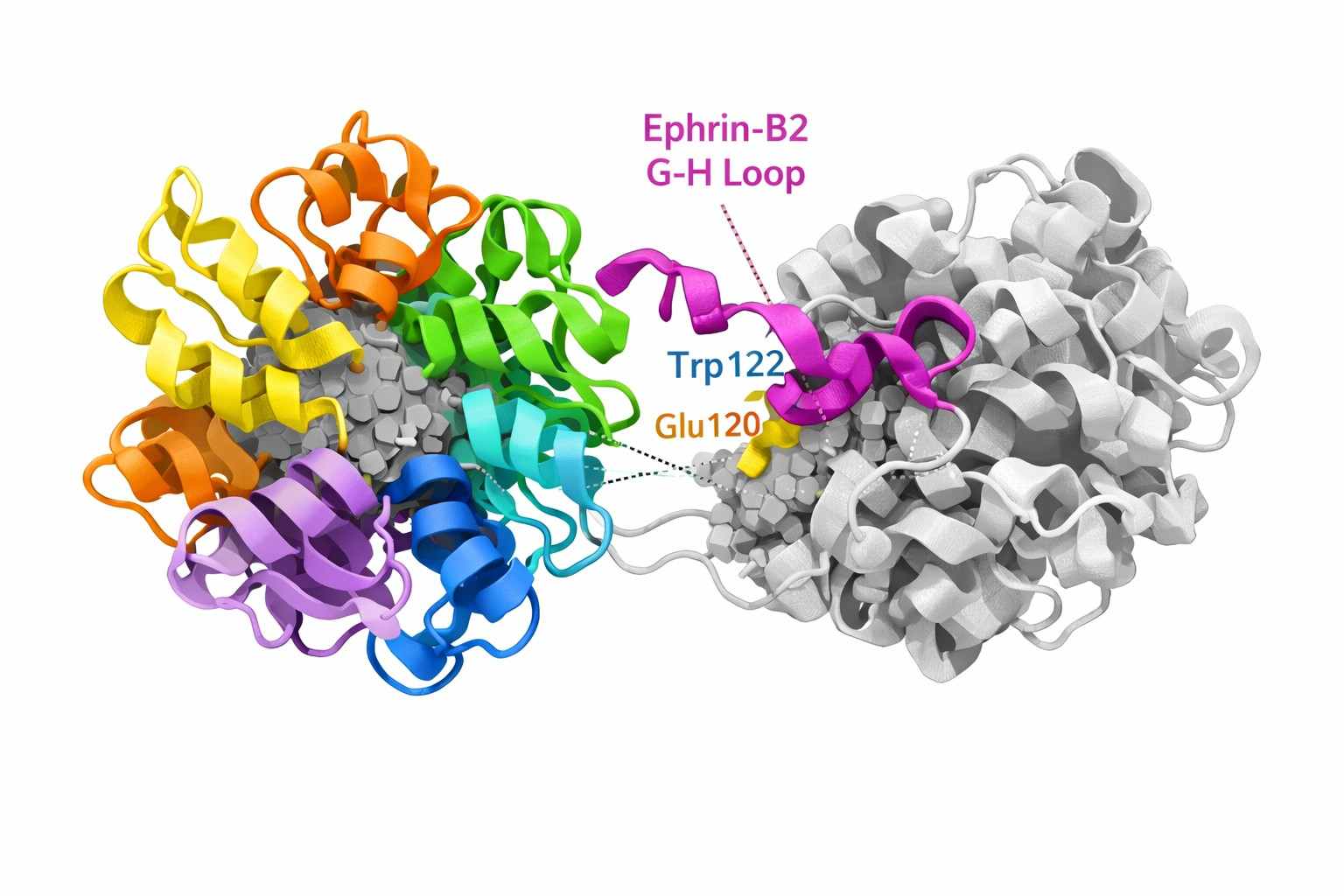 Fig 1. Schematic Diagram of NiV G Protein-Ephrin-B2 Complex Structure
Crystal structure analysis reveals that the G protein head forms a six-bladed β-propeller structure with a conserved hydrophobic binding cavity at its center. Ephrin-B2 inserts into this cavity through its G-H loop (residues 119-125), forming high-affinity protein-protein interactions. The binding interface involves approximately 2,700 Ų of surface area, including two major regions:
- Polar peripheral region: Stabilized by 24 hydrogen bonds, 4 salt bridges, and multiple hydrophobic interactions;
- Central hydrophobic cavity: Residues Phe120, Pro122, Leu124, and Trp125 of the Ephrin-B2 G-H loop interact with the G protein binding pocket through van der Waals forces.
Affinity and Kinetic Parameters
Biolayer interferometry (BLI) and surface plasmon resonance (SPR) experiments provide precise data for quantifying the interaction between NiV G protein and Ephrin receptors:
Table 2. Binding Kinetic Parameters of NiV G Protein with Ephrin-B2/B3
| Interaction Pair | Binding Format | Affinity Constant (KD) | Association Rate (Kon) | Dissociation Rate (Koff) | Experimental Method |
|---|---|---|---|---|---|
| NiV-G / Ephrin-B2 (wild-type) | Soluble protein | 3.36 × 10⁻¹⁰ M | 6.72 × 10⁴ M⁻¹s⁻¹ | 2.26 × 10⁻⁵ s⁻¹ | BLI |
| NiV-G / Ephrin-B2 (L124A mutant) | Soluble protein | 2.66 × 10⁻¹¹ M | 8.89 × 10⁴ M⁻¹s⁻¹ | 2.37 × 10⁻⁶ s⁻¹ | BLI |
| NiV-G / Ephrin-B3 | Cell surface | Lower than Ephrin-B2 | Not reported | Faster dissociation | Flow cytometry |
| HeV-G / Ephrin-B2 | Soluble protein | ~10⁻¹⁰ M | Not reported | Not reported | SPR |
Data sources: Xu et al., 2008; Negrete et al., 2006
Notably, the Ephrin-B2 L124A mutant shows more than 10-fold higher binding affinity for NiV-G compared to wild-type (KD decreased from 336 pM to 26.6 pM), primarily due to significantly reduced dissociation rates (Koff decreased approximately 10-fold). This mutant substantially enhances pseudovirus and live virus infection efficiency, providing a new platform for establishing highly sensitive viral isolation and drug screening cell lines.
Receptor Selectivity Mechanism
Although both Ephrin-B2 and Ephrin-B3 can serve as NiV receptors, Ephrin-B2 exhibits higher binding affinity. Molecular dynamics simulations show that the NiV-G/Ephrin-B2 complex forms more hydrogen bonds and has higher conformational stability. Ephrin-B3, as an alternative receptor, is primarily expressed in specific brain regions (such as the corpus callosum and spinal cord), potentially explaining viral tropism in these areas.
Blocking Strategies Based on Receptor-Ligand Interactions
Soluble Receptor Decoys
Using soluble Ephrin-B2 as a competitive inhibitor is an effective strategy for blocking NiV entry. Soluble Ephrin-B2 ligands can effectively block henipavirus infection mediated by both Ephrin-B2 and Ephrin-B3 in vitro. However, since Ephrin-B2 is also a physiological ligand for EphB receptor tyrosine kinases involved in angiogenesis and neural development, direct use of soluble Ephrin-B2 may interfere with normal physiological functions.
Recent research has employed deep mutational scanning technology to engineer Ephrin-B2, developing decoy molecules that selectively bind NiV-G without binding Eph receptors. These engineered receptors retain high-affinity viral neutralization capabilities while avoiding interference with host signaling pathways, showing promising therapeutic potential.
Monoclonal Antibodies and Nanobodies
Monoclonal antibodies targeting the G protein receptor binding site exert neutralizing effects through competitive inhibition of Ephrin binding:
Table 3. Therapeutic Antibodies Targeting NiV G Protein/Ephrin Interactions
| Antibody Name | Target Epitope | Mechanism of Action | Neutralizing Activity | Development Stage |
|---|---|---|---|---|
| m102.4 | G protein head, receptor binding cavity | Competitive inhibition of Ephrin-B2/B3 binding | Broad neutralization of HeV/NiV | Preclinical/Emergency use |
| HENV-26 | G protein receptor binding site | Blocks Ephrin binding | High-efficiency neutralization | Research stage |
| n425 (single-domain antibody) | Conserved cryptic epitope | Conformational locking, prevents receptor-induced G protein conformational changes | Broad neutralization of multiple henipaviruses | Research stage |
| HENV-32 | G protein non-receptor binding region | No direct competition, may interfere with oligomerization | Moderate neutralizing activity | Research stage |
Data sources: Zhu et al., 2024; Broder et al., 2024
The m102.4 antibody mimics the structure of the Ephrin-B2 G-H loop through its CDR-H3 loop, occupying the G protein binding cavity through "molecular mimicry" to block viral interaction with natural receptors. This antibody has completed validation in non-human primate models, demonstrating good post-exposure prophylactic efficacy.
Small Molecule Inhibitors and Peptide Inhibitors
Based on structural information of the G protein-Ephrin interaction interface, researchers have designed various small molecule and peptide inhibitors:
- G-H loop peptide analogs: Short peptides containing key Ephrin-B2 residues (Phe120, Pro122, Leu124, Trp125) as competitive inhibitors;
- Small molecules targeting the binding cavity: Compounds identified through virtual screening that can embed into the central hydrophobic cavity of G protein, blocking Ephrin insertion;
- Glycoprotein processing inhibitors: Blocking post-translational modifications of G protein (such as N-glycosylation), affecting proper folding and receptor binding capacity.
Applications of In Vitro Binding Assays in Drug Screening
Recombinant Protein Preparation and Quality Control
High-quality recombinant proteins are fundamental for conducting in vitro interaction studies. Currently, various commercial recombinant NiV G proteins and Ephrin receptors are available for SPR and BLI experiments:
Table 4. Characteristics of Commercial NiV G Protein and Ephrin Receptor Products
| Product Name | Expression System | Tag | Purity | Bioactivity Validation | Application Platform |
|---|---|---|---|---|---|
| NiV G protein (aa 71-602) | HEK293 | His-tag (C-terminal) | ≥95% (SDS-PAGE) | Binding to Ephrin-B2, EC50: 16-48 ng/mL | SPR, BLI, ELISA |
| NiV G protein (aa 71-602) | HEK293 | Human Fc-tag (C-terminal) | ≥90% (SEC-HPLC) | Receptor binding validated | Pseudovirus packaging, neutralization assays |
| Ephrin-B2 (full-length extracellular domain) | HEK293 | His-tag | ≥95% | Binding to NiV-G, KD ~10⁻¹⁰ M | SPR, BLI |
| Ephrin-B3 (full-length extracellular domain) | HEK293 | Fc-tag | ≥90% | Supports NiV pseudovirus entry | Cell assays, BLI |
Explore Nipah Virus Proteins
Learn More
SPR and BLI Experimental Protocol Examples
Case Study: BLI Binding Kinetics Analysis Using Creative BioMart NiV G Protein
Experimental Design:
- Ligand immobilization: Biotinylated NiV G protein (Cat. No.: DRA265, Creative BioMart) immobilized via streptavidin sensors;
- Analyte: Serially diluted soluble Ephrin-B2 (concentration range: 1.25-100 nM);
- Buffer: PBS pH 7.4 containing 0.1% BSA and 0.02% Tween-20;
- Experimental procedure: Baseline (60 s) → Association (300 s) → Dissociation (600 s) → Regeneration (10 mM Glycine-HCl pH 2.0).
Data Analysis: Association rate constant (Kon), dissociation rate constant (Koff), and equilibrium dissociation constant (KD) are obtained through 1:1 binding model fitting. Typical results show high-affinity binding between NiV G protein and Ephrin-B2 (KD ~10⁻¹⁰ M), consistent with literature reports.
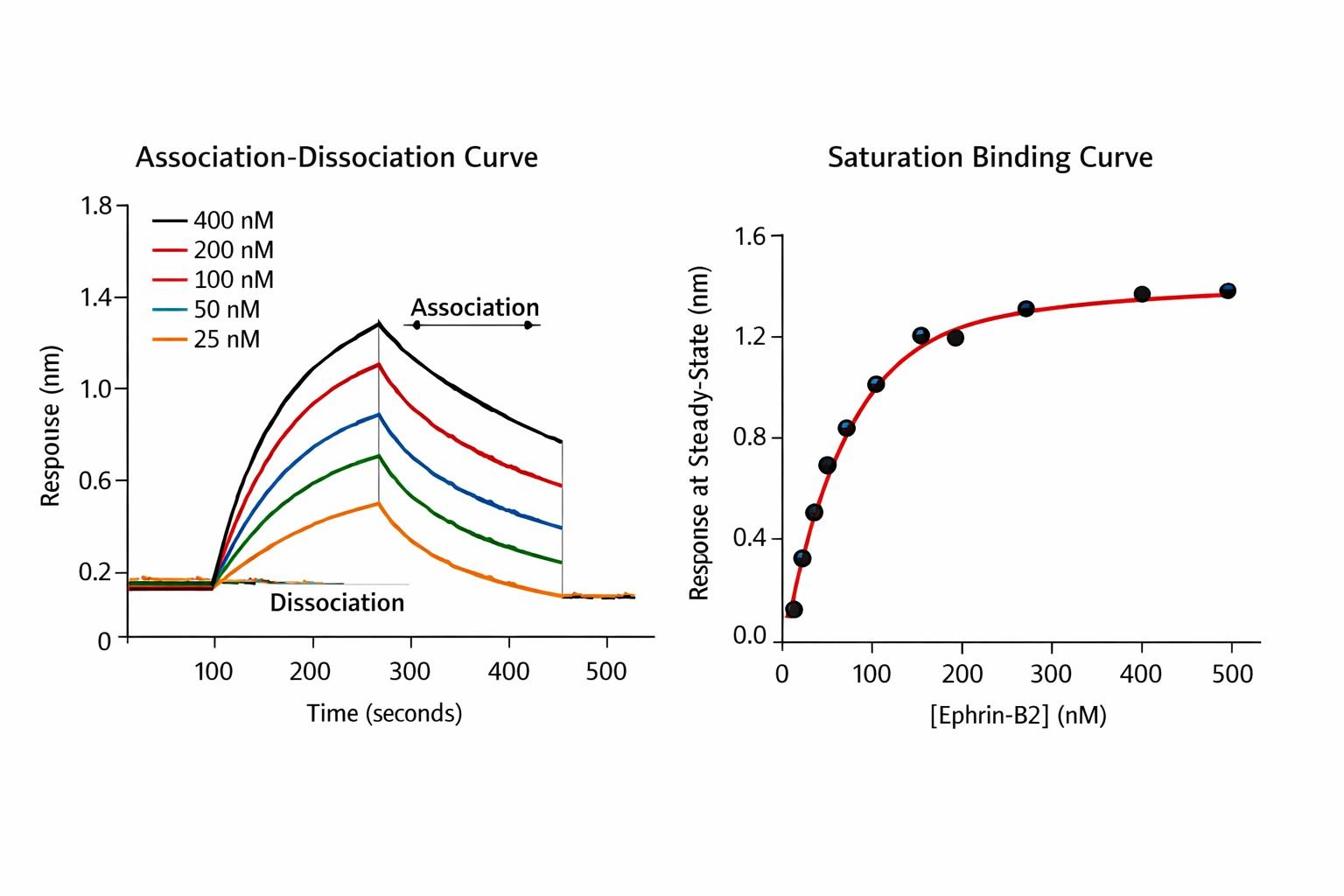 Fig 2. Example BLI Sensorgram
High-Throughput Drug Screening Applications
SPR/BLI-based high-throughput screening platforms can be used for:
- Small molecule compound library screening: Detecting inhibition rates of compounds on G protein-Ephrin binding;
- Antibody epitope binning: Identifying competitive/non-competitive antibodies to guide combination therapy design;
- Affinity maturation: Optimizing affinity of lead antibodies/proteins to reduce therapeutic doses.
Screening Case Study: Using the Octet RED96 system with immobilized NiV G protein as bait, 1,200 natural product extracts were screened. By monitoring inhibition signals of Ephrin-B2 binding, three candidate compounds with significant inhibitory activity were identified, with IC50 values in the 1-10 μM range, providing starting points for subsequent structure optimization.
Conclusions and Perspectives
Ephrin-B2/B3, as key receptors for NiV entry into host cells, research on their molecular interaction mechanisms has provided multiple druggable targets for antiviral drug development. The high-affinity, high-specificity binding interface between the G protein head domain and the Ephrin G-H loop is an ideal target for structure-based drug design (SBDD). Structure-based drug design has successfully guided the development of high-affinity decoy receptors and broadly neutralizing antibodies.
Future research directions include:
- Resolving the structure of G protein tetramers in complex with Ephrin to understand the impact of oligomerization on binding affinity;
- Developing peptide mimetics or small molecule inhibitors with high oral bioavailability;
- Establishing animal models based on humanized Ephrin-B2 to evaluate in vivo efficacy of soluble receptors and antibodies;
- Utilizing artificial intelligence algorithms to predict the impact of viral G protein mutations on receptor binding and provide early warning of escape mutations.
Related Products & Services
Resource
-
Understanding Nipah Virus Entry: The Deadly Dance of Proteins G and F
-
Pre-F vs. Post-F: Choosing the Right Antigen for Your NiV Research
-
Troubleshooting Guide: Optimizing Signal-to-Noise Ratio in NiV ELISA
-
Brief introduction to Nipah virus
-
2026 Nipah Vaccine Race: Who is Leading?
References
- Negrete, O.A., et al. (2005). EphrinB2 is the entry receptor for Nipah virus, an emergent deadly paramyxovirus. Nature, 436(7049), 401-405.
- Negrete, O.A., et al. (2006). Ephrin-B3 is a functional receptor for Nipah virus and Hendra virus. Proceedings of the National Academy of Sciences, 103(46), 17975-17976.
- Xu, K., et al. (2008). Host cell recognition by the henipaviruses: crystal structures of the Nipah virus attachment glycoprotein and its complex with ephrin-B3. Proceedings of the National Academy of Sciences, 105(29), 9953-9958.
- Bowden, T.A., et al. (2008). Crystal structure and carbohydrate analysis of Nipah virus attachment glycoprotein: a template for antiviral and vaccine design. Journal of Virology, 82(22), 11628-11636.
- Diederich, S., et al. (2008). Ephrin-B2 expression critically influences Nipah virus infection independent of its cytoplasmic tail. Virology Journal, 5, 163.
- Bossart, K.N., et al. (2005). Functional studies of host-specific ephrin-B ligands as Henipavirus receptors. Virology, 335(2), 357-363.
- Zhu, Z., et al. (2024). Fully human single-domain antibody targeting a highly conserved cryptic epitope on the Nipah virus G protein. Nature Communications, 15, 6834.
- Broder, C.C., et al. (2024). An attachment glycoprotein nanoparticle elicits broadly neutralizing antibodies and protects against lethal Nipah virus infection. npj Vaccines, 9, 150.
- Mathieu, C., et al. (2012). Nipah virus: high lethality, zoonotic potential, and the development of vaccines and therapies. Virus Research, 162(1-2), 132-140.
- Weis, M., et al. (2024). Interaction of Nipah Virus F and G with the Cellular Protein Cortactin Discovered by a Proximity Interactome Assay. International Journal of Molecular Sciences, 25(7), 4112.
- Hoque, A.F., et al. (2023). In silico prediction of interaction between Nipah virus attachment glycoprotein and host cell receptors Ephrin-B2 and Ephrin-B3 in domestic and peridomestic mammals. Infection, Genetics and Evolution, 116, 105516.
- Bender, F., et al. (2016). Pseudotyping Lentiviral Vectors: When the Clothes Make the Virus. Current Gene Therapy, 16(5), 313-325.
- Wang, L., et al. (2024). Sequence basis for selectivity of ephrin-B2 ligand for Eph receptors and pathogenic henipavirus G glycoproteins. Journal of Virology, 98(3), e01506-23.

Contact us or send an email at for project quotations and more detailed information.
Quick Links
-

Papers’ PMID to Obtain Coupon
Submit Now -

Refer Friends & New Lab Start-up Promotions