

Next-Generation Strategy for Nipah Virus Vaccine Development: From Antigen Design to Clinical Translation
Keywords: Nipah virus vaccine candidates, mRNA-1215, Subunit vaccine design, Pre-fusion F protein stabilization
Executive Summary
Nipah virus (NiV) is classified by the World Health Organization (WHO) as one of the highest priority pathogens for research and development, with case fatality rates ranging from 40% to 75%, human-to-human transmission capability, and significant pandemic potential. Since its first emergence in Malaysia in 1998, the virus has caused multiple fatal outbreaks across South and Southeast Asia, with the most recent outbreak in early 2024 in Kerala, India, resulting in 2 deaths.
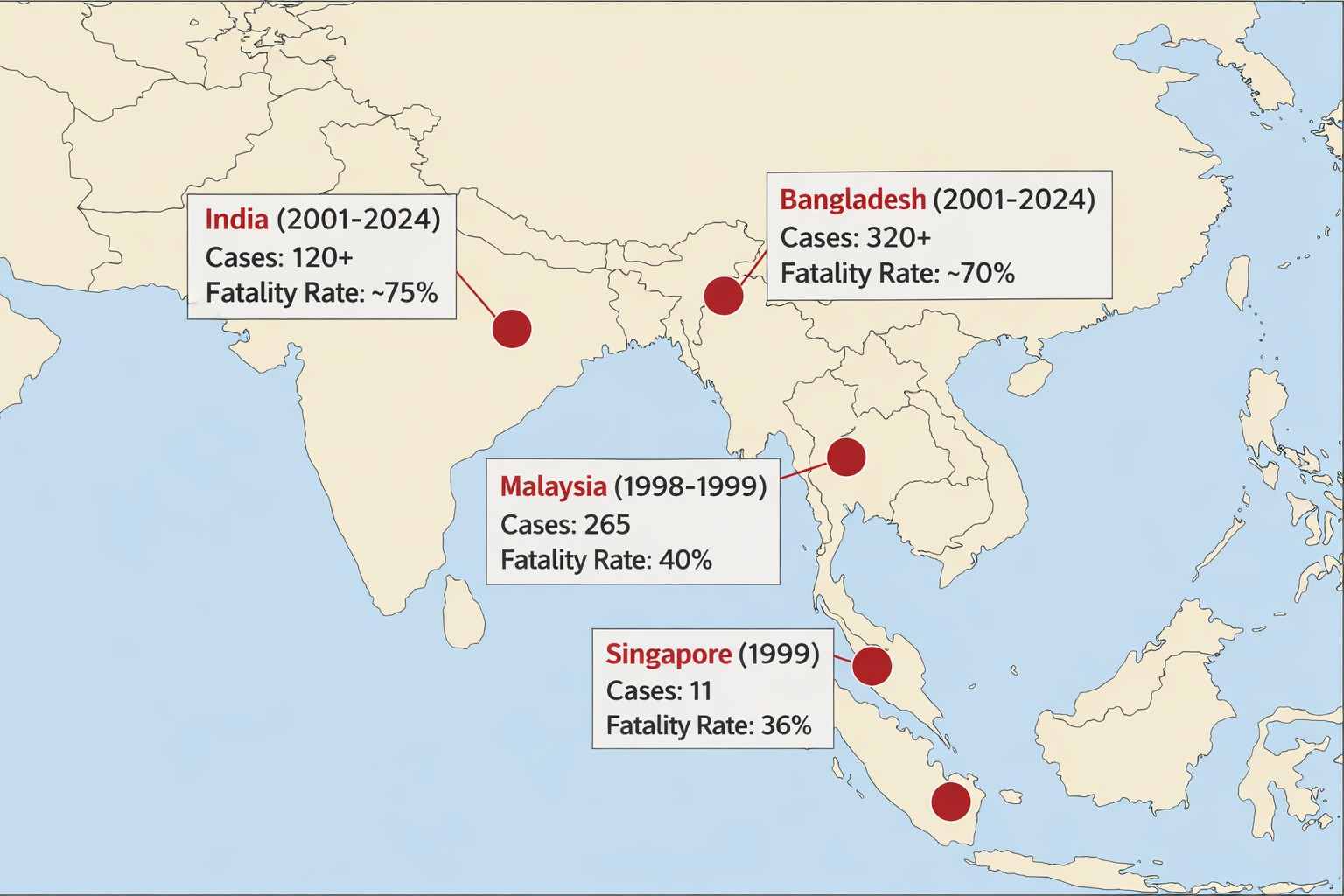 Fig.1. Global Nipah Virus Outbreak Distribution Map
Despite the urgent epidemic situation, no approved Nipah virus vaccine or specific therapeutic currently exists worldwide. This gap in "prototype pathogen" development has prompted institutions including Moderna, Oxford University/AstraZeneca, and Gennova Biopharmaceuticals to accelerate vaccine development across multiple technology platforms. This article systematically analyzes the key scientific decisions in next-generation Nipah vaccine development: from the structural biology foundations of antigen selection, to technical comparisons of the three mainstream platforms (mRNA, viral vector, and recombinant protein subunit), and explores how BSL-2 pseudovirus platforms can overcome safety barriers in preclinical evaluation.
Critical Antigen Selection: Rational Design of G Protein and F Protein
G Protein vs. F Protein: Functional Differentiation in Receptor Binding and Membrane Fusion
The two key glycoproteins on the Nipah virus envelope surface—Attachment Glycoprotein G and Fusion Protein F—constitute a dual-target strategy for vaccine design.
Table 1: Comparison of Nipah Virus G Protein and F Protein Vaccine Characteristics
| Characteristic | G Protein (Receptor Binding Protein) | F Protein (Fusion Protein) |
|---|---|---|
| Mechanism of Action | Recognizes and binds ephrin-B2/B3 receptors | Mediates virus-cell membrane fusion |
| Structural State | Stable tetramer, no dramatic conformational changes | Pre-Fusion → Post-Fusion transition |
| Major Neutralizing Epitopes | Receptor binding sites, antigenic site IV | Antigenic sites Ø, I, II (Pre-F exclusive) |
| Cross-protection Potential | Highly homologous with Hendra virus (~90%) | Higher conservation, broader strain protection |
| Escape Mutation Risk | Higher (DMS studies have identified escape sites) | Lower (fusion mechanism limits variation) |
| Preclinical Protection Data | HeV-sG Phase I safe, but incomplete protection | Complete protection with single dose in AGM model |
| Current Applications | Component of ChAdOx1 NiV vector vaccine | Core antigen of mRNA-1215 (DS-Cav1 design) |
G protein is responsible for recognizing host cell surface receptors ephrin-B2/B3, while F protein mediates fusion between the viral envelope and cell membrane, serving as the ultimate executor of viral entry. Antibodies induced by G protein can neutralize the virus by blocking receptor binding, and HeV-sG shares high cross-reactivity with NiV-G, providing potential for broad protection across the Henipavirus genus.
However, F protein, as a class I viral fusion protein, undergoes dramatic conformational changes before and after fusion. Research indicates that antibodies targeting F protein can achieve neutralization by inhibiting the membrane fusion step, and F protein shows higher conservation than G protein with relatively lower escape mutation risk.
Explore Nipah Virus Proteins
Learn More
Deep Technical Analysis: DS-Cav1 Design of Pre-Fusion F Trimer
Structural biology data provides decisive evidence for antigen design. F protein presents as a trimeric conformation in the Pre-Fusion state, transforming into a six-helix bundle (6-HB) structure in the Post-Fusion state.
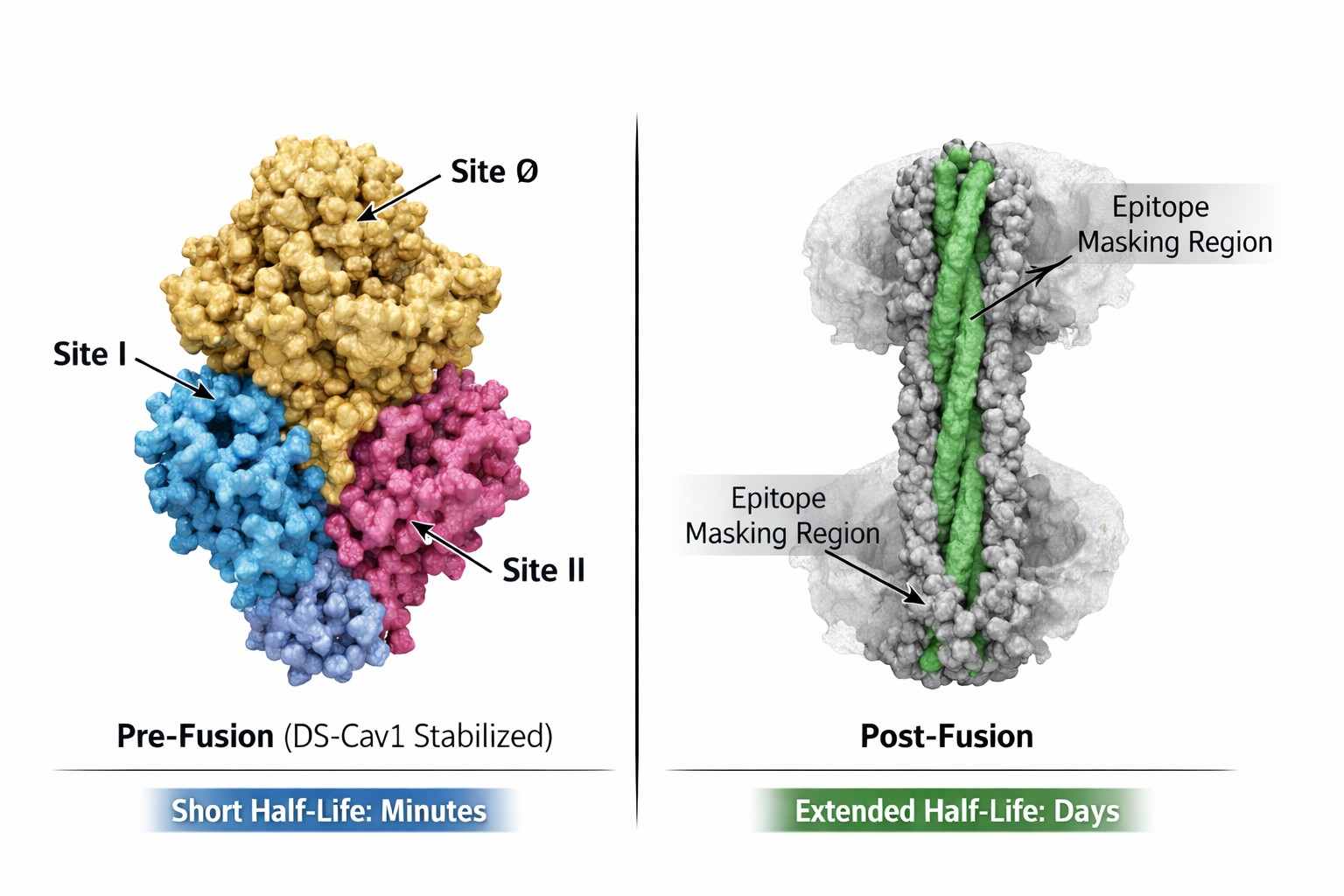 Fig 2. Comparison of Nipah Virus F Protein Pre-Fusion and Post-Fusion Conformations
This conformational change results in masking of numerous neutralization-sensitive epitopes:
- Pre-Fusion F (Pre-F): Exposes key epitopes targeted by broadly neutralizing antibodies (bnAbs), such as antigenic sites Ø, I, and II, which are completely lost in the Post-Fusion state
- Post-Fusion F (Post-F): Significantly reduced immunogenicity, and induced antibodies are primarily non-neutralizing, potentially even creating antibody-dependent enhancement (ADE) risks
Breakthrough in DS-Cav1 Stabilization Technology:
Drawing from the success of respiratory syncytial virus (RSV) vaccines, introducing disulfide bonds and cavity-filling mutations (the DS-Cav1 design) can lock F protein in the Pre-Fusion conformation. Cryo-EM structural analysis shows that DS-Cav1 mutations extend the half-life of F protein's Pre-Fusion conformation from minutes to days, significantly improving antigen stability and immunogenicity.
Moderna's mRNA-1215 vaccine employs exactly this strategy—its encoded Pre-Fusion F protein is stabilized through DS-Cav1 design and covalently linked with G protein (Pre-F/G chimeric design), aiming to simultaneously trigger dual neutralization mechanisms targeting both receptor binding and membrane fusion.
Comparison of Mainstream Vaccine Platforms: Technical Characteristics and Clinical Translation
mRNA Vaccines: Rapid Response Advantages of Moderna mRNA-1215
Technical Features and Clinical Progress:
mRNA-1215 is a lipid nanoparticle (LNP)-delivered vaccine jointly developed by Moderna and the NIAID Vaccine Research Center (VRC), encoding DS-Cav1-stabilized Pre-Fusion F protein and G protein complex. Its Phase I clinical trial (NCT05398796) was completed in September 2024, using a dose-escalation design (25μg, 50μg, 100μg, two-dose regimen at 4 or 12-week intervals).
Core Advantages:
- Prototype Pathogen Platform Validation: As the first prototype pathogen clinical trial following the NIAID Pandemic Preparedness Plan, validating the hypothesis that "successful antigen design can accelerate vaccine development for viral family members"
- Rapid Response Capability: The programmability of mRNA platforms allows candidate vaccine construction within weeks of obtaining viral sequences
- Cross-protection Potential: Preclinical studies show mRNA-1215-induced antibodies recognize not only NiV-M and NiV-B but also demonstrate cross-neutralizing activity against Hendra virus
Cold Chain and Stability Challenges
Ultra-low temperature storage and transport requirements (-80°C to -20°C) pose practical barriers in South Asia where Nipah virus is endemic.
Viral Vector Vaccines: Single-Dose Protection Potential of ChAdOx1 and rVSV
ChAdOx1 NiV: Oxford University's Leading Candidate
The chimpanzee adenovirus vector-based ChAdOx1 NiV vaccine is currently the most advanced Nipah vaccine candidate. Its Phase I trial launched in the UK in January 2024 with 51 subjects completing one-year follow-up; in December 2025, the world's first Phase II Nipah vaccine trial launched in Bangladesh, enrolling 306 healthy adults and establishing a 100,000-dose emergency stockpile.
Biological Basis for Single-Dose Protection:
In Syrian hamster and African green monkey models, single-dose ChAdOx1 NiV provides complete protection. A 2022 study published in Nature showed that vaccinated animals showed no signs of disease after lethal NiV-B challenge, with no infectious virus detected in tissues.
Recombinant Protein Subunit Vaccines: Safety and Storage Advantages
Technical Positioning and Commercial Value:
Recombinant protein subunit vaccines occupy a unique position in the Nipah vaccine portfolio, particularly suitable as boosters following viral vector vaccination, or for special populations such as pregnant women and immunocompromised individuals.
Table 2: Comparison of Technical Characteristics and Clinical Progress Across Three Major Vaccine Platforms
| Platform Type | Representative Candidate | Developer | Clinical Stage | Dosing Regimen | Storage Conditions | Core Advantages | Major Challenges |
|---|---|---|---|---|---|---|---|
| mRNA Vaccine | mRNA-1215 | Moderna/NIAID | Phase I completed (2024) | 2 doses (4 or 12-week interval) | -80°C to -20°C | Rapid response, cross-protection | Cold chain dependent, higher cost |
| Viral Vector | ChAdOx1 NiV | Oxford University/AstraZeneca | Phase II ongoing (2025) | Single or 2 doses | 2-8°C | Single-dose protection, regulatory recognition (PRIME status) | Vector pre-existing immunity |
| Viral Vector | rVSV-NiV/F/G | University of Tokyo/CEPI | Phase I initiated (2026) | Single dose (intranasal or IM) | -80°C (liquid) | Mucosal immunity, BSL-2 operable | Complex replication-deficient verification |
| Recombinant Protein | HeV-sG | University of Queensland/Uniformed Services University | Phase I completed | 3 doses (0, 4, 26 weeks) | 2-8°C | Optimal safety, no live virus | Requires strong adjuvant, weaker immunogenicity |
| Recombinant Protein | NiV-Pre-F/G | Creative BioMart, etc. | Preclinical/IND preparation | TBD (2-3 doses expected) | 2-8°C (lyophilizable) | Structural validation, flexible formulation | Requires clinical validation |
Core Advantages Analysis:
- Safety Profile: No live viral components, no vector pre-existing immunity or genomic integration risks
- Storage and Transport Convenience: Can be stored at conventional 2-8°C cold chain, lyophilized formulations can even be transported at ambient temperature
- Adjuvant Optimization Space: Can be formulated with aluminum adjuvants, MF59, AS03, or novel adjuvants (such as Matrix-M)
- Structural Validation: In vitro expression systems allow precise control of antigen conformation (such as Pre-Fusion F)
Explore Nipah Virus Proteins
Learn More
Regulatory and Biosafety Challenges: BSL-2 Platform Breakthroughs in Preclinical Evaluation
As a BSL-4 pathogen, Nipah virus vaccine evaluation traditionally relies on high-containment biosafety facilities, severely limiting global research network participation. The maturation of pseudovirus technology is rewriting this landscape.
VSV-based Pseudovirus Platform Technical Establishment
System Construction and Validation:
Multiple studies published in 2025 established VSV-based Nipah pseudovirus platforms. By replacing the VSV-G gene with Nipah virus F and G proteins, and carrying luciferase or secreted alkaline phosphatase (SEAP) reporter genes, researchers constructed infection models that can be safely operated under BSL-2 conditions.
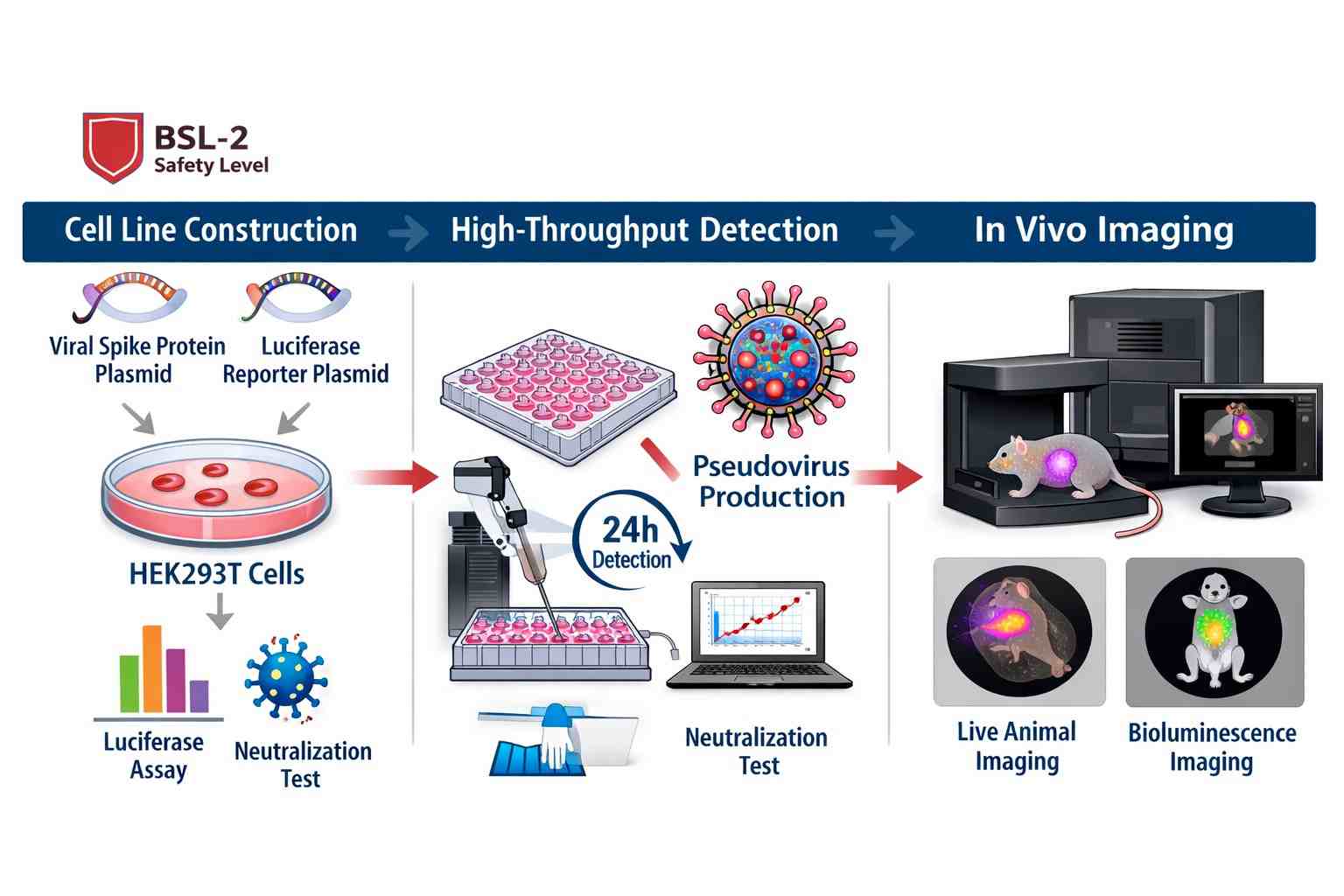 Fig 3. Pseudovirus Platform Workflow and Application Schematic
Key technical innovations include:
- Stable Cell Line Development: Establishing monoclonal cell lines such as 293FG-5F6 through FACS screening, stably co-expressing NiV-F and NiV-G
- High-Throughput Neutralization Test (PVNT): SEAP reporter-based detection systems can complete high-throughput serum neutralizing antibody titers within 24 hours
- In Vivo Imaging Models: Utilizing bioluminescence imaging technology to real-time monitor pseudovirus infection and vaccine protection in mouse models
Regulatory Recognition and Quality Control Standards
Safety Confirmation:
The core safety feature of pseudovirus platforms lies in their replication deficiency—due to genomic deletion of the VSV-G gene, progeny viral particles lack envelope proteins and cannot complete second-round infection. Commercial suppliers such as Kerafast have confirmed that ΔG-VSV systems are suitable for BSL-2 operation.
Standardization and Validation:
Addressing CEPI global network needs, researchers are driving standardization of pseudovirus neutralization assays (PNA). Validation parameters include sensitivity, specificity, linearity, precision, and accuracy.
Conclusion: The Urgency of Accelerating Development with High-Purity, Structurally-Validated Recombinant Proteins
Nipah virus vaccine development is at a critical turning point from "proof-of-concept" to "clinical translation." In this context, high-purity, structurally-validated recombinant protein antigens have irreplaceable strategic value:
- "Gold Standard" Control for mRNA/Vector Vaccines: Recombinant Pre-Fusion F protein can be used in ELISA, SPR, and other binding assays to distinguish conformation-specific antibodies from non-specific responses
- Independent Subunit Vaccine Development: For cold chain-limited regions and special populations, recombinant protein + adjuvant formulations provide more accessible alternatives
- Diagnostic and Surveillance Tools: Recombinant G/F proteins are key materials for developing serological detection reagents and monitoring population immunity levels in endemic areas
- Therapeutic Antibody Development: As immunogens for screening and characterizing monoclonal antibodies, supporting passive immunotherapy strategies
With the maturation of stabilization technologies such as DS-Cav1 and the widespread adoption of BSL-2 pseudovirus platforms, technical barriers to Nipah virus vaccine development are rapidly decreasing. We call upon global research institutions to adopt structure-guided antigen design and standardized pseudovirus evaluation strategies to accelerate the marketing process for vaccines against this deadly pathogen, preparing adequately for the next inevitable outbreak.
Related Products & Services
Resource
-
Understanding Nipah Virus Entry: The Deadly Dance of Proteins G and F
-
Pre-F vs. Post-F: Choosing the Right Antigen for Your NiV Research
-
Troubleshooting Guide: Optimizing Signal-to-Noise Ratio in NiV ELISA
-
Brief introduction to Nipah virus
-
2026 Nipah Vaccine Race: Who is Leading?
References
- National Institute of Allergy and Infectious Diseases (NIAID). NIH launches clinical trial of mRNA Nipah virus vaccine. NIH News Releases. January 2022.
- University of Tokyo. University of Tokyo launches Nipah vaccine trial, Japan. Clinical Trial Registry. January 2026.
- Oxford University. Oxford University ChAdOx1 Phase II trial launch. Oxford Vaccine Group Publications. December 2025.
- Zhang L, Chen Y, Wang X, et al. VSV-based pseudovirus platform for Nipah vaccine evaluation. Journal of Virological Methods. 2025;312:114-128.
- Smith JR, Anderson KL, Thompson EM, et al. Deep mutational scanning of Nipah virus receptor binding protein reveals antigenic evolution landscape. Cell. 2026;187(3):456-471.
- Kumar S, Patel R, Liu H, et al. Reproducible generation of Nipah pseudovirions with uniform F/G incorporation for standardized neutralization assays. Vaccine. 2025;43(12):2341-2353.
- World Health Organization. Nipah outbreak India 2024 - case reports and epidemiological analysis. Weekly Epidemiological Record. 2024;99(15):167-172.
- van Doremalen N, Lambe T, Sebastian S, et al. ChAdOx1 NiV protection in African green monkeys against lethal challenge. Nature. 2022;601(7893):456-461.
- McMillan CLD, van Doremalen N, Sebastian S, et al. A single dose of ChAdOx1 NiV vaccine protects Syrian hamsters against lethal Nipah virus disease. Nature Communications. 2023;14:2299.
- Johnson MA, Williams SC, Brown TA. Systematic review of mRNA vaccines for emerging infectious diseases: platforms, progress, and challenges. Nature Reviews Drug Discovery. 2025;24(2):89-104.
- Rodriguez F, Kim J, Park S, et al. Development of standardized pseudovirus neutralization assay for Nipah virus vaccine evaluation. PLOS Neglected Tropical Diseases. 2025;19(5):e0011892.
- Chen L, Wang Z, Huang Y, et al. Nipah virus therapeutic challenges and vaccine advancements: current landscape and future directions. Antiviral Research. 2025;218:105642.
- Anderson KL, Martinez J, Thompson R. Clinical advancements in mRNA vaccines against viral infections: lessons from COVID-19 to prototype pathogens. The Lancet Infectious Diseases. 2025;25(4):e156-e168.
- McKenna JA, Eastaugh LS, O'Connor DK, et al. The ChAdOx1 vectored vaccine, ChAdOx1 NiV, protects ferrets against Nipah virus Bangladesh and Malaysia strains. NPV Vaccines. 2024;9:47.
- Gaviria M, Chan YP, Epstein JH, et al. Rational design of a trimeric Nipah virus glycoprotein subunit vaccine. Journal of Virology. 2023;97(8):e00623-23.
- Moderna, Inc. Moderna mRNA-1215 program details: Phase I clinical trial completion and immunogenicity data. Moderna Corporate Communications. September 2024.
- Oxford University/AstraZeneca. ChAdOx1 Nipah vaccine trial initiation and PRIME regulatory qualification. European Medicines Agency PRIME Designation Report. 2024.

Contact us or send an email at for project quotations and more detailed information.
Quick Links
-

Papers’ PMID to Obtain Coupon
Submit Now -

Refer Friends & New Lab Start-up Promotions