

Technical Guide: Evaluating Neutralizing Antibody Titers Using NiV Pseudovirus Systems
Background: Rationale for Pseudovirus-Based Neutralization Assays
Nipah virus (NiV) is a highly pathogenic paramyxovirus classified as a Priority Pathogen by the WHO. Research with live virus requires Biosafety Level 4 (BSL-4) laboratory facilities, which significantly limits the development of vaccines and therapeutic antibodies. Pseudovirus systems address this challenge by incorporating NiV envelope glycoproteins (G and F proteins) into replication-defective viral backbones, enabling safe and efficient evaluation of neutralizing antibody titers under Biosafety Level 2 (BSL-2) conditions.
Key Advantages:
- Biosafety: Pseudoviruses are single-cycle, replication-incompetent, eliminating the need for BSL-4 containment
- Standardized Quantification: Luciferase reporter genes provide objective, reproducible quantitative readouts
- High-Throughput Screening: Compatible with 96/384-well formats for large-scale drug screening
- Antigenic Authenticity: Preserves authentic NiV entry mechanisms, including receptor binding and membrane fusion
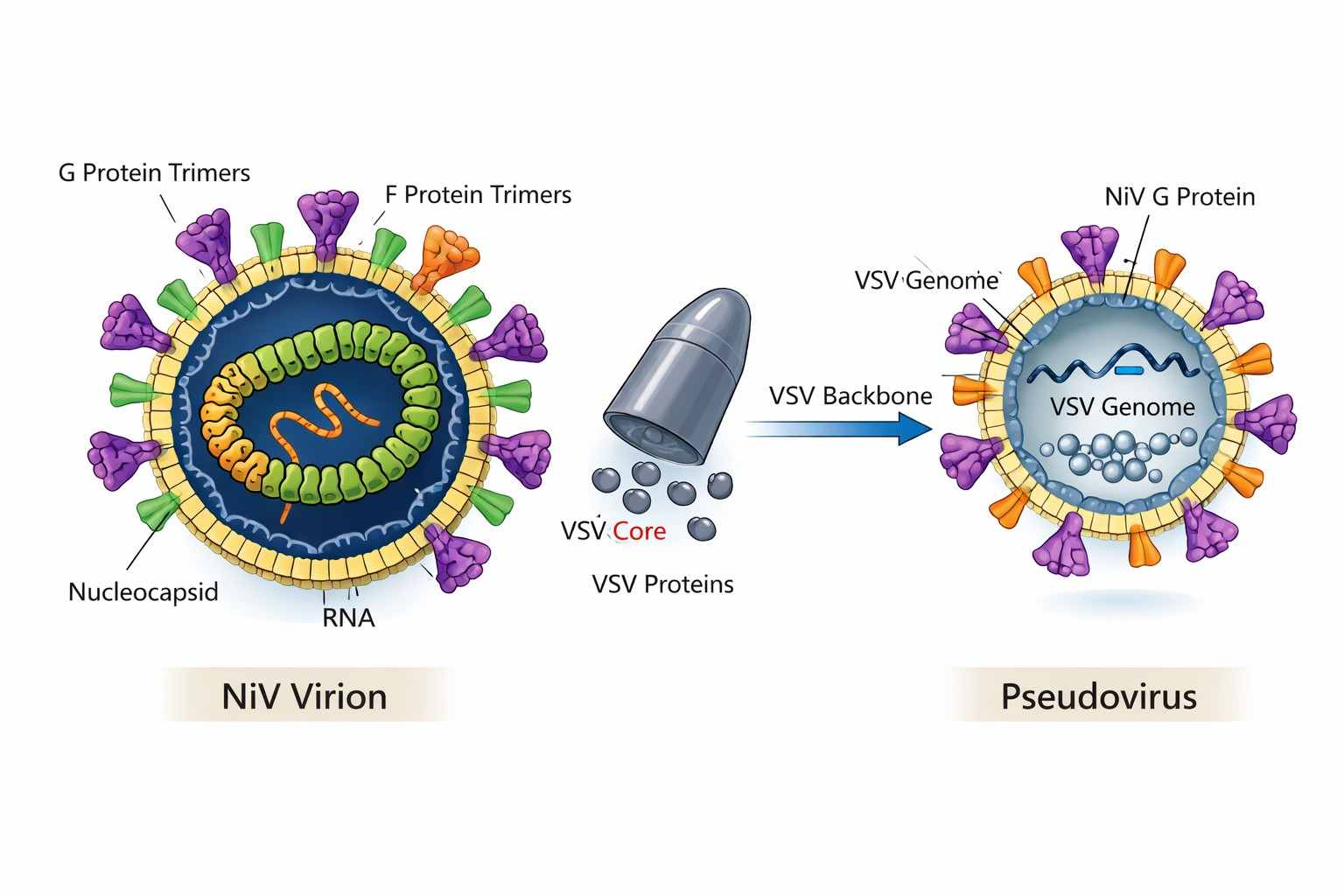 Fig 1. Schematic Diagram of Nipah Virus Structure and Pseudovirus System Principle
Explore Nipah Virus Proteins
Learn More
System Construction: Viral Components and Design Principles
Envelope Plasmid Design: Co-expression of NiV G and F Proteins
Pseudovirus infectivity depends on the coordinated function of two NiV surface glycoproteins:
NiV G Protein (Attachment Glycoprotein)
- Function: Recognizes host cell receptors (ephrin-B2/B3) and mediates viral attachment
- Design Considerations: Use codon-optimized sequences with CMV or EF1α promoter-driven expression
- Tag Options: C-terminal HA or FLAG tags facilitate Western blot verification
NiV F Protein (Fusion Glycoprotein)
- Function: Triggers fusion between viral envelope and cell membrane, enabling viral genome release
- Critical Requirement: F protein precursor (F0) must be proteolytically cleaved into F1/F2 heterodimers to acquire fusion activity
- Cleavage Optimization Strategies:
- Co-expression of exogenous proteases (e.g., TMPRSS2 or furin)
- Utilization of polybasic cleavage site mutants
- For transient expression in 293T cells, endogenous furin activity is typically sufficient for cleavage
Table 1: Construction Parameters for NiV Envelope Protein Expression Plasmids
| Component | Recommended Vector | Key Elements | Verification Methods |
|---|---|---|---|
| NiV G Protein | pcDNA3.1(+) | CMV promoter, Kozak sequence, HA tag | Flow cytometry, immunofluorescence |
| NiV F Protein | pcDNA3.1(+) | CMV promoter, native signal peptide, no tag | Western blot (detect F1/F2 cleavage bands) |
| Protease Auxiliary | pCAGGS-TMPRSS2 | CAG promoter, furin/TMPRSS2 | Functional validation (cell-cell fusion assay) |
Backbone Vector Selection: VSV-dG-Luc vs. Lentivirus
Select the appropriate replication-defective backbone based on experimental objectives:
VSV-dG-Luc System (Recommended for Neutralization Assays)
- Structure: Vesicular stomatitis virus (VSV) genome with G gene deletion, replaced by luciferase (Luc) or GFP reporter gene
- Advantages:
- High-titer production (up to 10^8-10^9 TU/mL)
- Rapid readout (detectable 16-24 hours post-infection)
- Low background signal with excellent signal-to-noise ratio
- Limitations: Single infection cycle only; no integration into host genome
Lentivirus System
- Structure: HIV-1 backbone pseudotyped with NiV envelope proteins
- Advantages:
- Integrates into host genome, suitable for stable cell line generation
- Capable of infecting non-dividing cells
- Limitations: Lower titers (10^6-10^7 TU/mL); longer detection period (48-72 hours)
Table 2: Comparison of Pseudovirus Backbone Systems
| Characteristic | VSV-dG-Luc | Lentivirus |
|---|---|---|
| Reporter Gene | Firefly luciferase (Luc) | GFP/Luc/Puro |
| Production Titer | 10^8-10^9 TU/mL | 10^6-10^7 TU/mL |
| Detection Time | 16-24 hours | 48-72 hours |
| Genome Integration | No | Yes |
| Applicable Cells | Broad (requires receptor expression) | Dividing/non-dividing cells |
| Optimal Application | High-throughput neutralization screening | Stable cell line construction |
Transfection and Pseudovirus Production: Optimization Protocol
HEK293T Cell Transfection Condition Optimization
Pseudovirus yield and quality are highly dependent on transfection efficiency. The following optimization strategies are recommended:
Cell State Control
- Cell density: 70-80% confluence at transfection
- Passage number: Use low-passage cells (<P20)
- Culture medium: DMEM with 10% FBS; replace with fresh medium 4 hours before transfection
Transfection System (10 cm culture dish example)
- Plasmid Ratio: G:F:Backbone = 1:1:2 (mass ratio)
- Total DNA amount: 10-15 μg
- Excess backbone plasmid ensures efficient packaging
- Transfection Reagent: PEI 40kDa (1:3 DNA:PEI mass ratio) or Lipofectamine 3000
- Culture Conditions: 37°C, 5% CO2; replace with complete medium 6-8 hours post-transfection
Pseudovirus Harvesting and Purification
- Harvest time: 48-72 hours post-transfection (VSV system) or 60-72 hours (lentivirus system)
- Centrifugation: 3,000 rpm for 10 minutes to remove cell debris; filter through 0.45 μm filter
- Concentration methods: Ultracentrifugation (50,000×g, 2 hours) or PEG8000 precipitation
- Storage conditions: Aliquot and store at -80°C; avoid freeze-thaw cycles
Critical Quality Control
- Titer determination: Infect target cells (e.g., Vero or 293T-ephrinB2) with serial dilutions; calculate TCID50 or relative light units (RLU)
- Specificity validation: Confirm pseudovirus neutralization using anti-NiV G/F monoclonal antibodies
- Background exclusion: Set up no-envelope control (backbone-only transfection) to assess background signal
Neutralization Assay Workflow: Standardized Protocol
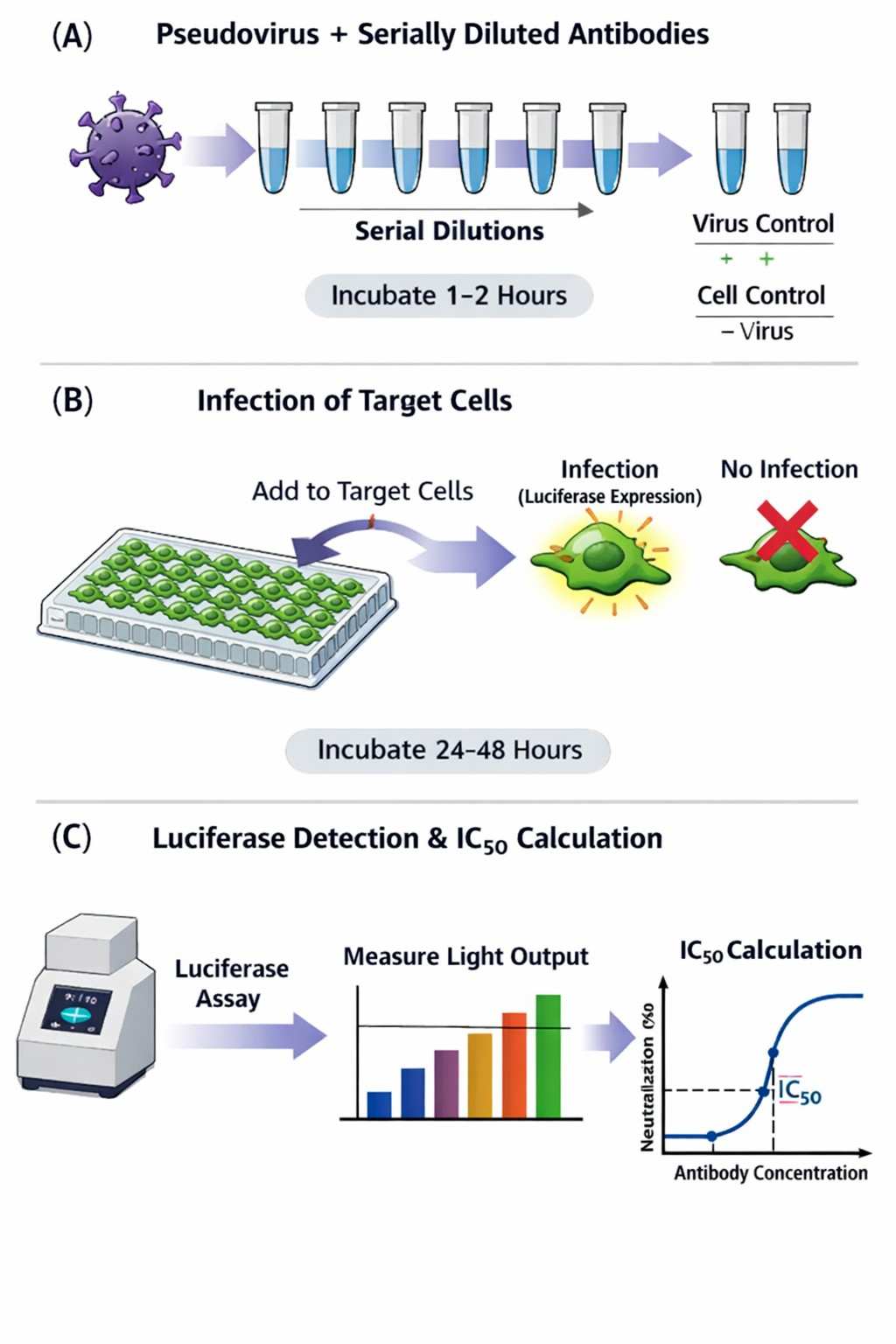 Fig 2. Schematic diagram of pseudovirus neutralization assay workflow
Pre-Experimental Preparation
Target Cell Selection
- Vero Cells: African green monkey kidney cells with high ephrin-B2 expression; NiV-susceptible cell line
- 293T-ephrinB2: 293T cells stably transfected with human ephrin-B2; enhanced infection efficiency
- Cell Plating: Seed 96-well plates 24 hours before infection (1×10^4 cells/well); ensure 80-90% confluence at infection
Pseudovirus Titer Standardization
- Pre-determine pseudovirus input via pilot experiment: viral amount producing 50,000-100,000 RLU/well (within linear range)
- Avoid high MOI that may cause cytopathic effects (CPE) interfering with readouts
Neutralization Assay Procedure
Step 1: Sample Pre-treatment
- Heat-inactivate serum/antibody samples at 56°C for 30 minutes to inactivate complement
- Perform serial dilutions using serum-free DMEM (typically starting from 1:20 or 1:40, 3-fold or 4-fold serial dilutions)
Step 2: Virus-Antibody Incubation
- Mix equal volumes of pseudovirus and diluted samples (e.g., 50 μL virus + 50 μL sample)
- Incubate at 37°C, 5% CO2 for 1 hour (allows adequate antibody-virus binding)
Step 3: Infection and Detection
- Add 100 μL virus-antibody mixture to pre-plated target cells
- Incubate at 37°C for 2 hours, then replace with maintenance medium containing 2% FBS
- Continue culture for 16-24 hours (VSV system) or 48 hours (lentivirus system)
Step 4: Luciferase Readout
- Remove medium; gently wash cells with PBS
- Add cell lysis buffer
- Use luciferase detection reagent (e.g., Bright-Glo or Steady-Glo)
- Detect RLU values using chemiluminescence plate reader; integration time 0.5-1 second/well
Data Analysis and IC50 Calculation
Neutralization Percentage Calculation:
Neutralization (%) = [1 - (Sample RLU - Background RLU) / (Virus Control RLU - Background RLU)] × 100
IC50/ID50 Calculation:
- Perform non-linear regression analysis using GraphPad Prism or similar software (four-parameter logistic fit)
- Report 50% inhibitory concentration (IC50) or 50% inhibitory dilution (ID50)
- Set quality control criteria: Positive control antibody IC50 should fall within ±2 standard deviations of historical mean values
Table 3: Neutralization Assay Control Setup
| Control Type | Setup Method | Expected Result | Quality Control Significance |
|---|---|---|---|
| Virus Control | Pseudovirus + medium (no antibody) | High RLU signal (set as 0% inhibition) | Confirm pseudovirus infectivity |
| Cell Control | Target cells only (no virus) | Background RLU signal | Exclude cell autofluorescence |
| Positive Control | Known neutralizing antibody (e.g., m102.4 analog) | Dose-dependent inhibition | Validate assay system functionality |
| Negative Control | Irrelevant antibody or negative serum | No or low inhibition (<20%) | Exclude non-specific effects |
| Pseudovirus Control | Envelope-free backbone virus | Background RLU level | Exclude residual backbone virus infection |
Product Recommendations: Critical Reagents and Controls
To ensure experimental reproducibility and standardization, the following validated reagents are recommended:
Table 4: Recommended Critical Reagents and Controls
| Product Category | Recommended Product | Catalog/Source | Application |
|---|---|---|---|
| Recombinant Proteins | NiV G protein ectodomain (aa1-602, Fc-tagged) | Custom or commercial sources | Immunogen for antibody production, ELISA control |
| NiV F protein ectodomain (aa1-488, prefusion-stabilized mutant) | Custom or commercial sources | Conformation-specific antibody screening, vaccine design | |
| Positive Antibodies | Anti-NiV G neutralizing mAb (e.g., m102.4 analog) | Literature-reported or custom production | Positive control, validate pseudovirus system |
| Anti-NiV F neutralizing mAb (targeting F1 subunit) | Literature-reported or custom production | Assess F protein-dependent neutralization | |
| Detection Systems | Bright-Glo Luciferase Assay System | Promega E2610 | High-sensitivity chemiluminescence detection |
| Firefly Luciferase Reporter Gene Assay Kit | Various brands | Standardized RLU readout | |
| Cell Lines | Vero CCL-81 | ATCC | Standard target cells |
| 293T-ephrinB2 stable line | Laboratory-constructed or custom | Enhanced infection efficiency |
Critical Notes:
- Recombinant F protein should be confirmed in prefusion-stabilized conformation, which exposes major neutralizing epitopes
- Positive control antibodies should be aliquoted and stored at -80°C; avoid repeated freeze-thaw cycles that may reduce titers
- Regularly calibrate inter-batch experimental variation using reference sera with known titers
Explore Nipah Virus Proteins
Learn More
Troubleshooting Guide
Table 5: Common Issues and Solutions
| Issue | Possible Cause | Solution |
|---|---|---|
| Low pseudovirus titer | Insufficient F protein cleavage efficiency | Co-express furin or TMPRSS2; verify F protein sequence integrity |
| Low transfection efficiency | Optimize DNA:PEI ratio; ensure healthy cell status | |
| High background signal | Residual G protein in backbone | Use higher purity plasmid preparation; optimize ultracentrifugation purification |
| Target cell autofluorescence | Switch to lower passage cells; adjust lysis conditions | |
| Atypical neutralization curve | Excessive pseudovirus input | Dilute virus to linear range; reduce MOI |
| Antibody-dependent enhancement (ADE) | Test low-dilution sera; use Fc-mutant antibody controls | |
| Poor experimental reproducibility | Pseudovirus batch variation | Prepare large virus batches at once; titrate validate each batch |
| Cell status fluctuation | Strictly standardize cell culture; use same batch of FBS |
Applications and Future Perspectives
The NiV pseudovirus system extends beyond neutralizing antibody detection to various applications:
- Entry Inhibitor Screening: High-throughput screening of small molecule compound libraries targeting receptor binding (ephrin-B2/B3) or membrane fusion
- Vaccine Immunogenicity Assessment: Comparative analysis of neutralizing antibodies induced by different vaccine platforms (mRNA, recombinant protein, viral vectors)
- Escape Mutation Monitoring: Directed evolution screening of escape mutant strains to assess antibody resistance risks
- Cross-Protection Studies: Utilize Hendra virus (HeV) pseudovirus systems to evaluate cross-neutralization activity
Safety and Regulatory Considerations
Although pseudoviruses are handled in BSL-2 laboratories, the following precautions remain essential:
- Treat all pseudovirus-containing materials as potentially infectious substances
- Conduct virus manipulation in biosafety cabinets (BSC-II)
- Treat liquid waste with 1% sodium hypochlorite for 30 minutes before disposal
- Ensure laboratory personnel receive NiV-specific biosafety training
Related Products & Services
Resource
-
Understanding Nipah Virus Entry: The Deadly Dance of Proteins G and F
-
Pre-F vs. Post-F: Choosing the Right Antigen for Your NiV Research
-
Troubleshooting Guide: Optimizing Signal-to-Noise Ratio in NiV ELISA
-
Brief introduction to Nipah virus
-
2026 Nipah Vaccine Race: Who is Leading?
References
- Tamin, A., et al. (2009). Functional properties of the fusion and attachment glycoproteins of Nipah virus. Virology, 386(1), 157-171.
- Bossart, K. N., et al. (2012). Neutralization assays for differential henipavirus serology using Bio-Plex protein array systems. Journal of Virological Methods, 179(2), 245-253.
- Kalodimou, G., et al. (2022). Development and validation of a pseudovirus-based assay for Nipah virus neutralizing antibodies. Journal of Virological Methods, 299, 114345.
- Mire, C. E., et al. (2019). A recombinant Hendra virus G glycoprotein subunit vaccine protects nonhuman primates against Hendra virus challenge. Science Translational Medicine, 11(494), eaau5658.
- Wang, Z., et al. (2021). Structure and function of the Nipah virus fusion glycoprotein. Current Opinion in Virology, 48, 1-9.
- Geisbert, T. W., et al. (2014). Medical countermeasures against the henipaviruses: Current status and future directions. Antiviral Research, 108, 1-13.
- DeBuysscher, B. L., et al. (2013). A rapid immunodiagnostic test for the detection of IgM antibodies against Nipah virus. Journal of Virological Methods, 193(1), 33-39.
- Peeples, M. E. (2021). Paramyxovirus entry: Lessons from the Nipah virus F and G glycoproteins. Viruses, 13(8), 1556.

Contact us or send an email at for project quotations and more detailed information.
Quick Links
-

Papers’ PMID to Obtain Coupon
Submit Now -

Refer Friends & New Lab Start-up Promotions