

From Pre- to Post-Fusion: Conformational Changes and Epitope Mapping of Nipah Virus F Protein
Introduction
Nipah virus (NiV) is a highly pathogenic paramyxovirus belonging to the genus Henipavirus, causing severe neurological and respiratory diseases in humans with case fatality rates of 40-75%. Due to the lack of approved vaccines and therapeutic agents, Nipah virus has been designated as a priority pathogen by the World Health Organization. The two surface glycoproteins of the virus—the attachment protein G and the fusion protein F—mediate host cell receptor binding and membrane fusion processes, respectively, and serve as the primary targets of host antibody responses.
The fusion protein F belongs to Class I viral membrane fusion proteins, undergoing dramatic conformational rearrangements during viral entry, transitioning from a metastable prefusion conformation (Pre-F) to a highly stable postfusion conformation (Post-F). This transition releases free energy that drives the fusion of the viral envelope with the host cell membrane. Recent structural biology studies have demonstrated that the Pre-F conformation exposes far more neutralization-sensitive epitopes than the Post-F conformation, making Pre-F-based vaccine design strategies a current research hotspot.
Explore Nipah Virus Proteins
Learn More
Structural Biology Foundation of Class I Fusion Proteins
The Spring-Loaded Mechanism
Class I viral fusion proteins share common structural features and functional mechanisms, including influenza virus hemagglutinin (HA), HIV-1 envelope protein (Env), respiratory syncytial virus (RSV) F protein, and Nipah virus F protein. These proteins exist as homotrimers on the viral surface in a metastable Pre-F conformation, storing substantial conformational energy like a compressed spring.
When the virus binds to host cell receptors or is triggered by acidic environments, the F protein undergoes a "spring-loaded" conformational change: the fusion peptide (FP) exposes from the protein core and inserts into the host cell membrane, followed by extension of heptad repeat A (HRA) to form a trimeric coiled coil, while heptad repeat B (HRB) folds back in the opposite direction to form a six-helix bundle with HRA, ultimately bringing the viral envelope and cell membrane into close proximity for fusion. During this process, the fusion protein transforms from a compact globular Pre-F trimer (approximately 80 Å in height) to an elongated Post-F rod-like structure (approximately 160 Å in height), representing a massive conformational change.
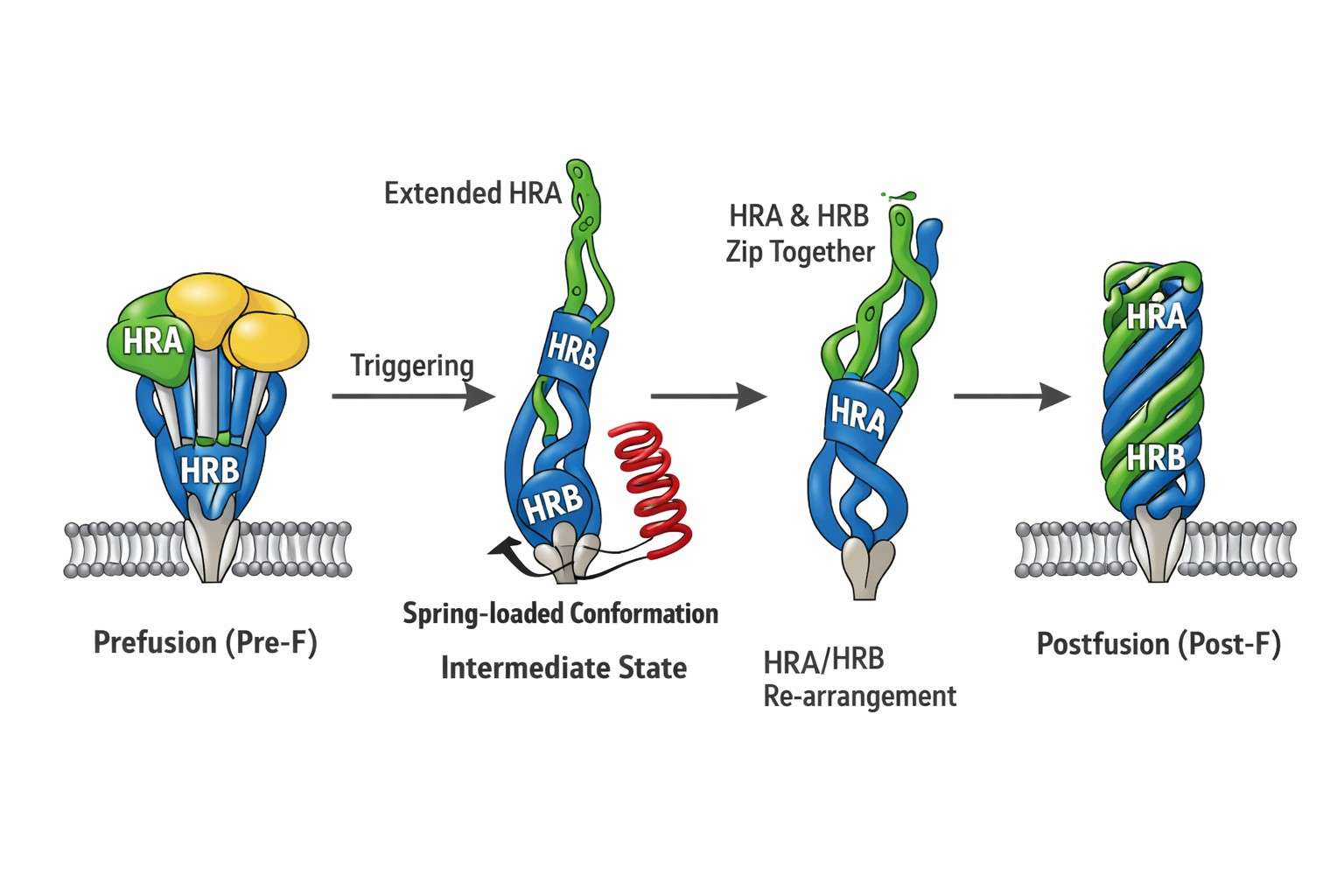 Fig1. Schematic diagram of conformational change of Nipah virus F protein from prefusion (Pre-F) to postfusion (Post-F)
Domain Organization of Nipah Virus F Protein
Nipah virus F protein consists of 546 amino acids, containing a type I transmembrane domain and an ectodomain. The ectodomain can be divided into three structural domains: Domain I (D1), Domain II (D2), and Domain III (D3). D3 is located at the membrane-distal apex, containing the fusion peptide and the N-terminal portion of HRA; D2 is situated in the middle layer; D1 is positioned near the membrane-proximal region. In the Pre-F trimer, the three D3 domains converge at the top to form an antigenically rich apical region, while the fusion peptide is wrapped in the interface between D1 and D3.
Compared to RSV F protein, Nipah virus F protein has lower glycosylation density, containing only 12 N-glycosylation sites (4 per protomer), forming three glycan bands from bottom to top. These glycans play important roles in immune evasion, but the glycosylation density at the D3 apex is relatively low, making this region a "soft spot" for antibody attack.
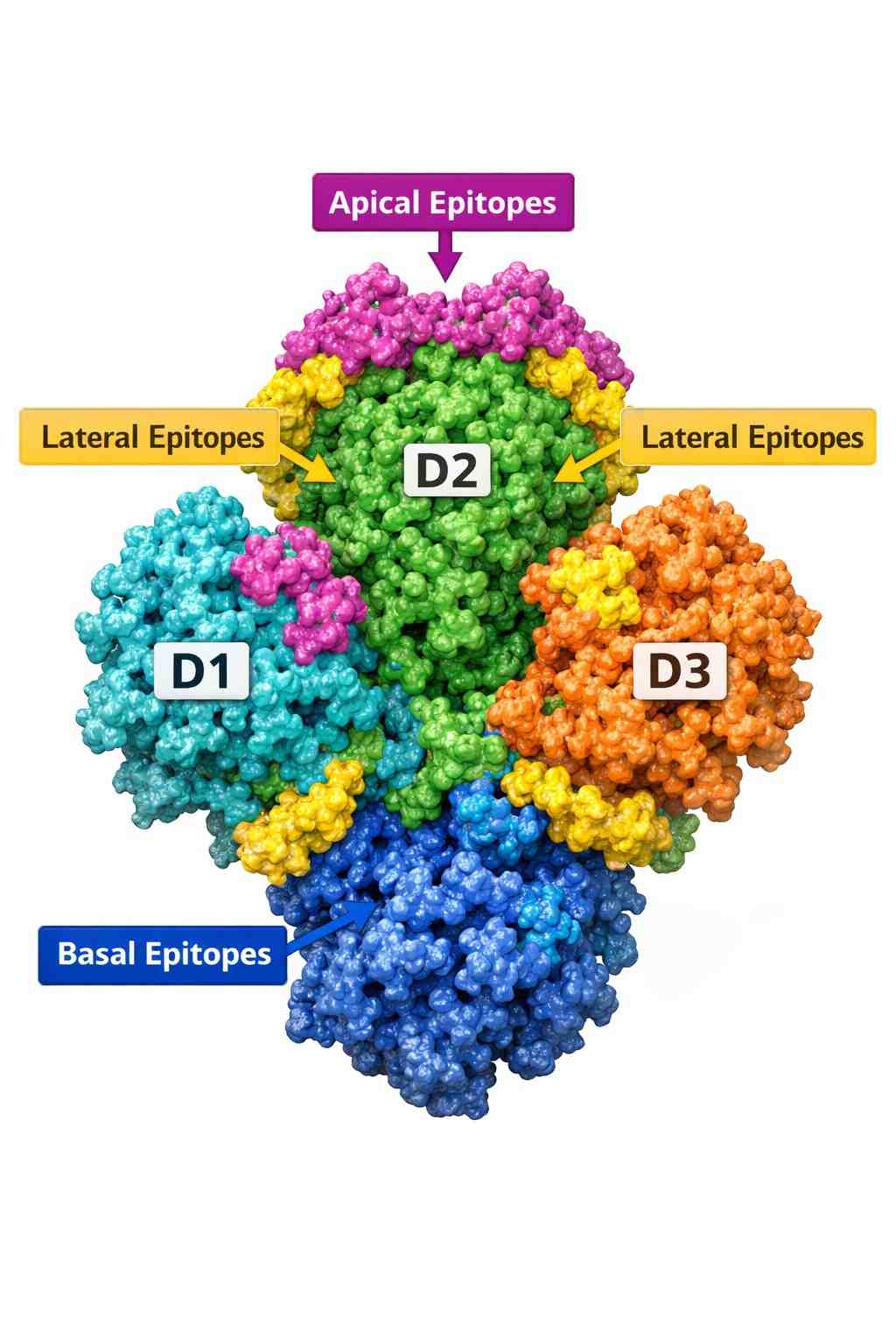 Fig2. Surface distribution map of neutralizing epitopes on Nipah virus F protein
Conformational Stabilization Technologies: Engineering Strategies to Lock the Pre-F State
Due to the metastable nature of the Pre-F conformation, it readily undergoes spontaneous transition to the Post-F conformation during in vitro expression and purification, resulting in loss of neutralization-sensitive epitopes. Therefore, developing conformational locking strategies to stabilize the Pre-F state has become a critical technical challenge for vaccine antigen design.
The DS-Cav1 Mutation Strategy
The DS-Cav1 (Disulfide-Cavity filling 1) strategy was initially successful in RSV F protein stabilization and has been successfully applied to Nipah virus F protein. This strategy combines two types of mutations:
Cysteine Crosslinking (Disulfide bond, DS): In RSV F protein, S155C and S290C mutations form a disulfide bond that covalently links D1 and D3 domains, preventing HRA extension. For Nipah virus F protein, the corresponding mutation sites are L104C/I114C, introducing engineered disulfide bonds near the fusion peptide that lock the fusion peptide within the D1 domain, preventing its exposure and insertion into the cell membrane. This disulfide bond is located at the proximal end of the fusion peptide and serves as a critical "molecular lock" for maintaining the Pre-F conformation.
Cavity-Filling Mutations (Cav): By introducing bulky hydrophobic amino acids to fill internal cavities in the Pre-F structure, enhancing van der Waals interactions and structural rigidity. In Nipah virus F protein, L172F and S191P mutations fill hydrophobic cavities within D2 and D3 domains, respectively, further improving Pre-F thermal stability.
Table 1: Pre-F Stabilization Mutation Strategies for Nipah Virus F Protein
| Mutation Type | Mutation Sites | Mechanism of Action | Structural Effect |
|---|---|---|---|
| Cysteine crosslinking | L104C/I114C | Forms disulfide bond covalent lock | Prevents fusion peptide release, blocks HRA extension |
| Cavity-filling mutation | L172F | Fills D2 hydrophobic cavity | Enhances inter-domain hydrophobic interactions |
| Proline substitution | S191P | Restricts backbone conformational flexibility | Stabilizes D3 domain conformation |
| Combined mutations | DS-Cav1 (L104C/I114C + L172F + S191P) | Synergistic stabilization effect | Maximizes Pre-F stability and expression yield |
The DS-Cav1 combined mutations significantly increase the expression yield of Nipah virus F protein trimers and confer physical stability against extreme temperatures, pH changes, osmotic pressure, and repeated freeze-thaw cycles. Cryo-EM analysis confirms that the DS-Cav1 mutant forms a homogeneous Pre-F trimer population that can efficiently bind to antibodies recognizing the native Pre-F conformation (such as mAb66, 5B3, etc.).
Explore Nipah Virus Proteins
Learn More
Other Stabilization Strategies
In addition to DS-Cav1, researchers have explored other Pre-F stabilization methods:
Dityrosine Crosslinking: In RSV F protein, V185Y/N428Y and K226Y/Y198 mutations can form dityrosine covalent bonds under oxidative conditions, providing stronger low-temperature stability than DS-Cav1. The application potential of this technology in Nipah virus F protein is worth exploring.
Postfusion Destabilization: By introducing charge clash mutations in the Post-F six-helix bundle (such as V185E, I506K), the stability of Post-F is reduced, thereby indirectly promoting Pre-F accumulation. However, such mutations cannot stabilize specific Pre-F neutralizing epitopes (such as antigenic site Ø), so they are typically used as auxiliary strategies.
Trimerization Tags: Fusing the T4 phage fibritin "foldon" domain to the C-terminus of the F protein ectodomain can enhance trimer assembly efficiency. However, foldon itself cannot stabilize the Pre-F conformation and must be used in combination with DS or Cav mutations.
Antigenic Epitope Mapping: Differences Between Pre-F and Post-F Antigenicity
Pre-F Specific Neutralizing Epitopes
The antigenic epitopes exposed by the Pre-F conformation are key to inducing high-titer neutralizing antibodies. Based on cryo-EM structural analysis, at least eight different neutralization-sensitive epitopes have been identified on Nipah virus F protein, which can be classified into three spatial distribution categories:
Apical Epitopes: Located at the top of D3 domain, including binding sites for antibodies such as mAb66, 4H3, 2D3, 1F3, mAb92, etc. These epitopes are adjacent to the fusion peptide and HRA, and antibody binding can directly block fusion peptide release or HRA extension. Notably, the D3 apical region is highly conserved among henipaviruses, and no immune-driven sequence variation has been observed, suggesting that functional constraints limit evolution in this region.
Lateral Epitopes: Located at the trimeric sides at the D1-D3 interface, including epitopes recognized by antibodies such as 1H8, 1F2, 4B8, NiF03-3C9, 5B3, etc. The NiF03-3C9 antibody achieves cross-neutralization of Nipah and Hendra viruses by binding to conserved residues in D1 and D3 domains, and its epitope shows high conservation within the genus.
Basal Epitopes: Located near the membrane-proximal region, including binding sites for antibodies such as 2B12, 4F6, 1H1, 1A9, etc. Among these, the epitope recognized by 1A9 spans the D1-D2 interface and includes the fusion peptide, representing the first fusion peptide-specific neutralizing epitope identified in the Paramyxoviridae family.
Table 2: Major Pre-F Specific Neutralizing Antibodies and Their Epitope Characteristics
| Antibody Name | Epitope Location | Domain Distribution | Neutralization Mechanism | Cross-Reactivity |
|---|---|---|---|---|
| mAb66 | Apical | D3 | Blocks fusion peptide release | Henipavirus genus |
| 4H3 | Apical | D3 | Prevents HRA extension | Nipah virus specific |
| 2D3 | Apical | D3 | Stabilizes Pre-F conformation | Nipah virus specific |
| mAb92 | Apical | D3 | Blocks conformational change | Nipah virus specific |
| 5B3 | Lateral | D1-D3 interface | Locks Pre-F state | Nipah/Hendra cross-reactive |
| NiF03-3C9 | Lateral | D1-D3 interface | Prevents membrane fusion | Henipavirus genus |
| 1H8 | Lateral | D1-D3 | Blocks HRA extension | Nipah virus specific |
| 1A9 | Basal | D1-D2 + FP | Fusion peptide specific | Nipah virus specific |
| 2B12 | Basal | D2 | Blocks six-helix bundle formation | Nipah virus specific |
Post-F Epitopes and Immunological Decoys
When F protein transitions to the Post-F conformation, D3 undergoes dramatic rearrangement, HRA fully extends, and HRB folds back to form the six-helix bundle. This conformational change results in complete disappearance of Pre-F specific epitopes (such as the D3 apex) and exposure of Post-F specific epitopes.
Studies have shown that antibodies induced by the Post-F conformation mainly recognize the six-helix bundle region, and these antibodies typically lack neutralizing activity for several reasons:
- Poor epitope accessibility: The Post-F six-helix bundle is tightly packed, making antibody binding difficult;
- Late binding timing: When F protein transitions to Post-F, the membrane fusion process is essentially complete, and antibodies cannot block viral entry;
- Steric hindrance: The rod-like structure of Post-F may hinder antibody access to the viral surface.
Therefore, Post-F antigens serve primarily as "immunological decoys" in vaccination, inducing non-protective antibody responses that dilute Pre-F specific neutralizing responses. Early vaccine candidates based on inactivated viruses or Post-F proteins showed poor immunogenicity, partly due to this phenomenon.
Structural Basis for Cross-Protective Epitopes
The genus Henipavirus includes Nipah virus, Hendra virus (HeV), and the newly discovered Langya virus (LayV), among others. Although these viruses have limited overall sequence homology in their F proteins (e.g., LayV and NiV F proteins have low homology), the lateral region at the D1-D3 interface shows high conservation.
The NiF03-3C9 antibody achieves cross-neutralization of multiple henipavirus variants by recognizing conserved residues in D1 and D3 domains (such as Lys55, Glu166, Glu251, Ser50, Asn51, Pro52, Phe282, His372, Asn424). Structural comparison shows that this epitope is completely conserved between NiV and HeV, explaining its broad neutralizing activity. In contrast, apical epitopes in D3 show amino acid differences between viral species, limiting cross-protective capacity.
Application Recommendations and Vaccine Design Strategies
Vaccine Development: Prioritize Pre-F Trimers
Based on the structural biology and immunological evidence presented above, Nipah virus vaccine development should follow these principles:
Antigen Selection: Prioritize the use of Pre-F trimers locked by DS-Cav1 or other stabilization strategies as vaccine antigens. The Pre-F conformation can induce higher titers of neutralizing antibodies, and the breadth of antibody responses is superior to Post-F. Preclinical studies have shown that Pre-F stabilized RSV vaccines demonstrate significantly better protective efficacy in animal models than Post-F vaccines, and this experience can be directly translated to Nipah virus vaccine design.
Epitope Targeting: Vaccine design should preserve the native conformations of D3 apical and D1-D3 lateral epitopes as much as possible. These regions contain the most sensitive neutralizing epitopes, and the conservation of lateral epitopes provides possibilities for developing broad-spectrum henipavirus vaccines.
Vector Selection: Pre-F-based viral vector vaccines (such as chimpanzee adenovirus vector ChAdOx1) and mRNA vaccines are currently in preclinical research stages. These platforms can induce strong cellular and humoral immunity, synergizing with the conformational advantages of Pre-F proteins.
Diagnostic Reagents: Combined Application of N Protein and Post-F
In diagnostic reagent development, antigen selection must consider detection sensitivity, specificity, and production convenience:
Nucleoprotein N (N): N protein is the most abundant viral structural protein, with conserved gene sequences, and does not require complex conformational stabilization processing. N protein-specific antibodies can be used to develop high-sensitivity antigen detection reagents (such as ELISA and lateral flow assays), suitable for early infection screening.
Post-F Protein: The Post-F conformation is highly stable, easy to recombinantly express and purify, and suitable as a capture antigen for serological detection. However, since antibodies induced by Post-F are primarily non-neutralizing, using Post-F alone may miss some early infection samples. It is recommended to use Post-F in combination with N protein or G protein to improve detection coverage.
Pre-F Protein: Although Pre-F is an ideal vaccine antigen, its conformational stability poses challenges for long-term storage and transportation of diagnostic reagents. If detection of Pre-F specific neutralizing antibodies is required (such as for vaccine immunogenicity assessment), it is recommended to use DS-Cav1 stabilized mutants and indicate conformational specificity in the kit instructions.
Table 3: Antigen Selection Strategies for Nipah Virus Vaccines and Diagnostic Reagents
| Application Scenario | Recommended Antigen | Conformational Requirements | Rationale |
|---|---|---|---|
| Prophylactic vaccine | F protein | Pre-F (DS-Cav1 stabilized) | Induces high-titer neutralizing antibodies, strongest protective efficacy |
| Therapeutic antibody | F protein | Pre-F | Targets conserved neutralizing epitopes (such as 5B3, NiF03-3C9) |
| Antigen detection (early diagnosis) | N protein | No specific conformation required | High expression, conserved, easy to produce |
| Serological detection (antibody screening) | N protein + Post-F | Post-F stable | Covers non-neutralizing antibody responses, good stability |
| Neutralizing antibody titer determination | Pre-F | DS-Cav1 stabilized | Specifically detects functional antibodies |
Conclusion and Future Perspectives
Research on the conformational changes of Nipah virus F protein has revealed the molecular details of the "spring-loaded" mechanism of Class I membrane fusion proteins, providing precise molecular blueprints for vaccine design. The DS-Cav1 mutation strategy successfully locks the Pre-F conformation through cysteine crosslinking (L104C/I114C) and cavity-filling mutations (L172F, S191P), solving the industrial production challenges of metastable antigens.
Systematic mapping of antigenic epitopes demonstrates that the apical and lateral epitopes exposed by the Pre-F conformation are key targets for inducing protective immunity, while the Post-F conformation primarily induces non-neutralizing antibody responses. Pre-F-based vaccine design strategies have achieved success in the RSV field (with approved vaccines such as Abrysvo and Arexvy), providing a referenceable path for Nipah virus vaccine development.
Future research should focus on the following directions: (1) developing broad-spectrum henipavirus vaccines targeting conserved lateral epitopes at the D1-D3 interface; (2) exploring the application of novel stabilization technologies such as dityrosine crosslinking in NiV F protein; (3) establishing Pre-F specific antibody detection methods for vaccine immunogenicity assessment; (4) conducting protective efficacy validation of Pre-F vaccines in non-human primate models to lay the foundation for clinical trials.
Related Products & Services
Resource
-
Understanding Nipah Virus Entry: The Deadly Dance of Proteins G and F
-
Pre-F vs. Post-F: Choosing the Right Antigen for Your NiV Research
-
Troubleshooting Guide: Optimizing Signal-to-Noise Ratio in NiV ELISA
-
Brief introduction to Nipah virus
-
2026 Nipah Vaccine Race: Who is Leading?
References
- A structural basis for antibody-mediated neutralization of Nipah virus reveals a site of vulnerability at the fusion glycoprotein apex. Nature Communications, 2020, 11: 2507.
- Dang HV, et al. Structural basis for antibody recognition of vulnerable epitopes on Nipah virus F protein. Nature Communications, 2023, 14: 2265.
- Chai F, et al. Detection of Nipah and Hendra Viruses Using Recombinant Human Ephrin B2 Capture Virus in Immunoassays. Viruses, 2022, 14(5): 921.
- Dang HV, et al. Structural basis for antibody recognition of vulnerable epitopes on Nipah virus F protein. Nature Communications, 2023, 14: 36995.
- Welch SR, et al. Structural Studies of Henipavirus Glycoproteins. Current Opinion in Virology, 2024, 69: 101448.
- Dong J, et al. Chimpanzee adenovirus vectored vaccine against Nipah virus. Journal of Clinical Investigation Insight, 2024, 9(3): e175461.
- Dang HV, et al. An antibody against the F glycoprotein inhibits Nipah and Hendra virus infections. Nature Structural & Molecular Biology, 2019, 26: 980-987.
- Li T, et al. A monoclonal antibody targeting conserved regions of pre-fusion protein cross-neutralizes Nipah and Hendra virus variants. Antiviral Research, 2025, 240: 106215.
- Aljohani S, et al. An Immunoinformatics Prediction of Novel Multi-Epitope Vaccines Candidate Against Surface Antigens of Nipah Virus. Vaccines, 2022, 10(2): 216.
- Byrne PO, et al. Prefusion stabilization of the Hendra and Langya virus F proteins. Journal of Virology, 2024, 98(2): e00638-24.
- Li T, et al. A monoclonal antibody targeting conserved regions of pre-fusion protein cross-neutralizes Nipah and Hendra virus variants. Antiviral Research, 2025, 240: 106215.
- RCSB PDB - 9LNG: An antibody target the fusion protein of Nipah virus. Protein Data Bank, 2025.
- Welch SR, et al. A monoclonal antibody targeting the Nipah virus fusion glycoprotein apex imparts protection from disease. Journal of Virology, 2024, 98(18): e00638-24.
- RCSB PDB - 8RVN: Nipah virus (NiV) fusion protein in complex with neutralizing Fab92. Protein Data Bank, 2024.
- RCSB PDB - 8DO4: Prefusion-stabilized Nipah virus fusion protein, dimer of trimers. Protein Data Bank, 2022.
- A structural basis for antibody-mediated neutralization of Nipah virus reveals a site of vulnerability at the fusion glycoprotein apex. Strubi, Oxford University.
- PDBj - PDB-8do4: Prefusion-stabilized Nipah virus fusion protein, dimer of trimers. PDBj, 2022.
- Welch SR, et al. A monoclonal antibody targeting the Nipah virus fusion glycoprotein apex imparts protection from disease. Strubi, Oxford University.
- PDBj - EMDB-27590: Prefusion-stabilized Nipah virus fusion protein, dimer of trimers. PDBj, 2022.
- Krarup A, et al. Pre-fusion RSV F strongly boosts pre-fusion specific neutralizing responses in cattle pre-exposed to bovine RSV. Nature Communications, 2017, 8: 14317.
- Ota W, et al. Detailed analysis of low temperature inactivation of respiratory syncytial virus. Scientific Reports, 2024, 14: 62658.
- Harrison SC. Viral membrane fusion. Nature Structural & Molecular Biology, 2008, 15: 690-698.
- Henderson CI, et al. Conformational dynamics of SARS-CoV-2 Omicron spike trimers during fusion activation at single molecule resolution. Structure, 2024, 32(10): 1841916627745955840.
- Roymans D, et al. GS-5806 Inhibits Pre- to Postfusion Conformational Changes of the Respiratory Syncytial Virus Fusion Protein. Antimicrobial Agents and Chemotherapy, 2015, 59(12): 7612-7620.
- Backovic M, Rey FA. Viral fusion proteins of classes II and III recognize and shape the membranes. Communications Biology, 2025, 8: 8040.
- Shapiro JR, et al. Emergence of new antigenic epitopes in the glycoproteins of human respiratory syncytial virus collected from a US surveillance study, 2015-17. Scientific Reports, 2019, 9: 3894.
- White JM, et al. Vaccinia viral A26 protein is a fusion suppressor of mature virus and triggers membrane fusion through conformational change at low pH. PLoS Pathogens, 2019, 15(6): e1007800.
- Zhang Z, et al. RSV Vaccines: Targeting Prefusion F and G Proteins from Structural Design to Clinical Application. Vaccines, 2025, 13(11): 1133.
- Pan J, et al. Engineered dityrosine-bonding of the RSV prefusion F. Nature Communications, 2024, 15: 6295.
- Magyarics B, et al. Stabilizing Prefusion SARS-CoV-2 Spike by Destabilizing the Postfusion Conformation. Vaccines, 2025, 13(3): 315.
- Henderson CI, et al. Conformational dynamics of SARS-CoV-2 Omicron spike trimers during fusion activation at single molecule resolution. Structure, 2024, 32(10).
- Henderson CI, et al. Conformational dynamics of SARS-CoV-2 Omicron spike trimers during fusion activation at single molecule resolution. X-Mol, 2024.
- Fedeli C, et al. pH-dependent conformational change within the Lassa virus transmembrane domain elicits efficient membrane fusion. Biochimica et Biophysica Acta - Biomembranes, 2024, 1866(1): 184400.
- Backovic M, Jardetzky TS. Viral Fusion Proteins. ScienceDirect Topics, 2024.
- White JM, Delos SE, Brecher M, Schornberg K. Structures and mechanisms of viral membrane fusion proteins. Current Topics in Microbiology and Immunology, 2008, 285: 148-173.
- Gibbons DL, et al. Conformational change and protein–protein interactions of the fusion protein of Semliki Forest virus. Nature, 2004, 427(6972): 320-325.

Contact us or send an email at for project quotations and more detailed information.
Quick Links
-

Papers’ PMID to Obtain Coupon
Submit Now -

Refer Friends & New Lab Start-up Promotions