

Active Recombinant Human CTSS protein, His-tagged
| Cat.No. : | CTSS-282H |
| Product Overview : | Active Recombinant Human CTSS protein(NP_004070.3) (Met 1-Ile 331) with a carboxy-terminal polyhistidine tag was expressed in HEK293. |
- Specification
- Gene Information
- Related Products
- Case Study
- Application
- Download
| Species : | Human |
| Source : | HEK293 |
| Tag : | His |
| Protein Length : | 1-331 aa |
| Form : | Lyophilized from sterile PBS, pH 7.4. |
| Bio-activity : | Measured by its ability to cleave a fluorogenic peptide substrate, (7-methoxycoumarin-4-yl) acetyl-Arg-Pro-Lys-Pro-Val-Glu-Nva-Trp-Arg-Lys (2, 4-dinitrophenyl)-NH2. Cleavage of ES002 can be measured using excitation and emission wavelengths at 320 nm and 405 nm, respectively. The specific activity is >300 pmoles/min/μg. |
| Molecular Mass : | The secreted recombinant human CTSS consists of 326 amino acids with the predicted molecular mass of 37 kDa as estimated by SDS-PAGE under reducing conditions. |
| Endotoxin : | < 1.0 EU per μg protein as determined by the LAL method. |
| Purity : | > 97 % as determined by SDS-PAGE |
| Storage : | Store it under sterile conditions at -20°C to -80°C upon receiving. Recommend to aliquot the protein into smaller quantities for optimal storage. Avoid repeated freeze-thaw cycles. |
| Reconstitution : | It is recommended that sterile water be added to the vial to prepare a stock solution of 0.2 ug/ul. Centrifuge the vial at 4°C before opening to recover the entire contents. |
| Gene Name | CTSS cathepsin S [ Homo sapiens ] |
| Official Symbol | CTSS |
| Synonyms | CTSS; cathepsin S; MGC3886; FLJ50259; |
| Gene ID | 1520 |
| mRNA Refseq | NM_001199739 |
| Protein Refseq | NP_001186668 |
| MIM | 116845 |
| UniProt ID | P25774 |
Case 1: Preya UH, et al. Exp Eye Res. 2024
CTSS promotes oxidative stress-driven inflammation and angiogenesis in age-related macular degeneration. In H2O2-exposed retinal cells, CTSS upregulation activates NF-κB-dependent cytokines, complement factors (C3a/C5a/C5b-9), and VEGF-Akt pathways, enhancing choroidal neovascularization. CTSS silencing via siRNA reduces inflammation and angiogenesis in vitro and in vivo, demonstrating its therapeutic potential for AMD by targeting complement dysregulation and vascular pathology.
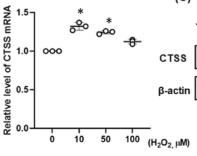
Fig1. Expression of CTSS increased in RPE cells incubated with H2O2.
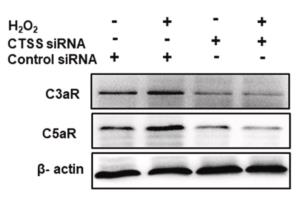
Fig2. Hydrogen peroxide and CTSS siRNA respectively increased and decreased expression of C3aR and C5aR.
Case 2: Sayed S, et al. Int J Mol Sci. 2023
CTSS activation in hyperglycemia drives inflammation and vascular dysfunction via NF-κB signaling. High glucose upregulates CTSS in endothelial cells, increasing cytokines, complement proteins (C3a/C5a), and angiogenesis. CTSS knockdown reduces these effects, suppressing inflammatory markers and vascular remodeling. Targeting CTSS mitigates hyperglycemia-induced microvascular complications, highlighting its therapeutic potential for diabetes-related endothelial damage and inflammatory pathways.
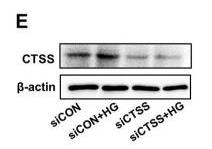
Fig1. mRNA expression and Western blot analysis of CTSS expression after siRNA transfection.
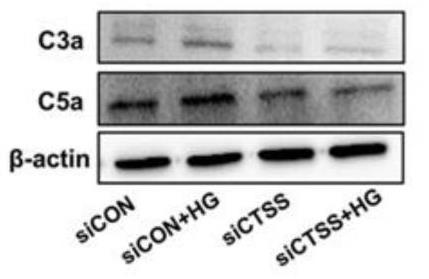
Fig2. C3a and C5a proteins after CTSS siRNA transfection under high glucose conditions.
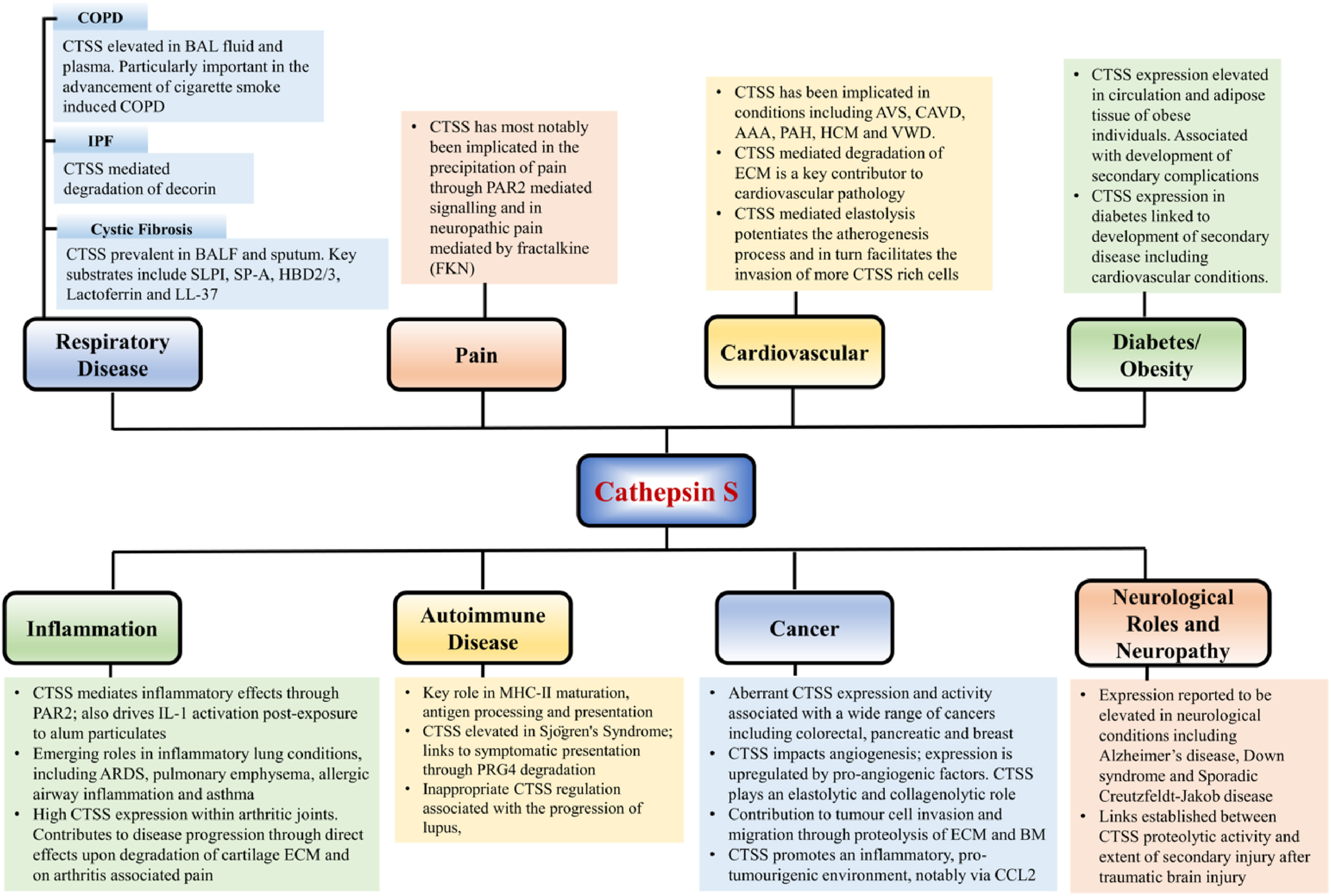
Fig1. CTSS – Activity and Pathological Implications. (Peter Smyth, 2022)

Not For Human Consumption!
Inquiry
- Reviews (0)
- Q&As (0)


Ask a Question for All CTSS Products
Required fields are marked with *
My Review for All CTSS Products
Required fields are marked with *
Recently Viewed