

Active Recombinant Human CR2 protein, His-tagged
| Cat.No. : | CR2-3186H |
| Product Overview : | Active Recombinant Human CR2 protein(P20023-1)(Ile21-Arg971) is expressed from HEK293 with His tag at the C-Terminus. |
- Specification
- Gene Information
- Related Products
- Case Study
- Application
- Download
| Species : | Human |
| Source : | HEK293 |
| Tag : | His |
| Protein Length : | 21-971 aa |
| Form : | Lyophilized from 0.22μm filtered solution in PBS (pH 7.4). |
| Bio-activity : | Immobilized Human CD21, His Tag at 1μg/ml (100μl/Well) on the plate. Dose response curve for Anti-CD21 Antibody, hFc Tag with the EC50 of 2.9ng/ml determined by ELISA. |
| Molecular Mass : | The protein has a predicted MW of 105.3 kDa. Due to glycosylation, the protein migrates to 110-130 kDa based on Bis-Tris PAGE result. |
| Endotoxin : | Less than 1 EU per μg by the LAL method. |
| Purity : | > 95% as determined by Bis-Tris PAGE > 95% as determined by HPLC |
| Storage : | -20 to -80°C for 12 months as supplied from date of receipt. -80°C for 3 months after reconstitution. Recommend to aliquot the protein into smaller quantities for optimal storage. Please minimize freeze-thaw cycles. |
| Reconstitution : | Dissolve the lyophilized protein in distilled water. |
| Gene Name | CR2 complement component (3d/Epstein Barr virus) receptor 2 [ Homo sapiens ] |
| Official Symbol | CR2 |
| Synonyms | CR2; complement component (3d/Epstein Barr virus) receptor 2; complement receptor type 2; CD21; EBV receptor; complement C3d receptor; epstein-Barr virus receptor; CR; C3DR; SLEB9; |
| Gene ID | 1380 |
| mRNA Refseq | NM_001006658 |
| Protein Refseq | NP_001006659 |
| MIM | 120650 |
| UniProt ID | P20023 |
Case 1: Jin H, et al. J Immunol. 2023
Chickens have a version of the complement receptor type 2 (CR2), an immune player in birds, that connects different immunity components. This chicken CR2 binds well with chicken C3d, an important part of their immune response. It's smaller than human CR2 but is significant in their immune organs and changes with infections, serving as a key immune marker for chickens.
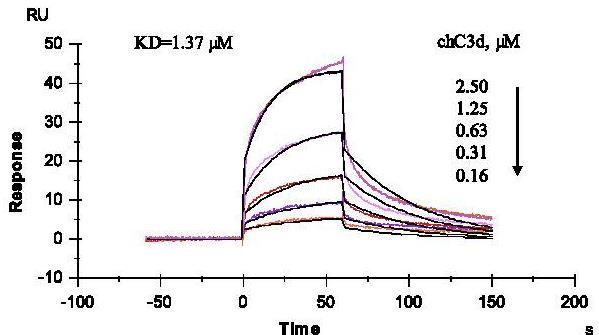
Fig1. Measurement of the KD for chCR2 and chC3d by SPR technology.
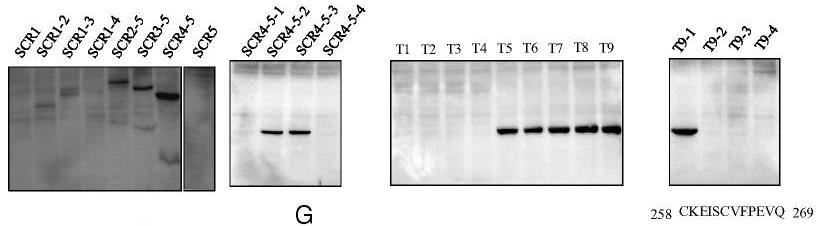
Fig2. The position of the epitope recognized by the chCR2 mAb at aa 258-269 identified by WB with the anti-chCR2 mAb.
Case 2: Cruickshank MN, et al. Mol Immunol. 2012
Systemic lupus erythematosus (SLE) is a tricky autoimmune disease, largely influenced by genetics. One genetic factor linked to higher SLE risk involves a three-SNP pattern in the CR2 gene. On the flip side, a different SNP pattern offers some protection. A specific SNP, rs3813946, found in the CR2 gene's 5' untranslated region, changes how the gene behaves in cell lines, whether temporarily or permanently introduced. This SNP tweaks gene function by affecting how accessible the surrounding DNA is for transcription factors, making it an important piece in the gene's regulation and its link to lupus.
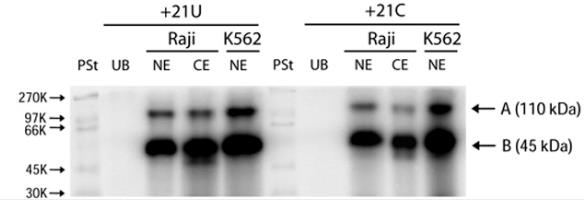
Fig1. UV crosslinking with Raji and K562 cytoplasmic (CE) and nuclear (NE) extracts identified two proteins bound to both CR2 transcripts in a sequence-specific manner.
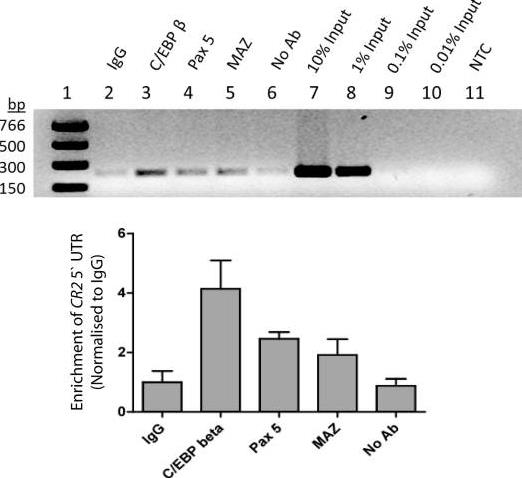
Fig2. Evidence that C/EBP β, PAX5 and MAZ interacts with the CR2 5` UTR in Raji cells.
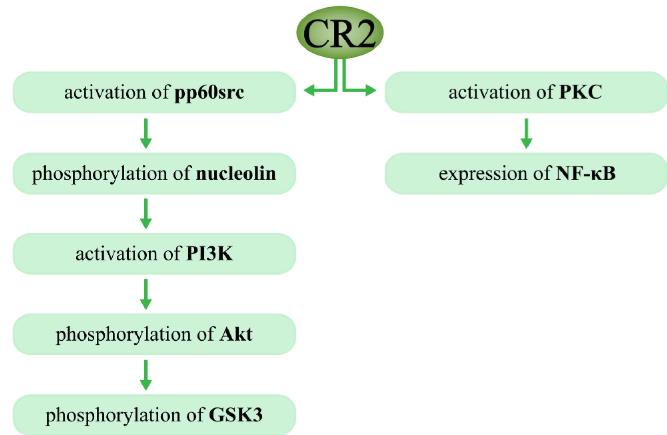
Fig1. Human CR2 (CD21) involved in intracellular signaling events. (Anna Erdei, 2021)

Not For Human Consumption!
Inquiry
- Reviews (0)
- Q&As (0)


Ask a Question for All CR2 Products
Required fields are marked with *
My Review for All CR2 Products
Required fields are marked with *
Recently Viewed