

Active Recombinant Human CD244 protein, hFc-tagged
| Cat.No. : | CD244-580H |
| Product Overview : | Active Recombinant Human CD244 protein(Q9BZW8-2)(Cys22-Arg221) is expressed from HEK293 with hFc (IgG1) tag at the C-Terminus. |
| Availability | October 22, 2026 |
| Unit | |
| Price | |
| Qty |
- Specification
- Gene Information
- Related Products
- Case Study
- Application
- Download
| Species : | Human |
| Source : | HEK293 |
| Tag : | Fc |
| Protein Length : | 22-221 aa |
| Form : | Lyophilized from 0.22μm filtered solution in 20mM Tris, 150mM NaCl (pH 8.0). |
| Bio-activity : | Immobilized Human CD48, His Tag at 1μg/ml (100μl/well) on the plate. Dose response curve for Human 2B4, hFc Tag with the EC50 of 0.13μg/ml determined by ELISA. |
| Molecular Mass : | The protein has a predicted MW of 49 kDa. Due to glycosylation, the protein migrates to 68-75 kDa based on Bis-Tris PAGE result. |
| Endotoxin : | Less than 1 EU per μg by the LAL method. |
| Purity : | > 95% as determined by Bis-Tris PAGE > 95% as determined by HPLC |
| Storage : | -20 to -80°C for 12 months as supplied from date of receipt. -80°C for 3 months after reconstitution. Recommend to aliquot the protein into smaller quantities for optimal storage. Please minimize freeze-thaw cycles. |
| Reconstitution : | Dissolve the lyophilized protein in distilled water. |
| Gene Name | CD244 CD244 molecule, natural killer cell receptor 2B4 [ Homo sapiens ] |
| Official Symbol | CD244 |
| Synonyms | CD244; CD244 molecule, natural killer cell receptor 2B4; CD244 natural killer cell receptor 2B4, natural killer cell receptor 2B4; natural killer cell receptor 2B4; 2B4; NAIL; NKR2B4; Nmrk; SLAMF4; h2B4; NK cell activation-inducing ligand; NK cell type I receptor protein 2B4; NK cell activation inducing ligand NAIL; |
| Gene ID | 51744 |
| mRNA Refseq | NM_001166663 |
| Protein Refseq | NP_001160135 |
| MIM | 605554 |
| UniProt ID | Q9BZW8 |
Case 1: Koide S, et al. iScience. 2021
Isolating long-term hematopoietic stem cells (HSCs) using flow cytometry and surface markers doesn't always reflect their true functionality after being cultured. In this study, cultured HSCs start expressing genes related to mast cells, including Cd244. Once cultured, HSCs split into CD244- and CD244+ groups, where only the CD244- ones, which express less mast cell markers and maintain HSC genes, kept their potential to regenerate. This was consistent even when using a special growth medium with polyvinyl alcohol. Inducing ER stress resulted in more CD244+ cells, while reducing stress with TUDCA decreased CD244+ numbers and improved regeneration. This suggests CD244 can serve as a marker to filter out non-functional HSCs after culture, helping us understand how their functionality declines during treatment.
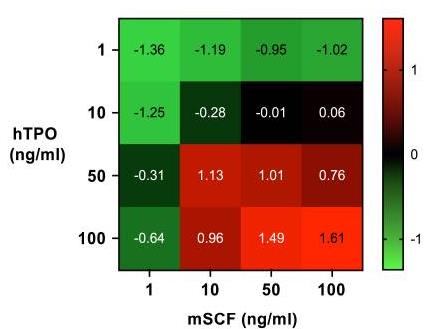
Fig1. A heatmap showing frequencies of CD244-CD48-KSL cells after 7 days’ culture with various SCF/TPO concentrations.
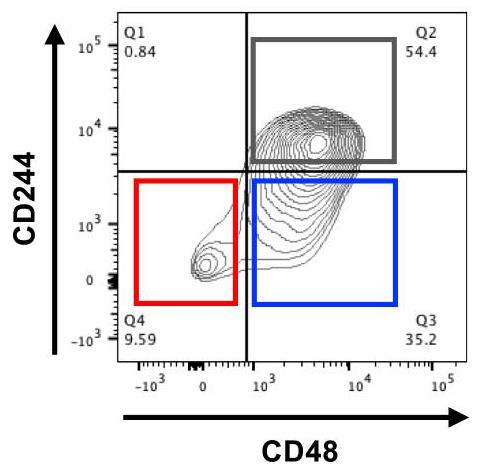
Fig2. Expression patterns of CD244 and CD48 on the cell surface of KSL cells after in vitro culture in PVA medium.
Case 2: Enose-Akahata Y, et al. PLoS Pathog. 2009
HTLV-I-specific CD8(+) T cells, abundant in blood and cerebrospinal fluid, drive inflammation in HTLV-I-related nerve diseases like HAM/TSP. While these cells are active in both asymptomatic carriers and affected patients, CD244 levels are higher in those infected than in healthy people. Blocking CD244 reduces inflammation signals in patients, linking it to T cell activity. Additionally, the protein SAP is more present in patients, correlating with viral loads, and its reduction lowers inflammation signals. The CD244/SAP pathway is thus crucial in T cell regulation and contributes to inflammatory nerve diseases.
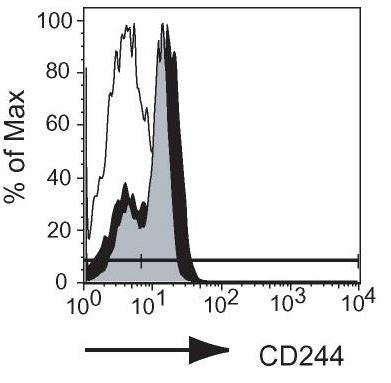
Fig1. Representative histograms of CD244 expression on CD8+ T cells of a ND, an AC and a patient with HAM/TSP.
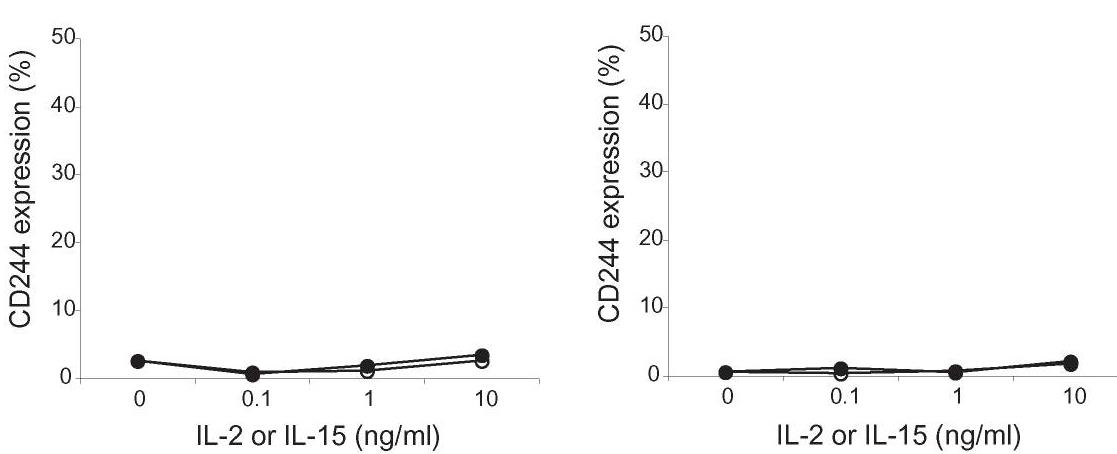
Fig2. CD244 expressions in CD8+ T cells isolated from ND PBMCs were compared after the culture with rhIL-2 (opened circle) or rhIL-15.
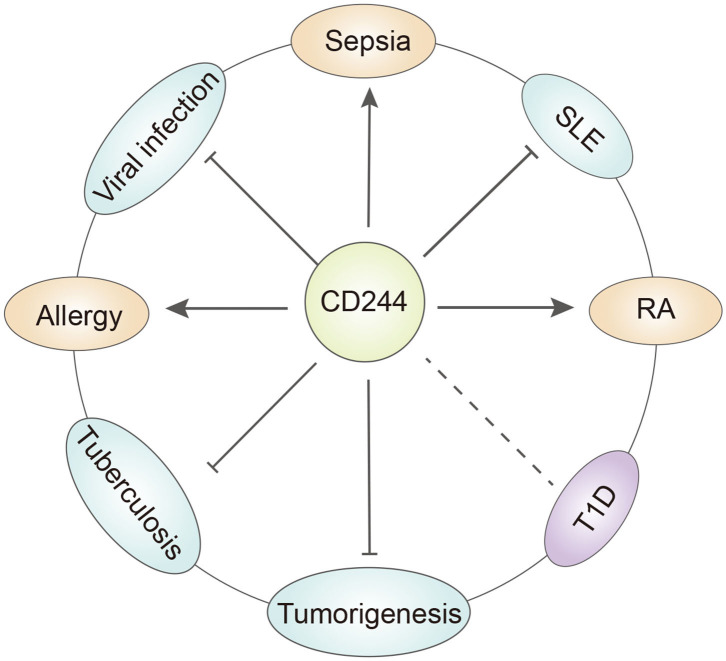
Fig1. The role of CD244 in different diseases. (Lin Sun, 2021)

Not For Human Consumption!
Inquiry
- Reviews (0)
- Q&As (0)


Ask a Question for All CD244 Products
Required fields are marked with *
My Review for All CD244 Products
Required fields are marked with *
Recently Viewed