

Recombinant Oryzias latipes Tol2 integrase, His-tagged 
| Cat.No. : | Tol2 transposase-12O |
| Product Overview : | Recombinant Tol2 integrase (transposase) protein with His-tag, expressed in E. coli. |
| Availability | October 24, 2026 |
| Unit | |
| Price | |
| Qty |
- Specification
- Gene Information
- Related Products
- Case Study
- Application
- Download
| Species : | Oryzias latipes (Japanese medaka) |
| Source : | E. coli |
| Tag : | His |
| Protein Length : | Full length (74 kDa calculated) |
| Description : | Tol2 is a DNA-based transposon system derived from the Japanese medaka fish (Oryzias latipes). The Tol2 transposase is the enzyme responsible for catalyzing the transposition of the Tol2 element. This recombinant protein is expressed in E. coli with an N-terminal His-tag for purification. |
| Form : | Liquid |
| Molecular Mass : | 74 kDa |
| AASequence : | MHHHHHHEEVCDSSAAASSTVQNQPQDQEHPWPYLREFFSLSGVNKDSFKMKCVLCLPLNKEISAFKSSPSNLRKHIERMHPNYLKNYSKLTAQKRKIGTSTHASSSKQLKVDSVFPVKHVSPVTVNKAILRYIIQGLHPFSTVDLPSFKELISTLQPGISVITRPTLRSKIAEAALIMKQKVTAAMSEVEWIATTTDCWTARRKSFIGVTAHWINPGSLERHSAALACKRLMGSHTFEVLASAMNDIHSEYEIRDKVVCTTTDSGSNFMKAFRVFGVENNDIETEARRCESDDTDSEGCGEGSDGVEFQDASRVLDQDDGFEFQLPKHQKCACHLLNLVSSVDAQKALSNEHYKKLYRSVFGKCQALWNKSSRSALAAEAVESESRLQLLRPNQTRWNSTFMAVDRILQICKEAGEGALRNICTSLEVPMFNPAEMLFLTEWANTMRPVAKVLDILQAETNTQLGWLLPSVHQLSLKLQRLHHSLRYCDPLVDALQQGIQTRFKHMFEDPEIIAAAILLPKFRTSWTNDETIIKRGMDYIRVHLEPLDHKKELANSSSDDEDFFASLKPTTHEASKELDGYLACVSDTRESLLTFPAICSLSIKTNTPLPASAACERLFSTAGLLFSPKRARLDTNNFENQLLLKLNLRFYNFE |
| Endotoxin : | < 1 EU/μg (LAL method) |
| Purity : | >90% (by SDS-PAGE) |
| Notes : | Tol2 transposase is a recombinant protein. Store at -20 to -80°C. Aliquot to avoid freeze-thaw cycles. |
| Storage : | -20 to -80°C (aliquot to avoid freeze-thaw) |
| Concentration : | 0.35 mg/ml |
| Storage Buffer : | 10 mM HEPES, 300 mM KCl, pH 6.9 |
| Publications : |
|
| Gene Name | Tol2 (transposase) |
| Official Symbol | Tol2 |
| Synonyms | Tol2 integrase, Tol2 transposase, Tol2 TPase |
| ◆ Recombinant Proteins | ||
| Tol2 transposase-12O | Recombinant Oryzias latipes Tol2 integrase, His-tagged | +Inquiry |

Case 1: Weissbourd B, et al. Cell. 2021
Jellyfish, ancient organisms with over 500 million years of evolution, exhibit radial symmetry and lack a brain. Despite the absence of a centralized nervous system, they coordinate complex behaviors through decentralized neural networks. While their neurons have been electrophysiologically examined, a systemic understanding remains elusive.
Researchers propose Clytia hemisphaerica, a transparent jellyfish with accessible genetics, as a novel model for studying systems and evolutionary neuroscience. By creating stable F1 transgenic lines, they have enabled cell-type-specific ablation and whole-organism calcium imaging using GCaMP.
Employing these techniques and computational methods, they have discovered that RFamide-expressing neurons, which seem to form a dispersed network, are actually organized into distinct, spatially defined modules. These modules work in concert to direct the movement of food from the tentacles to the mouth, highlighting a sophisticated level of decentralized neural control in jellyfish.
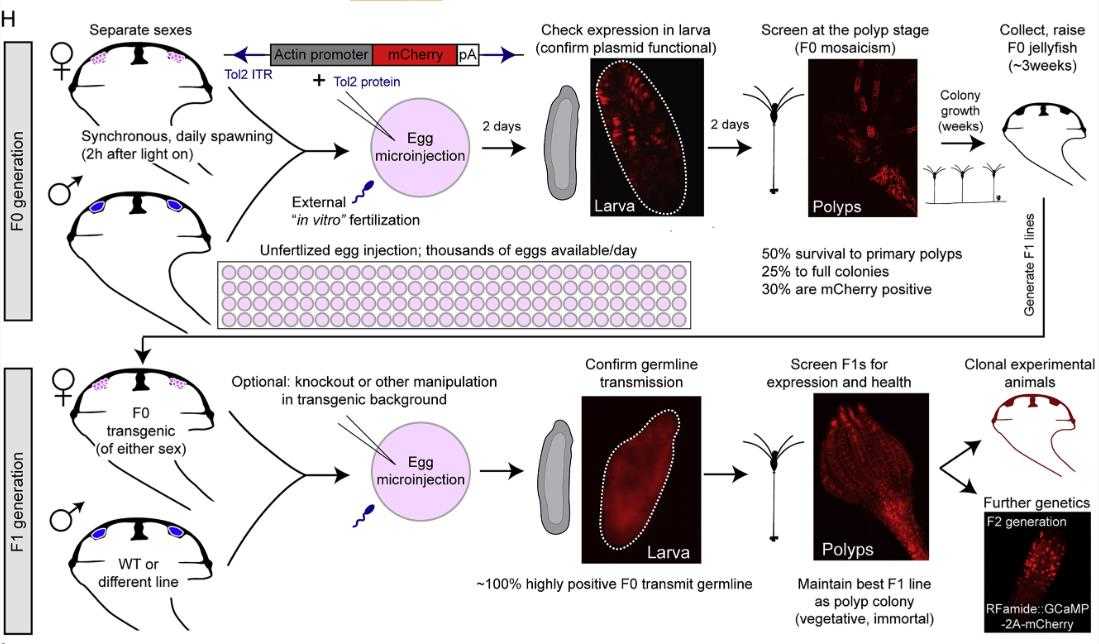
Fig1. To generate transgenic Clytia, plasmid DNA containing Tol2 recognition sites was injected into eggs together with Tol2 protein.
Case 2: Anderluh G, et al. J Biol Chem. 2003
Natively unfolded protein domains, which are more prevalent in protein-protein and protein-DNA interactions than folded structures, are a hallmark of colicins and crucial for their outer membrane translocation in E. coli. These domains interact with periplasmic proteins of the Tol or Ton families, as seen in Ton-dependent transporters, suggesting similar mechanisms of interaction.
In this study, researchers investigated the binding of colicin N's translocation domain to its receptor TolA using fluorescence resonance energy transfer (FRET) with fluorescent probes and NMR. The domain has a random coil spectrum, but FRET showed that it is not fully extended despite being natively unfolded. NMR confirmed a compact hydrodynamic radius. FRET measurements indicated structural rearrangement upon TolA binding, with 1H-15N NMR revealing a transition from a disordered to an ordered state. Stopped-flow methods demonstrated that binding kinetics and structural change occur concurrently.
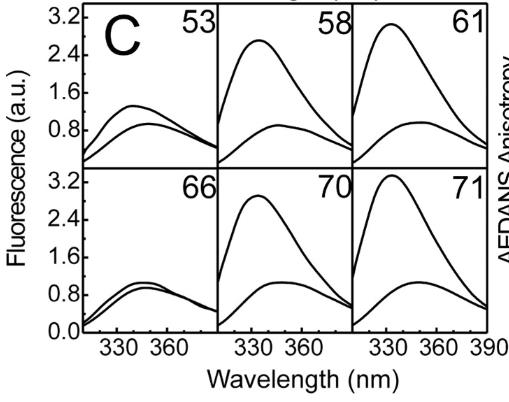
Fig1. Tryptophan fluorescence in solution and in the presence of 11 μm TolA-II,III.
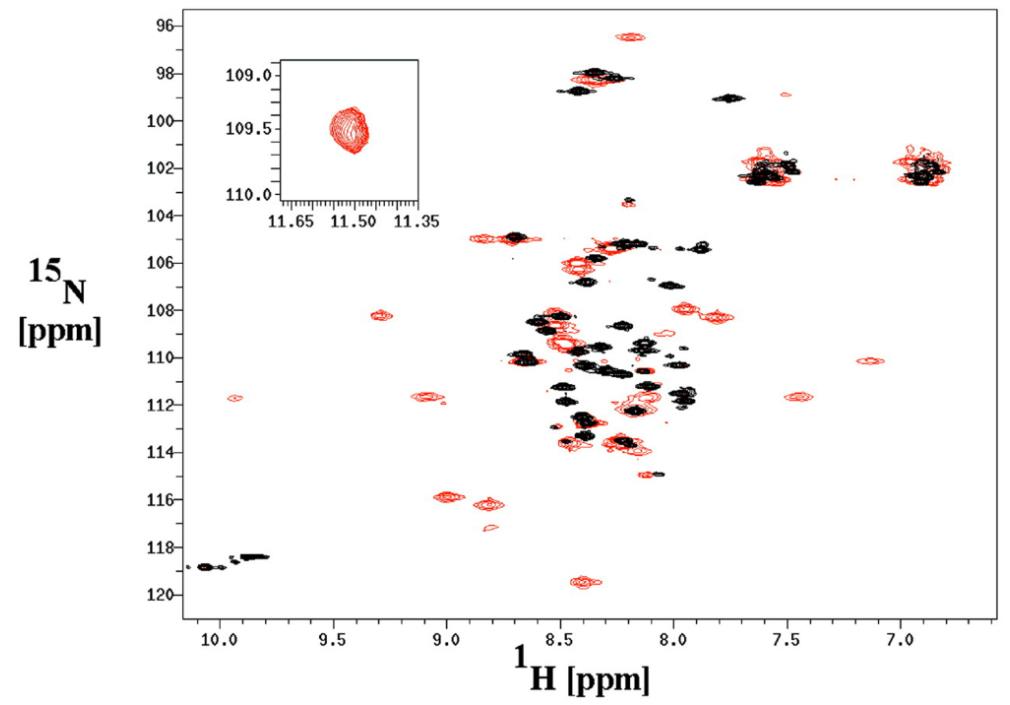
Fig2. 1H,15N HSQC spectra of binding box peptide in solution and in the presence of TolA-III.
The Tol2 transposon is a member of the hAT transposon family, which also includes other well-known transposons such as hobo, Activator, and Tam3. The transposable mechanism of Tol2 transposons involves a "cut and paste" process in which the Tol2 transposable enzyme protein is able to recognize a specific DNA sequence, cut it out and insert it elsewhere in the genome.
Tol2 transposase can catalyze the transfer of genes in vivo and in vitro, and is widely used in gene discovery and molecular medical research, as well as to study the mechanism of transposons and the interaction between transposons and the genome. The recombinant protein was efficiently produced by CHO cell culture using the Tol2 transposon system, which increased the yield of the recombinant protein by incorporating cycloheximide (CHX) resistance selection. The Tol2 transposon system is used in model organisms such as zebrafish and Xenopus to study gene expression regulation and developmental processes. Due to its efficiency and versatility, the Tol2 transposon system is being explored for use in gene therapy strategies, especially in situations where therapeutic genes need to be integrated into the host genome.
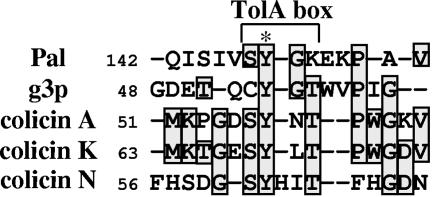
Fig1. Sequence conservation of the TolA box. (Stéphanie Pommier, 2005)

Not For Human Consumption!
Inquiry
- Reviews (0)
- Q&As (0)


Ask a Question for All Tol2 integrase Products
Required fields are marked with *
My Review for All Tol2 integrase Products
Required fields are marked with *
Recently Viewed