

Active Recombinant Human EGF protein
| Cat.No. : | EGF-06H |
| Product Overview : | Active Recombinant Human EGF protein(P01133-1)(Asn971-Arg1023) is expressed from E.coli without tag. |
- Specification
- Gene Information
- Related Products
- Case Study
- Application
- Download
| Species : | Human |
| Source : | E. coli |
| Tag : | Non |
| Protein Length : | 971-1023 aa |
| Form : | Lyophilized from 0.22μm filtered solution in PBS (pH 7.4). |
| Bio-activity : | Measured in a cell proliferation assay using Balb/C 3T3 mouse embryonic fibroblasts. The ED50 for this effect is typically 0.1 - 0.2 ng/mL. |
| Molecular Mass : | The protein has a predicted MW of 5.6 kDa same as Bis-Tris PAGE result. |
| Endotoxin : | Less than 0.2 EU per μg by the LAL method. |
| Purity : | > 95% as determined by Bis-Tris PAGE > 95% as determined by HPLC |
| Storage : | -20 to -80°C for 12 months as supplied from date of receipt. -80°C for 3 months after reconstitution. Recommend to aliquot the protein into smaller quantities for optimal storage. Please minimize freeze-thaw cycles. |
| Reconstitution : | It is recommended that sterile water be added to the vial to prepare a stock solution of 0.2 ug/ul. Centrifuge the vial at 4°C before opening to recover the entire contents. |
| Gene Name | EGF epidermal growth factor [ Homo sapiens ] |
| Official Symbol | EGF |
| Synonyms | EGF; epidermal growth factor; epidermal growth factor (beta urogastrone); pro-epidermal growth factor; beta-urogastrone; URG; HOMG4; |
| Gene ID | 1950 |
| mRNA Refseq | NM_001178130 |
| Protein Refseq | NP_001171601 |
| MIM | 131530 |
| UniProt ID | P01133 |
Case 1: Liu X, et al. Mol Med. 2022
Recent research reveals EGF-activated EGFR/Erk signaling drives Sox10-mediated astrocyte-to-oligodendrocyte transdifferentiation, enhancing spinal cord injury repair through dual-phase reprogramming (astrocyte precursors → O4+ iOPCs) and glial scar reduction. In vitro/vivo studies confirm EGF promotes Olig1/Olig2 expression via Erk1/2, offering therapeutic potential for neural regeneration and remyelination in CNS disorders. Key mechanisms involve pathological niche modulation and EGFR-dependent neural repair pathways.
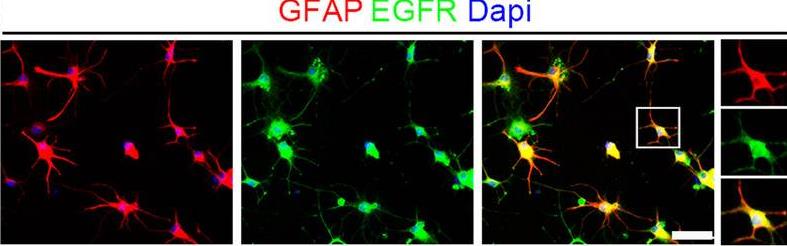
Fig1. Purified cells were immunoreactive to GFAP and EGFR antibodies.
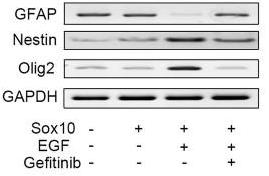
Fig2. Western blotting analysis of GFAP, Nestin and Olig2 on d5 during the transdifferentiation process.
Case 2: Pascarelli S, et al. J Biol Chem. 2021
Recent study uncovers EGFR’s biased signaling via single EGF mutations, revealing conserved residues critical for receptor dimer stability and pathway activation. Combining molecular dynamics simulations with biochemical assays, researchers demonstrated that targeted EGF mutations alter EGFR phosphorylation patterns and cell proliferation without affecting ligand binding affinity. These findings highlight ligand-specific modulation of tyrosine kinase receptor outcomes, advancing precision drug design for cancer and neurological disorders through EGFR signaling pathways. Key insights include dimer interface dynamics and paralog-divergent residues as therapeutic targets in receptor-ligand interactions.
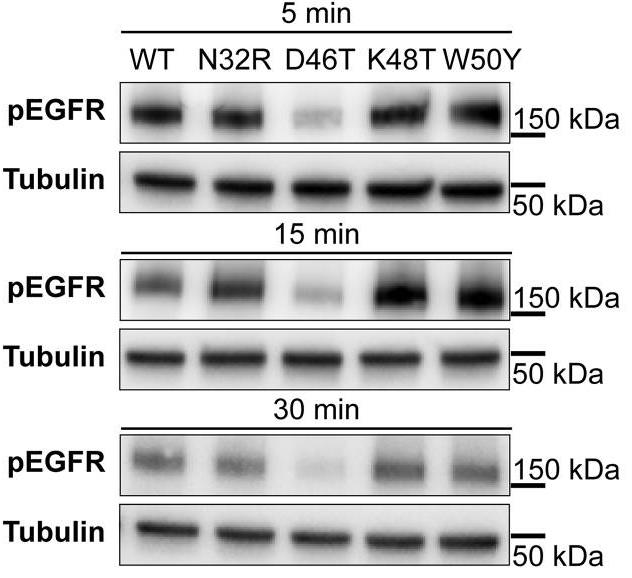
Fig1. Short-term effects on the phosphorylation level of EGFR Tyr-1173 after treating A431 cells.
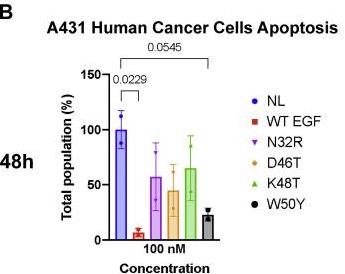
Fig2. Apoptosis effect of WT or mutant EGF on A431 cells.
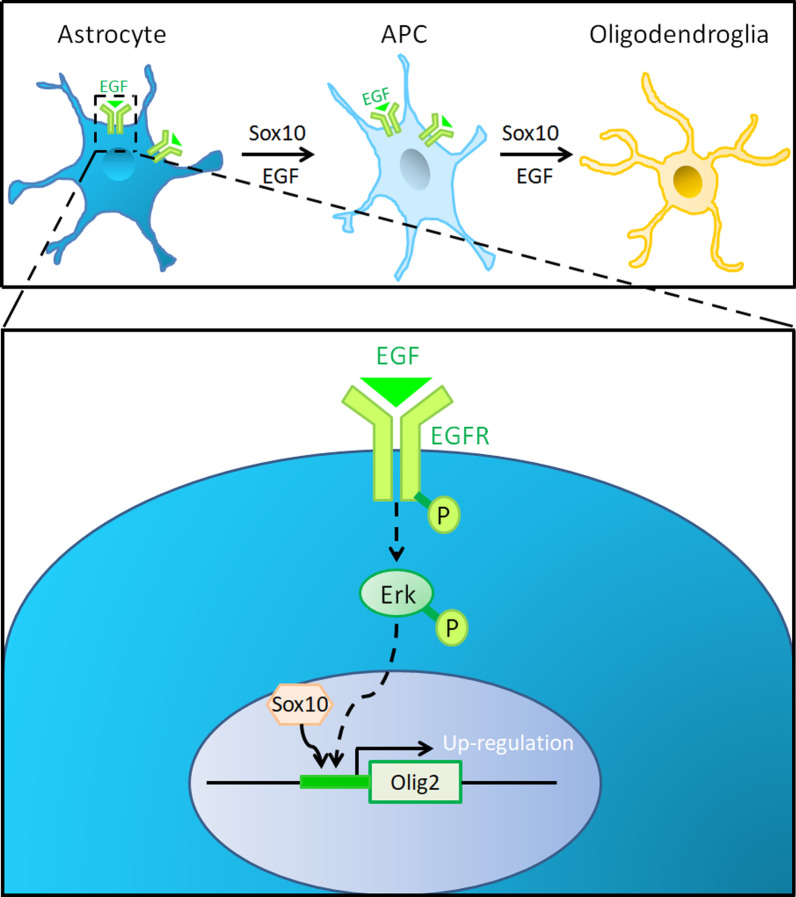
Fig1. Proposed model of synergistic induction of transdifferentiation from astrocytes to oligodendrocytes by EGF and Sox10. (Xinyu Liu, 2022)

Not For Human Consumption!
Inquiry
- Reviews (0)
- Q&As (0)


Ask a Question for All EGF Products
Required fields are marked with *
My Review for All EGF Products
Required fields are marked with *
Recently Viewed