

CD Antigens in Antibody, CAR-T, Bispecific and ADC Development
Table of Contents
- Why CD Antigens Make Attractive Drug Targets
- What Defines a Good Therapeutic CD Target?
- Therapeutic Antibody Target Requirements
- CAR-T and CAR-NK Target Selection
- Bispecific Antibody Target Selection
- ADC Target Requirements
- Antigen Density and Heterogeneity
- Antigen Escape and Resistance
- Cross-Species Target Validation
- Recombinant CD Antigens in Drug Discovery
Why CD Antigens Make Attractive Drug Targets
Many CD molecules are accessible on the extracellular surface of cells.
This makes CD antigens particularly attractive for therapeutic modalities that recognize intact cell-surface proteins.
Examples include:
- monoclonal antibodies;
- antibody-drug conjugates;
- bispecific antibodies;
- CAR-T cells;
- CAR-NK cells.
However, accessibility alone does not make a target therapeutically attractive.
A target must be evaluated in the context of the treatment modality.
Explore Our CD Antigen Products
Learn More
What Defines a Good Therapeutic CD Target?
A useful target ideally has:
- appropriate expression on disease cells;
- limited expression on critical normal tissues;
- sufficient surface density;
- accessible epitopes;
- stable expression;
- limited shedding;
- biology compatible with the therapeutic mechanism.
The relative importance of each property differs by modality.
| Property | Antibody | CAR-T | Bispecific | ADC |
|---|---|---|---|---|
| Surface density | Important | Critical | Critical | Important |
| Internalization | Variable | Usually not needed | Variable | Critical |
| Normal-tissue selectivity | Important | Critical | Critical | Critical |
| Epitope geometry | Important | Important | Very important | Important |
| Antigen stability | Important | Critical | Critical | Important |
| Intracellular trafficking | Limited role | Limited role | Variable | Critical |
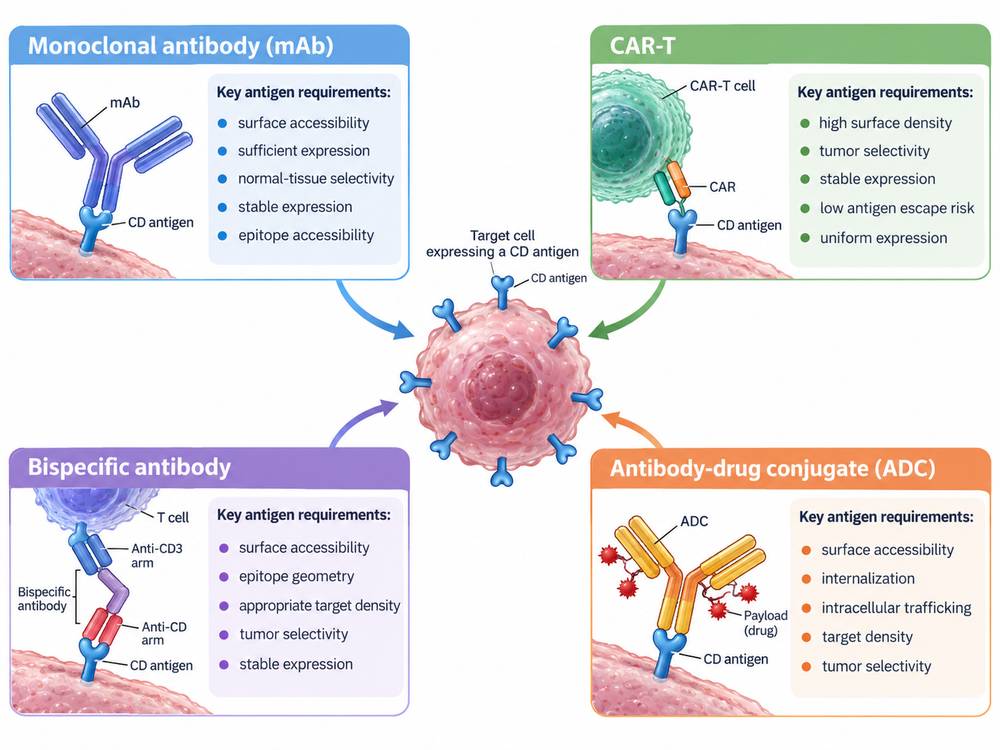 Fig 1. Matching CD Antigen Properties to Therapeutic Modality
Therapeutic Antibody Target Requirements
Conventional antibodies can operate through several mechanisms:
- receptor blockade;
- ligand neutralization;
- agonism;
- ADCC;
- ADCP;
- complement activation.
The optimal antigen therefore depends on mechanism.
For a blocking antibody, functional pathway dependence can be more important than internalization.
For an ADCC-focused antibody, antigen density and Fc-receptor engagement are central.
For receptor agonists, antibody geometry and crosslinking can be especially important.
Antigen quality during discovery also matters. Poorly folded recombinant protein can lead to antibodies that bind artificial epitopes but fail on native cells.
CAR-T and CAR-NK Target Selection
Engineered immune cells are highly sensitive to antigen distribution because recognition can trigger potent cytotoxicity.
Ideal targets have:
- strong tumor expression;
- little expression on essential tissues;
- sufficient density;
- stable expression.
Antigen heterogeneity can be a major problem.
If only part of a tumor expresses the antigen, target-negative cells can survive.
Antigen escape after treatment is a well-established resistance mechanism in CAR-T therapy.
Therefore, longitudinal target profiling may be more informative than a single pretreatment measurement.
Bispecific Antibody Target Selection
Bispecific T-cell engagers simultaneously bind a tumor antigen and an immune-cell molecule such as CD3.
Functional activity depends strongly on geometry.
Relevant parameters include:
- epitope position;
- distance from the membrane;
- affinity of each arm;
- valency;
- molecular flexibility.
A very high affinity is not automatically optimal.
If a bispecific creates an unfavorable cell-cell distance, T-cell activation may be weaker despite strong biochemical binding.
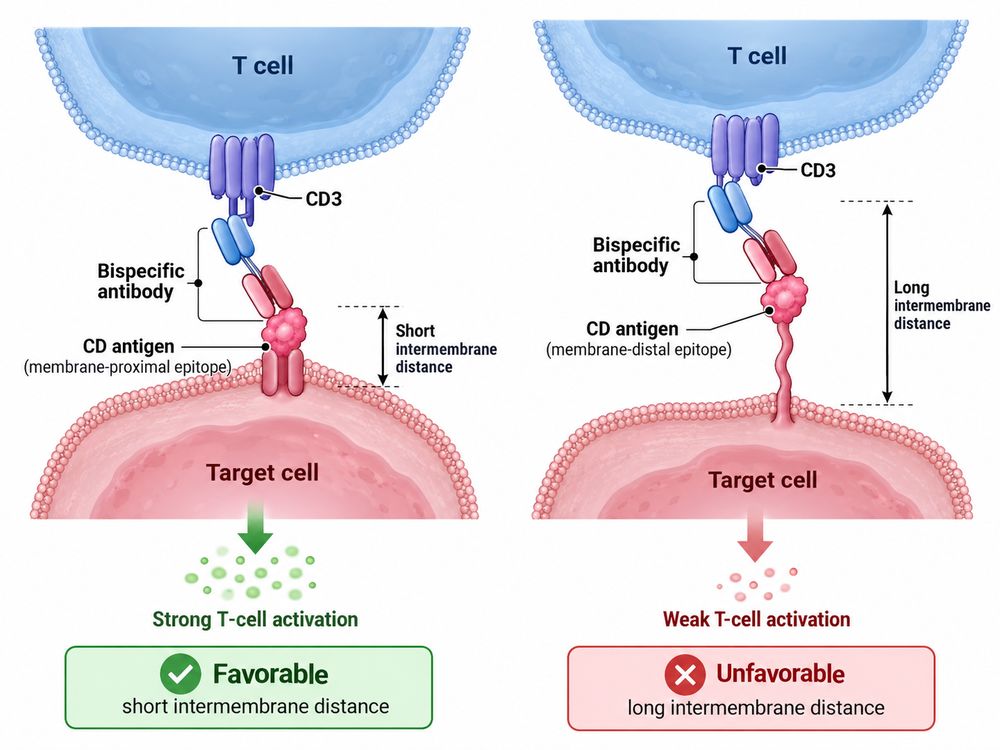 Fig 2. Epitope Geometry in Bispecific T-Cell Engagement
ADC Target Requirements
Antibody-drug conjugates use antibodies to deliver cytotoxic payloads.
After target engagement, the complex often needs to internalize and enter an intracellular trafficking pathway that enables payload release.
Therefore, ADC target selection places strong emphasis on:
- internalization;
- trafficking;
- antigen density;
- tumor selectivity;
- resistance to shedding.
CD79B is an example of a B cell-associated target whose biology has supported ADC development.
An antigen may be excellent for CAR-T but poor for ADC if it does not internalize efficiently.
Antigen Density and Heterogeneity
"Positive versus negative" is often too crude.
Therapeutic response can depend on quantitative antigen density.
Methods for assessing density include:
- calibrated flow cytometry;
- quantitative immunofluorescence;
- targeted proteomics;
- standardized IHC scoring.
Heterogeneity should also be evaluated.
A tumor containing 90% antigen-high cells is biologically different from one containing several spatially separated target-positive and target-negative regions.
Explore Our CD Antigen Products
Learn More
Antigen Escape and Resistance
Therapeutic pressure can reshape antigen expression.
Resistance mechanisms include:
- genetic antigen loss;
- altered splicing;
- receptor internalization;
- lineage switching;
- epigenetic downregulation;
- selective outgrowth of antigen-low clones.
This is why dual-target or multi-target therapeutic strategies are increasingly investigated.
Cross-Species Target Validation
Animal-model selection depends partly on whether the candidate recognizes the orthologous antigen.
A translational program may therefore compare:
- human CD protein;
- mouse protein;
- cynomolgus monkey protein;
- other relevant species.
Cross-reactivity should be evaluated at multiple levels.
Protein binding → cell binding → functional response
Sequence identity alone is insufficient because a few amino-acid changes can alter the antibody epitope.
Recombinant CD Antigens in Drug Discovery
High-quality recombinant CD antigen proteins can support:
- immunization;
- phage-display screening;
- antibody selection;
- affinity measurement;
- epitope binning;
- competition assays;
- species cross-reactivity.
Different modalities may require different antigen formats.
| Application | Preferred Consideration |
|---|---|
| ELISA screening | Stable extracellular domain |
| SPR/BLI | Monodispersity and controlled valency |
| Antibody discovery | Native-like conformation |
| Cross-species testing | Matched constructs |
| Bispecific characterization | Defined epitope and geometry |
| ADC research | Native cell-binding + internalization |
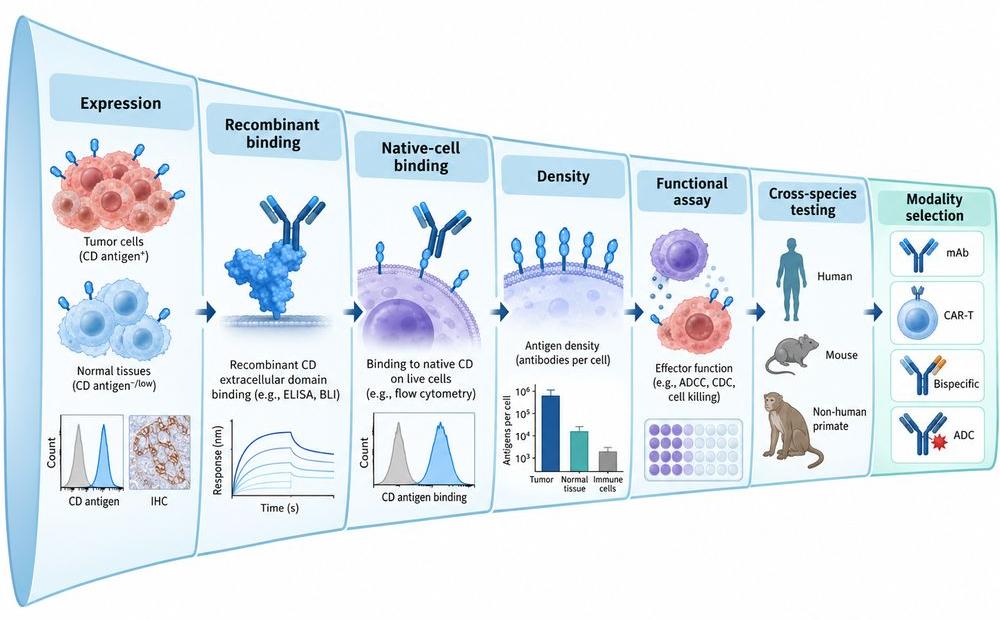 Fig 3. CD Antigen Target-Validation Funnel
Explore Our CD Antigen Products
Learn More
Why are CD antigens widely used as therapeutic targets?
Many CD molecules are accessible cell-surface proteins with defined expression patterns and biological functions. This makes them compatible with antibody, CAR-T, bispecific and ADC approaches. However, the ideal antigen depends on modality-specific properties such as surface density, normal-tissue distribution, internalization, epitope location and susceptibility to antigen escape.
Resource
-
From CD Markers to Immune Maps: A New Era in Immunology
-
The CD Map Is Still Growing: New CD Molecules and HLDA11
-
Antigen Density: Beyond CD-Positive
-
Spatial CD Biology: Why Location Matters in the Tumor Microenvironment
-
Logic-Gated CAR-T: Revolutionizing Cancer Therapy
-
Cluster of Differentiation

References
- Ebersbach H, Geisse S. Antigen Generation and Display in Therapeutic Antibody Drug Discovery—A Neglected but Critical Player. Biotechnol J. 2012;7(12):1433–1443. doi:10.1002/biot.201200066.
- Driscoll CL, Howarth MR. Matchmaking at the Cell Surface Using Bispecifics to Put Cells on Their Best Behavior. Curr Opin Biotechnol. 2025;92:103267. doi:10.1016/j.copbio.2025.103267.
- Jiang M, Li Q, Xu B. Spotlight on Ideal Target Antigens and Resistance in Antibody-Drug Conjugates: Strategies for Competitive Advancement. Drug Resist Updat. 2024;75:101086. doi:10.1016/j.drup.2024.101086.
- Majzner RG, Mackall CL. Tumor Antigen Escape From CAR T-Cell Therapy. Cancer Discov. 2018;8(10):1219–1226. doi:10.1158/2159-8290.CD-18-0442.

Contact us or send an email at for project quotations and more detailed information.
Quick Links
-

Papers’ PMID to Obtain Coupon
Submit Now -

Refer Friends & New Lab Start-up Promotions