

CD70-CD27 Axis in Cancer: CAR-T, ADC and Antibody Research
Table of Contents
- What Is the CD70-CD27 Axis?
- Physiological CD70 and CD27 Signaling
- Dysregulated CD70 Expression in Cancer
- Why CD70 Is an Attractive Tumor Target
- CD70-Directed Antibody Strategies
- CD70 and Antibody-Drug Conjugates
- CD70-Targeted CAR-T Research
- Bispecific and Combination Approaches
- Challenges in CD70 Targeting
- Assays for CD70 Drug Development
- Selecting Recombinant CD70 Proteins
What Is the CD70-CD27 Axis?
CD70 is a member of the tumor necrosis factor ligand family. Its receptor CD27 is expressed on several lymphocyte populations and contributes to immune-cell activation, survival and differentiation.
In normal immune biology, CD70 expression is tightly regulated and usually transient.
This makes CD70 unusual among CD antigens: instead of being constitutively abundant on resting healthy tissues, it is often induced after immune activation.
In several malignancies, however, CD70 can become persistently expressed.
This difference between transient normal expression and sustained tumor-associated expression has made CD70 an important research target.
Physiological CD70 and CD27 Signaling
CD27 is a costimulatory receptor of the TNF receptor superfamily.
Interaction with CD70 can support:
- T-cell expansion;
- survival;
- memory formation;
- B-cell responses;
- NK-cell activity under selected conditions.
The duration of signaling matters.
Short, regulated CD70-CD27 interaction can support productive immune responses, whereas chronic stimulation may contribute to immune dysfunction or altered lymphocyte differentiation.
Therefore, CD70 cannot be understood only as a tumor-surface marker. Its signaling biology is also relevant.
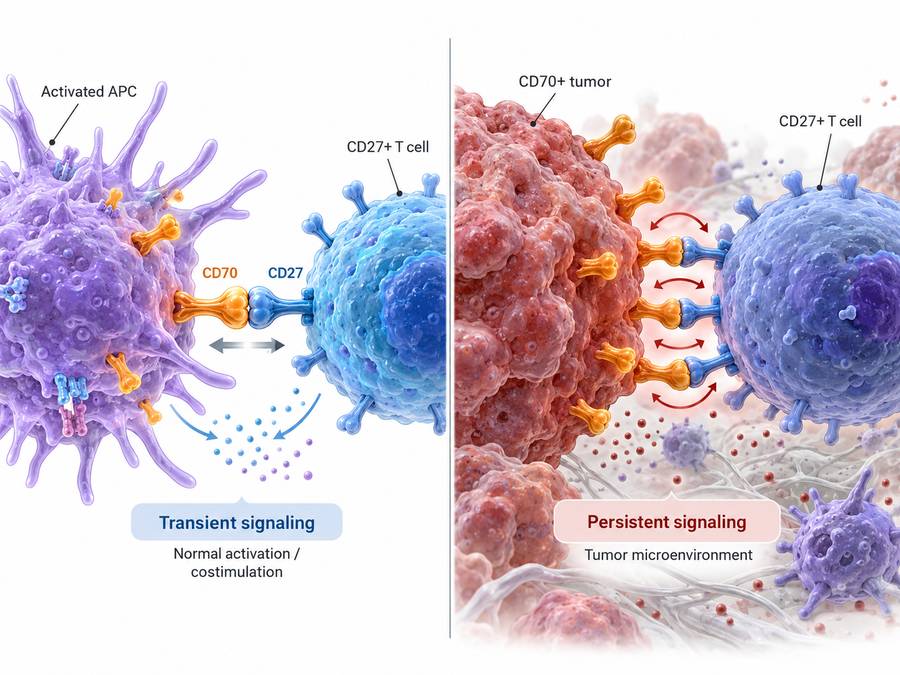 Fig 1. Physiological Versus Persistent CD70 Signaling
Dysregulated CD70 Expression in Cancer
Aberrant CD70 expression has been reported in hematologic malignancies and solid tumors.
Examples include:
- renal-cell carcinoma;
- selected lymphomas;
- leukemias;
- nasopharyngeal carcinoma;
- subsets of other solid tumors.
Expression varies considerably by tumor type and patient.
This is important for biomarker-driven development. A CD70-directed therapy is unlikely to behave uniformly across diseases with very different antigen density and distribution.
Assessment should ideally consider:
- percentage of positive tumor cells;
- antigen density per cell;
- intratumoral heterogeneity;
- expression on stromal or immune populations;
- change after treatment.
Why CD70 Is an Attractive Tumor Target
CD70 has several characteristics favorable for targeted drug development.
| CD70 Feature | Potential Value |
|---|---|
| Surface expression | Accessible to antibodies and CARs |
| Restricted resting-tissue expression | Potential therapeutic window |
| High expression in selected tumors | Supports biomarker-directed strategies |
| Ligand-receptor biology | Enables functional pathway studies |
| Potential internalization | Relevant to some ADC formats |
However, activated normal immune cells can express CD70. Therefore, "restricted expression" should not be interpreted as complete tumor specificity.
Explore Our CD Antigen Products
Learn More
CD70-Directed Antibody Strategies
Monoclonal antibodies can be designed with several goals.
Blocking CD70-CD27 Signaling
An antibody can interfere with ligand-receptor interaction.
Recruiting Effector Functions
Appropriate Fc design may support antibody-dependent cellular cytotoxicity or phagocytosis.
Target Delivery
CD70 can act as a targeting address for conjugated payloads or engineered molecules.
The desired antibody properties depend on the intended mechanism.
A blocking antibody optimized for receptor inhibition may differ from an antibody intended primarily for Fc-mediated cell killing.
CD70 and Antibody-Drug Conjugates
ADC development requires additional target features beyond antibody binding.
After an ADC binds the tumor surface, efficient internalization and trafficking can be important for delivering payload to the appropriate intracellular compartment.
Relevant CD70 considerations include:
- target density;
- internalization kinetics;
- recycling;
- epitope location;
- antigen modulation;
- heterogeneity.
A high-affinity antibody is not necessarily the best ADC if the antigen-antibody complex traffics inefficiently.
CD70-Targeted CAR-T Research
CD70 has attracted substantial interest as a CAR-T target.
The rationale is particularly strong in malignancies with high CD70 expression and limited effective treatment options.
In 2026, results from the Phase I TRAVERSE study of an allogeneic CD70-targeted CAR-T product in advanced clear-cell renal-cell carcinoma were reported in Journal of Clinical Oncology.
This study is important because it demonstrates continued clinical investigation of CD70-directed cellular therapy in a solid tumor.
However, it should be described accurately: the study represents early-phase clinical evidence, not establishment of CD70 CAR-T as standard therapy.
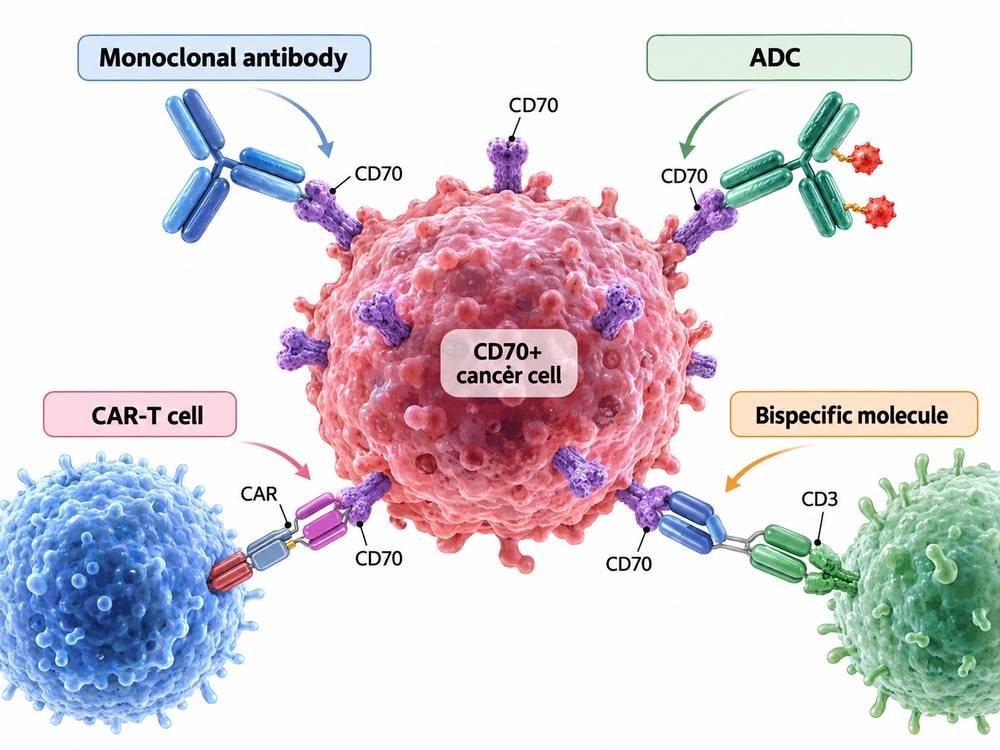 Fig 2. CD70-Directed Therapeutic Modalities
Bispecific and Combination Approaches
Bispecific molecules offer another strategy.
One arm can recognize CD70 while another recruits an immune effector molecule or cell.
Potential advantages include localized immune activation and increased functional avidity.
Combination approaches may also attempt to address immunosuppression in the tumor microenvironment.
The most appropriate strategy depends on tumor type and CD70 distribution.
Challenges in CD70 Targeting
Antigen Heterogeneity
Not every tumor cell may express equal CD70 levels.
A therapy that eliminates CD70-high cells could select for antigen-low populations.
Expression on Activated Immune Cells
Activated T or B cells may express CD70, raising questions about immune-cell targeting.
Antigen Modulation
Surface expression can change after treatment.
Cross-Species Differences
An antibody optimized for human CD70 may not bind the corresponding animal ortholog.
Modality-Specific Requirements
CAR-T, ADC and antibody programs need different target characteristics.
| Challenge | mAb | ADC | CAR-T |
|---|---|---|---|
| Surface density | Important | Important | Often critical |
| Internalization | Variable | Critical | Not generally required |
| Normal immune-cell expression | Important | Important | Critical |
| Antigen heterogeneity | Important | Important | Critical |
Explore Our CD Antigen Products
Learn More
Assays for CD70 Drug Development
A robust CD70 program should include complementary biochemical and cellular assays.
Target Expression
Flow cytometry, immunohistochemistry and quantitative protein measurements help establish the biological opportunity.
Direct Binding
ELISA, SPR and BLI can measure antibody or receptor binding to recombinant CD70 antigen.
CD70-CD27 Competition
Competition assays determine whether a candidate disrupts ligand-receptor interaction.
Cell-Surface Binding
Native cell assays confirm recognition of membrane CD70.
Internalization
Particularly important for ADC research.
Cytotoxicity
CAR-T and effector-function studies require target-density-dependent functional assays.
Cross-Species Testing
Human, mouse and nonhuman-primate CD70 proteins can help establish translational relevance.
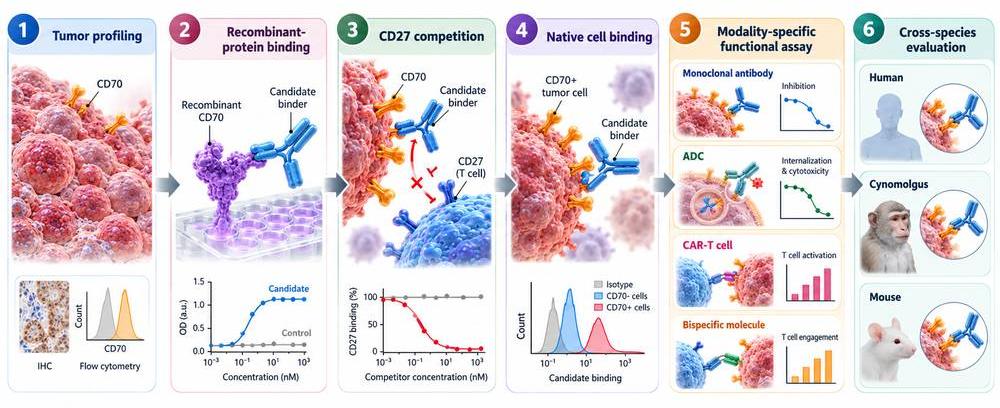 Fig 3. CD70 Target-Validation Workflow
Selecting Recombinant CD70 Proteins
CD70 is a trimeric TNF-family ligand in its native biological context, so recombinant format can influence binding behavior.
Researchers should consider:
Domain Design
The extracellular domain should include the biologically relevant receptor-binding region.
Oligomerization
Some experimental formats may benefit from multimeric presentation, while quantitative affinity measurements may require careful control of avidity.
Fc Tag
Fc fusion can improve stability and simplify capture but produces higher-order presentation.
His Tag
A relatively small tag can be useful for biochemical characterization.
Biotinylation
Site-specific biotinylated proteins are convenient for SPR/BLI or high-throughput screening.
Species
Matched orthologs can support preclinical model selection.
Using several recombinant CD antigen proteins with consistent format can be especially valuable for human-versus-animal cross-reactivity studies.
Key Takeaway
CD70 is normally expressed transiently after immune activation but is persistently overexpressed in several malignancies. This difference has made CD70 an attractive target for antibodies, ADCs and CAR-T cells, although antigen heterogeneity and expression on activated normal immune cells remain important development challenges.
Resource
-
From CD Markers to Immune Maps: A New Era in Immunology
-
The CD Map Is Still Growing: New CD Molecules and HLDA11
-
Antigen Density: Beyond CD-Positive
-
Spatial CD Biology: Why Location Matters in the Tumor Microenvironment
-
Logic-Gated CAR-T: Revolutionizing Cancer Therapy
-
Cluster of Differentiation

References
- Sam I, Ben Hamouda N, Alkatrib M, et al. The CD70-CD27 Axis in Cancer Immunotherapy: Predictive Biomarker and Therapeutic Target. Clin Cancer Res. 2025;31(14):2872–2881. doi:10.1158/1078-0432.CCR-24-2668.
- Wei W, Grünwald V, Herrmann K. CD70-Targeted Cancer Theranostics: Progress and Challenges. Med. 2025;6(8):100671. doi:10.1016/j.medj.2025.100671.
- Srour SA, Chahoud J, Drakaki A, et al. Allogeneic CD70-Targeted Chimeric Antigen Receptor T-Cell Therapy for Advanced Renal Cell Carcinoma: Results From the Phase I TRAVERSE Trial. J Clin Oncol. 2026;44(24):2329–2340. doi:10.1200/JCO-26-00388.
- van de Ven K, Borst J. Targeting the T-Cell Co-Stimulatory CD27/CD70 Pathway in Cancer Immunotherapy: Rationale and Potential. Immunotherapy. 2015;7(6):655–667. doi:10.2217/imt.15.32.

Contact us or send an email at for project quotations and more detailed information.
Quick Links
-

Papers’ PMID to Obtain Coupon
Submit Now -

Refer Friends & New Lab Start-up Promotions