

CD96-CD155/PVR Axis and the TIGIT Checkpoint Network
Table of Contents
What Are CD96 and CD155?
CD155, also called PVR, is an immunoglobulin-superfamily cell-surface molecule with roles in adhesion and immune regulation.
It can bind multiple immune receptors, including:
- TIGIT;
- CD96;
- CD226.
This receptor-sharing arrangement creates a competitive signaling network.
Some interactions are predominantly inhibitory, while others support immune activation.
CD96 and CD155 therefore illustrate why CD antigen biology should often be studied as a network rather than as an isolated receptor-ligand pair.
The CD155 Receptor Network
CD155 is the central ligand.
TIGIT and CD96 compete with the activating receptor CD226 for overlapping ligand availability.
| Receptor | Major Ligand | General Functional Association |
|---|---|---|
| TIGIT | CD155 | Inhibitory |
| CD96 | CD155 | Regulatory/context-dependent |
| CD226 | CD155 | Activating |
The final immune response depends on relative receptor expression, affinity, cell type and tumor context.
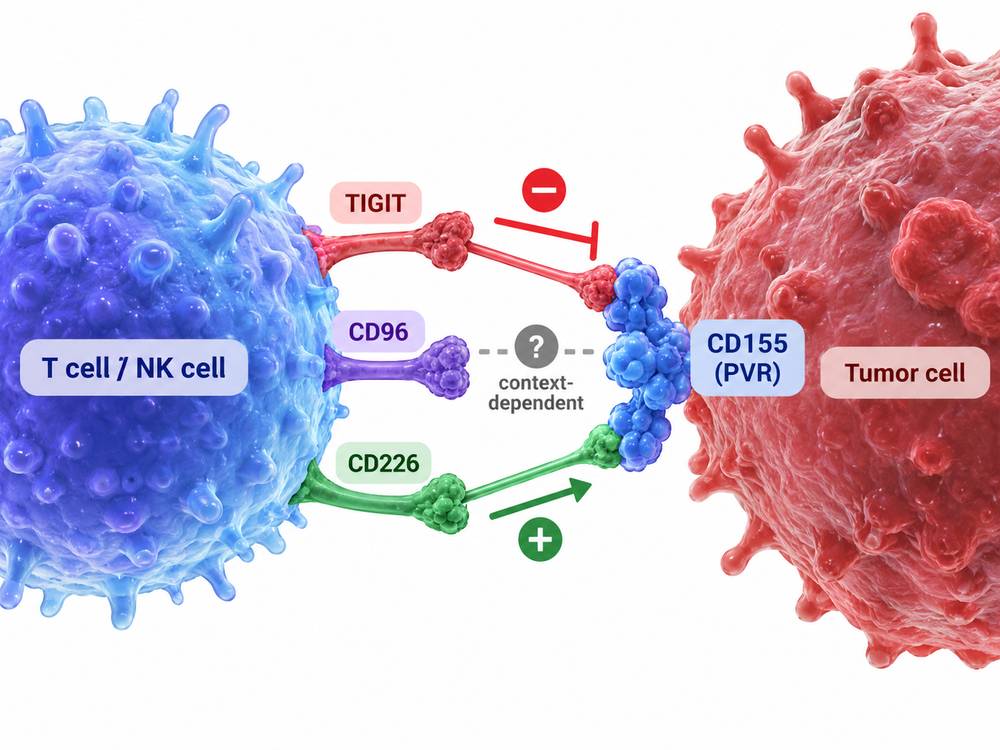 Fig 1. CD155-TIGIT/CD96/CD226 Network
CD226 as an Activating Counterbalance
CD226, also known as DNAM-1, is an activating adhesion and costimulatory receptor.
It contributes to NK-cell and T-cell recognition of CD155-positive targets.
High functional CD226 signaling can support cytotoxicity.
This matters because inhibitory pathways do not operate independently. TIGIT or CD96 may compete with CD226 for ligand access.
Therefore, therapeutic blockade of an inhibitory receptor may partly depend on whether sufficient CD226 remains available to transmit an activating signal.
Explore Our CD Antigen Products
Learn More
TIGIT-Mediated Immune Regulation
TIGIT is the most clinically developed inhibitory receptor in this network.
It is expressed on:
- activated T cells;
- regulatory T cells;
- NK cells;
- exhausted T-cell populations.
TIGIT binds CD155 and can suppress immune-cell function through several mechanisms.
In addition to direct inhibitory signaling, TIGIT can shift the competitive balance away from CD226.
This explains why measuring TIGIT without CD226 can provide an incomplete picture.
CD96 Biology in NK and T Cells
CD96 is expressed on NK cells and subsets of T cells.
Its biological interpretation is more complex than TIGIT.
In experimental models, CD96 has been linked to regulation of cytotoxicity, cytokine production and tumor surveillance, but human and mouse findings are not always identical.
As a result, CD96 should not simply be labeled as "another TIGIT."
Its signaling can be context dependent and may vary with:
- species;
- cell type;
- activation state;
- receptor density;
- ligand distribution.
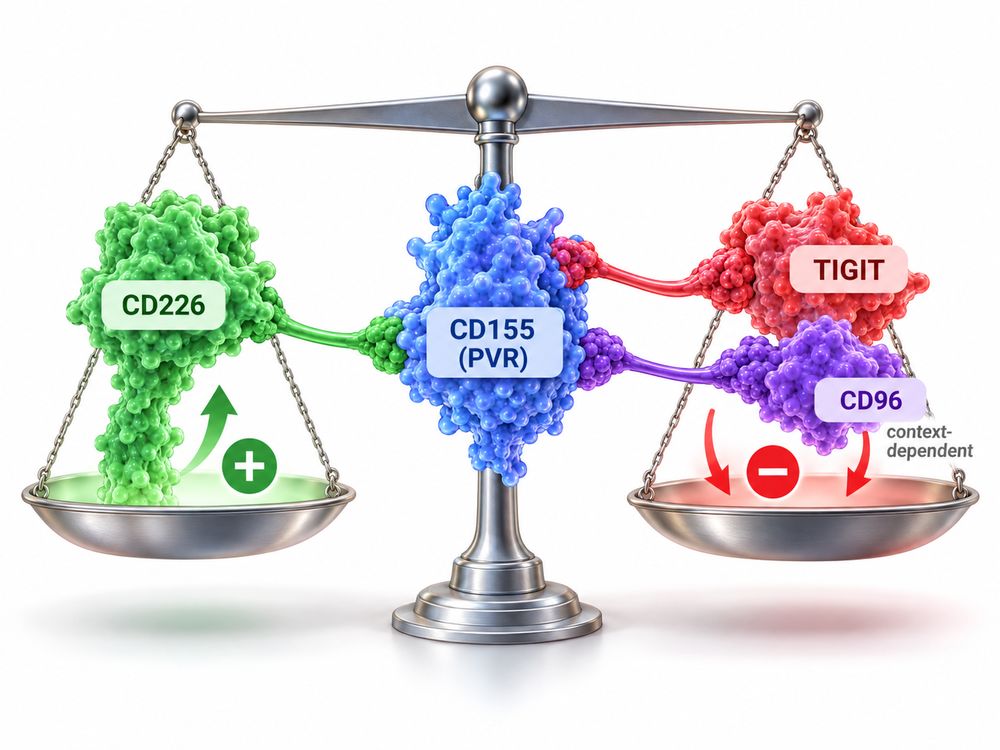 Fig 2. Activating and Inhibitory Balance at CD155
CD155 Expression in Cancer
CD155 is frequently elevated in tumor cells.
Its expression can be influenced by oncogenic signaling, DNA-damage pathways and microenvironmental conditions.
High CD155 can affect immune surveillance by increasing opportunities for interaction with TIGIT and CD96.
However, CD155 also interacts with CD226, so the biological outcome cannot be predicted from CD155 abundance alone.
Current studies increasingly evaluate the entire CD155-TIGIT/CD96/CD226 axis rather than treating one molecule as an independent prognostic marker.
Explore Our CD Antigen Products
Learn More
Therapeutic Strategies
TIGIT Blockade
The most extensively studied strategy.
CD96 Blockade
An emerging research direction intended to modify NK- and T-cell regulation.
CD155-Directed Approaches
Targeting the shared ligand may alter multiple receptor interactions simultaneously.
Combination Checkpoint Therapy
Combining this pathway with PD-1/PD-L1 modulation has strong biological rationale.
Engineered Immune Cells
Research is also exploring whether receptor expression or signaling can be engineered in T or NK cells.
Because all these approaches can shift multiple competing interactions, mechanistic assays are essential.
Designing Ligand-Receptor Competition Assays
A pairwise assay answers only one question.
For example:
Does compound X inhibit CD155-CD96?
A more informative program asks:
- Does it inhibit CD155-TIGIT?
- Does it preserve CD155-CD226?
- Does it alter affinity differently across receptors?
- Does it change immune-cell function?
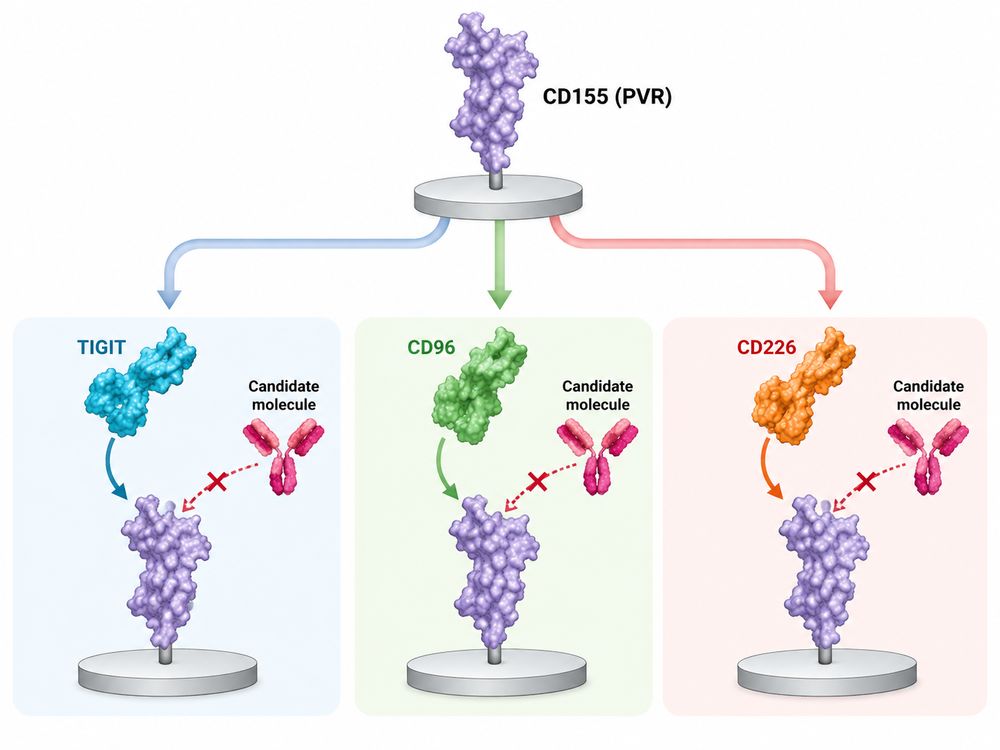 Fig 3. Multi-Receptor Competition Assay
Recombinant CD96, CD155, TIGIT and CD226
Matched recombinant CD antigens are valuable for studying this network.
A useful matched panel can include:
- CD155/PVR;
- CD96;
- TIGIT;
- CD226.
Ideally, proteins should use comparable:
- species;
- expression systems;
- tag architectures;
- domain boundaries.
Fc fusion can increase apparent binding through avidity. If intrinsic affinities are being compared, monomeric or carefully immobilized formats may be more informative.
Biotinylated proteins allow standardized immobilization for competition assays.
Cross-species CD antigen proteins can also clarify whether therapeutic candidates recognize mouse or primate homologs.
How are CD96, TIGIT and CD226 related?
All three can interact with CD155. CD226 generally supports T- and NK-cell activation, TIGIT is predominantly inhibitory and CD96 has context-dependent regulatory functions. Their competition for shared ligand means the immune effect depends on the balance of the entire receptor network.
Resource
-
From CD Markers to Immune Maps: A New Era in Immunology
-
The CD Map Is Still Growing: New CD Molecules and HLDA11
-
Antigen Density: Beyond CD-Positive
-
Spatial CD Biology: Why Location Matters in the Tumor Microenvironment
-
Logic-Gated CAR-T: Revolutionizing Cancer Therapy
-
Cluster of Differentiation

References
- Zhou R, Chen S, Wu Q, et al. CD155 and Its Receptors in Cancer Immune Escape and Immunotherapy. Cancer Lett. 2023;573:216381. doi:10.1016/j.canlet.2023.216381.
- Dougall WC, Kurtulus S, Smyth MJ, Anderson AC. TIGIT and CD96: New Checkpoint Receptor Targets for Cancer Immunotherapy. Immunol Rev. 2017;276(1):112–120. doi:10.1111/imr.12518.
- Blake SJ, Dougall WC, Miles JJ, Teng MWL, Smyth MJ. Molecular Pathways: Targeting CD96 and TIGIT for Cancer Immunotherapy. Clin Cancer Res. 2016;22(21):5183–5188. doi:10.1158/1078-0432.CCR-16-0933.
- Liu L, You X, Han S, Sun Y, Zhang J, Zhang Y. CD155/TIGIT, a Novel Immune Checkpoint in Human Cancers. Oncol Rep. 2021;45(3):835–845. doi:10.3892/or.2021.7943.

Contact us or send an email at for project quotations and more detailed information.
Quick Links
-

Papers’ PMID to Obtain Coupon
Submit Now -

Refer Friends & New Lab Start-up Promotions