

CD93 in Tumor Vasculature: An Emerging Target for Cancer Immunotherapy Research
Table of Contents
- What Is CD93?
- CD93 Expression and Physiological Roles
- CD93 in Tumor-Associated Endothelium
- CD93-IGFBP7 Signaling
- Abnormal Tumor Vasculature
- CD93 and Vascular Normalization
- CD93 and Immune-Cell Infiltration
- CD93 as an Emerging Therapeutic Target
- Assays for CD93 Research
- Recombinant CD93 Protein Selection
What Is CD93?
CD93 is a type I transmembrane glycoprotein expressed prominently in endothelial and selected hematopoietic contexts.
Interest in CD93 has increased because it contributes to tumor vascular biology.
Unlike many tumor-associated CD antigens studied directly on malignant cells, CD93 represents a strategy focused substantially on the tumor microenvironment.
Specifically, CD93-related signaling is associated with endothelial-cell behavior and abnormal tumor vasculature.
This has created a therapeutic concept based not only on killing cancer cells but on improving the physical and functional properties of tumor blood vessels.
Explore Our CD Antigen Products
Learn More
CD93 Expression and Physiological Roles
CD93 is associated with:
- vascular endothelial cells;
- selected immune-cell populations;
- cell adhesion;
- vascular organization.
Its extracellular region contains domains capable of interacting with extracellular ligands.
CD93 signaling can influence endothelial migration, adhesion and vascular stability.
These physiological functions provide context for its role in cancer.
CD93 in Tumor-Associated Endothelium
Solid tumors require blood vessels, but tumor vessels often differ dramatically from normal vasculature.
They may be:
- tortuous;
- poorly organized;
- excessively permeable;
- irregularly perfused;
- hypoxic.
Tumor endothelial cells can express increased CD93 and participate in ligand-driven signaling programs that maintain this abnormal architecture.
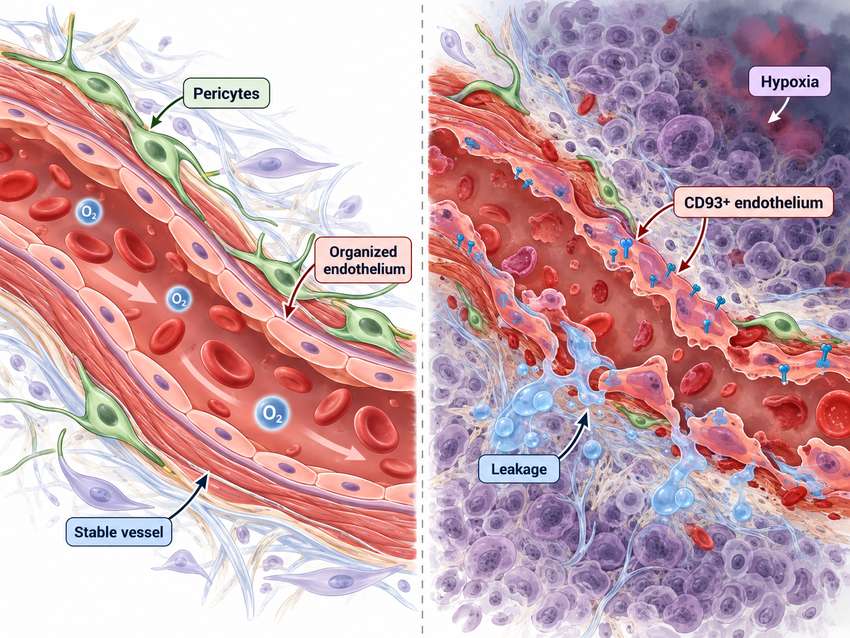 Fig 1. Normal Versus Tumor Vasculature
CD93-IGFBP7 Signaling
A major mechanistic advance was identification of IGFBP7 as a CD93-interacting ligand relevant to tumor vasculature.
Experimental work demonstrated elevated CD93 and IGFBP7 in tumor-associated endothelial cells and linked this interaction to abnormal vascular function.
Blocking the pathway in mouse tumor models promoted features associated with vascular maturation.
This finding expanded CD93 from an endothelial marker into a functional therapeutic hypothesis.
Abnormal Tumor Vasculature
Tumor vessels influence therapy in several ways.
Poor perfusion can limit drug delivery.
Hypoxia can promote tumor aggressiveness and immune suppression.
Disorganized endothelium can impair immune-cell trafficking.
High interstitial pressure can create another physical barrier.
Therefore, abnormal vasculature is not simply a consequence of cancer. It can actively contribute to resistance.
CD93 and Vascular Normalization
The traditional idea of anti-angiogenic therapy focused heavily on restricting blood-vessel formation.
Vascular normalization introduces a different goal.
Rather than eliminating every tumor vessel, therapy may improve vessel organization and function.
Potential consequences include:
- reduced leakage;
- improved perfusion;
- decreased hypoxia;
- better drug delivery;
- improved immune-cell access.
A 2021 study reported that CD93-pathway blockade promoted vascular normalization in preclinical models and improved delivery and immunotherapy-related outcomes.
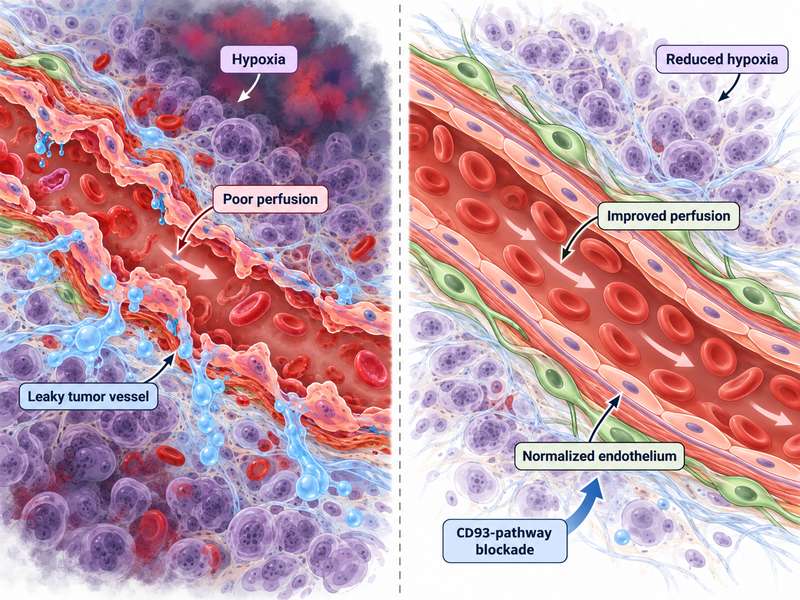 Fig 2. CD93 Blockade and Vascular Normalization
CD93 and Immune-Cell Infiltration
The vascular barrier is particularly important for cellular immunotherapies.
Even highly active T cells cannot effectively attack a tumor if they fail to enter it.
In 2025, experimental work reported that CD93 blockade increased expression of endothelial adhesion molecules and improved effector T-cell infiltration in solid-tumor models.
The study also demonstrated improved activity of adoptive T-cell approaches in preclinical settings.
This creates an important mechanistic sequence:
CD93 pathway → tumor endothelial state → adhesion and trafficking → T-cell infiltration → antitumor response
CD93 as an Emerging Therapeutic Target
CD93 should not be grouped simplistically with PD-1 or CTLA-4.
| Classical Immune Checkpoint | CD93 Vascular Target |
|---|---|
| Directly regulates immune signaling | Primarily modifies endothelial biology |
| Often expressed on immune cells | Strong association with tumor endothelium |
| Goal: restore immune activation | Goal: improve vessel function and immune access |
| Major readout: lymphocyte function | Readouts include perfusion and infiltration |
A 2026 review in British Journal of Pharmacology highlights CD93 as an emerging vascular target but also emphasizes the need for continued translational validation.
Therefore, CD93 remains an emerging rather than established cancer therapeutic target.
Explore Our CD Antigen Products
Learn More
Assays for CD93 Research
CD93 development requires assays across several biological levels.
Molecular Binding
- antibody-CD93 binding;
- CD93-ligand interaction;
- epitope analysis;
- competition assays.
Endothelial Function
- migration;
- adhesion;
- tube formation;
- permeability.
Vascular Models
- three-dimensional endothelial systems;
- perfusion models;
- tumor vascular imaging.
Immune Trafficking
- adhesion-molecule induction;
- T-cell transmigration;
- tumor-infiltration studies.
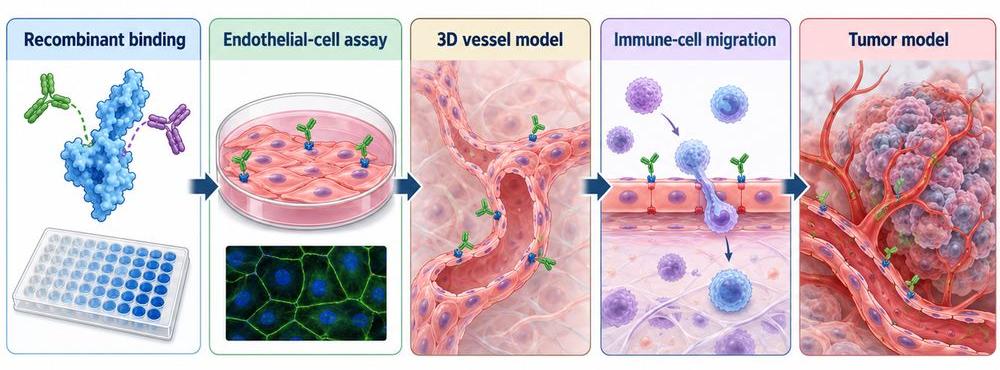 Fig 3. CD93 Research Cascade
Recombinant CD93 Protein Selection
Purified recombinant CD antigen proteins can support antibody generation and mechanistic binding studies.
Because CD93 is a glycosylated extracellular receptor, mammalian expression may help preserve native-like folding.
Useful formats include:
His-tagged CD93
Suitable for many direct-binding studies.
Fc-tagged CD93
Can improve stability and facilitate capture.
Biotinylated CD93
Useful for SPR/BLI and high-throughput assays.
For ligand studies, researchers should ensure that the relevant extracellular domains are present.
Cross-reactivity studies should use species-matched CD antigen reagents, as human CD93 binding does not establish equivalent recognition of mouse or nonhuman-primate orthologs.
Explore Our CD Antigen Products
Learn More
Why is CD93 being studied in cancer?
CD93 is associated with abnormal tumor endothelial signaling. Experimental blockade of the CD93 pathway has been shown in preclinical models to promote vascular normalization, improve perfusion and increase effector T-cell infiltration, making CD93 an emerging target for strategies intended to improve drug delivery and immunotherapy access to solid tumors.
Resource
-
From CD Markers to Immune Maps: A New Era in Immunology
-
The CD Map Is Still Growing: New CD Molecules and HLDA11
-
Antigen Density: Beyond CD-Positive
-
Spatial CD Biology: Why Location Matters in the Tumor Microenvironment
-
Logic-Gated CAR-T: Revolutionizing Cancer Therapy
-
Cluster of Differentiation
References
- Sun Y, Chen W, Torphy RJ, et al. Blockade of the CD93 Pathway Normalizes Tumor Vasculature to Facilitate Drug Delivery and Immunotherapy. Sci Transl Med. 2021;13(604):eabc8922. doi:10.1126/scitranslmed.abc8922.
- Sun Y, Yee E, Fujiwara Y, et al. CD93 Blockade Promotes Effector T-Cell Infiltration and Facilitates Adoptive Cell Therapy in Solid Tumors. J Immunother Cancer. 2025;13(1):e010554. doi:10.1136/jitc-2024-010554.
- de Alves Pereira B, Barbera S, Lugano R, Dimberg A. CD93—An Emerging Vascular Target in Cancer Therapy. Br J Pharmacol. 2026. doi:10.1111/bph.70577.

Contact us or send an email at for project quotations and more detailed information.
Quick Links
-

Papers’ PMID to Obtain Coupon
Submit Now -

Refer Friends & New Lab Start-up Promotions