

Active Recombinant Human EFNA1 protein, His-tagged
| Cat.No. : | EFNA1-2238H |
| Product Overview : | Recombinant Human EFNA1 protein(Asp19-Ser182), fused with C-terminal His tag, was expressed in HEK293. |
| Availability | October 05, 2026 |
| Unit | |
| Price | |
| Qty |
- Specification
- Gene Information
- Related Products
- Case Study
- Application
- Download
| Species : | Human |
| Source : | HEK293 |
| Tag : | His |
| Protein Length : | 19-182 aa |
| Form : | Lyophilized from a 0.22 μm filtered solution of PBS, pH 7.4. |
| Bio-activity : | Measured by its binding ability in a functional ELISA. Immobilized Human EFNA1 at 1 μg/mL (100 μL/well) can bind Human Ephrin A1 Rabbit mAb with a linear range of 0.098-2.066 ng/mL. |
| Molecular Mass : | 20.20 kDa |
| Endotoxin : | < 0.1 EU/μg of the protein by LAL method. |
| Purity : | ≥ 95 % as determined by SDS-PAGE. |
| Storage : | Store at -20°C.Store the lyophilized protein at -20°C to -80°C up to 1 year from the date of receipt.After reconstitution, the protein solution is stable at -20°C for 3 months, at 2-8°C for up to 1 week. |
| Reconstitution : | Centrifuge the vial before opening. Reconstitute to a concentration of 0.1-0.5 mg/mL in sterile distilled water. Avoid vortex or vigorously pipetting the protein. For long term storage, it is recommended to add a carrier protein or stablizer (e.g. 0.1% BSA, 5% HSA, 10% FBS or 5% Trehalose), and aliquot the reconstituted protein solution to minimize free-thaw cycles. |
| Gene Name | EFNA1 ephrin-A1 [ Homo sapiens ] |
| Official Symbol | EFNA1 |
| Synonyms | EFNA1; ephrin-A1; EPLG1, TNFAIP4; ECKLG; LERK1; TNF alpha-induced protein 4; ligand of eph-related kinase 1; immediate early response protein B61; eph-related receptor tyrosine kinase ligand 1; tumor necrosis factor alpha-induced protein 4; tumor necrosis factor, alpha-induced protein 4; B61; EFL1; EPLG1; LERK-1; TNFAIP4; |
| Gene ID | 1942 |
| mRNA Refseq | NM_004428 |
| Protein Refseq | NP_004419 |
| MIM | 191164 |
| UniProt ID | P20827 |
| ◆ Recombinant Proteins | ||
| EFNA1-301377H | Recombinant Human EFNA1 protein, GST-tagged | +Inquiry |
| EFNA1-229H | Recombinant Human EFNA1 Protein, Fc-tagged | +Inquiry |
| Efna1-159M | Recombinant Mouse Efna1 Protein, His (Fc)-Avi-tagged | +Inquiry |
| EFNA1-2060H | Recombinant Human Ephrin-A1, Fc Chimera | +Inquiry |
| Efna1-425M | Active Recombinant Mouse Ephrin A1, His-tagged | +Inquiry |

| ◆ Cell & Tissue Lysates | ||
| EFNA1-2594HCL | Recombinant Human EFNA1 cell lysate | +Inquiry |
| EFNA1-2177MCL | Recombinant Mouse EFNA1 cell lysate | +Inquiry |
| EFNA1-150HKCL | Human EFNA1 Knockdown Cell Lysate | +Inquiry |
| EFNA1-1514RCL | Recombinant Rat EFNA1 cell lysate | +Inquiry |
Case 1: Tandon M, et al. J Gene Med. 2012
Combined EphrinA1-Fc and Flt3L adenoviral therapy synergistically inhibits breast cancer growth by activating EphA2 degradation and dendritic cell-mediated immunity, demonstrating enhanced anti-tumor immune responses in preclinical models. This dual-targeted approach highlights potential for EphA2-directed immunotherapy and combination strategies in oncology.
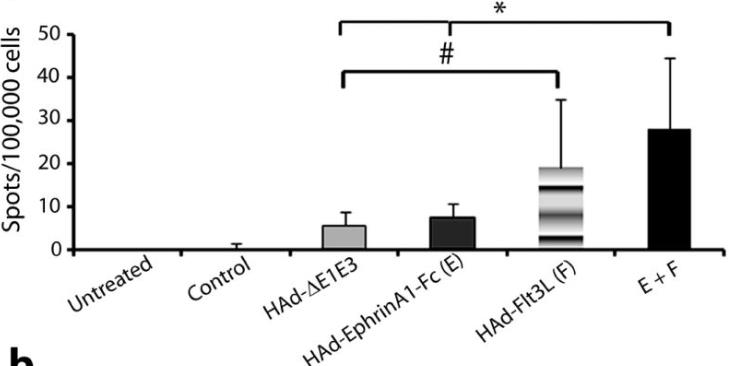
Fig1. The tumor bearing mice were inoculated i.t. three times with PBS, HAd-ΔE1E3, HAd-EphrinA1-Fc, HAd-Flt3L, or HAd-EphrinA1-Fc + HAd-Flt3L.
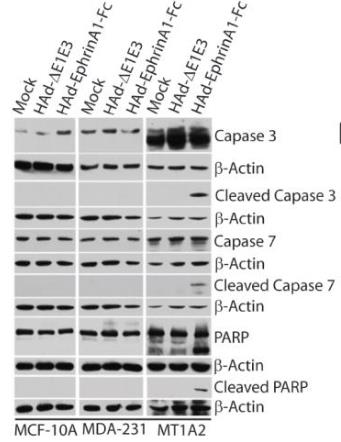
Fig2. MCF-10A, MDA-MB-231 and MT1A2 cells were either mock-infected or infected with 100 pfu/cell of HAd-ΔE1E3 or HAd-EphrinA1-Fc.
Case 2: Wiedemann E, et al. Cell Signal. 2017
Ephrin-A1 regulates endothelial proliferation/migration via EphA2 signaling and cytoskeletal dynamics, suppressing growth while enhancing directed cell movement—key for angiogenesis and vascular wound healing. Its density-dependent expression modulates re-endothelialization, offering therapeutic targets for vascular repair and anti-angiogenic strategies.
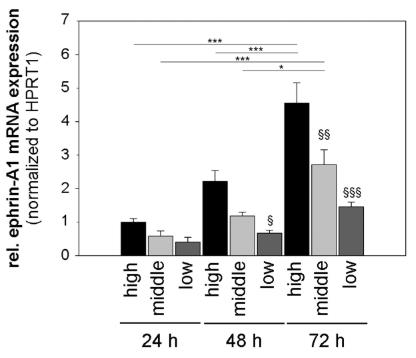
Fig1. The most pronounced effect was seen in the case of ephrin-A1 which correlates highly with the cell density.
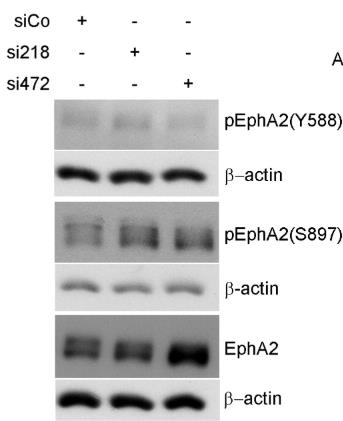
Fig2. Silencing of ephrin-A1 (si218 and si472) leads to an increased EphA2 expression in endothelial cells.
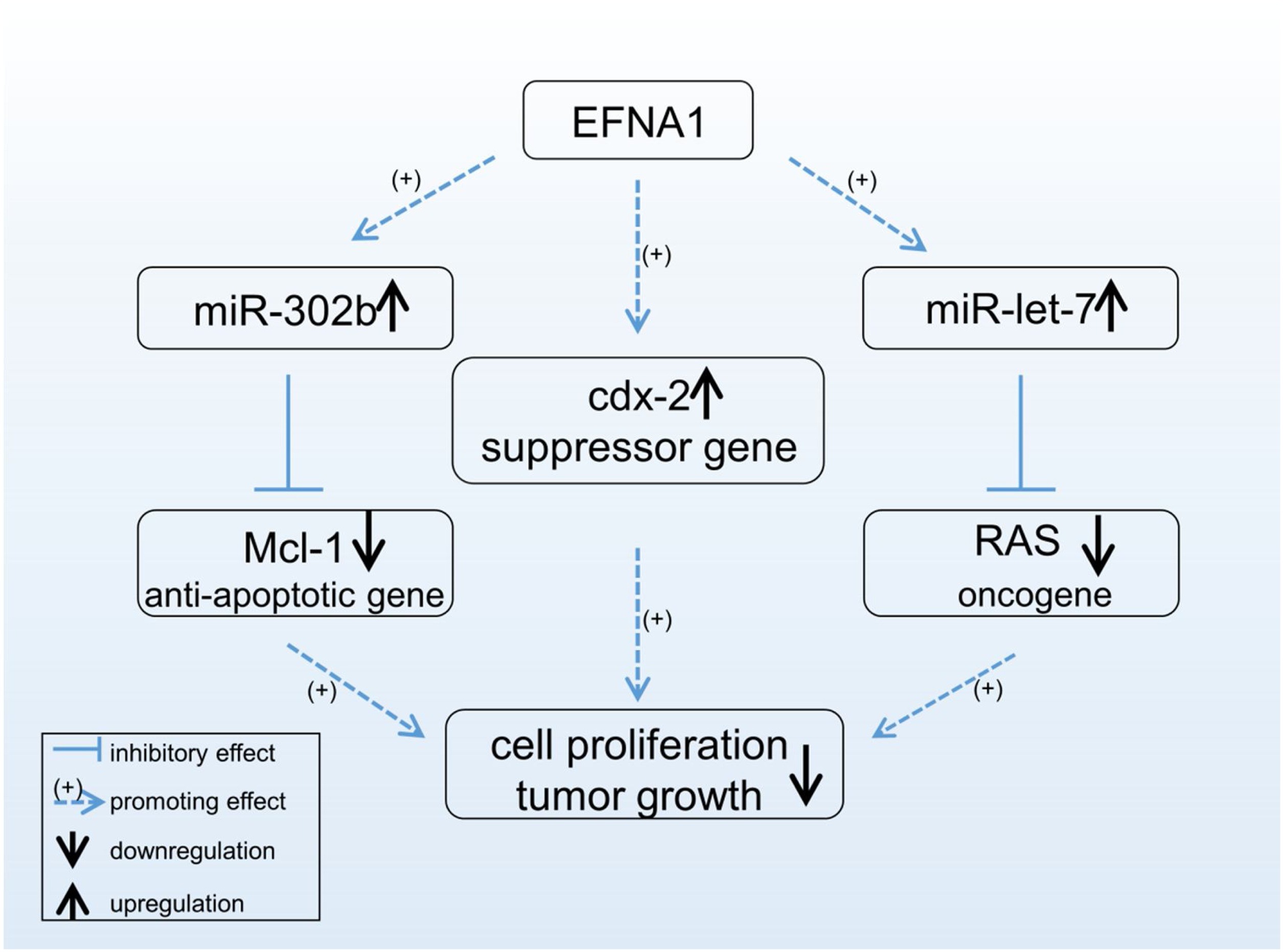
Fig1. Possible mechanisms by which EFNA1 inhibits tumor growth. (Yongping Hao, 2020)
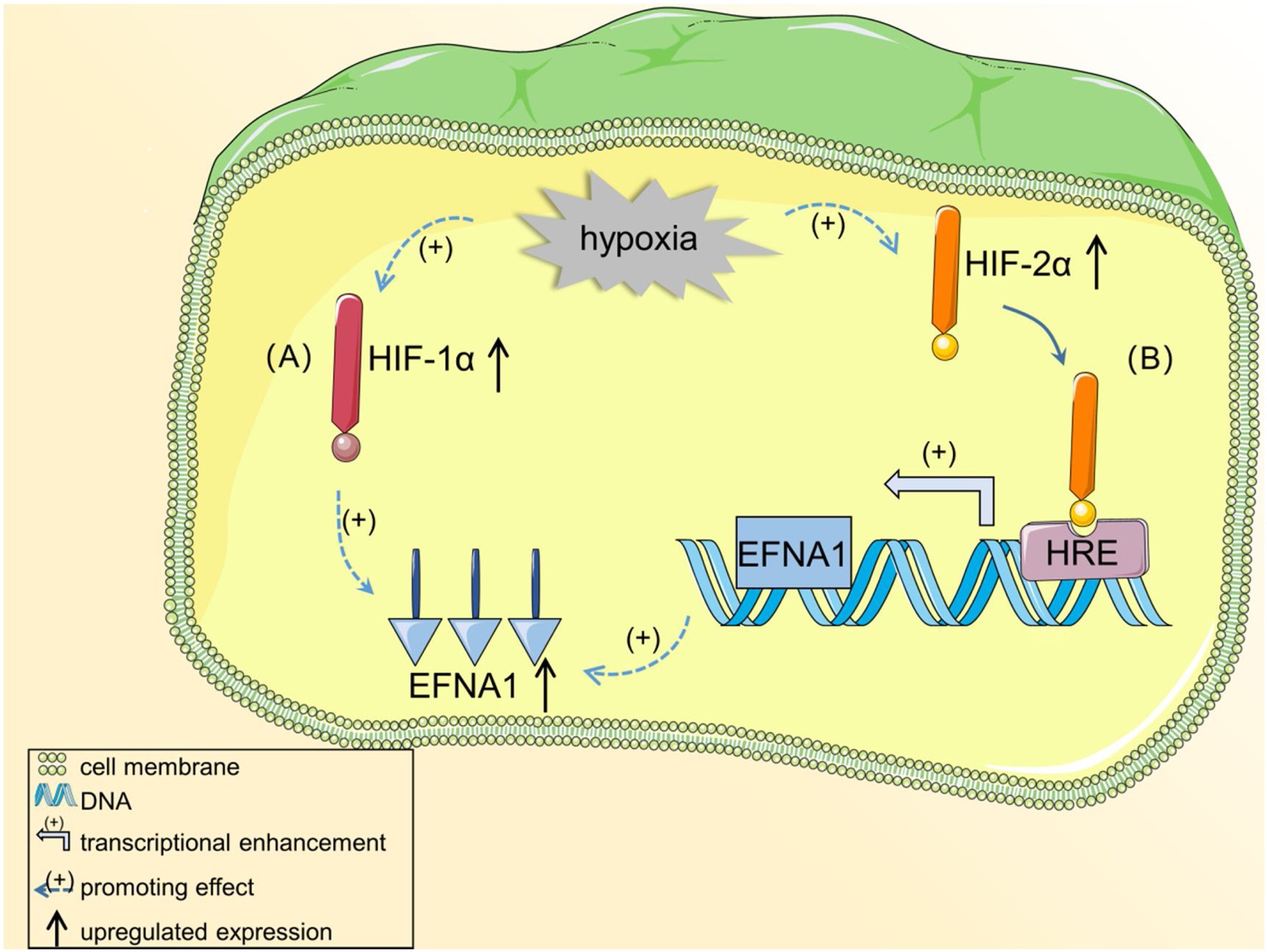
Fig2. EFNA1 is induced in hypoxic environments in HIF-dependent pathways. (Yongping Hao, 2020)

Not For Human Consumption!
Inquiry
- Reviews (0)
- Q&As (0)


Ask a Question for All EFNA1 Products
Required fields are marked with *
My Review for All EFNA1 Products
Required fields are marked with *
Recently Viewed