

Fc Receptor Binding Assays for Antibody Drug Development
Table of Contents
- Why Fc Receptor Binding Matters in Antibody Development
- Common FcR Binding Assay Platforms
- Choosing FcR Proteins for Binding Assays
- Tag and Biotinylation Considerations
- Species and Receptor Variant Considerations
- Assay Applications in Screening, Optimization, and Comparability
- Creative BioMart Assay-Ready Fc Receptor Proteins
Why Fc Receptor Binding Matters in Antibody Development
The interaction between an antibody's fragment crystallizable (Fc) region and Fc receptors (FcRs) is a cornerstone of therapeutic antibody design. These Fc–Fc receptor interactions govern critical effector functions including antibody-dependent cellular cytotoxicity (ADCC), antibody-dependent cellular phagocytosis (ADCP), complement-dependent cytotoxicity (CDC), and the neonatal Fc receptor (FcRn)-mediated serum half-life extension.
For developers of monoclonal antibodies, Fc-fusion proteins, antibody-drug conjugates (ADCs), and bispecific antibodies, characterizing Fc receptor binding is not merely a quality attribute—it is a functional prerequisite. Differential binding to activating FcγRIIIa (CD16a) versus inhibitory FcγRIIb (CD32b), for instance, directly modulates the therapeutic window of oncology antibodies. Similarly, FcRn binding affinity determines pharmacokinetic profiles and dosing regimens.
Recent studies demonstrate that antigen binding itself can alter Fc receptor interaction properties. Using BLI and SPR methods, researchers have observed that antibody–antigen complex formation may weaken or strengthen subsequent FcγR engagement, underscoring the need for robust, physiologically relevant binding assays throughout development.
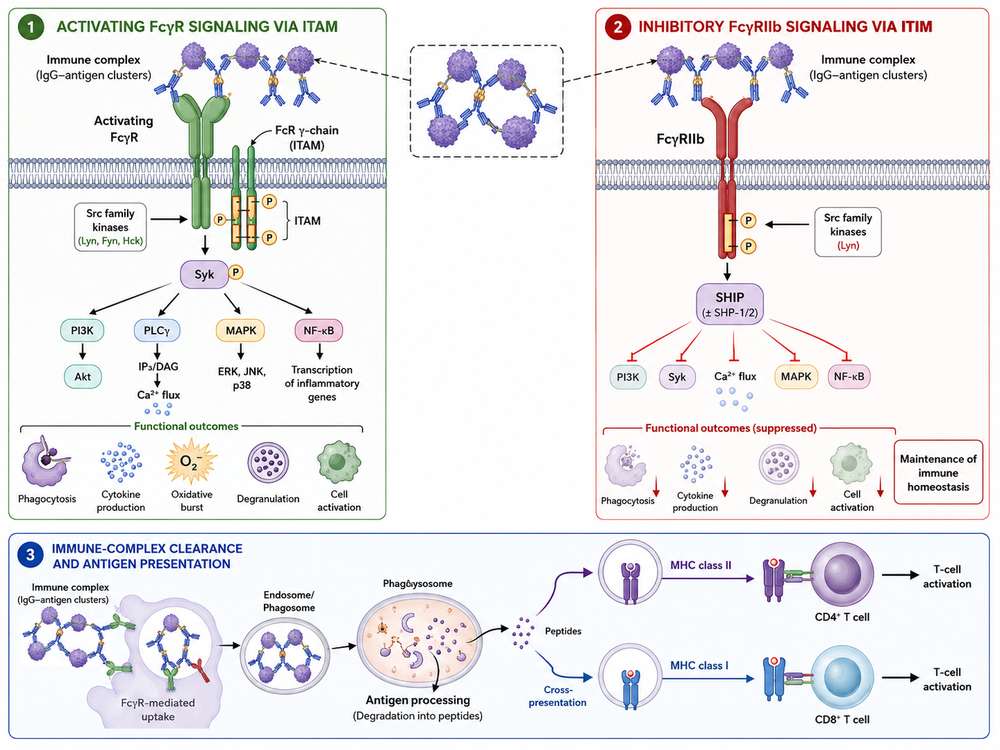 Fig 1. Fc Receptor-Mediated Antibody Effector Functions
Common FcR Binding Assay Platforms
Selecting the optimal antibody binding assay platform depends on your development stage, throughput requirements, and the biophysical properties of the Fc receptor being studied. The four dominant technologies—SPR, BLI, ELISA, and flow-based assays—each offer distinct advantages for Fc–Fc receptor interaction analysis.
SPR (Surface Plasmon Resonance)
SPR remains the gold standard for real-time, label-free kinetic characterization of Fc receptor binding. By immobilizing either the Fc receptor or the antibody on a sensor chip, SPR generates association rate constants (ka), dissociation rate constants (kd), and equilibrium dissociation constants (KD) without secondary detection reagents.
Key applications include:
- Full kinetic profiling of IgG1, IgG2, IgG4 subclasses to FcγRI, FcγRIIa/b, FcγRIIIa, and FcRn
- Fc-engineered antibody characterization (e.g., LALA, YTE, afucosylation variants)
- Comparability and biosimilarity studies requiring high sensitivity
SPR is particularly valuable for low-affinity interactions typical of FcγRIIa and FcγRIIIa, where direct binding formats minimize avidity artifacts from antibody aggregates.
However, SPR requires dedicated instrumentation (e.g., Biacore T200, 8K+, Carterra LSA) and moderate throughput capacity.
BLI (Biolayer Interferometry)
BLI offers a plate-based, dip-and-read alternative to SPR with comparable kinetic resolution. Using biosensors coated with capture molecules (Protein A, anti-His, or streptavidin), BLI measures interference patterns as Fc receptor–antibody complexes form at the sensor tip.
BLI advantages include:
- Lower sample consumption: Plate format reduces protein requirements compared to SPR flow cells
- Higher throughput: 8- or 16-parallel readout enables screening campaigns
- Format flexibility: Compatible with crude supernatants for early clone ranking
Studies comparing SPR and BLI for FcγRI characterization demonstrate equivalent accuracy in affinity and kinetics measurements, with BLI reducing hands-on operator time and total sample volume.
BLI is ideal for screening large panels of Fc-engineered variants or biosimilar candidates where speed and cost-efficiency are prioritized.
ELISA
ELISA provides a straightforward, endpoint-based approach for quantitative Fc receptor binding assessment. In a typical format, biotinylated or directly coated FcRs are immobilized on streptavidin or polystyrene plates, followed by serial dilutions of the test antibody and HRP-conjugated detection.
Table 1: Comparison of Fc Receptor Binding Assay Platforms
| Parameter | SPR | BLI | ELISA | Flow Cytometry |
|---|---|---|---|---|
| Detection Mode | Label-free, real-time | Label-free, real-time | Endpoint, labeled | Cell-based, labeled |
| Sensitivity (KD range) | pM to µM | nM to sub-µM | Moderate | High |
| Throughput | Moderate | High | High | High |
| Data Output | Kinetics (ka, kd, KD) | Kinetics (ka, kd, KD) | Relative binding/potency | Mean fluorescence intensity |
| Sample Requirements | Purified proteins | Purified or crude | Purified preferred | Cells + antibody |
| Typical Applications | Detailed characterization, comparability | Screening, koff ranking | QC release, relative potency | Cellular FcR expression, functional validation |
| FcRn Suitability | Excellent | Good | Moderate | Limited |
ELISA is particularly effective for high-affinity receptors like FcγRI (CD64) and for lot-release testing where relative potency determination is sufficient. However, for low-affinity FcγRIIIa interactions, ELISA may require optimization to minimize dissociation during wash steps, and avidity effects from antibody aggregates can confound results.
Flow-Based Assays
Flow cytometry bridges biochemical binding data and cellular function by measuring antibody binding to Fc receptors expressed on transfected cell lines (e.g., CHO cells engineered to express CD16a, CD32a, or CD64). These assays validate that biochemical affinities translate to cellular engagement and are essential for ADCC/ADCP mechanism-of-action studies.
Flow-based approaches also enable multi-parametric analysis, simultaneously assessing Fc receptor binding, cell viability, and activation markers. For FcRn, cellular uptake and recycling assays using FcRn-transfected cells provide physiologically relevant half-life predictions beyond pure binding kinetics.
Choosing FcR Proteins for Binding Assays
The quality of Fc receptor proteins directly determines assay reliability. Recombinant FcR extracellular domains (ECDs) are the standard reagents for cell-free binding assays, but several design considerations apply:
Table 2: Selection Criteria for Recombinant Fc Receptor Proteins
| Consideration | Recommendation | Rationale |
|---|---|---|
| Protein Format | Monomeric ECD vs. dimeric Fc-fusion | Monomeric for kinetic accuracy; dimeric for avidity-sensitive functional assays |
| Receptor Coverage | Full panel: FcγRI, FcγRIIa, FcγRIIb, FcγRIIIa, FcγRIIIb, FcRn | Comprehensive effector function and PK profiling |
| Purity Validation | ≥95% by SDS-PAGE; monomeric by SEC-HPLC | Aggregates cause avidity artifacts in binding assays |
| Activity Verification | SPR/BLI confirmed binding to reference IgG | Ensures proper folding and glycosylation-independent function |
For therapeutic antibody development, a pre-configured Fc receptor protein panel covering all major human FcγRs and FcRn enables parallel interaction studies and accelerates lead optimization.
Explore the full Fc receptor product
Learn More
Tag and Biotinylation Considerations
Proper tag selection ensures robust immobilization while preserving native Fc–Fc receptor interaction kinetics:
His-Tag (6×His or 8×His)
- Compatible with anti-His capture surfaces on SPR (CM5/CM4 chips) and BLI (NTA sensors)
- Enables oriented immobilization with uniform presentation
- Requires divalent cation (Ni²⁺/Co²⁺) maintenance for stable capture
Avi-Tag / Enzymatic Biotinylation
- Site-specific biotinylation at a single lysine residue
- Ideal for streptavidin-coated SPR/BLI sensors and ELISA plates
- Eliminates batch-to-batch variation seen in chemical biotinylation
- Preferred for assay-ready protein libraries requiring consistent performance
Fc-Tag (Protein A/G binding)
- Convenient capture via Protein A or Protein G biosensors
- Risk of bivalent binding through Fc tag rather than antigen-binding region
- Best suited for qualitative screening rather than precise kinetic determination
Chemical Biotinylation
- Random lysine modification may mask binding epitopes
- Heterogeneous biotinylation sites can alter apparent affinity
- Requires optimization of biotin-to-protein ratio
For assay-ready applications, enzymatically biotinylated Fc receptor proteins with HPLC-verified monomeric purity provide the most reproducible results across SPR, BLI, and ELISA platforms.
Species and Receptor Variant Considerations
Fc receptor biology varies significantly across species and within human polymorphic variants, necessitating careful assay design:
Human FcγR Polymorphisms
- FcγRIIIa-158V/F: The V allele confers higher IgG1 affinity and enhanced ADCC; most therapeutic antibodies (e.g., rituximab, trastuzumab) show genotype-dependent efficacy
- FcγRIIa-131H/R: The H allele binds IgG2 more effectively, critical for immunotherapies relying on IgG2 isotype
- FcγRIIb-232I/T: Affects inhibitory signaling thresholds
Assays should characterize binding to both allotypic variants to predict patient stratification and guide Fc engineering strategies.
Species Cross-Reactivity
- Human IgG1 binds weakly to mouse FcγRIII; humanization campaigns require surrogate assays
- Cynomolgus monkey FcγRs are commonly used for toxicology bridging studies
- Rodent models often require engineered human FcR knock-in backgrounds for predictive translation
FcRn Considerations
- Human FcRn (FCGRT/B2M heterodimer) binds IgG at acidic pH (6.0–6.5) but not neutral pH (7.4), enabling recycling assays
- Species-specific FcRn binding profiles dictate preclinical PK model selection
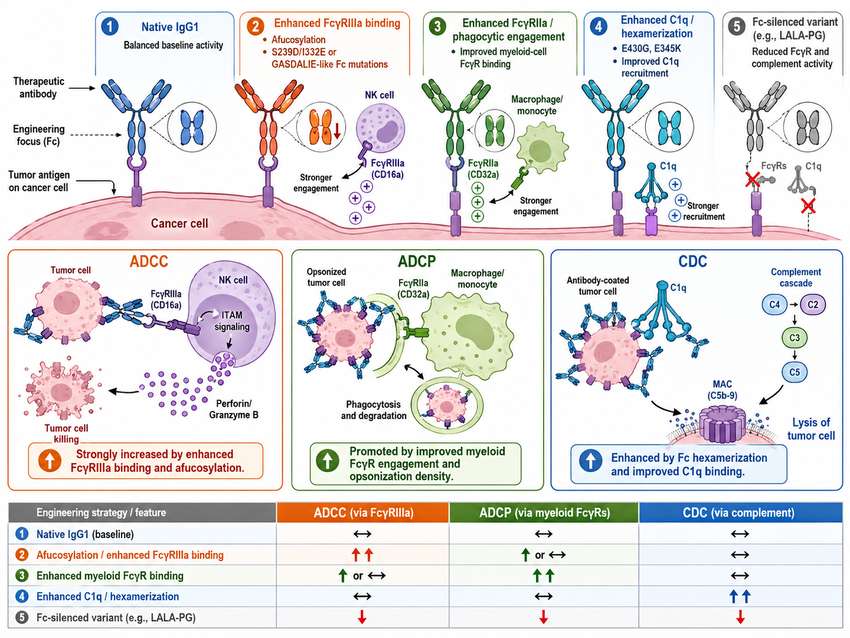 Fig 2. Fc Receptor Polymorphisms and Antibody Engineering Impact on ADCC and CDC
Assay Applications in Screening, Optimization, and Comparability
Fc receptor binding assays serve distinct purposes across the antibody development lifecycle:
Discovery Screening
- BLI-based koff ranking from crude CHO supernatants enables rapid clone differentiation
- High-throughput SPR (Carterra LSA) supports 384×384 epitope binning and FcR panel screening simultaneously
- ELISA-based relative binding identifies hits with desired FcγRIIIa/FcγRIIb selectivity ratios
Lead Optimization
- SPR kinetic analysis guides Fc engineering (afucosylation for enhanced ADCC, LALA mutations for silencing)
- FcRn binding at pH 6.0 vs. pH 7.4 optimizes half-life extension without compromising clearance
- Aggregate tolerance testing ensures assay robustness for stressed samples
Comparability and Biosimilarity
- Side-by-side SPR/BLI analysis of biosimilar vs. innovator against full FcR panels
- Flow cytometry confirmation of cellular binding equivalence
- ELISA-based relative potency for lot-release consistency
CMC and Release Testing
- Qualified SPR or ELISA methods as identity/potency assays for IND/BLA submissions
- FcRn binding as a surrogate for pharmacokinetic comparability
Creative BioMart Assay-Ready Fc Receptor Proteins
Creative BioMart provides a comprehensive portfolio of assay-ready Fc receptor proteins engineered specifically for antibody development workflows. Our recombinant FcR proteins are manufactured under standardized workflows and validated by multiple binding platforms:
Product Features:
- High Purity: ≥95% by SDS-PAGE; monomeric confirmation by SEC-HPLC
- Verified Activity: Binding to reference IgG1 confirmed by SPR and BLI
- Flexible Formats: His-tagged, Avi-tagged (enzymatically biotinylated), and Fc-fusion constructs
- Comprehensive Coverage: FcγRI (CD64), FcγRIIa (CD32a), FcγRIIb (CD32b), FcγRIIIa (CD16a), FcγRIIIb (CD16b), and FcRn (FCGRT/B2M heterodimer)
- Polymorphic Variants: FcγRIIIa-158V and 158F alleles available for precision medicine applications
Applications Supported:
- SPR/BLI kinetic characterization
- ELISA-based relative potency and QC testing
- Flow cytometry assay development
- ADCC/ADCP reporter cell line validation
- Biosimilar comparability studies
Whether you are establishing a Fc receptor binding assay for early discovery or qualifying a release method for regulatory submission, Creative BioMart's assay-ready proteins provide the batch-to-batch consistency and platform versatility required for rigorous antibody characterization.
Explore the full Fc receptor product
Learn More
Resource
-
What Are Fc Receptors? The Immune System's Antibody Response Switch
-
FcRn: The Secret to Long-Lasting Antibodies!
-
ADCC vs ADCP: How Fcγ Receptors Drive Cancer Immunity
-
CD64: The Tiny Receptor with Big Implications!
-
Fc Receptor Polymorphisms: Why Antibody Responses Differ Between Patients
References
- Jeong S, et al. Identification, characterization and control of a sequence variant in monoclonal antibody drug product: a case study. Sci Rep. 2021;11:12338. doi:10.1038/s41598-021-92338-1
- Gruber DR, et al. Targeted Delivery of a Potent STING Agonist Payload via an Antibody-Drug Conjugate Drives Robust Antitumor Activity in Preclinical Models. Mol Cancer Ther. 2026;25(3):457-468. doi:10.1158/1535-7163.MCT-25-0108
- Ivanova MV, et al. Changes in the Interaction Properties of Antibodies with Fc Receptors upon Binding to Target Antigens. Biosensors. 2025;15(11):759. doi:10.3390/bios15110759
- Li Y, et al. Biolayer Interferometry-based FcγRIIa binding assay for a therapeutic antibody with strong effector function. Anal Biochem. 2021;609:113916. doi:10.1016/j.ab.2020.113916
- Schäfer A, et al. Rapid screening of IgG quality attributes – effects on Fc receptor binding. FEBS Open Bio. 2017;7(12):1887-1898. doi:10.1002/2211-5463.12283
- Nicoya Life. SPR vs BLI: Fc Receptor-IgG Characterization. 2022. https://nicoyalife.com/blog/alto-fc-receptors-spr-vs-bli/
- European Medicines Agency. Guideline on similar biological medicinal products containing monoclonal antibodies. EMA/CHMP/BMWP/403543/2010.

Contact us or send an email at for project quotations and more detailed information.
Quick Links
-

Papers’ PMID to Obtain Coupon
Submit Now -

Refer Friends & New Lab Start-up Promotions