

Fc Receptors in ADCC, ADCP, and CDC-Related Antibody Function
Table of Contents
- Overview
- Antibody Effector Functions: Overview
- Fc Receptors in ADCC
- Fc Receptors in ADCP
- Fc Receptors and Complement-Related Functional Evaluation
- Key FcγR Targets for Effector Function Research
- Assay Reagent Selection
- Using Recombinant FcR Proteins in Functional Prediction
- Creative BioMart FcR Products for Effector Function Research
- FAQ: Fc Receptors in ADCC, ADCP, and CDC Research
- Conclusion
Overview
Antibody effector function is a key mechanism by which antibodies translate antigen recognition into immune-mediated target elimination. Beyond antigen binding, the Fc region of an antibody can interact with Fc receptors, complement components, and immune cells to activate functional pathways such as antibody-dependent cellular cytotoxicity, antibody-dependent cellular phagocytosis, and complement-dependent cytotoxicity.
For researchers searching for ADCC ADCP CDC Fc receptor mechanisms, the central question is often not simply whether an antibody binds its antigen, but whether it can recruit the right immune effector pathway. Fc receptor engagement, Fc glycosylation, antibody isotype, Fc engineering, receptor polymorphism, antigen density, and effector-cell context can all influence the final functional outcome.
In antibody discovery, biosimilar analysis, immuno-oncology research, and Fc engineering studies, ADCC ADCP CDC Fc receptor profiling provides an important bridge between molecular binding analysis and functional immune readouts.
Explore Our Fc Receptor Products
Learn More
Antibody Effector Functions: Overview
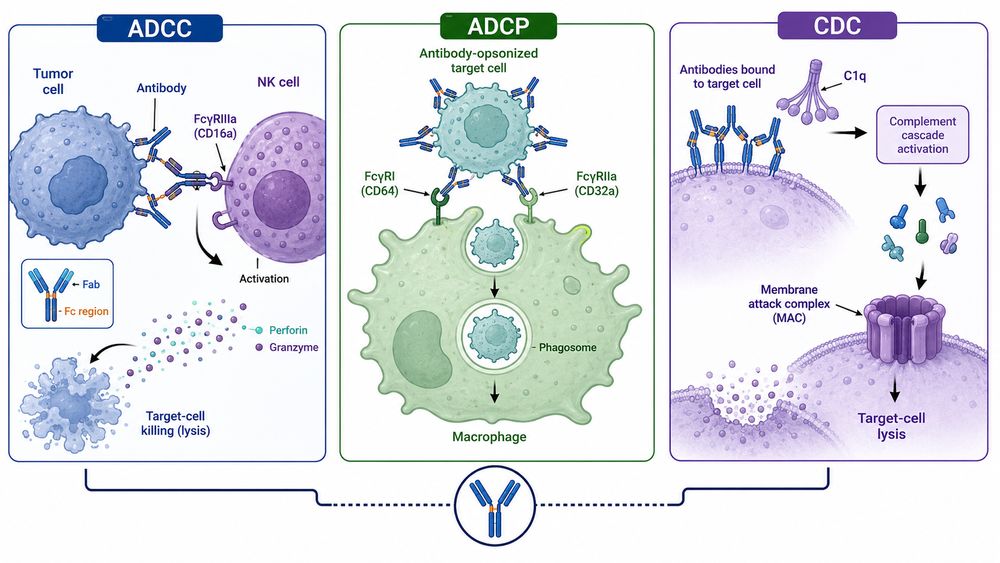 Fig1. Fc-Mediated Antibody Effector Functions: ADCC, ADCP, and CDC
Antibodies can mediate immune activity through several Fc-dependent pathways. Among them, ADCC, ADCP, and CDC are the most frequently evaluated in therapeutic antibody research.
ADCC, or antibody-dependent cellular cytotoxicity, is mainly associated with NK-cell-mediated target-cell killing. ADCP, or antibody-dependent cellular phagocytosis, involves the engulfment and clearance of antibody-coated targets by macrophages, monocytes, dendritic cells, or neutrophils. CDC, or complement-dependent cytotoxicity, occurs when antibody Fc regions recruit complement proteins and initiate complement-mediated target-cell lysis.
Although these functions are often measured using separate assays, they are closely connected by Fc biology. The Fc region determines how an antibody interacts with Fcγ receptors, FcRn, C1q, and other immune components. Therefore, antibody effector function Fc receptor analysis is essential for understanding why different antibodies produce different immune outcomes.
| Effector Function | Main Biological Outcome | Major Fc-Related Interaction | Common Research Readout |
|---|---|---|---|
| ADCC | Immune-cell-mediated target killing | IgG Fc binding to activating FcγRs, especially FcγRIIIa/CD16a | Reporter assay, cytotoxicity assay, FcγR binding |
| ADCP | Phagocytic uptake and clearance | IgG Fc binding to FcγRI, FcγRIIa, FcγRIIIa, and other phagocytic receptors | Phagocytosis assay, imaging, flow cytometry |
| CDC | Complement-mediated target lysis | Fc-dependent C1q recruitment and complement activation | C1q binding, complement deposition, cell lysis assay |
| FcR Binding Profiling | Functional prediction and mechanism support | Recombinant Fc receptor-antibody interaction | SPR, BLI, ELISA, binding panel |
Fc Receptors in ADCC
ADCC is one of the most widely studied Fc-mediated antibody effector functions. In this pathway, an antibody binds to an antigen on the surface of a target cell, while the exposed Fc region engages Fc receptors on immune effector cells. The best-characterized ADCC receptor is FcγRIIIa, also known as CD16a, which is expressed on NK cells and some other immune-cell subsets.
When FcγRIIIa binds clustered IgG Fc regions on an antibody-coated target cell, receptor crosslinking activates intracellular signaling. This leads to immune synapse formation, degranulation, and release of cytotoxic molecules such as perforin and granzymes. The result is target-cell killing.
FcγRIIIa polymorphism is particularly important in ADCC research. The V158 variant generally binds IgG1 with higher affinity than the F158 variant, and this difference can influence antibody activity in functional assays. For this reason, Fc receptor-mediated immunity studies often include both FcγRIIIa V158 and FcγRIIIa F158 proteins.
| ADCC Research Need | Relevant Fc Receptor | Why It Matters |
|---|---|---|
| Predict NK-cell-mediated cytotoxicity | FcγRIIIa/CD16a | Primary Fc receptor associated with IgG-driven ADCC |
| Compare Fc-engineered antibodies | FcγRIIIa V158/F158 | Helps evaluate enhanced or reduced ADCC potential |
| Study receptor polymorphism | FcγRIIIa allelic variants | Supports donor- and population-related interpretation |
| Screen antibody candidates | Recombinant FcγRIIIa proteins | Enables early-stage binding-based prioritization |
Explore Our Fc Receptor Products
Learn More
Fc Receptors in ADCP
ADCP is a phagocytic antibody effector function in which antibody-coated targets are internalized and cleared by immune cells. This mechanism is especially relevant in macrophage-mediated tumor-cell clearance, immune complex processing, infectious disease antibody studies, and antibody mechanism-of-action research.
Several Fcγ receptors contribute to ADCP. FcγRI/CD64 is a high-affinity IgG receptor frequently associated with monocytes and macrophages. FcγRIIa/CD32a is an activating receptor that supports immune complex uptake and phagocytic signaling. FcγRIIb/CD32b is an inhibitory receptor that can dampen activation signals and influence the balance between immune activation and regulation.
Because ADCP depends on receptor engagement, target-cell properties, antibody density, and effector-cell phenotype, recombinant receptor binding data should be interpreted together with cell-based functional assays. However, Fc receptor proteins for ADCC and ADCP research are valuable tools for identifying whether an antibody has the potential to engage phagocytic pathways.
Explore Our Fc Receptor Products
Learn More
| ADCP Factor | Impact on Functional Result | Common Evaluation Method |
|---|---|---|
| FcγRI/CD64 binding | Supports macrophage and monocyte engagement | SPR, BLI, ELISA, cell-based binding |
| FcγRIIa/CD32a binding | Promotes activating phagocytic signaling | FcγR binding panel, ADCP assay |
| FcγRIIb/CD32b binding | May reduce immune activation | Activating/inhibitory receptor comparison |
| Target antigen density | Affects antibody clustering and receptor crosslinking | Flow cytometry, antigen quantification |
| Fc glycosylation | Can alter FcγR binding and functional strength | Glycan profiling plus FcR binding assay |
Fc Receptors and Complement-Related Functional Evaluation
CDC is mechanistically different from ADCC and ADCP because it is driven by complement activation rather than direct Fcγ receptor signaling. However, CDC is commonly evaluated together with Fc receptor-mediated functions because all three depend on Fc-region accessibility, antibody clustering, antibody isotype, antigen density, and Fc structural properties.
In the classical complement pathway, antigen-bound antibodies recruit C1q through clustered Fc regions. This triggers a cascade that can result in complement deposition and membrane attack complex formation, leading to target-cell lysis. CDC evaluation is especially important for antibodies designed to eliminate B cells, hematological tumor cells, or other complement-sensitive targets.
Although Fcγ receptors do not directly initiate CDC, FcγR binding analysis can help define whether an antibody is more biased toward cellular effector mechanisms such as ADCC and ADCP, while C1q and complement assays define complement-related activity. IntegratedFc receptor binding for antibody effector function analysis therefore helps researchers build a broader functional profile.
| Functional Pathway | Main Trigger | Key Assay Type | Interpretation Value |
|---|---|---|---|
| ADCC | FcγRIIIa engagement | ADCC reporter or cytotoxicity assay | Indicates cytotoxic immune-cell recruitment |
| ADCP | FcγRI/FcγRIIa/FcγRIIIa engagement | Phagocytosis assay | Indicates phagocytic clearance potential |
| CDC | C1q recruitment and complement activation | CDC assay, C1q binding, complement deposition | Indicates complement-mediated lysis potential |
| FcR Binding | Fc-Fc receptor interaction | SPR, BLI, ELISA | Supports mechanistic prediction before functional assays |
Key FcγR Targets for Effector Function Research
Different Fcγ receptors have different affinities, signaling functions, and immune-cell distributions. Selecting the right FcγR targets is critical for meaningful antibody effector function research.
| FcγR Target | Common Name | Functional Role | Relevance to ADCC, ADCP, or CDC-Related Evaluation |
|---|---|---|---|
| FcγRI | CD64 | High-affinity activating IgG receptor | Important for macrophage and monocyte-mediated ADCP |
| FcγRIIa | CD32a | Activating receptor | Important for ADCP and immune complex signaling |
| FcγRIIb | CD32b | Inhibitory receptor | Helps evaluate immune-regulatory balance |
| FcγRIIIa | CD16a | Activating receptor on NK cells | Key receptor for ADCC prediction |
| FcγRIIIb | CD16b | Neutrophil-associated receptor | Useful for neutrophil-related Fc function studies |
| FcRn | Neonatal Fc receptor | Regulates IgG recycling and half-life | Supports Fc developability and half-life engineering |
A well-designed Fc receptor panel may include activating receptors, inhibitory receptors, polymorphic variants, and species-specific homologs. For example, FcγRIIIa V158/F158 and FcγRIIa H131/R131 are commonly included when researchers need to assess how receptor polymorphism may affect antibody function.
Explore Our Fc Receptor Products
Learn More
Assay Reagent Selection
Assay reagent selection directly affects the reliability of Fc receptor-mediated immunity studies. Recombinant Fc receptor proteins should be selected based on assay format, receptor biology, species, tag design, and functional validation.
For binding assays, researchers often use His-tagged, Fc-tagged, Avi-tagged, or biotinylated Fc receptor proteins. Avi-tagged and biotinylated receptors are particularly useful for SPR and BLI assays because they allow directional capture on streptavidin-coated surfaces. This can improve orientation consistency and reduce assay variability.
| Selection Factor | Recommended Consideration | Why It Matters |
|---|---|---|
| Species | Choose human, mouse, cynomolgus, or other species-specific FcRs according to the study model | Fc-FcR binding varies by species |
| Receptor subtype | Include FcγRI, FcγRIIa, FcγRIIb, FcγRIIIa, and other relevant targets | Different receptors contribute to different functions |
| Polymorphic variant | Include V158/F158, H131/R131, or other variants when relevant | Polymorphism may influence binding and activity |
| Tag format | Select His, Avi, biotinylated, or Fc tag based on platform | Immobilization strategy affects assay performance |
| Expression system | Prefer mammalian-expressed proteins for complex FcR studies | Folding and glycosylation may influence binding |
| Validation | Use activity-confirmed recombinant proteins | Functional binding is essential for reproducible data |
For researchers building Fc binding panels, recombinant Fc receptor proteins can support SPR, BLI, ELISA, flow-based binding, and screening workflows.
Explore Our Fc Receptor Products
Learn More
Using Recombinant FcR Proteins in Functional Prediction
Recombinant Fc receptor proteins are useful for predicting antibody effector function before more complex cell-based testing. Although FcR binding assays cannot fully replace ADCC, ADCP, or CDC assays, they provide mechanistic insight and help prioritize candidates.
A practical Fc receptor-based prediction workflow may include the following steps:
| Step | Workflow Stage | Purpose |
|---|---|---|
| 1 | Antibody candidate selection | Identify IgG candidates or Fc variants for analysis |
| 2 | FcγR binding panel | Compare binding to activating and inhibitory Fcγ receptors |
| 3 | Polymorphism analysis | Evaluate FcγRIIIa V158/F158 or FcγRIIa H131/R131 effects |
| 4 | FcRn binding analysis | Assess pH-dependent FcRn interaction for half-life-related studies |
| 5 | Functional assay confirmation | Validate findings with ADCC, ADCP, CDC, or reporter assays |
| 6 | Integrated interpretation | Combine FcR binding, C1q binding, glycosylation, and functional data |
This workflow is especially useful for antibody engineering, biosimilar comparison, developability assessment, and mechanism-of-action studies. By integrating recombinant receptor binding data with functional assays, researchers can better understand whether an antibody is likely to favor ADCC, ADCP, CDC, or reduced-effector-function profiles.
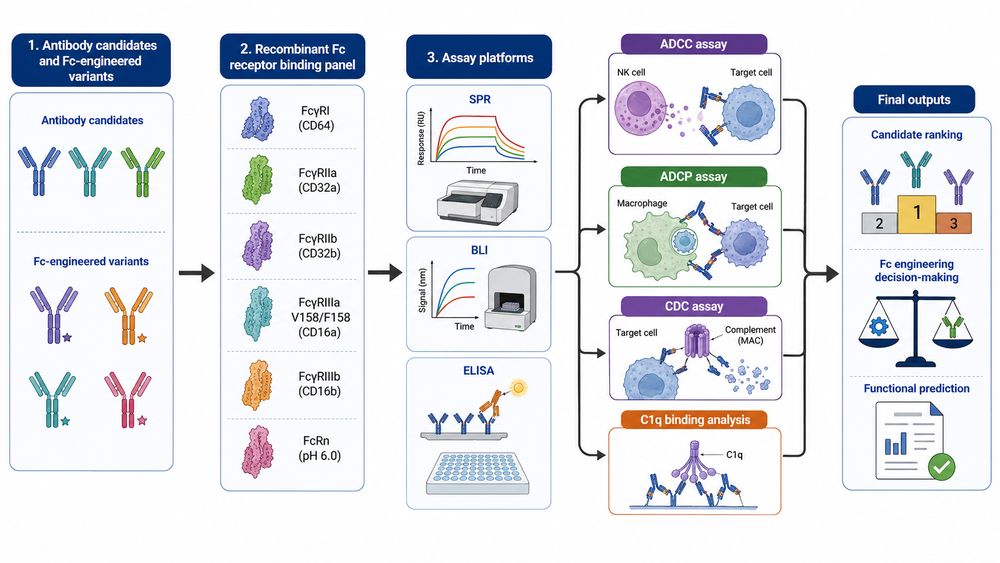 Fig 2. Recombinant Fc Receptor-Based Workflow for Antibody Functional Prediction
Creative BioMart FcR Products for Effector Function Research
Creative BioMart provides Fc receptor-related research tools for antibody effector function studies, Fc receptor-mediated immunity research, and antibody-Fc interaction analysis. These products can support ADCC, ADCP, CDC-related evaluation, Fc engineering, antibody screening, and comparative antibody characterization.
Researchers can explore Creative BioMart's Fc receptor products for antibody effector function research, including recombinant Fcγ receptor proteins, Fc receptor variants, Avi-tagged FcR proteins, biotinylated FcR proteins, FcRn proteins, and species-specific Fc receptor reagents.
These products are suitable for applications such as SPR, BLI, ELISA, Fc receptor binding assays, antibody functional prediction, and assay development. For studies focused on ADCC, ADCP, and CDC-related antibody function, Creative BioMart's Fc receptor-mediated immunity reagents can help researchers connect Fc-FcR binding profiles with downstream functional assay results.
Explore Our Fc Receptor Products
Learn More
FAQ: Fc Receptors in ADCC, ADCP, and CDC Research
-
What Fc receptor is most important for ADCC?
FcγRIIIa/CD16a is one of the most important receptors for ADCC because it is expressed on NK cells and mediates IgG-dependent target-cell killing. FcγRIIIa V158 and F158 variants are often evaluated because they differ in IgG binding affinity.
-
Which Fc receptors are involved in ADCP?
ADCP can involve several Fcγ receptors, including FcγRI/CD64, FcγRIIa/CD32a, and FcγRIIIa/CD16a. The exact receptor contribution depends on the effector cell type, antibody format, target antigen density, and assay system.
-
Is CDC mediated by Fc receptors?
CDC is not directly mediated by classical Fcγ receptors. It is initiated by C1q binding to clustered antibody Fc regions, which activates the complement cascade. However, CDC is often evaluated together with Fc receptor binding because ADCC, ADCP, and CDC are all Fc-dependent antibody effector functions.
-
Why use recombinant Fc receptor proteins in antibody research?
Recombinant Fc receptor proteins help researchers measure antibody-FcR binding, compare Fc variants, study receptor polymorphism, and predict antibody effector function. They are commonly used in SPR, BLI, ELISA, and screening assays before functional ADCC, ADCP, or CDC testing.
-
How can Fc receptor binding data support antibody engineering?
Fc receptor binding data can show whether Fc modifications increase activating FcγR binding, reduce inhibitory FcγRIIb binding, alter FcRn interaction, or change the overall effector function profile. This helps guide Fc engineering strategies for enhanced, reduced, or selectively tuned antibody activity.
Conclusion
ADCC, ADCP, and CDC are essential antibody effector functions that connect antigen recognition with immune-mediated target elimination. Fc receptors are especially important for ADCC and ADCP, while complement-related analysis provides insight into Fc-driven complement activation. Together, these pathways define how an antibody interacts with the immune system after binding its target.
For antibody discovery, Fc engineering, biosimilar development, and immuno-oncology research, ADCC ADCP CDC Fc receptor profiling provides a practical approach to understanding antibody mechanism of action. By combining recombinant Fc receptor binding assays with ADCC, ADCP, CDC, C1q, FcRn, and glycosylation analysis, researchers can build a more complete picture of antibody effector function and make better-informed candidate selection decisions.
Resource
-
What Are Fc Receptors? The Immune System's Antibody Response Switch
-
FcRn: The Secret to Long-Lasting Antibodies!
-
ADCC vs ADCP: How Fcγ Receptors Drive Cancer Immunity
-
CD64: The Tiny Receptor with Big Implications!
-
Fc Receptor Polymorphisms: Why Antibody Responses Differ Between Patients
References
- Nimmerjahn F, Ravetch JV. Fcγ receptors as regulators of immune responses. Nature Reviews Immunology. 2008;8:34–47.
- Bruhns P, Jönsson F. Mouse and human FcR effector functions. Immunological Reviews. 2015;268(1):25–51.
- Wang X, Mathieu M, Brezski RJ. IgG Fc engineering to modulate antibody effector functions. Protein & Cell. 2018;9(1):63–73.
- Bournazos S, Ravetch JV. Fcγ receptor pathways during active and passive immunization. Immunological Reviews. 2015;268(1):88–103.
- Bournazos S, Wang TT, Dahan R, Maamary J, Ravetch JV. Signaling by antibodies: recent progress. Annual Review of Immunology. 2017;35:285–311.
- Vidarsson G, Dekkers G, Rispens T. IgG subclasses and allotypes: from structure to effector functions. Frontiers in Immunology. 2014;5:520.
- DiLillo DJ, Ravetch JV. Fc-receptor interactions regulate both cytotoxic and immunomodulatory therapeutic antibody effector functions. Cancer Immunology Research. 2015;3(7):704–713.
- Moore GL, Chen H, Karki S, Lazar GA. Engineered Fc variant antibodies with enhanced ability to recruit complement and mediate effector functions. mAbs. 2010;2(2):181–189.
- Shields RL, Namenuk AK, Hong K, et al. High resolution mapping of the binding site on human IgG1 for FcγRI, FcγRII, FcγRIII, and FcRn and design of IgG1 variants with improved binding to the FcγR. Journal of Biological Chemistry. 2001;276(9):6591–6604.

Contact us or send an email at for project quotations and more detailed information.
Quick Links
-

Papers’ PMID to Obtain Coupon
Submit Now -

Refer Friends & New Lab Start-up Promotions