

Fc Receptor Product Selection Guide
Table of Contents
- Define Your Antibody Class: IgG, IgE, IgA, or IgM
- Choose the Right FcR Family
- Select Species and Homolog
- Choose Tag and Protein Format
- Decide Whether Biotinylated or Active Protein Is Needed
- Match Product to Assay Platform
- Consider Endotoxin, Purity, Activity, and Storage
- When to Request a Custom Fc Receptor Protein
- Creative BioMart Technical Support
Introduction
Selecting the right recombinant Fc receptor protein is not only a catalog search task. It directly affects antibody binding data, Fc engineering decisions, species translation, ADCC or ADCP interpretation, FcRn half-life studies, and assay reproducibility. A well-matched Fc receptor protein can help researchers generate cleaner kinetic curves, stronger assay signals, and more reliable cross-species comparisons.
This Fc Receptor Product Selection Guide is designed as a practical buying guide for researchers who need to choose recombinant Fc receptor proteins for antibody discovery, therapeutic antibody characterization, immune complex studies, Fc engineering, biosimilar comparison, or preclinical model evaluation.
For a broader product overview, researchers can explore Creative BioMart's Fc receptor resource page, which provides access to Fc receptor-related recombinant proteins for different research applications.
Explore Our Fc Receptor Products
Learn More
1. Define Your Antibody Class: IgG, IgE, IgA, or IgM
The first step in choosing an Fc receptor protein is identifying the antibody class or Fc domain you need to evaluate. Different Fc receptors recognize different immunoglobulin classes. A mismatch at this stage can lead to weak binding, irrelevant results, or misleading assay interpretation.
| Antibody Class | Typical Fc Receptor Family | Common Research Use |
|---|---|---|
| IgG | Fcγ receptors and FcRn | Therapeutic antibody Fc function, ADCC, ADCP, Fc engineering, half-life studies |
| IgE | Fcε receptors | Allergy research, mast cell activation, IgE-mediated immune response studies |
| IgA | Fcα receptors | Mucosal immunity, neutrophil activation, IgA antibody research |
| IgM | Fcμ receptor or Fcα/μ receptor | Early immune response, B-cell biology, immune complex studies |
For most therapeutic antibody projects, IgG-related receptors are the primary choice. These usually include FcγRI/CD64, FcγRIIa/CD32a, FcγRIIb/CD32b, FcγRIIIa/CD16a, FcγRIIIb/CD16b, and FcRn. Fcγ receptors are especially important for evaluating effector functions such as ADCC and ADCP, while FcRn is mainly used for pH-dependent IgG recycling and half-life-related studies. Fc receptor classes are generally named according to the antibody class they bind, such as FcγR for IgG, FcεR for IgE, and FcαR for IgA.
Buying decision tip:
Before selecting a product, confirm whether your antibody is an IgG1, IgG2, IgG3, IgG4, IgE, IgA, IgM, Fc fusion protein, bispecific antibody, or Fc-engineered variant. This determines which Fc receptor family should be prioritized.
2. Choose the Right FcR Family
Once the antibody class is clear, the next step is selecting the Fc receptor family. The receptor family should match the biological question, not simply the antibody type.
Fcγ Receptors for IgG Effector Function
Fcγ receptors are commonly selected for IgG antibody projects. They are used to evaluate antibody interaction with immune effector cells such as NK cells, macrophages, monocytes, neutrophils, and dendritic cells. FcγRIIIa/CD16a is frequently used in ADCC-related studies, while FcγRIIa/CD32a and FcγRI/CD64 are often relevant to phagocytosis, myeloid cell activation, and immune complex binding. FcγRIIb/CD32b is an inhibitory receptor and is important when studying immune regulation or balancing activating versus inhibitory signaling.
| Fcγ Receptor | Common Name | Typical Use Case |
|---|---|---|
| FcγRI | CD64 | High-affinity IgG binding, monocyte/macrophage studies |
| FcγRIIa | CD32a | Activating receptor, ADCP and immune complex binding |
| FcγRIIb | CD32b | Inhibitory receptor, immune regulation studies |
| FcγRIIIa | CD16a | ADCC, NK cell-mediated antibody function |
| FcγRIIIb | CD16b | Neutrophil-related Fc receptor studies |
| FcRn | Neonatal Fc receptor | IgG recycling, half-life extension, pH-dependent binding |
Fcγ receptors are highly relevant to therapeutic antibody research because FcγR interactions can influence antibody activity, Fc engineering outcomes, and translational interpretation across models.
FcRn for Antibody Half-Life and Recycling
FcRn is different from classical activating or inhibitory Fcγ receptors. It binds IgG in acidic endosomal conditions and releases IgG at neutral extracellular pH. This pH-dependent interaction is central to IgG recycling and antibody half-life studies. FcRn binding analysis is commonly performed at both acidic and neutral pH to evaluate whether Fc variants preserve the desired release profile. FcRn is also widely used in antibody engineering projects focused on serum persistence.
Fcε Receptors for IgE Research
FcεRI is a high-affinity IgE receptor associated with allergic immune responses, mast cells, and basophils. FcεRII/CD23 is a lower-affinity IgE receptor with roles in B-cell biology and IgE regulation. Choose Fcε receptor proteins when your project focuses on IgE binding, allergy mechanisms, or anti-IgE therapeutic research.
Fcα and Fcμ Receptors for IgA and IgM Research
FcαRI/CD89 is typically selected for IgA-related studies, especially mucosal immunity and neutrophil-mediated immune responses. Fcμ receptor and Fcα/μ receptor proteins may be considered for IgM or mixed IgA/IgM binding studies.
Buying decision tip:
Do not choose the Fc receptor only by name. Choose it based on the functional question: ADCC, ADCP, inhibitory signaling, FcRn recycling, IgE allergy research, IgA mucosal immunity, or immune complex clearance.
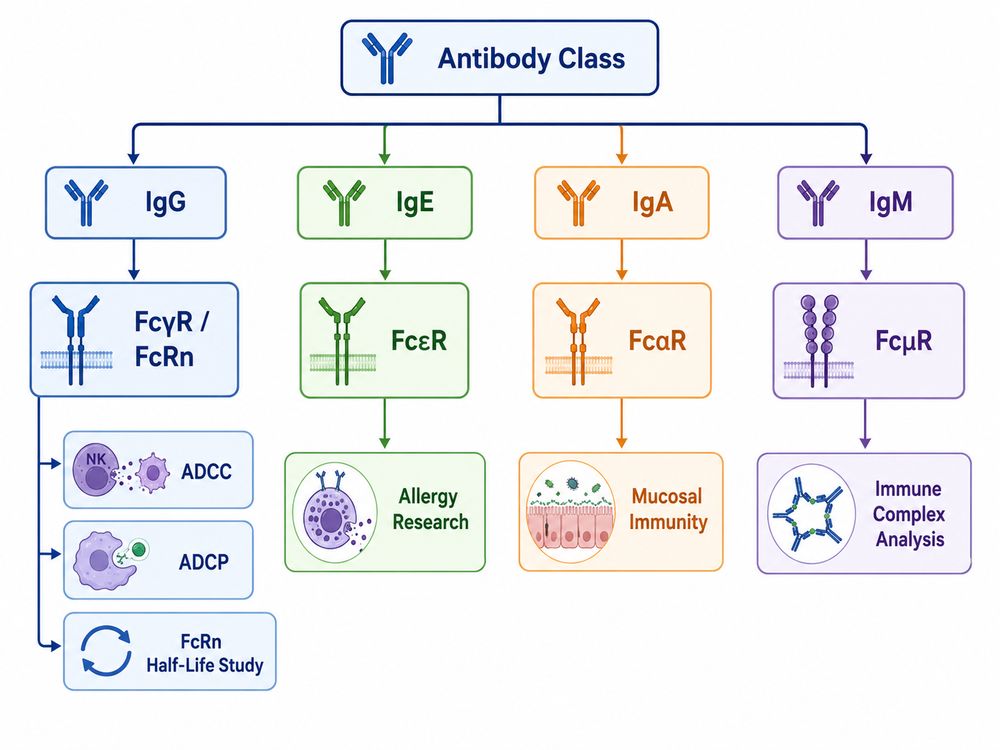 Fig 1. Fc Receptor Family Selection Map
3. Select Species and Homolog
Species selection is one of the most important steps in Fc receptor product choice. Human receptors are usually preferred for therapeutic antibody screening and clinical relevance. Mouse, rat, cynomolgus monkey, or other species homologs may be needed for animal models, toxicology studies, or cross-species translation.
| Study Goal | Recommended Species Choice |
|---|---|
| Human therapeutic antibody screening | Human Fc receptor proteins |
| Mouse efficacy model interpretation | Mouse Fc receptor homologs |
| Cynomolgus monkey toxicology or PK/PD support | Cynomolgus monkey Fc receptor proteins |
| Cross-species binding comparison | Parallel human, mouse, and cynomolgus Fc receptor panels |
| Preclinical candidate ranking | Species-matched Fc receptor proteins based on model design |
Species differences can significantly influence Fc receptor binding and downstream interpretation. A therapeutic antibody that binds strongly to a human Fc receptor may not show the same profile against mouse or non-human primate homologs. For this reason, cross-species Fc receptor panels are often used during antibody engineering and preclinical planning.
Buying decision tip:
If your antibody will be evaluated in both in vitro assays and animal models, order a species-matched Fc receptor panel early. This helps avoid inconsistent interpretation between human binding data and preclinical model results.
Explore Our Fc Receptor Products
Learn More
4. Choose Tag and Protein Format
Tag and format selection depends on how the Fc receptor protein will be captured, immobilized, detected, or used in the assay. Common formats include His-tagged, Fc-tagged, Avi-tagged, biotinylated, and untagged recombinant proteins.
| Format | Typical Advantage | Common Application |
|---|---|---|
| His-tagged Fc receptor | Easy purification and nickel-based capture | ELISA, pull-down, screening assays |
| Fc-tagged Fc receptor | Improved stability or dimeric presentation | Cell-based binding models, plate coating |
| Avi-tagged Fc receptor | Site-specific biotinylation compatibility | SPR, BLI, streptavidin-based capture |
| Biotinylated Fc receptor | Direct immobilization on streptavidin surfaces | SPR, BLI, ELISA, flow-based assays |
| Untagged Fc receptor | Reduced tag interference | Functional studies or custom conjugation |
For kinetic analysis, orientation matters. Random immobilization may reduce binding accessibility or create heterogeneous surfaces. Avi-tagged or site-specifically biotinylated Fc receptor proteins are often preferred for SPR and BLI because they support more controlled immobilization on streptavidin-coated sensor surfaces.
Buying decision tip:
If your assay requires receptor orientation, select Avi-tagged or biotinylated Fc receptor proteins. If your assay only requires plate coating or detection, His-tagged or Fc-tagged proteins may be sufficient.
5. Decide Whether Biotinylated or Active Protein Is Needed
Not every assay requires a biotinylated Fc receptor protein. However, for label-free kinetic assays or streptavidin-based capture systems, biotinylation can improve reproducibility.
When to Choose Biotinylated Fc Receptor Protein
Biotinylated Fc receptor proteins are recommended when:
- The assay uses streptavidin biosensors or streptavidin-coated plates.
- Orientation-controlled immobilization is important.
- The platform is SPR or BLI.
- The study compares multiple Fc-engineered antibody variants.
- Low background and reproducible capture density are required.
When to Choose Active Fc Receptor Protein
An active Fc receptor protein is important when the assay depends on confirmed antibody binding. Activity validation may include binding to known IgG subclasses, Fc variants, IgE, IgA, or reference antibodies depending on the receptor type. For SPR, BLI, and ELISA, activity-validated proteins can reduce assay development time.
| Requirement | Product Feature to Prioritize |
|---|---|
| Streptavidin capture | Biotinylated or Avi-tagged protein |
| Kinetic analysis | Activity-validated, properly folded extracellular domain |
| Fc variant ranking | Consistent lot-to-lot activity |
| Functional assay support | Low endotoxin and high purity |
| Custom immobilization | Specific tag, conjugation, or buffer compatibility |
Buying decision tip:
For SPR/BLI experiments, biotinylated and activity-validated Fc receptor proteins are usually better than non-biotinylated proteins because they reduce immobilization variability. SPR-based Fc receptor assays are widely used for standardized FcγR binding characterization, but assay setup and reagent quality can strongly affect results.
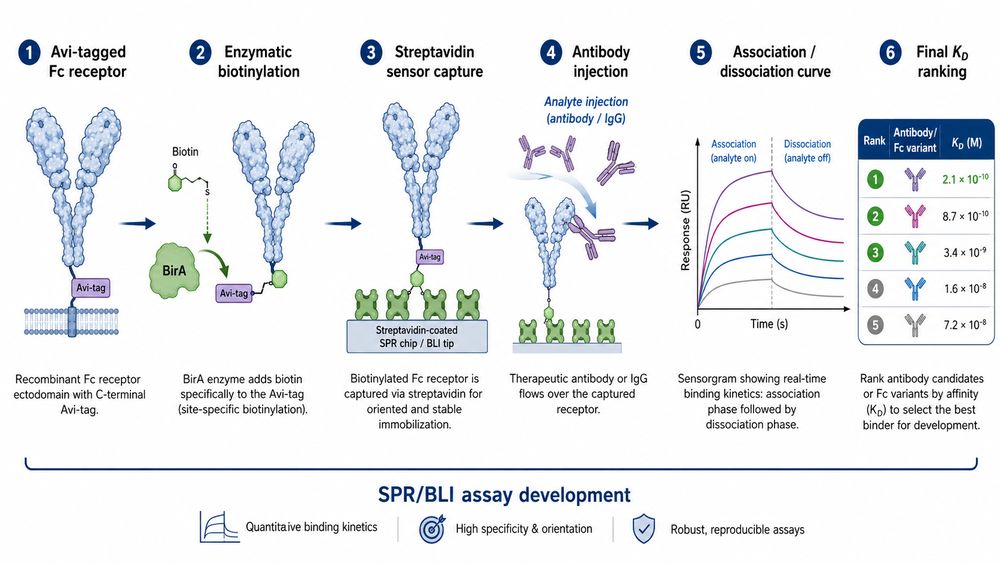 Fig 2. Biotinylated Fc Receptor Protein Capture Workflow
6. Match Product to Assay Platform
Different assay platforms require different product specifications. Before ordering, confirm how the Fc receptor protein will be used.
| Assay Platform | Recommended Fc Receptor Product Feature | Key Selection Point |
|---|---|---|
| ELISA | His-tagged, Fc-tagged, or biotinylated protein | Plate coating or capture format |
| SPR | Biotinylated or Avi-tagged protein | Orientation and kinetic consistency |
| BLI | Biotinylated protein | Streptavidin biosensor compatibility |
| Flow cytometry | Fluorescently labeled or tag-compatible protein | Detection strategy and background control |
| Cell-based assay | Active, low-endotoxin protein | Avoid nonspecific immune activation |
| Immune complex binding assay | Species-matched receptor panel | Biological relevance |
| Fc engineering screen | Multiple FcγR and FcRn proteins | Comparative ranking |
ELISA
For ELISA, the product format depends on whether the receptor is coated directly, captured through a tag, or detected after binding. His-tagged and Fc-tagged proteins are often suitable, while biotinylated proteins may provide better orientation when streptavidin-coated plates are used.
SPR and BLI
For SPR and BLI, protein orientation and immobilization consistency are critical. Biotinylated Fc receptor proteins are often preferred because they can be captured on streptavidin surfaces with controlled orientation. This is especially useful when comparing Fc variants with small affinity differences.
Flow Cytometry
For flow-based binding analysis, the Fc receptor protein may require a compatible tag or label. Background binding should be carefully controlled, especially when working with Fc-containing detection reagents.
Functional and Cell-Based Assays
For functional assays, endotoxin level becomes more important. Low-endotoxin Fc receptor proteins are preferred when the protein will contact immune cells or be used in cell-sensitive systems.
Buying decision tip:
Choose the Fc receptor product based on the final readout. Kinetic platforms need orientation and activity validation; cell-based platforms need low endotoxin and biological compatibility; screening platforms need consistency and scalability.
Explore Our Fc Receptor Products
Learn More
7. Consider Endotoxin, Purity, Activity, and Storage
After selecting receptor family, species, and format, check the quality specifications. These parameters often determine whether the protein is suitable for your assay.
| Specification | Why It Matters | Recommended Consideration |
|---|---|---|
| Purity | Reduces background and nonspecific signals | Prefer high-purity protein for SPR/BLI and quantitative assays |
| Activity | Confirms binding competence | Choose activity-validated protein when available |
| Endotoxin | Critical for cell-based assays | Select low-endotoxin protein for immune cell studies |
| Glycosylation | May affect folding and binding | Consider mammalian-expressed proteins for complex receptors |
| Buffer | May affect immobilization or assay chemistry | Check compatibility with ELISA, SPR, BLI, or cell assays |
| Storage | Maintains performance over time | Avoid repeated freeze-thaw cycles |
| Lot consistency | Important for long-term studies | Request lot-specific data if needed |
Purity
High purity is especially important for label-free assays such as SPR and BLI, where impurities may contribute to nonspecific binding or baseline instability.
Activity
Activity validation gives confidence that the receptor is properly folded and able to bind the expected antibody or Fc ligand. This is particularly important for FcγRIIIa, FcRn, FcεRI, and FcαRI binding assays.
Endotoxin
Endotoxin is a key consideration for cell-based assays. If the Fc receptor protein will be used with immune cells, cytokine readouts, or functional activation assays, low-endotoxin material should be prioritized.
Storage
Fc receptor proteins should generally be stored according to supplier recommendations. Avoid repeated freeze-thaw cycles and aliquot the protein after first thawing when appropriate.
Buying decision tip:
For purely biochemical assays, purity and activity may be the highest priorities. For immune cell assays, endotoxin level and buffer compatibility become equally important.
8. When to Request a Custom Fc Receptor Protein
A standard catalog product may not always match the needs of advanced antibody research. Custom Fc receptor protein production may be required when your project involves unusual species, specific polymorphisms, special tags, or assay-specific modifications.
Consider requesting a custom Fc receptor protein when you need:
- A rare species homolog.
- A specific FcγR polymorphic variant.
- A custom tag such as Avi tag, His tag, Fc tag, FLAG tag, or no tag.
- Site-specific biotinylation.
- A special expression system.
- A receptor extracellular domain with defined boundaries.
- Low-endotoxin preparation.
- Custom buffer formulation.
- Bulk quantity for screening or long-term assay programs.
- Matched receptor panels across multiple species.
| Project Scenario | Recommended Custom Option |
|---|---|
| FcγRIIIa V158/F158 comparison | Polymorphism-specific recombinant proteins |
| FcRn pH-dependent binding | FcRn/B2M complex with assay-compatible buffer |
| Cross-species antibody evaluation | Human, mouse, rat, and cynomolgus homolog panel |
| BLI screening campaign | Biotinylated receptor panel |
| Cell-sensitive assay | Low-endotoxin custom preparation |
| Non-standard detection system | Custom tag or label |
Buying decision tip:
If your assay requires a special tag, exact homolog, receptor variant, or controlled biotinylation strategy, custom production may save time compared with adapting the assay around an unsuitable catalog product.
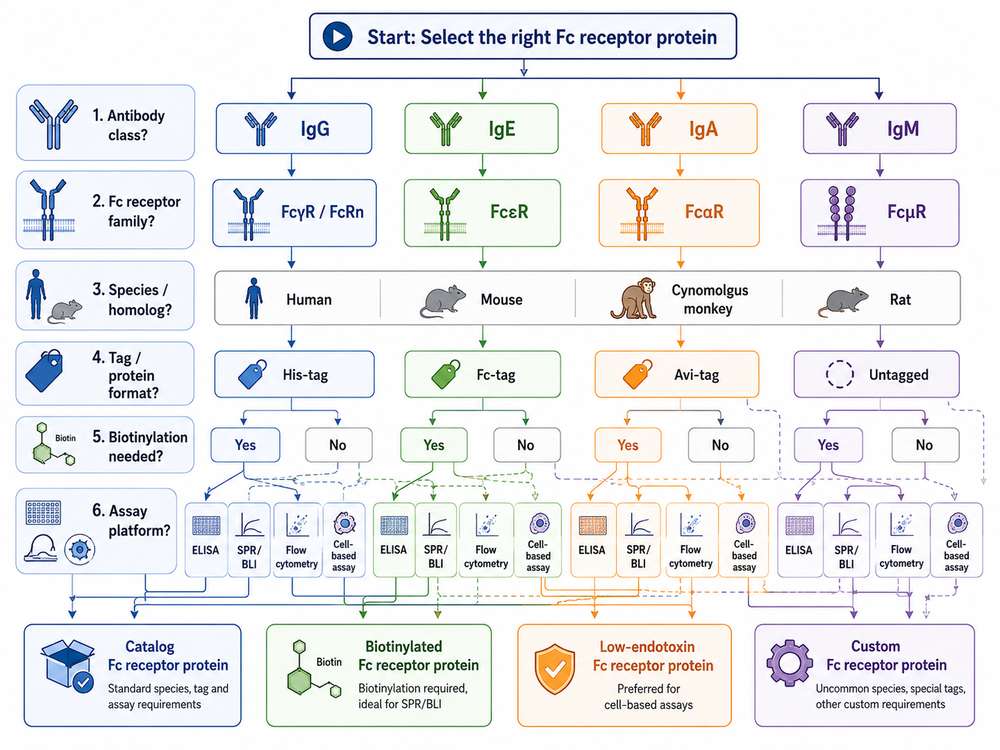 Fig 3. Fc Receptor Product Selection Decision Tree
 A practical decision tree beginning with antibody class, followed by Fc receptor family, species, tag format, biotinylation need, assay platform, and final product choice. Add decision endpoints such as "Catalog Fc receptor protein," "Biotinylated Fc receptor protein," "Low-endotoxin Fc receptor protein," and "Custom Fc receptor protein."
9. Creative BioMart Technical Support
Creative BioMart provides recombinant Fc receptor-related products and technical support for researchers working on antibody discovery, Fc engineering, immune receptor biology, and therapeutic antibody characterization. Whether the project requires a single human Fcγ receptor protein or a customized cross-species receptor panel, technical support can help match product specifications to the intended assay.
Researchers may contact Creative BioMart for support with:
- Selecting Fc receptor family and species.
- Choosing tag format and protein construct.
- Matching Fc receptor proteins to ELISA, SPR, BLI, or flow cytometry platforms.
- Planning FcγR, FcRn, FcεR, FcαR, or FcμR binding panels.
- Requesting biotinylated or low-endotoxin Fc receptor proteins.
- Designing custom Fc receptor protein production projects.
- Evaluating bulk supply or long-term assay needs.
For product browsing and project planning, visit Creative BioMart's Fc receptor page. Researchers looking for a practical Fc receptor protein selection guide or a recombinant Fc receptor buying guide can use this page as the starting point for product selection and technical consultation.
Explore Our Fc Receptor Products
Learn More
Conclusion
Choosing the right Fc receptor protein requires more than selecting a receptor name from a catalog. Researchers should begin with the antibody class, then define the receptor family, species, homolog, tag, protein format, biotinylation status, activity requirement, assay platform, and quality specifications. For routine assays, a standard recombinant Fc receptor protein may be sufficient. For Fc engineering, cross-species comparison, FcRn half-life studies, or cell-based functional research, a more carefully designed receptor panel or custom Fc receptor protein may be needed.
A structured selection process helps improve assay reproducibility, reduce troubleshooting time, and generate more meaningful antibody-Fc receptor interaction data.
Resource
-
What Are Fc Receptors? The Immune System's Antibody Response Switch
-
FcRn: The Secret to Long-Lasting Antibodies!
-
ADCC vs ADCP: How Fcγ Receptors Drive Cancer Immunity
-
CD64: The Tiny Receptor with Big Implications!
-
Fc Receptor Polymorphisms: Why Antibody Responses Differ Between Patients
References
- Bruhns, P., & Jönsson, F. Mouse and human FcR effector functions. Immunological Reviews, 268(1), 25–51.
- Nimmerjahn, F., & Ravetch, J. V. Fcγ receptors as regulators of immune responses. Nature Reviews Immunology, 8, 34–47.
- Sondermann, P., & Szymkowski, D. E. Harnessing Fc receptor biology in the design of therapeutic antibodies. Current Opinion in Immunology, 40, 78–87.
- Hogarth, P. M., & Pietersz, G. A. Fc receptor-targeted therapies for the treatment of inflammation, cancer and beyond. Nature Reviews Drug Discovery, 11, 311–331.
- Vidarsson, G., Dekkers, G., & Rispens, T. IgG subclasses and allotypes: From structure to effector functions. Frontiers in Immunology, 5, 520.
- Roopenian, D. C., & Akilesh, S. FcRn: The neonatal Fc receptor comes of age. Nature Reviews Immunology, 7, 715–725.
- Hayes, J. M., Frostell, A., Cosgrave, E. F. J., et al. Fc gamma receptor glycosylation modulates the binding of IgG glycoforms. Journal of Proteome Research, 13(12), 5471–5485.
- Bournazos, S., Gupta, A., & Ravetch, J. V. The role of IgG Fc receptors in antibody-dependent enhancement. Nature Reviews Immunology, 20, 633–643.
- Treffers, L. W., Ten Broeke, T., Rösner, T., et al. IgA-mediated killing of tumor cells by neutrophils is enhanced by CD47-SIRPα checkpoint inhibition. Cancer Immunology Research, 8(1), 120–130.

Contact us or send an email at for project quotations and more detailed information.
Quick Links
-

Papers’ PMID to Obtain Coupon
Submit Now -

Refer Friends & New Lab Start-up Promotions