

Fc Receptors in Monoclonal Antibody and Biosimilar Development
Table of Contents
- Role of Fc Receptors in Therapeutic Antibody Function
- FcR Binding in Early Antibody Screening
- Fc Engineering and Effector Function Optimization
- FcR Binding in Biosimilar Comparability
- FcR Assays in CMC and Quality Control
- FcRn Binding and Antibody Half-Life Evaluation
- Product Requirements for Development Workflows
- Creative BioMart Fc Receptor Products for Biologics Research
Role of Fc Receptors in Therapeutic Antibody Function
Therapeutic monoclonal antibodies (mAbs) exert their clinical effects through two distinct functional domains: the antigen-binding fragment (Fab) and the crystallizable fragment (Fc). While Fab domains confer target specificity, Fc receptors (FcRs) mediate the effector functions that are essential for therapeutic efficacy. The interaction between antibody Fc regions and Fc receptors on immune effector cells triggers antibody-dependent cellular cytotoxicity (ADCC), antibody-dependent cellular phagocytosis (ADCP), and complement-dependent cytotoxicity (CDC).
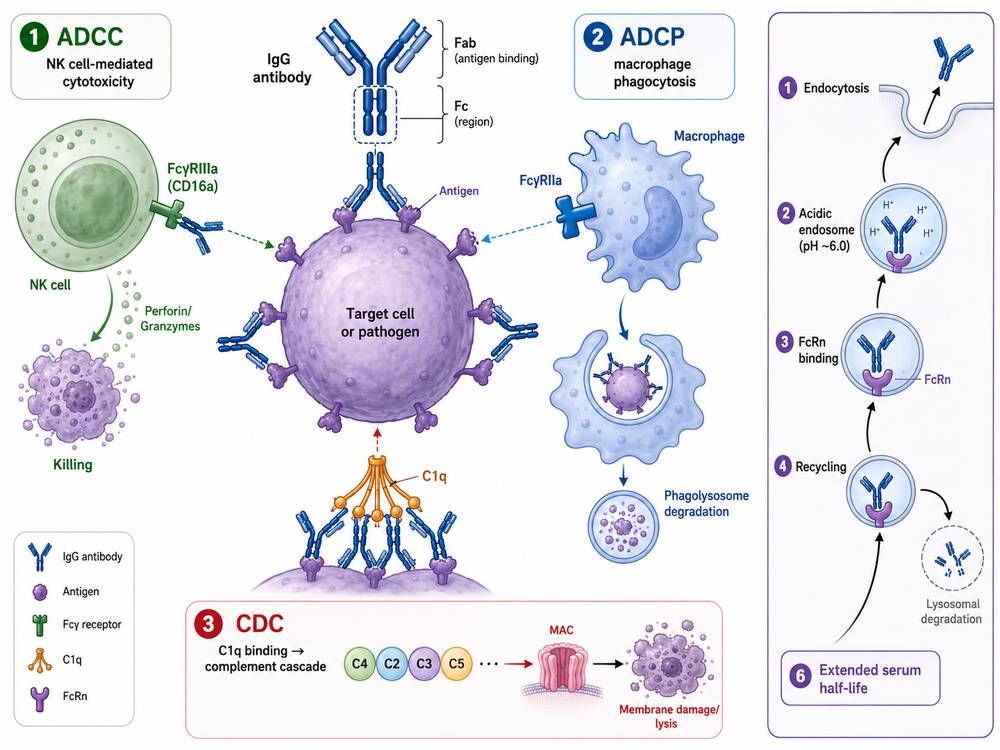 Fig 1. Fc-Mediated Effector Functions of Therapeutic mAbs
Table1. Human IgG subclasses interact with distinct Fcγ receptor families:
| Fc Receptor | Primary Ligand | Expressing Cells | Effector Function |
|---|---|---|---|
| FcγRI (CD64) | IgG1, IgG3 | Monocytes, macrophages, DCs | Phagocytosis, ADCC |
| FcγRIIa (CD32a) | IgG1, IgG2, IgG3 | Neutrophils, macrophages, platelets | ADCP, immune complex clearance |
| FcγRIIb (CD32b) | IgG1, IgG2, IgG3 | B cells, mast cells | Inhibitory signaling |
| FcγRIIIa (CD16a) | IgG1, IgG3 | NK cells, macrophages | ADCC |
| FcγRIIIb (CD16b) | IgG1, IgG3 | Neutrophils | Degranulation, respiratory burst |
| FcRn | IgG (all subclasses), Albumin | Endothelial cells, monocytes | Serum half-life extension, transcytosis |
The balance between activating receptors (FcγRI, FcγRIIa, FcγRIIIa) and the inhibitory FcγRIIb determines the overall effector response. Clinical evidence demonstrates that patients homozygous for the FcγRIIIa-V158 allele, which binds IgG1 with higher affinity, exhibit improved response rates to rituximab and trastuzumab therapy.
FcR Binding in Early Antibody Screening
During lead candidate selection, Fc receptor binding assessment serves as a critical quality attribute (CQA) that predicts in vivo effector function. Early-stage screening employs high-throughput binding assays to evaluate candidate antibodies against panels of recombinant Fcγ receptors, enabling developers to identify molecules with optimal effector profiles before committing to costly cell line development.
Surface plasmon resonance (SPR) and bio-layer interferometry (BLI) represent the gold standard technologies for FcR binding characterization during screening. These label-free methods provide real-time kinetic data (kon, koff, KD) that distinguish subtle differences in binding affinity between candidate clones. SPR-based assays can detect moderate binding activity alterations linked to post-translational modifications such as asparagine deamidation or methionine oxidation, which may compromise effector function.
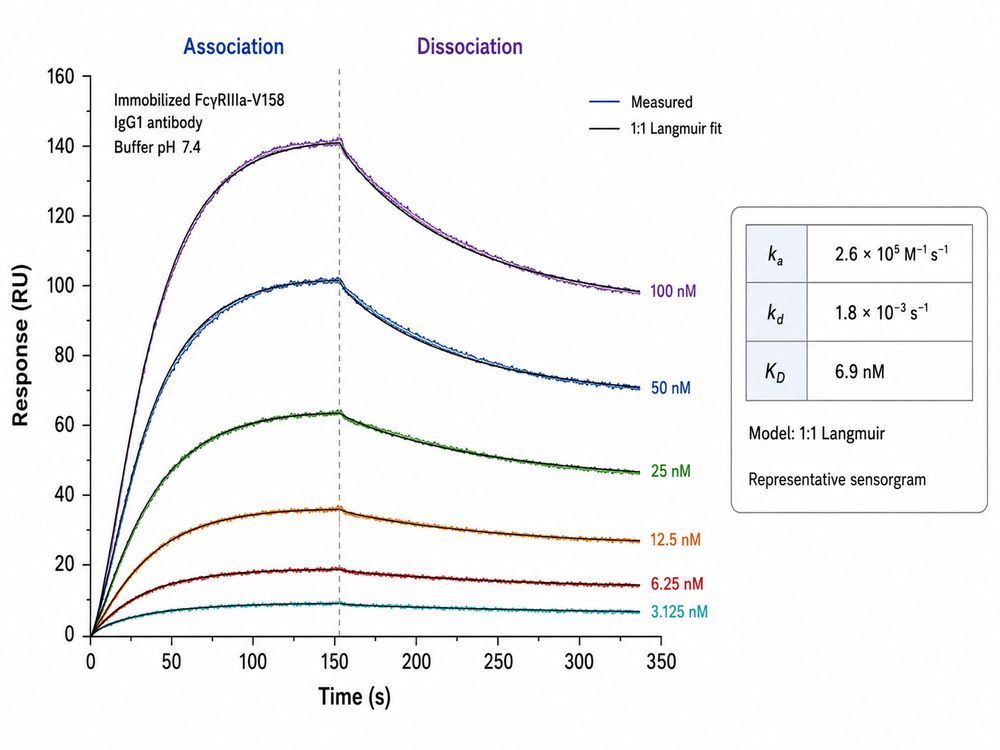 Fig 2. SPR-Based FcγR Binding Kinetics in Antibody Screening
Flow cytometry-based binding assays using cells expressing surface Fc receptors offer physiologically relevant alternatives, particularly for evaluating interactions with low-affinity receptors that require multivalent engagement. Reporter gene assays (RGAs) provide functional readouts by linking FcγR engagement to luciferase expression, enabling high-throughput screening of ADCC potential without primary cell isolation.
Fc Engineering and Effector Function Optimization
Fc engineering strategies enable precise modulation of Fc receptor interactions to enhance or suppress effector functions according to therapeutic indications. Two primary approaches dominate current development: glycoengineering and site-directed mutagenesis.
Glycoengineering: Afucosylation for Enhanced ADCC Removal of core fucose from the N297-linked glycan dramatically increases FcγRIIIa binding affinity and ADCC potency. Afucosylated antibodies such as obinutuzumab (Gazyva) demonstrate 5- to 50-fold enhanced ADCC compared to their fucosylated counterparts. This enhancement arises from optimized carbohydrate-carbohydrate interactions between the Fc glycan and the Asn162 glycan on FcγRIIIa, reducing steric constraints that limit binding in fucosylated forms.
Site-Directed Mutagenesis: S239D/I332E and Beyond Amino acid substitutions in the CH2-CH3 interface can selectively enhance activating receptor binding while minimizing inhibitory FcγRIIb engagement:
| Mutation Combination | Target Receptor | Effector Enhancement | Clinical/Preclinical Example |
|---|---|---|---|
| S239D/I332E | FcγRIIIa | ADCC | Tafasitamab (MOR208) |
| S239D/A330L/I332E | FcγRIIIa (V158) | ADCC, ADCP | Solid tumor candidates |
| G236A/S239D/I332E (GASDALIE) | FcγRIIa, FcγRIIIa | ADCC, ADCP | Enhanced phagocytosis |
| F243L/R292P/Y300L/V305I/P396L | FcγRIIa vs. FcγRIIb | ADCP | Selective macrophage activation |
| E345G/E430G | C1q | CDC | HexaBody-CD38 (GEN3014) |
The S239D/I332E double mutation, developed through computational design and high-throughput screening, increases FcγRIIIa affinity by approximately 100-fold. When combined with A330L (the "DLE" variant), this triple mutation further optimizes the binding interface for the V158 allotype, which is present in approximately 85% of the population.
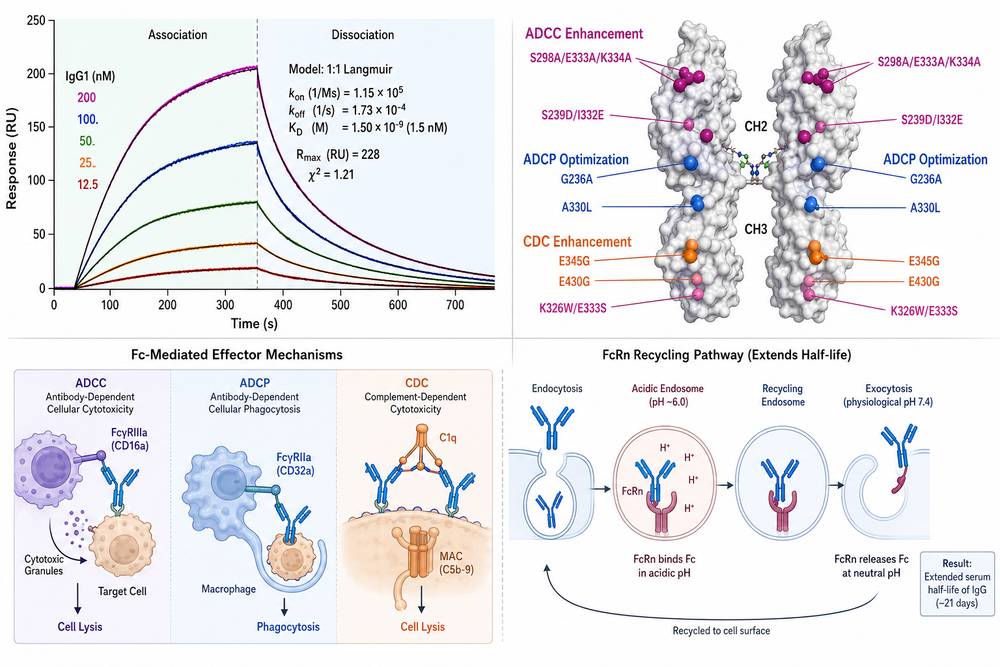 Fig 3. Fc Engineering Strategies for Effector Function Modulation
FcR Binding in Biosimilar Comparability
For biosimilar development, analytical similarity assessment represents the foundation of regulatory approval. Fc receptor binding comparability is classified as a Tier 1 critical quality attribute under FDA guidance, requiring formal equivalence testing using the Two One-Sided Tests (TOST) procedure with acceptance criteria of ±1.5× the reference product standard deviation.
The comparability exercise must demonstrate that the biosimilar's Fc-mediated functions are statistically equivalent to the reference product across multiple lots. This includes binding affinity to FcγRI, FcγRIIa, FcγRIIIa (both F158 and V158 allotypes), FcγRIIb, and FcRn, as well as functional readouts including ADCC, ADCP, and CDC.
| Analytical Domain | Representative Methods | Relevance to Biosimilarity |
|---|---|---|
| Primary structure | Peptide mapping (LC-MS/MS), intact mass | Sequence identity, PTMs |
| Higher-order structure | CD, FTIR, DSC, HDX-MS | Conformational similarity |
| Glycosylation | Released N-glycan analysis, glycopeptide mapping | Effector function, PK |
| Fc receptor binding | SPR-based FcγR panels, FcRn binding assays | Predicts ADCC/ADCP/CDC, half-life |
| Functional activity | Cell-based potency, ADCC, CDC assays | Biological equivalence |
SPR and flow cytometry assays for FcR binding demonstrate excellent precision (typically <5% CV) and can distinguish between variant glycoforms, providing correlation with cell-killing experiments without associated variability. EMD Millipore's biosimilar testing data showed that most FcγR, FcRn, and C1q assays yielded results within 10% relative potency of innovator biologics, supporting European regulatory approval.
FcR Assays in CMC and Quality Control
During Chemistry, Manufacturing, and Controls (CMC) development, Fc receptor binding assays transition from characterization tools to validated quality control methods. ICH Q2(R1) validation requirements ensure these assays meet criteria for specificity, linearity, accuracy, precision, and robustness when implemented for release testing and stability studies.
SPR-Based QC Assays SPR biosensors provide real-time, label-free kinetic analysis that serves as the gold standard for FcR binding characterization. In QC applications, SPR assays are validated for:
- Active concentration determination: Evaluating effects of PTMs on binding potency
- Relative binding activity: Comparability assessments using sensorgram comparison methods
- Kinetic profiling: kon, koff, and KD determination for lot release
ELISA and Plate-Based Formats Enzyme-linked immunosorbent assays offer higher throughput and lower equipment costs, making them suitable for routine release testing. ELISA formats for FcγR and C1q binding are particularly valuable when qualified as potency assays using the parallel-line method.
Cell-Based Functional Assays ADCC and CDC cell-based assays serve as complementary potency tests that confirm binding data translates to biological activity. These assays typically employ engineered effector cells (e.g., Jurkat-NFAT-CD16a reporter cells) to reduce donor variability while maintaining regulatory acceptability.
| Assay Format | Technology | Application Stage | Advantages | Limitations |
|---|---|---|---|---|
| SPR | Biacore, ProteOn | Characterization, QC | Real-time kinetics, high precision | Equipment cost, expertise |
| BLI | Octet | Screening, characterization | Label-free, high throughput | Regeneration challenges |
| ELISA | Plate reader | QC release, stability | Cost-effective, high throughput | Indirect binding, less kinetic info |
| Flow cytometry | FACS | Characterization | Physiologically relevant | Variability, lower throughput |
| Cell-based | Reporter gene | Potency, comparability | Functional readout | Higher variability, complex |
FcRn Binding and Antibody Half-Life Evaluation
The neonatal Fc receptor (FcRn) is distinct from classical Fcγ receptors in both structure and function. As a heterodimer of an MHC class I-like α-chain and β2-microglobulin, FcRn regulates IgG and albumin homeostasis through pH-dependent binding—capturing antibodies in acidic endosomes (pH 6.0) and releasing them at physiological pH (7.4).
Engineering for Extended Half-Life FcRn-mediated recycling is the primary determinant of IgG serum persistence, with typical human IgG1 half-lives of 21 days. Engineering strategies focus on enhancing FcRn binding at acidic pH while ensuring rapid dissociation at neutral pH:
| Fc Variant | Mutations | FcRn Binding Enhancement | Half-Life Extension |
|---|---|---|---|
| YTE | M252Y/S254T/T256E | 10× at pH 6.0 | 2-4× (up to 100 days in humans) |
| LS | M428L/N434S | Enhanced pH 6.0 | 3-4× |
| DHS | L309D/Q311H/N434S | Enhanced pH 6.0, reduced pH 7.4 | 5.3× AUC improvement |
| YML | L309Y/Q311M/M428L | Superior on-rate/off-rate kinetics | 6.1× vs. wild-type |
The YTE triple mutation (M252Y/S254T/T256E) creates an additional salt bridge with FcRn's β2-microglobulin chain, increasing binding affinity 10-fold at pH 6.0. In clinical studies, motavizumab-YTE demonstrated a 71-86% reduction in clearance and half-life extension up to 100 days in healthy adults.
In Vitro Prediction of Half-Life High-throughput BLI platforms enable prediction of FcRn-mediated half-life by measuring association rates at pH 6.0 and dissociation rates at pH 7.5. Studies demonstrate strong correlation between combined FcRn binding rates and Phase 1 clinical half-lives, verified in human FcRn transgenic mice . This model allows screening of lead candidates for desired pharmacokinetic properties while requiring minimal antibody quantities (<0.5 mg) and only 1-2 hours per analysis.
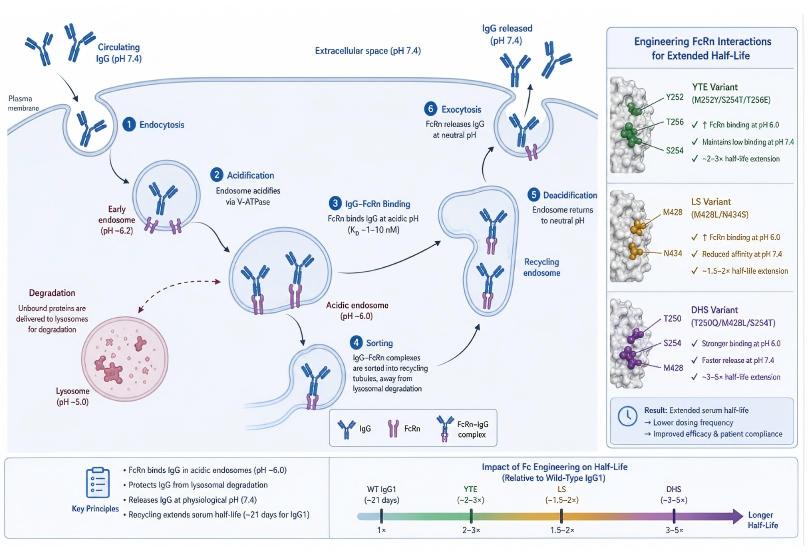 Fig 4. FcRn-Mediated IgG Recycling and Half-Life Extension
Product Requirements for Development Workflows
Successful integration of Fc receptor analysis into mAb and biosimilar development workflows demands reagents that meet stringent quality standards:
Recombinant Fc Receptor Requirements:
- High purity: >95% by SDS-PAGE and SEC-HPLC
- Verified bioactivity: Confirmed by SPR/BLI binding to reference antibodies
- Low endotoxin: <0.1-10 EU/mg for cell-based applications
- Batch consistency: Validated across multiple production lots
- Multiple formats: His-tagged, biotinylated, Fc-tagged, fluorescent labels
- Species coverage: Human, mouse, cynomolgus for cross-species PK/PD
Assay Development Considerations:
- pH buffer optimization (pH 6.0 for FcRn association, pH 7.4 for dissociation)
- Regeneration conditions for SPR/BLI sensor surfaces
- Reference standard qualification for comparability studies
- Statistical power analysis for equivalence testing
Creative BioMart Fc Receptor Products for Biologics Research
Creative BioMart provides comprehensive recombinant Fc receptor products specifically designed to support biologics development workflows. Their portfolio encompasses all major Fc receptor families critical for therapeutic antibody characterization:
Featured Fc Receptor Product Categories:
| Product Line | Description | Applications |
|---|---|---|
| FcγRI (CD64) | High-affinity IgG receptor | ADCC, ADCP, phagocytosis assays |
| FcγRIIa/b (CD32a/b) | Low-affinity activating/inhibitory receptors | Immune complex clearance, ADCP balance |
| FcγRIIIa (CD16a) | Low-affinity ADCC receptor | NK cell-mediated cytotoxicity |
| FcγRIIIb (CD16b) | GPI-anchored neutrophil receptor | Degranulation, respiratory burst |
| FcRn (FCGRT & B2M) | Neonatal Fc receptor heterodimer | Half-life prediction, PK optimization |
| FcεRI | High-affinity IgE receptor | Allergic response, mast cell activation |
| FcαRI (CD89) | IgA receptor | Mucosal immunity, IgA therapeutics |
Explore Our Fc Receptor Products
Learn More
Product Specifications:
- Expression systems: HEK293, CHO, E. coli (species-dependent)
- Purification: Multi-step chromatography with endotoxin removal
- Quality verification: SDS-PAGE, SEC-HPLC, SPR/BLI bioactivity
- Custom services: Biotinylation, fluorescent labeling, tag removal
- GMP-grade options available for clinical development
Creative BioMart's Fc receptor proteins have been validated in SPR assays showing consistent binding to therapeutic antibody biosimilars (e.g., trastuzumab, rituximab, nivolumab) with affinities in the expected nanomolar to micromolar ranges. Their comprehensive catalog supports applications spanning early antibody screening, CMC method development, biosimilar comparability studies, and regulatory submission.
Resource
-
What Are Fc Receptors? The Immune System's Antibody Response Switch
-
FcRn: The Secret to Long-Lasting Antibodies!
-
ADCC vs ADCP: How Fcγ Receptors Drive Cancer Immunity
-
CD64: The Tiny Receptor with Big Implications!
-
Fc Receptor Polymorphisms: Why Antibody Responses Differ Between Patients
References
- Nimmerjahn F, Ravetch JV. Fcγ receptors as regulators of immune responses. Nat Rev Immunol. 2008;8(1):34-47.
- Jefferis R. Glycosylation as a strategy to improve antibody-based therapeutics. Nat Rev Drug Discov. 2009;8(3):226-234.
- Lazar GA, et al. Engineered antibody Fc variants with enhanced effector function. Proc Natl Acad Sci USA. 2006;103(11):4005-4010.
- Li B, et al. Fc engineering for enhanced ADCC and CDC. Antibodies. 2020;9(4):64.
- Schoch A, et al. Charge-mediated influence of the antibody variable domain on FcRn-dependent pharmacokinetics. Proc Natl Acad Sci USA. 2015;112(19):5997-6002.
- Robbie GJ, et al. A novel investigational Fc-modified humanized monoclonal antibody, motavizumab-YTE, has an extended half-life in healthy adults. Antimicrob Agents Chemother. 2013;57(12):6147-6153.
- Wang X, et al. Engineering FcRn binding kinetics dramatically extends antibody serum half-life and enhances therapeutic potential. Nat Commun. 2025;16:XXXX.
- Schlothauer T, et al. Analytical FcRn affinity chromatography for functional characterization of monoclonal antibodies. MAbs. 2013;5(4):576-586.
- Dall'Acqua WF, et al. Properties of human IgG1 engineered for enhanced binding to the neonatal Fc receptor (FcRn). J Biol Chem. 2006;281(33):23514-23524.
- FDA. Development of Therapeutic Protein Biosimilars: Comparative Analytical Assessment and Other Quality-Related Considerations. Guidance for Industry. 2019.
- EMA. Guideline on similar biological medicinal products containing biotechnology-derived proteins as active substance: non-clinical and clinical issues. 2014.
- Vidarsson G, et al. IgG subclasses and allotypes: from structure to effector functions. Front Immunol. 2014;5:520.
- Quast I, et al. Sialylation of IgG Fc domain impairs complement-dependent cytotoxicity. J Clin Invest. 2015;125(11):4160-4170.
- Bournazos S, et al. Fc receptor engineering for enhanced antibody effector function. Curr Opin Biotechnol. 2020;65:62-69.

Contact us or send an email at for project quotations and more detailed information.
Quick Links
-

Papers’ PMID to Obtain Coupon
Submit Now -

Refer Friends & New Lab Start-up Promotions